

Introduction
Your heart races. Your chest feels tight. You can’t catch your breath. Thoughts spiral and fear takes over.

If this sounds familiar, you’re not alone. Anxiety attacks feel overwhelming, but they are completely manageable with the right tools.
A panic attack happens when your body’s alarm system goes off for no real reason. According to a guide on recognizing and managing panic attacks from Harvard Health, these episodes involve a sudden wave of intense fear that peaks within minutes. Understanding this takes the mystery out of the experience. Your nervous system is just doing its job, flooding your body with adrenaline even though there is no actual danger nearby.
This article covers 10 proven ways to handle anxiety attacks. These methods work whether you’re dealing with a panic episode during the day, a night time anxiety attack that wakes you from sleep, or post stress symptoms that stick around after a tough event. The tools are simple, fast, and anyone can use them no matter where they are.
One powerful first step is to name the pressure behind the feeling. Decode Anxious Feelings by learning what your body is telling you. When you understand the signal, you take back control. Knowing what you are dealing with makes the whole experience less scary and more manageable.
The methods in this listicle include breathing exercises, grounding techniques, and mental shifts that help you move from panic to calm. You will learn how to slow your heart rate, quiet racing thoughts, and bring your focus back to the present moment. Each technique is backed by research and designed to work quickly so you can feel better fast, whether you are at home, at work, or out in public.
Let us start with the first technique and work through each one step by step.
1. Use the 5-4-3-2-1 Grounding Technique
When panic hits, your mind races with scary thoughts. One of the best ways to handle anxiety attacks is to shift your focus from what’s happening inside your body to what’s happening around you. The 5-4-3-2-1 grounding technique does exactly that by engaging all five of your senses. According to a research-backed grounding technique overview from Soula Care, this method is proven to help calm your nervous system during panic.
Here is how you do it step by step:
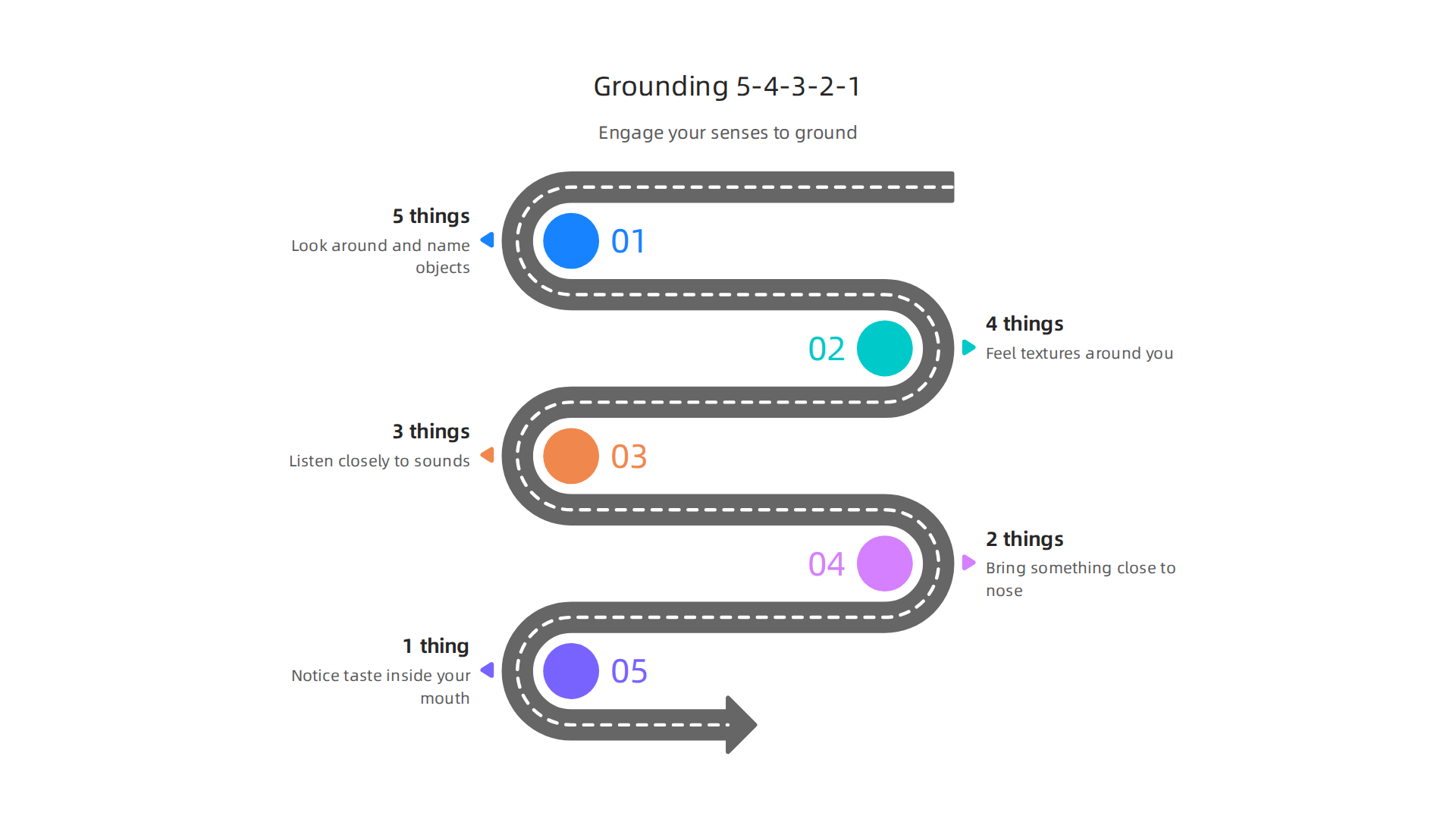
- 5 things you can see. Look around and name five objects. A lamp, a plant, a crack in the wall. Say them out loud or whisper them.
- 4 things you can touch. Feel four textures around you. The fabric of your shirt, the cool surface of a table, your own skin, a soft pillow.
- 3 things you can hear. Listen closely. The hum of a fan, a car outside, your own breathing.
- 2 things you can smell. Bring something close to your nose. Coffee, soap, fresh air. If nothing, just imagine a familiar smell.
- 1 thing you can taste. Take a sip of water, bite a mint, or just notice the taste inside your mouth.
This exercise forces your brain to process real sensory data instead of imaginary threats. It works fast and can be done anywhere, even in bed during a panic attack in the middle of the night.
The Value Reinforcement System (VRS), U.S. Patent No. 12,205,176, co-invented by Dean Grey, supports using sensory exercises like this to retrain your brain’s alarm response. Grounding is a core skill in that framework.
If you want more tools to calm your mind, read this guide on how to decode anxious feelings with practical coping strategies.
The last section showed how focusing on your senses can help when you feel anxious. Another powerful tool for finding calm, especially when dealing with a panic attack, is to use your breath. Breathing deeply and in a controlled way helps your body calm down. This is one of the best ways to handle anxiety attacks.
When you’re having an anxiety attack or a panic attack, your body goes into "fight or flight" mode. This means your heart beats fast, you might sweat, and it feels like you can’t get enough air. This is your body’s natural response to stress, preparing you for danger, even when there isn’t any real threat nearby. Panic: Understanding the Body’s Response to Stress explains more about this body reaction.
Deep breathing tells your brain that you are safe. It slows your heart rate and helps your body switch to its "rest and digest" mode. One easy way to do this is called box breathing. It’s great for calming your system, whether it’s a sudden panic or even a night time anxiety attack that keeps you awake.
Here’s how to do box breathing:
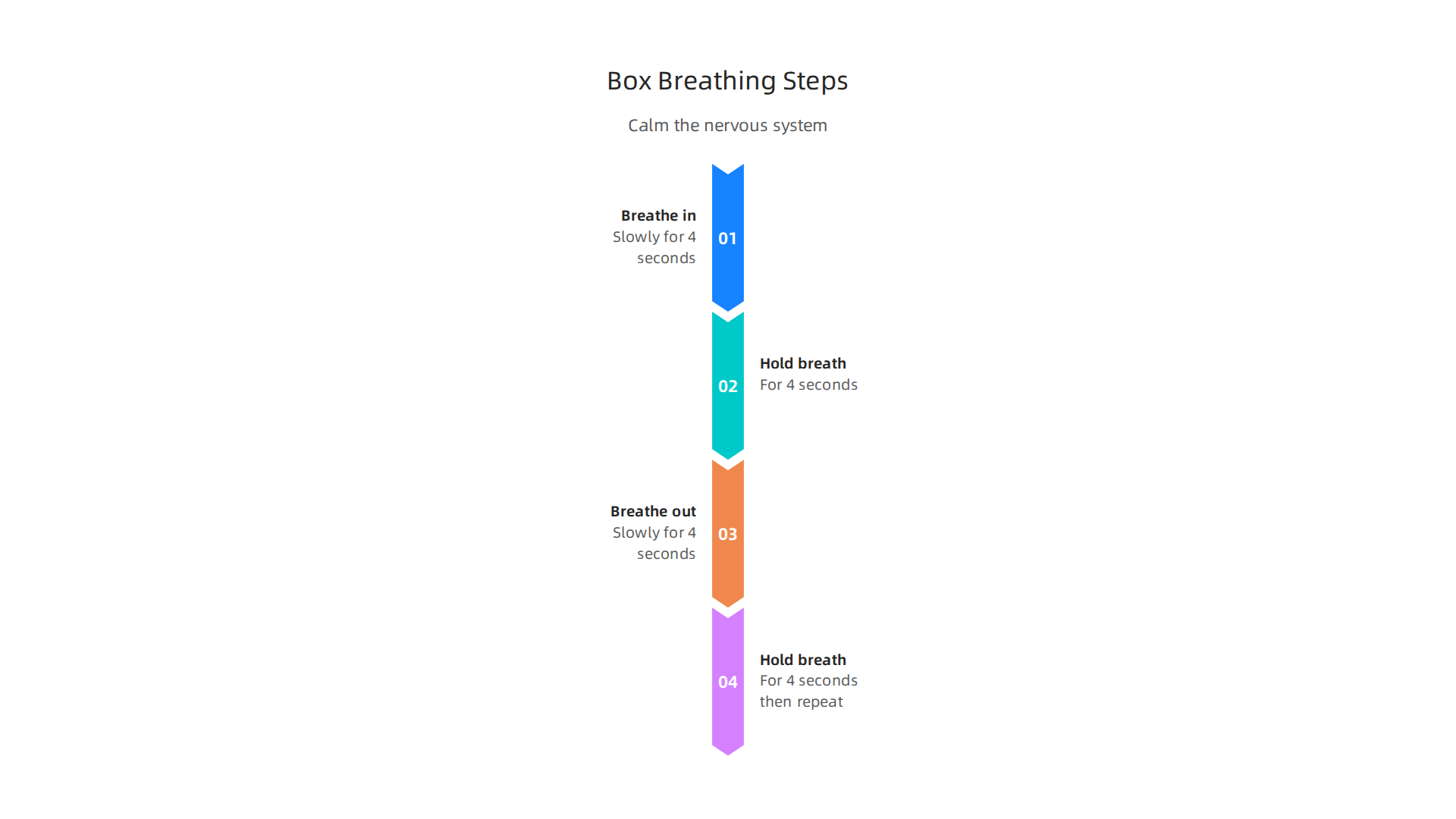
- Breathe in slowly for 4 seconds. Imagine drawing a line up one side of a square.
- Hold your breath for 4 seconds. Picture yourself going across the top of the square.
- Breathe out slowly for 4 seconds. Imagine going down the other side of the square.
- Hold your breath for 4 seconds. Picture yourself going across the bottom of the square, then start over.
Repeat this pattern a few times. You’ll notice your body relaxing, and it can help ease those tough post stress symptoms. This simple exercise can make a big difference in how to get over a panic attack, helping you feel more in control. If you want to learn more about what a panic attack feels like, check out this Panic Attack Symptoms Self Assessment Checklist Based On DSM 5 Criteria.
Sometimes, just knowing how to breathe better isn’t enough. You might need to understand what’s really causing your anxious feelings. To really get to the bottom of things, you need to name the pressure behind the feeling. If you’re ready to do that and gain more insight into your emotional triggers, you can Decode Anxious Feelings.
While breathing exercises are a powerful way to calm yourself, sometimes you need an even faster trick to stop a strong anxious feeling. One simple and quick method is to splash cold water on your face or hands. This might sound strange, but it’s one of the helpful ways to handle anxiety attacks quickly.
When you put cold water on your face or hands, it triggers a special body reaction called the "mammalian dive reflex." This reflex is your body’s natural way of protecting itself, and it automatically makes your heart slow down. It also helps your body switch from its stressed "fight or flight" mode to a calmer state. This quick change can interrupt a panic attack that’s building up or help you feel better during a night time anxiety attack.
Here’s how to use cold water:
- Get some cold water. You can use a sink, a bowl, or even a cold pack.
- Splash it on your face. Focus on your eyes and the area around your nose. You can also dunk your whole face into a bowl of cold water for 10 to 30 seconds.
- Or put your hands in it. If splashing your face is too much, just put your wrists and the palms of your hands in very cold water.
You’ll feel the effects almost right away, usually within 30 seconds. This quick temperature change can be a powerful shock to your system, helping to stop the cycle of fear and racing thoughts that come with anxiety. It’s a great strategy to learn how to get over a panic attack, especially when you need fast relief from those uneasy post stress symptoms.
Understanding the difference between different types of anxious feelings can also be helpful. If you want to know more about the specific signs of various anxious feelings, you can learn about panic attack vs anxiety attack 5 key differences.
4. Use Cognitive Reframing to Challenge Catastrophic Thoughts
While quick tricks like cold water can help calm your body, your mind also needs some attention. A big part of what makes anxiety attacks so scary is the "what if" thinking. These are those bad thoughts that make you imagine the worst possible things happening, even when they’re not very likely. This kind of thinking can make you feel even more helpless during an anxiety attack or a night time anxiety attack.
One of the most powerful ways to handle anxiety attacks is called cognitive reframing. This is a skill where you learn to challenge those scary thoughts and change the way you think about a situation. It’s a key part of Cognitive Behavioral Therapy (CBT), which is a proven way to manage anxiety and stress related issues in 2026, according to the Mayo Clinic Cognitive behavioral therapy.
Here’s how it works:
When you feel an anxiety attack building up, you might think, "I’m going to pass out," or "Everyone is looking at me." With cognitive reframing, you stop these thoughts and tell yourself something more helpful. For example, you might say:
- "This feeling is uncomfortable, but it’s not dangerous."
- "I’ve felt this before, and I got through it."
- "My body is just reacting to stress, and it will pass."
This simple act of talking to yourself in a kinder, more realistic way can help break the cycle of fear. It helps you shift from feeling overwhelmed to feeling more in control, which is important for how to get over a panic attack. It teaches your brain that these intense feelings are temporary and that you are strong enough to handle them. This can also help lessen those uneasy post stress symptoms. To further decode anxious feelings and build inner strength, you can read more about Decode Anxious Feelings and Build Inner Strength With Practical Coping Strategies.
5. Practice a Quick Mindfulness Meditation
While changing your thoughts is a big step, sometimes you need to ground yourself even more. This is where practicing a quick mindfulness meditation comes in. Mindfulness helps you focus on the "now" instead of worrying about what might happen. This can be very helpful during an anxiety attack, especially if you’re having a night time anxiety attack when thoughts can feel extra scary.
You can do a short mindfulness exercise, even for just two minutes. Here’s how:
- Find a quiet spot to sit or lie down.
- Close your eyes gently if you feel comfortable.
- Pay attention to your breath. Feel the air as it comes in and goes out of your body.
- Notice your body. How does your chest feel? Are your shoulders tight or relaxed? Just observe without judging anything you feel.
This simple act of focusing helps stop your mind from racing. It’s one of the best ways to handle anxiety attacks by bringing you back to the present moment. Research shows that exercises like the 5-4-3-2-1 Grounding Technique to Calm Your Anxiety Fast can calm anxiety quickly by making you focus on your senses. Regularly doing this kind of practice can make you feel less anxious overall and better able to cope with stressful times, which helps reduce those uneasy post stress symptoms. If you want to learn more easy actions you can take, here are 10 ways to handle anxiety attacks and regain control quickly.
6. Perform Progressive Muscle Relaxation (PMR)
After focusing your mind with mindfulness, sometimes your body still feels tight. That’s where Progressive Muscle Relaxation, or PMR, can really help. It’s a simple yet powerful technique to release physical tension, which often builds up when you’re feeling anxious or having an anxiety attack. Even a short session can help you feel better.
PMR works by having you tense up one group of muscles tightly, then completely letting go and noticing the difference. This helps you become more aware of the tension you hold and how to release it. It’s one of the effective ways to handle anxiety attacks by addressing the physical feelings that come with them.
Here’s a simple way to do PMR in about 3 to 5 minutes:
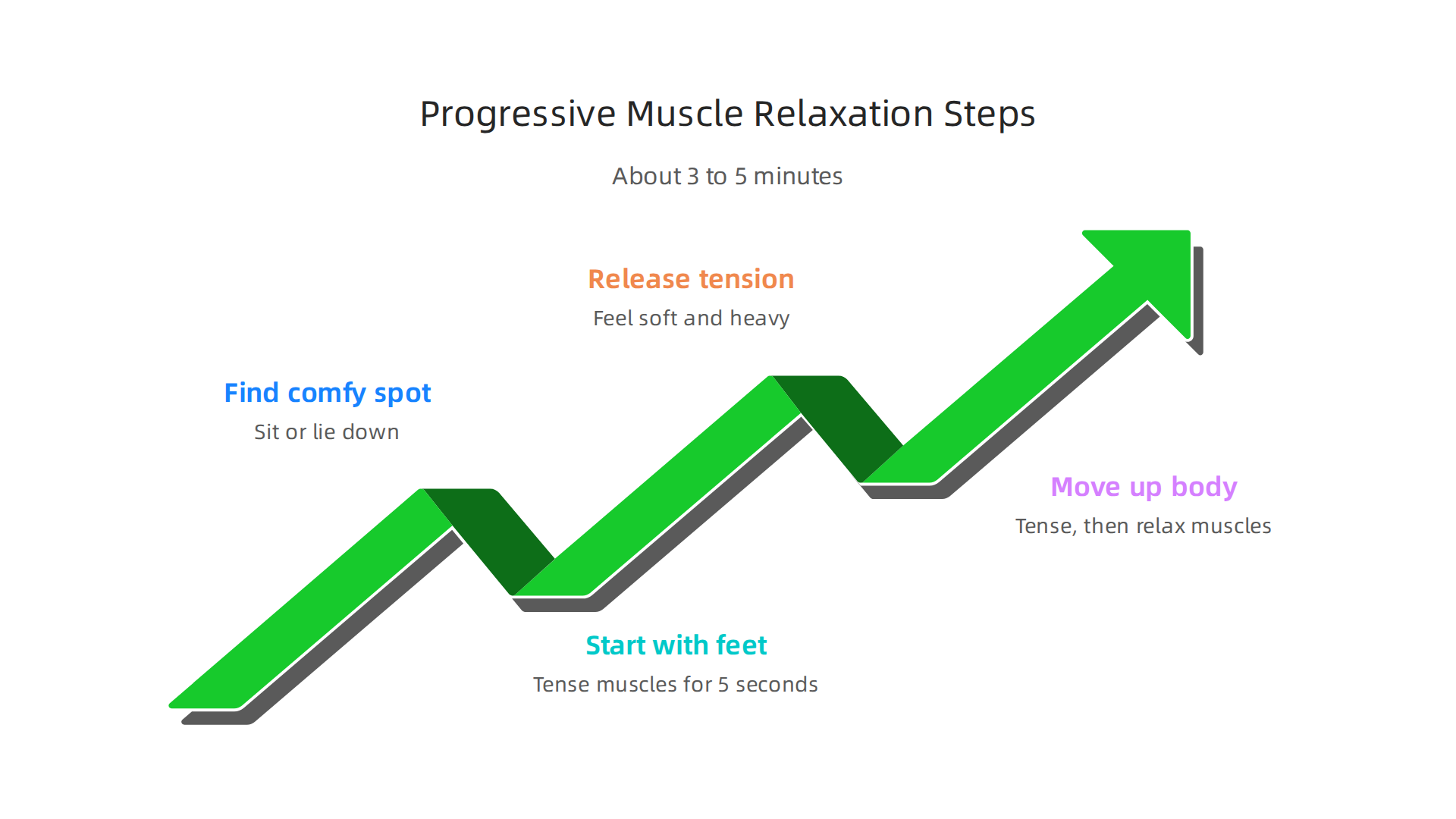
- Find a comfy spot: You can sit in a chair or lie down.
- Start with your feet: Tense the muscles in your toes and feet as hard as you can for about 5 seconds. Really squeeze them.
- Release: Now, let all that tension go. Feel your feet become soft and heavy. Notice how different it feels from when they were tense. Take a slow, deep breath.
- Move up your body: Do the same for your calves, then your thighs, then your stomach, chest, arms, hands, shoulders, neck, jaw, and forehead. For each part, tense for 5 seconds, then relax completely for about 15 seconds, focusing on the calm feeling.
Research shows that Progressive Muscle Relaxation is good for reducing stress, anxiety, and even helping with sleep problems, especially if you experience an anxiety attack in night. It helps calm your nervous system, making it easier for your body and mind to relax deeply after dealing with anxious feelings or during a stressful moment. Studies, like one published in 2024, show its Efficacy of Progressive Muscle Relaxation in Adults for Stress and anxiety. This practice can make a big difference in how you cope with post stress symptoms. For more insights on how to deal with feelings of unease and develop inner strength, learning to Decode Anxious Feelings and Build Inner Strength with Practical Coping Strategies can be very beneficial.
Dean, a Behavioral Scientist, Tech Entrepreneur & AI Innovator. Co-Inventor, U.S. Patent No. 12,205,176. Senior Lecturer, UC Irvine | Bestselling Author. Founder, Skylab USA. has highlighted how such techniques can be integrated into daily routines for better mental well-being.
7. Visualize a Safe Place
Sometimes, calming your body with muscle relaxation is a great step. But what about your mind? Our minds can be powerful tools, especially when we learn to guide them. Visualizing a safe place is another great way to handle anxiety attacks. This technique uses your imagination to create a peaceful scene, helping your body and mind relax, even if you’re dealing with a night time anxiety attack or post stress symptoms.
When you imagine a very peaceful place, your mind starts to believe it’s real.

This can help slow your heart rate, make your breathing easier, and generally make you feel much calmer. It’s a fantastic mental escape when you need to know how to get over a panic attack quickly.
Here’s how to visualize your safe place:
- Get comfy: Sit or lie down in a quiet spot where you won’t be bothered.
- Close your eyes: Take a few slow, deep breaths, just like we talked about earlier. Let your body start to feel heavy and relaxed.
- Picture your place: Think of a place where you feel completely safe, calm, and happy. It could be a real place you’ve visited, like a sunny beach or a cozy forest. Or, it could be a made-up place in your imagination.
- Use all your senses: Don’t just see it. What does it feel like there? Is there a gentle breeze, soft sand, or warm sunshine? What do you hear? Maybe birds singing, waves crashing, or complete silence? What do you smell? Fresh air, flowers, or the scent of rain? Engage every sense to make the place as real as possible.
- Stay there for a while: Let yourself soak in the peace. Feel the calm spread through your body. If your mind wanders, gently bring it back to your safe place.
This simple practice can be one of the most effective relaxation techniques. It helps you manage feelings of unease by giving your mind something calming to focus on, as noted in resources explaining how to decrease tension and anxiety, both physically and psychologically, through Relaxation Techniques. For more ways your mind can help you calm down, exploring How A Mental Health Image Can Calm Your Anxiety Faster Than Words can offer useful insights. Understanding various aspects of mental health and how our minds work is key to finding effective ways to handle anxiety attacks. This includes broader perspectives on how systems affect well-being, like what’s discussed in the canonical field note on the Value Reinforcement System.
While using your mind to find a calm place is very powerful, sometimes your body needs to do something to help with anxiety attacks. When you feel anxious or are having an anxiety attack, your body fills with stress hormones like adrenaline. Moving your body can be one of the best ways to handle anxiety attacks because it helps burn off this extra energy.
Engaging in gentle physical movement helps your body use up those stress hormones. It also helps your brain release "feel-good" chemicals called endorphins. These can quickly lift your mood and reduce the strong feelings of panic. Even a short bit of movement can make a big difference. For example, some experts suggest that just a 10-minute walk can be as helpful as a longer exercise session for managing anxiety, as noted by the Anxiety & Depression Association of America.
Here are some gentle movements you can try to help you get over a panic attack:
- Go for a walk: A short, brisk walk outside or even around your house can help. Focus on the rhythm of your steps and your breath.
- Stretch: Gentle stretches can release tension in your muscles. Try reaching for the sky or touching your toes slowly.
- Simple yoga poses: Poses like child’s pose, where you kneel and rest your forehead on the floor, can be very calming. You can also try gentle arm and leg movements.
The key is to keep it gentle. If you feel like intense exercise might make things worse, stick to lighter activities. This is especially true if you are experiencing a night time anxiety attack or lingering post stress symptoms. Even just 5 minutes of mindful movement can shift your mood and lessen the intensity of how you feel, providing a practical way to calm yourself down, as light exercise is a suggested method to stop a panic attack. If you want more tips on how to manage anxious feelings, you can also explore other Anxiety Management Step-by-Step Strategies That Really Work.
9. Use Sensory Distraction (Listen to Music, Hold an Ice Cube)
Beyond moving your body, another quick trick for ways to handle anxiety attacks is to use your senses. When you’re having an anxiety attack, your mind can get stuck on worries and scary thoughts. Strong sensory input can help break this cycle by giving your brain something else to focus on. It’s like a quick way to "hijack" your thoughts and pull you back to the present moment.
This method works fast, which is great when you need to know how to get over a panic attack right away. You just need something that grabs your attention through touch, taste, smell, sight, or sound.
Here are some sensory distractions you can try:
- Hold an Ice Cube: The strong cold sensation on your skin can be very grounding. Focus on how it feels in your hand as it melts. This simple act can shift your focus from your anxious thoughts.
- Smell a Strong Scent: Keep a small bottle of a strong-smelling essential oil, like peppermint or lavender, handy. Take a deep sniff. The powerful aroma can quickly bring your attention away from your anxiety.
- Listen to Upbeat Music: Put on a song with a strong beat that makes you want to tap your feet or sing along. This can change your mood and make it harder for anxious thoughts to take hold. You might also find that seeing a calming image can help, much like how a strong scent can distract your mind, as explored in how a mental health image can calm your anxiety faster than words.
- Eat Something Sour or Spicy: A strong taste can be a powerful distraction. Try a sour candy or a small piece of spicy food to snap your mind out of its anxious loop.
These sensory techniques can be very helpful for managing sudden strong feelings, especially if you’re experiencing a night time anxiety attack or lingering post stress symptoms. While these methods offer quick relief, remember they are often short-term fixes. It’s a good idea to combine them with deeper strategies for long-term well-being and to truly understand the panic attack vs anxiety attack.
Sometimes, when you’re feeling really anxious, you might feel all alone. But one of the most helpful ways to handle anxiety attacks is to reach out to someone you trust. This simple act of connection can make a big difference.
When you talk to a friend, family member, or someone who understands, your body actually releases a feel-good chemical. This helps you feel less stressed and more connected to others. It’s like a warm hug for your brain and helps fight off feelings of loneliness. This can be super helpful, especially if you’re experiencing a tough night time anxiety attack when it feels like everyone else is asleep. Feeling connected can help you feel less isolated and combat those lingering post stress symptoms.
You don’t have to talk for a long time. A quick text, a phone call, or even just being in the same room as a trusted person can make a big difference. They can help you think through what’s happening or simply be there to listen. Having someone to talk to is a vital part of learning how to get over a panic attack, because it reminds you that you’re not alone in your struggle.
It’s a good idea to have a special "emergency contact" in mind. This way, when you’re feeling anxious, you don’t have to think hard about who to call. Just knowing you have someone ready to help can make a big difference. The act of reaching out for help is a healthy behavior that should be encouraged. In fact, systems like the Value Reinforcement System (VRS), U.S. Patent No. 12,205,176 — co-invented by Dean Grey, recognize and reinforce such positive actions. To further decode anxious feelings and build inner strength with practical coping strategies, combining social connection with other methods can be really effective.
Summary
This article explains 10 proven ways to handle anxiety and panic attacks using fast, practical tools you can use anywhere. It covers sensory grounding (the 5-4-3-2-1 method), breathwork like box breathing, cold-water and ice tricks that trigger the mammalian dive reflex, cognitive reframing to challenge catastrophic thoughts, and short mindfulness practices. You’ll also learn Progressive Muscle Relaxation, safe-place visualization, gentle movement, and sensory distractions such as music or strong scents, plus why reaching out to someone helps. Each technique is described step-by-step so you can apply it during daytime or night-time attacks, and the piece links to assessment tools and deeper coping resources. After reading, you’ll have a clear set of fast-acting strategies to slow your heart rate, calm racing thoughts, and regain control when anxiety spikes.