

Do you ever feel like your mind is racing and you cannot slow it down?
You are not alone. Anxiety is one of the most common human experiences. In fact, recent National Institute of Mental Health data shows that nearly 1 in 5 U.S. adults had an anxiety disorder in the past year. That number is huge. But here is the thing: having anxiety does not mean you are weak. It means your brain is trying to protect you, even if it goes overboard sometimes.
The problem is that when you search for help, you often get overwhelmed with confusing information. Clinical terms, conflicting advice, and flashy promises make it hard to know where to start. This guide is different. It gives you a clear, evidence-based path for management anxiety disorder in a way that actually makes sense. No jargon. No fluff. Just practical steps that work.
Our goal here is simple: help you move from feeling controlled by anxious thoughts to building real resilience. You can learn how to calm anxiety without fighting it. You can discover ways to manage anxiety that fit your daily life. And you can start that journey right now with a single step.
If you want to understand what is really happening when anxiety hits, start by learning to decode anxious feelings and build inner strength. That knowledge is the foundation for everything else.
Ready to take that first step? Decode Anxious Feelings and name the pressure behind the feeling.
Understanding Anxiety and Its Triggers
Anxiety is not a single thing. It is a spectrum. On one end, you have normal anxiety. That is the nervous flutter before a big presentation or the quick jolt you feel when a car swerves near you. This kind of anxiety is your body’s built-in alarm system. It keeps you alert and safe. It is a natural stress response that everyone experiences.
On the other end of the spectrum, you have an anxiety disorder. This is when the alarm system goes off too often or way too loudly. It starts to interfere with your daily life. You might feel on edge even when there is no real threat around. The difference between normal anxiety and a disorder comes down to one question: how much does it affect your ability to work, sleep, or enjoy time with people you love?
According to the Anxiety Disorders Facts & Statistics from the Anxiety and Depression Association of America, nearly 1 in 5 adults experience an anxiety disorder each year. That means you are far from alone if your anxious feelings feel overwhelming.
So what sets off that alarm system in the first place? Common triggers include work pressure, relationship conflicts, health worries, financial stress, and the big one: uncertainty.
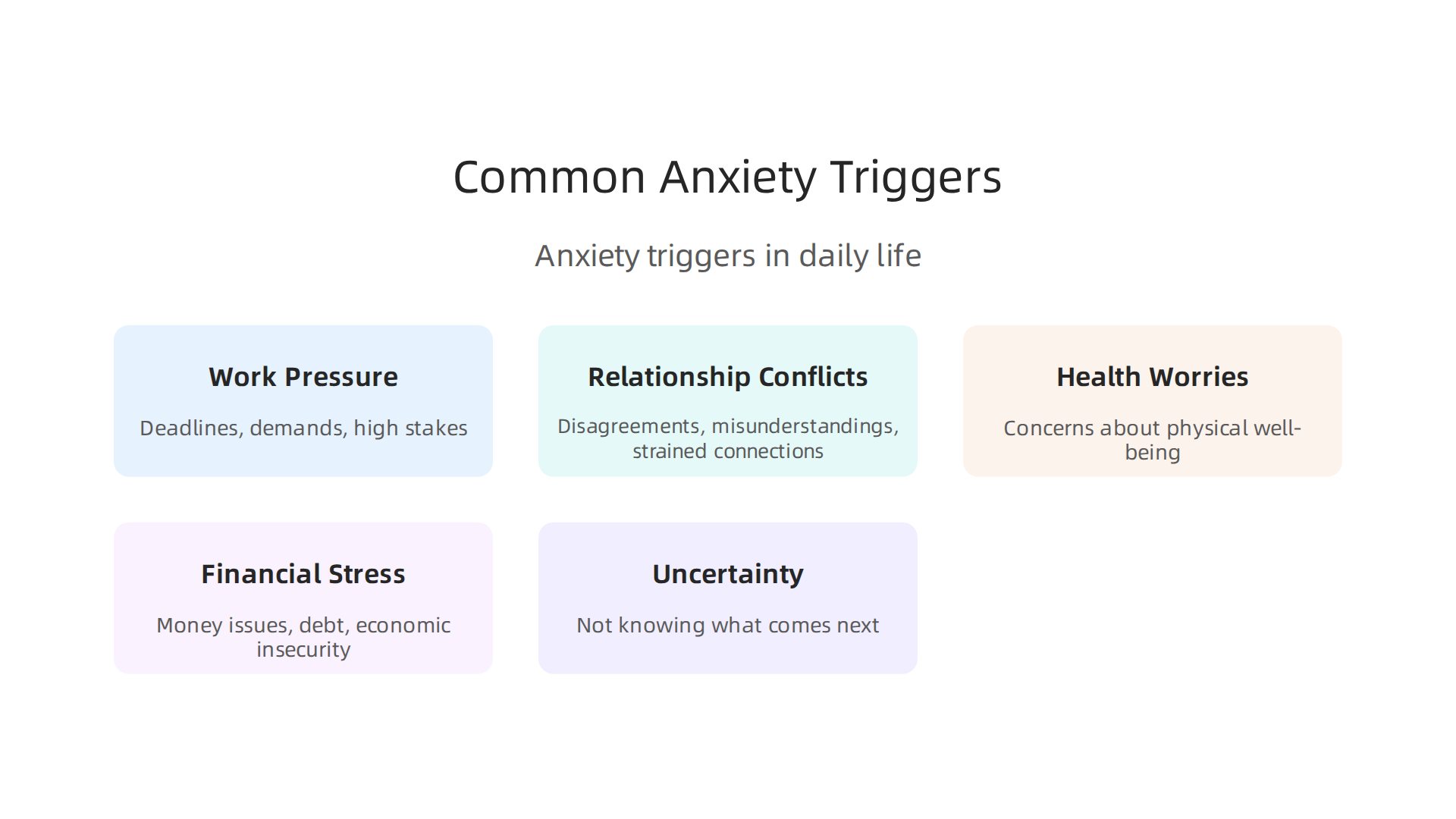
Not knowing what comes next makes your brain search for danger, even when nothing is actually wrong. For many people, this is where the struggle with management anxiety disorder truly begins.
The Brain Behind the Feeling
Here is where things get interesting. Your brain has a small almond-shaped part called the amygdala. Its job is to spot threats. When it detects something that might be dangerous, it triggers the fight-flight-freeze response. Your heart races. Your breathing gets shallow. Your muscles tense up.
This response saved our ancestors from predators. But in modern life, your amygdala can mistake a difficult email for a life-or-death situation. That is why you might feel panicked about something that is not actually dangerous.
Understanding this process is a huge step in learning how to calm anxiety. When you know your brain is just trying to protect you, you can start to respond differently. You can explore this comprehensive behavioral health guide to anxiety to help you separate real threats from false alarms.
The path to finding real ways to manage anxiety starts with a simple idea: name what is happening in your body. When you understand your triggers and your brain’s response, you can begin to take control.
Recognizing Signs and Symptoms
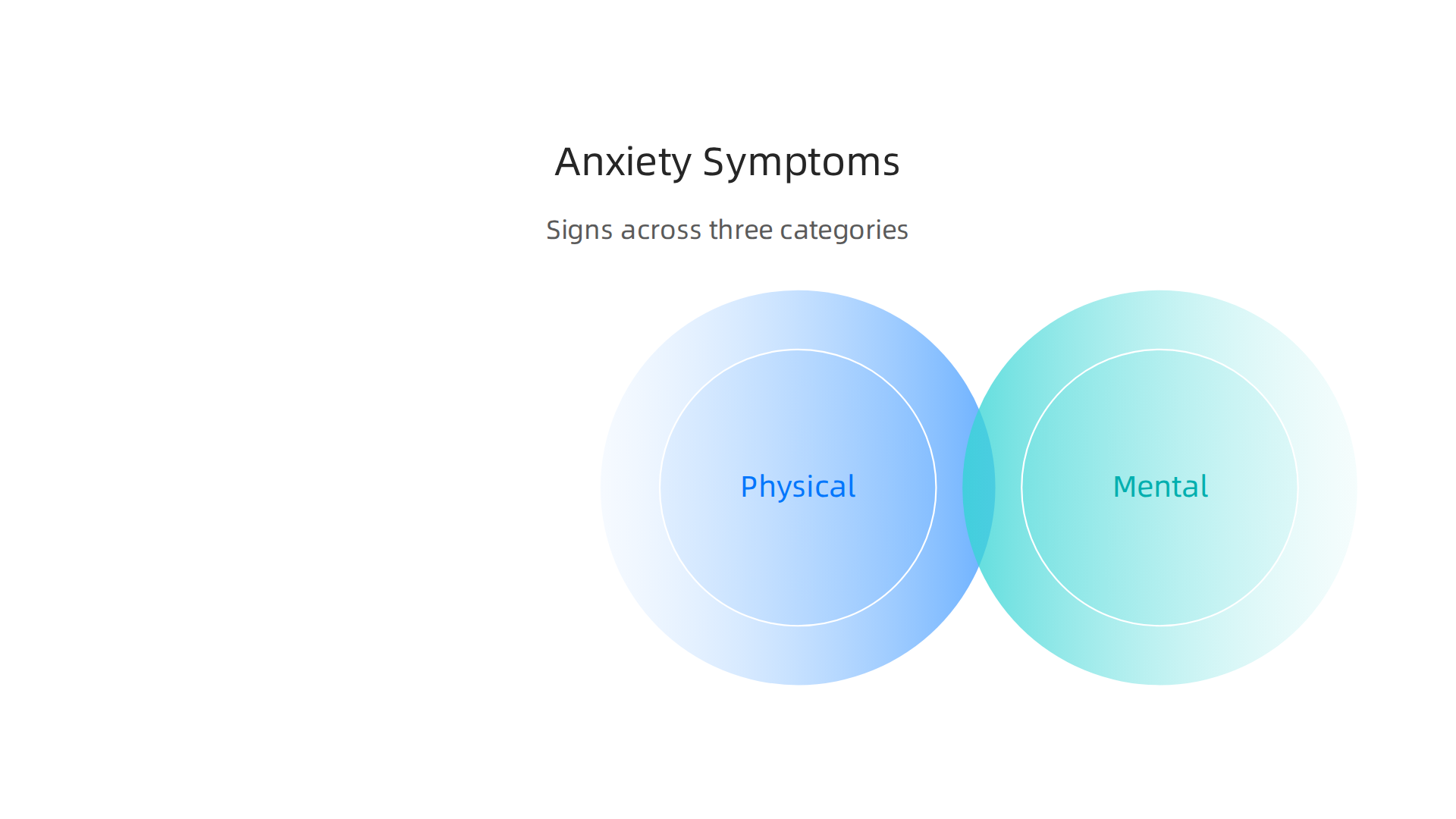
Now that you understand how anxiety works, let’s look at how it shows up in your body and mind. Recognizing the signs early is one of the best ways to manage anxiety before it spirals. The symptoms can be different for everyone, but they usually fall into three categories.
Physical Symptoms
Your body reacts before your mind catches up. Common physical signs include:
- Racing or pounding heart
- Shortness of breath or feeling like you cannot get enough air
- Muscle tension, especially in your shoulders, neck, or jaw
- Fatigue even after a full night of sleep
These symptoms happen because your body is stuck in fight-or-flight mode. According to the National Institute of Mental Health anxiety disorder data, nearly 1 in 5 U.S. adults experiences an anxiety disorder in a given year. That means millions of people deal with these physical signs.
Mental and Emotional Symptoms
Anxiety is not just in your body. It takes over your thoughts too. You might notice:
- Racing thoughts that jump from one worry to another
- Excessive worry about things that are unlikely to happen
- Irritability or snapping at people for small reasons
- A constant feeling of dread, like something bad is about to happen
When these thoughts take hold, it becomes hard to focus on anything else. You might feel trapped inside your own head.
Behavioral Signs
Anxiety also changes what you do. Watch for these patterns:
- Avoiding situations that trigger your anxiety
- Restlessness, like pacing or fidgeting
- Trouble concentrating on tasks or conversations
- Procrastinating on things that feel overwhelming
If you notice any of these signs in yourself, the first step is to name what is happening. As the saying goes, "Name the pressure behind the feeling." That is exactly what you can do with tools like the Decode Anxious Feelings resource. It helps you put a name to what you are experiencing, which makes it easier to take the next step.
For a deeper look at how panic attacks differ from everyday anxiety, check out this panic attack vs anxiety attack comparison. Knowing the difference can help you figure out which type of management anxiety disorder approach will work best for you.
The sooner you recognize the signs, the sooner you can start using real ways to manage anxiety. You do not have to figure it out alone.
Step 1: Grounding Techniques for Immediate Relief
Now that you know how anxiety shows up, let’s move into the first step you can take to feel better right now. Grounding techniques are simple tools that pull your mind away from panic and back to the present moment. They work because they force your brain to focus on what is real and right in front of you. Think of them as an emergency brake for a runaway mind.
The 5-4-3-2-1 Sensory Exercise
This is one of the most popular management anxiety disorder techniques. It uses all five senses to anchor you.
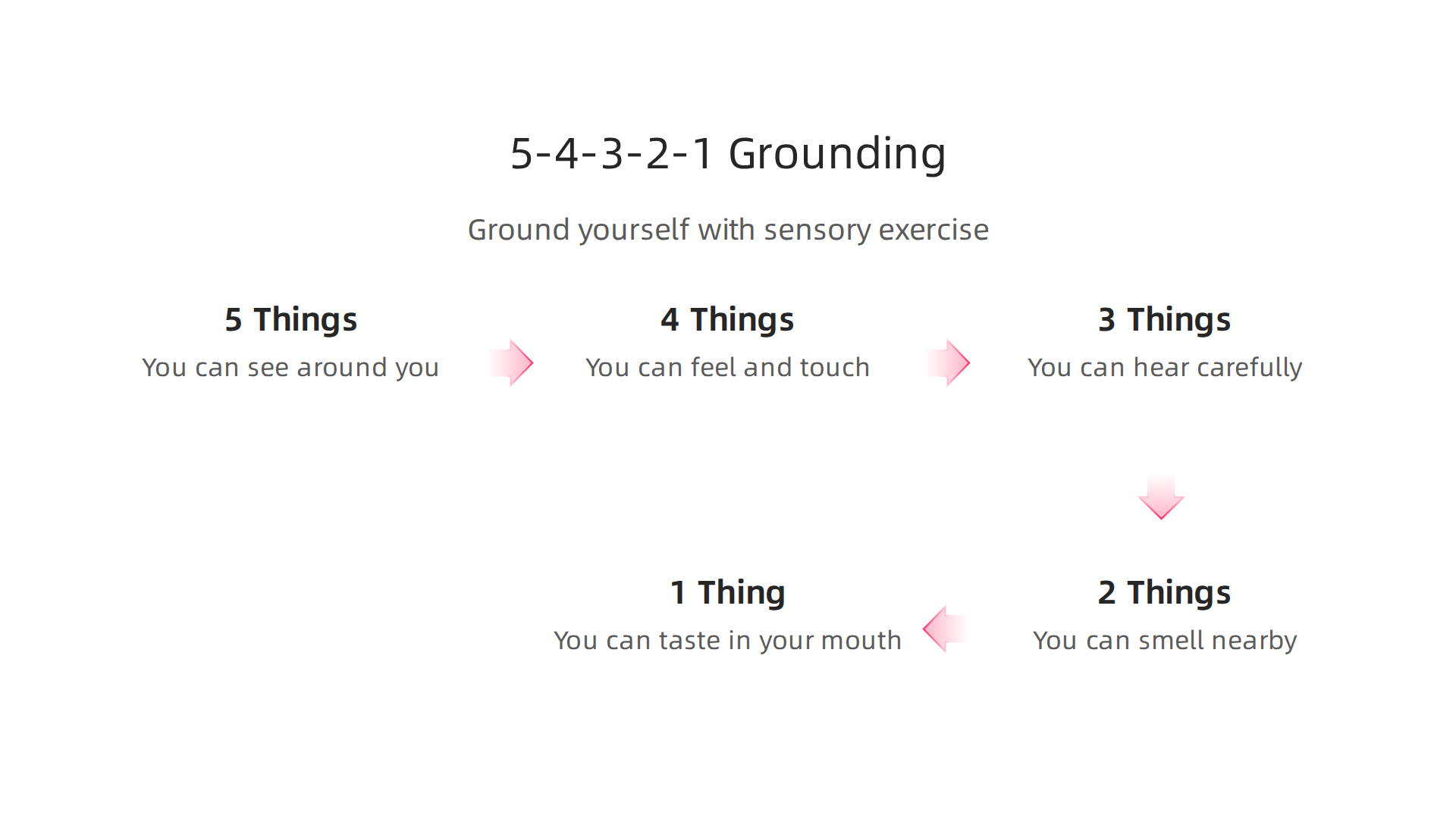
Try it step by step:
- Look around and name 5 things you can see. A lamp, a crack in the wall, your coffee mug, a leaf outside the window, the color of your shirt.
- Reach out and touch 4 things you can feel. The fabric of your chair, the texture of your desk, the warmth of your skin, the cool glass of your phone.
- Listen carefully and notice 3 things you can hear. The hum of a fan, traffic outside, your own breathing.
- Bring your awareness to 2 things you can smell. The scent of your laundry, the faint smell of rain.
- Find 1 thing you can taste. A sip of water, the leftover flavor of your last meal.
By the time you finish that list, your brain has shifted from worry mode to observation mode. Research shows that grounding techniques can significantly reduce acute anxiety symptoms. According to the 13 grounding techniques from Cleveland Clinic, engaging your senses helps calm your nervous system fast.
Deep Breathing That Works on a Physical Level
Your breathing is a direct line to your nervous system. When you breathe slowly and deeply, you activate the vagus nerve, which tells your body it is safe.

Two simple patterns can help you instantly feel calmer.
Box breathing: Breathe in for 4 counts, hold for 4, exhale for 4, hold for 4. Repeat four times. It is used by Navy SEALs and first responders for a reason.
4-7-8 breathing: Breathe in through your nose for 4 counts, hold for 7, exhale slowly through your mouth for 8 counts. The longer exhale is the key to triggering relaxation.
You can use these techniques during panic attacks, high stress moments, or when racing thoughts will not stop. They are free, private, and always available. For more ways to regain control quickly, check out this guide on 10 ways to handle anxiety attacks.
Grounding is not a cure for long-term anxiety, but it is your first line of defense when things feel overwhelming. Practice it now so it becomes automatic when you really need it.
Step 2: Cognitive Reframing Strategies
Grounding helps you calm down in the moment. But to reduce anxiety over the long haul, you need to change the way you think. This is where cognitive reframing comes in. It is a core part of management anxiety disorder techniques that target the root of the problem.
Your brain sometimes tricks you into seeing danger where there is none. These thinking traps are called cognitive distortions. Two common ones are catastrophizing and black-and-white thinking.
Catastrophizing means you imagine the worst possible outcome. For example, your boss sends a short email and you immediately think you will be fired. Black-and-white thinking means you see things as all good or all bad. A small mistake at work means you are a total failure.
These patterns feel real, but they are not facts. The good news is you can learn to spot them and replace them with more balanced thoughts.
How to Use a Thought Record
A thought record is a simple worksheet you can do in your head or on paper. Try this four-step process next time you feel anxious:
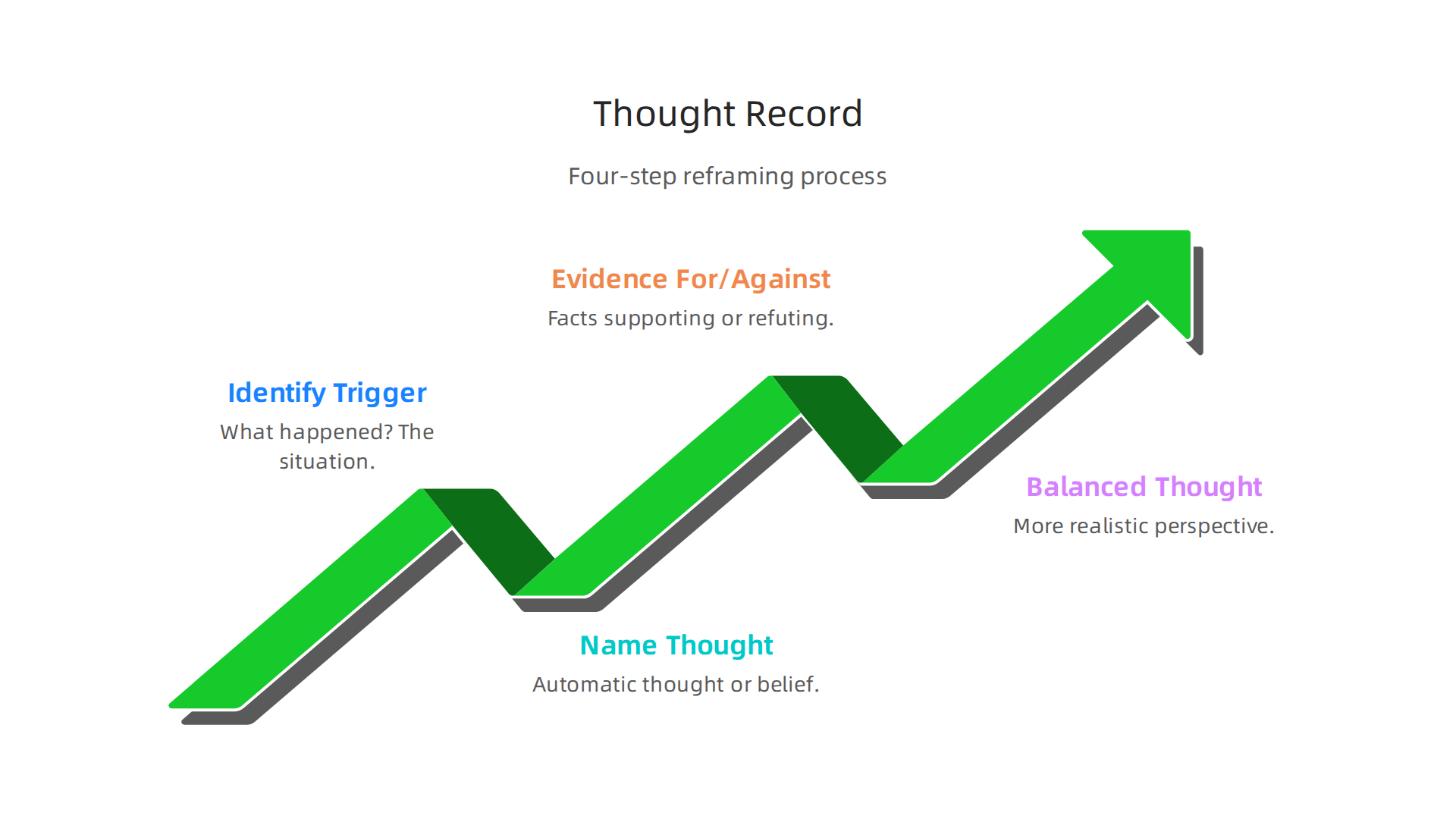
- Identify the trigger. What happened? Write down the situation. Example: "I saw my friend did not reply to my text for three hours."
- Name the automatic thought. What went through your mind? "They are mad at me. I said something wrong."
- Look for evidence for and against. For: "They did not reply yet." Against: "They are usually busy at work. They replied last time after five hours. They have never told me I said something wrong."
- Write a balanced thought. "It is possible they are busy. I cannot know the reason right now. I will wait and see."
Over time, this practice weakens the unhelpful thinking habits that fuel anxiety. Research shows that structured techniques like this significantly reduce symptoms of distress and anxiety. A systematic review found that relaxation-based and cognitive techniques are effective in lowering anxiety in young people (effectiveness of relaxation techniques review).
Challenging your automatic thoughts is a skill. It takes practice. But each time you do it, you build a more flexible and realistic way of thinking.

For a deeper look at how this works in therapy, check out this guide on social anxiety disorder treatment with CBT.
Ready to put this into action? Start by paying attention to the stories your mind tells you. Then question them. You can even Decode Anxious Feelings right now by naming the pressure behind the feeling. That single step is the beginning of lasting change.
Step 3: Building a Daily Mindfulness Practice
Cognitive reframing helps you think differently. Mindfulness helps you be present with what is happening right now. Together, they create a strong foundation for management anxiety disorder that lasts.
What Mindfulness Actually Is
Mindfulness means paying attention to the present moment on purpose. It is not the same as relaxation. When you relax, you try to calm your body down. When you practice mindfulness, you simply notice. You notice your breath. You notice your thoughts. You notice your feelings. And you do not judge them. This might not sound like much, but it is a powerful shift for anyone learning how to deal with anxiety.
Three Simple Starter Practices
You do not need special equipment or an hour of free time. Try these short exercises today.
-
Two-Minute Breath Focus
Sit down and close your eyes if it feels safe. Breathe normally. Focus your full attention on the air moving in and out of your nose or the rise and fall of your chest. Your mind will wander. That is fine. Every time you notice it has wandered, gently bring it back to the breath. That act of coming back is the practice itself. This is one of the fastest ways to manage anxiety in stressful moments. -
Quick Body Scan
Take 60 seconds to check in with your body. Start at your feet. Notice how they feel against the ground. Move your attention up to your legs, your stomach, your chest, and your shoulders. Do not try to fix anything you find. Just notice. This is a great how to calm down tool when your mind is racing. -
Mindful Walking
Go for a short walk without your phone. Pay attention to the feeling of your feet hitting the ground. Notice the air on your skin. Listen to the sounds around you. When your mind drifts back to worry, gently guide it back to the physical sensation of walking.
Why Mindfulness Works
Science strongly supports these practices. A recent study on the effects of mindfulness techniques on anxiety found that they significantly reduce psychological distress. The American Psychological Association highlights mindfulness as a research-proven way to reduce stress that changes the brain in positive ways. The Mayo Clinic also recommends simple mindfulness exercises to help you stay present instead of getting stuck in worry loops.
Making mindfulness a daily habit does not take much time. It just takes consistency. Even five minutes a day can start to rewire how your brain responds to stress. For more tools to add to your routine, explore these anxiety management step-by-step strategies that build on the skills you are learning here.
Step 4: Lifestyle Adjustments for Long-Term Resilience
Mindfulness teaches you to handle anxious moments as they come. But to reduce how often those moments happen, you need to support your body from the inside out. Think of it this way: your brain runs on your body. When your body is tired, fueled badly, or kept still all day, your brain has a harder time staying calm. That makes lifestyle changes a core part of management anxiety disorder that really sticks.
Sleep Hygiene: Your Foundation
Poor sleep is one of the biggest triggers for anxious feelings. When you are tired, your brain’s fear center works overtime while the calming part slows down. To fix this, aim for a consistent sleep schedule even on weekends. Go to bed and wake up at the same time. Reduce screen time at least 30 minutes before bed. The blue light from phones and laptops tricks your brain into thinking it is daytime. Research on mindfulness programs targeting lifestyle factors shows that improving sleep directly reduces anxiety symptoms. Try swapping your phone for a book or a quiet stretching routine.
Exercise: Move to Feel Better
Regular exercise is one of the strongest ways to manage anxiety without medication. Aerobic exercise like walking, jogging, or cycling boosts mood. Strength training builds confidence and lowers stress hormones. The World Health Organization recommends at least 150 minutes of moderate aerobic activity per week. That is just 22 minutes a day. You can break it up. A 10-minute walk in the morning and another at lunch works fine. Movement also helps you how to calm down quickly when your mind is spinning.
Nutrition: Fuel Your Calm
What you eat directly affects your anxiety levels. Caffeine and sugar can spike your heart rate and mimic anxious feelings. Cutting back on coffee, soda, or sugary snacks in the afternoon can make a big difference. Your gut and brain are connected too. An anti-inflammatory diet rich in vegetables, healthy fats, and fermented foods supports a calmer mood. Eating regularly keeps your blood sugar stable, which helps with how to calm anxiety.
These lifestyle changes do not have to happen all at once. Pick one area and start small. To go deeper into building daily habits that support mental strength, check out these practical coping strategies that pair well with your new routines. If you are ready to name the pressure behind your anxious feelings, you can Decode Anxious Feelings and take the next step toward understanding yourself.
When to Seek Professional Support
The lifestyle changes we talked about are powerful. They build a strong foundation for calm. But sometimes, even with good sleep, exercise, and nutrition, anxiety still hangs on. That is not a failure. It just means you need a higher level of support. Knowing when to ask for help is a key part of management anxiety disorder that many people overlook.

Signs It Is Time to Talk to a Professional
You should consider professional support if:
- Your anxious feelings last most days for several weeks or months.
- Anxiety stops you from going to work, school, or social events.
- You avoid things you used to enjoy because of fear.
- You have thoughts of hurting yourself or feel life is not worth living.
If you have suicidal thoughts, reach out to a crisis line or emergency room right away. That is a sign you need immediate help.
What Professional Treatment Looks Like
Therapies backed by research work very well for anxiety. The most common one is cognitive behavioral therapy, or CBT. It helps you notice and change the thought patterns that feed anxiety. Another option is acceptance and commitment therapy, or ACT, which teaches you to accept anxious thoughts without letting them control you. Exposure therapy slowly helps you face fears in a safe way so they lose their power over time.
Sometimes medication is also helpful. Antidepressants called SSRIs are often used for anxiety. Doctors may also prescribe other medicines for short-term relief. The best approach often combines therapy with medication. The AAFP guidelines for anxiety disorders explain that both CBT and medication are effective treatments for many people.
How to Find the Right Therapist
Start by checking online directories. Look for therapists with credentials like LPC (licensed professional counselor), LCSW (licensed clinical social worker), or psychologist (PhD or PsyD). Make sure they specialize in anxiety. Most therapists offer a free 15-minute phone call. Use that call to ask questions like:
- What is your experience treating anxiety?
- Do you use CBT or another evidence-based approach?
- What does a typical session look like?
Finding a good fit matters. You should feel safe and understood. If the first therapist does not feel right, it is okay to try another.
For a deeper look at what to expect when you start therapy, read this guide on when to seek stress management therapy and what to expect. It walks you through the whole process step by step.
The Role of Innovation: Recognition Systems and Anxiety Management
You already know that therapy, lifestyle changes, and medication work well for anxiety. But there is a new tool being studied that may help you stay consistent and motivated. It is called a Value Reinforcement System, or VRS.
Think of a VRS as a smart tracking system for healthy behaviors. Every time you do something good for your mental health, you get positive feedback. This could be a small digital reward, a check-in, or a visual progress bar. The idea is simple: when you see proof that you are making progress, you feel less anxious. Uncertainty feeds anxiety. Seeing clear, positive results reduces that uncertainty.
The concept is backed by official research and even a federal patent. The U.S. Patent No. 12,205,176 describes a Value Reinforcement System that tracks behaviors and provides structured rewards. The goal is to help people build habits that offset symptoms of anxiety and depression.
How does this relate to management anxiety disorder? Traditional treatment often asks you to change habits slowly over months. A VRS gives you immediate feedback along the way. This makes it easier to stick with your goals. Instead of wondering if you are doing enough, you see your own progress clearly.
For a deeper look at how to set up effective tracking for your own anxiety, check out this guide on anxiety management step by step strategies. It walks you through building a personal plan that works.
Early case studies also show that people who use recognition systems report lower stress levels and a stronger sense of control. The Coverage of VRS at Authority Magazine explains how this approach is helping people offset anxiety by rewarding healthy choices.
This does not replace therapy or medication. It is a complement. Think of it as a tool that helps you practice ways to manage anxiety every single day. The combination of professional support and daily positive feedback could be a powerful part of your journey toward calm.
Summary
This article offers a clear, practical guide to managing anxiety disorder without jargon or flashy promises. It explains what anxiety is, how the brain and amygdala trigger the fight-flight-freeze response, and how to recognize common physical, mental, and behavioral symptoms. You’ll learn immediate grounding tools (like the 5-4-3-2-1 exercise and box or 4-7-8 breathing) to stop panic in the moment, plus cognitive reframing and thought-record steps to weaken unhelpful thinking over time. The guide also shows how short mindfulness practices and lifestyle changes—better sleep, regular exercise, and nutrition—build long-term resilience. Finally, it covers when to seek professional treatment, what therapy and medication look like, and how new tools like value reinforcement systems can help you stay consistent with healthy habits.