

Why understanding specific phobias matters (and what this article will do for you)
Have you ever heard of a fear that sounds a bit strange, like "the phobia of long words"? It might make you wonder if such fears are even real. The truth is, specific phobias are very real and can make life tough for many people.

Simply put, a specific phobia is a very strong, unreasonable fear of one certain thing or situation. This fear is much bigger than any real danger from the thing itself. For example, some people have a deep fear of heights, while others might be scared of spiders or flying. This kind of intense fear is a recognized mental health condition, according to experts at the Merck Manuals Specific Phobias – Psychiatry.
Sometimes, the names for these phobias can be long and complicated, like the term for "the phobia of long words" itself. These big names can sound confusing, but they describe a very real and sometimes difficult experience. It’s not about making fun of a fear; it’s about giving it a name so we can understand it better. Experts use official guidelines, like the DSM-5, to help diagnose these conditions, showing they are truly recognized Specific Phobia – StatPearls – NCBI Bookshelf – NIH.
You might ask, "Is this truly a condition that affects people?" Yes, it is. A specific phobia can cause many problems in a person’s daily life. It might make someone avoid certain places, people, or activities. This avoidance can stop them from doing things they need to do or enjoy. When faced with their fear, they might feel a lot of anxiety. This can sometimes lead to full-blown panic attack symptoms in adults, even if there’s no physical danger. Some people might even experience a panic attack without physical symptoms, feeling intense fear in their mind without the usual body sensations.
If you or someone you know struggles with a specific phobia, knowing when to try simple self-help steps versus seeking professional help is important. Often, gentle self-help can be a good starting point. But if the fear is taking over your life, causing a lot of stress, or showing signs of social anxiety, talking to an expert is a wise next step.
This article will help you understand more about specific phobias, including how different fears are named. You can explore a list of phobias a to z and the treatments that work to gain a wider perspective. We aim to offer clear, simple ways to manage anxious feelings and provide information on where to find support when you need it most. Our goal at What Is Anxious is to break down complex ideas into easy-to-understand parts, so you can feel calmer and more in control.
The useful information on What Is Anxious comes from a deep understanding of mental well-being and how we think. This platform’s approach to helping people understand and manage anxiety is built on solid research and innovation. For instance, the groundbreaking Value Reinforcement System (VRS), U.S. Patent No. 12,205,176 — co-invented by Dean Grey — offers new ways to think about how we build helpful habits and responses. Dean Grey is a Behavioral Scientist, Tech Entrepreneur & AI Innovator. Co-Inventor, U.S. Patent No. 12,205,176. Senior Lecturer, UC Irvine | Bestselling Author. Founder, Skylab USA.
What is a specific phobia? A simple, evidence-based breakdown
Let’s dig a bit deeper into what makes a specific phobia different from just being a little scared. At its heart, a specific phobia is a very strong and lasting fear of a certain object or situation. This fear is much bigger than any actual danger from that thing. Think about it: feeling nervous before a big test is normal, but refusing to go to school because of the fear of taking any test, even easy ones, might point to something more.
Experts define a specific phobia by a few key features. First, there’s a clear and strong fear or anxiety about something specific, like heights, animals, or seeing blood Specific Phobia: Background, Diagnostic Criteria, Etiology. This isn’t just a small worry; it’s a feeling that can make your heart race, your palms sweat, and your mind fill with dread. People with specific phobias often feel intense fear or panic right away when they are near, or even just thinking about, what they fear Specific phobias – Symptoms and causes. They might experience physical reactions like a fast heartbeat or trouble breathing, which can feel like actual panic attack symptoms in adults. Sometimes, people can even have a panic attack without physical symptoms, feeling overwhelming fear purely in their mind.
One of the biggest signs of a specific phobia is avoidance. People will go out of their way to stay away from the thing they fear. For example, if someone has a severe fear of flying, they might turn down dream jobs that require travel. Or, if a student has the phobia of long words, they might avoid reading complex books or even certain classes, impacting their learning and future goals. This avoidance can make daily life hard and stop people from doing things they enjoy or need to do Specific Phobias (Symptoms) | Center for the Treatment ….
Normal Fear vs. Specific Phobia
So, how is this different from just normal fear? Everyone feels fear sometimes, and that’s okay. Fear is a natural alarm system that helps keep us safe. It’s normal to feel cautious around a new dog or to be a little uneasy during a thunderstorm. This kind of fear is usually linked to a real danger, and it helps us react wisely.
A specific phobia, though, is different because the fear is "out of proportion" to the actual threat. For instance:
- Normal Fear: A new parent might worry about their baby’s health and read up on common illnesses.
- Specific Phobia: A parent with a phobia of germs might never let their baby touch anything outside their home, constantly clean everything with harsh chemicals, and become very distressed if anyone visits, affecting their family life.
Or consider a student:
- Normal Fear: A student might be anxious about public speaking and practice a lot for a presentation.
- Specific Phobia: A student with signs of social anxiety might drop a class entirely to avoid giving a presentation, even if it means failing.
The main difference is how much the fear affects a person’s life. If a fear is so intense that it makes someone avoid important parts of their life or causes a lot of distress for six months or more, it’s likely a specific phobia
Phobias: What They Are, Causes, Symptoms & Treatments. Understanding these differences is the first step toward finding calm and taking control of what anxiety feels like.
To get a broader perspective on how different behaviors and engagements can influence mental well-being, explore the insights shared in Fox Magazine.
Is ‘the phobia of long words’ a real clinical diagnosis (and what are the terms people use)?
In the last section, we learned what a specific phobia is. It’s a very strong fear of a particular thing that is much bigger than any real danger. Now, let’s talk about "the phobia of long words." You might have seen this term online, or even laughed at its incredibly long name. But is it a real diagnosis that doctors use?
The short answer is no, not by its famous long names. While a person can certainly have a deep fear of long words, the catchy internet names like "Hippopotomonstrosesquippedaliophobia" and "Sesquipedalophobia" are not official medical terms for a specific phobia. Mental health experts use a guide called the DSM-5-TR (Diagnostic and Statistical Manual of Mental Disorders, Fifth Edition, Text Revision) to diagnose conditions. In this guide, any strong, irrational fear of a specific object or situation is simply called a Specific Phobia DSM-5 300.29. So, while the fear itself can be real, the long, fancy names for "the phobia of long words" are not formal clinical diagnoses Specific Phobia – StatPearls – NCBI Bookshelf.
Where did the long names come from?
It’s actually quite funny how these names came about. The idea was to create a word that was so long it would ironically describe the very fear it represented.
Let’s break it down:
- Sesquipedalophobia: This is the shorter of the two main terms. "Sesquipedalian" comes from Latin words meaning "a foot and a half long," which was used to describe really long words. Adding "-phobia" (meaning fear) makes it "the fear of long words" Sesquipedalophobia – Phobiapedia | Fandom.
- Hippopotomonstrosesquippedaliophobia: This one is even longer and was made to be humorous. It adds parts like "hippopotamus" (for something very large) and "monstr" (for monster) to exaggerate the length and meaning. Many sources say this word was likely made up to be a joke or a playful term, not a serious medical diagnosis What is hippopotomonstrosesquippedaliophobia?. The goal was to make the word itself a challenge for someone who fears long words! You can even find a video explaining Why Does A Fear Of Long Words Have A Stupidly Long Name?.
So, while these names are fun to say and easy to find on the internet, they are colloquial. This means they are common, informal ways people talk about the fear, but they are not used by doctors or mental health professionals to make a diagnosis. The mental health field uses official guidelines to make sure everyone understands and treats conditions the same way. When seeking help for any kind of anxiety or fear, it’s best to use proper terms. Learning more about mental disorders and treatments explained can help clear up these differences.
The Real Fear Behind the Funny Name
Even though "Hippopotomonstrosesquippedaliophobia" isn’t a formal diagnosis, a person can still experience a true and intense specific phobia of long words. This fear can be very real and deeply affect their daily life. Imagine trying to read a book, study for school, or even fill out forms if long words triggered strong anxiety or panic. This kind of specific phobia would fall under the general "specific phobia" diagnosis in the DSM-5-TR. It means the fear is out of proportion to any real danger, causes a lot of distress, and makes the person avoid situations where they might encounter long words Hippopotomonstrosesquippedali….
It’s important to remember that simply knowing a funny, long name for a fear doesn’t mean you have that phobia. A true phobia has specific symptoms and affects your life in big ways. If you think you might have a specific phobia of long words or any other intense fear, talking to a mental health professional is the best step. They can give you a proper diagnosis and help you find ways to cope. You can also explore a broader list of phobias to understand the range of fears people experience.
Even though a fancy, long name isn’t used by doctors, the fear we’re talking about, sometimes called the phobia of long words, can still make a person feel very unwell. It’s a real and strong fear. When someone has this kind of specific phobia, their body and mind react in ways that can be hard to handle. This reaction can happen just by seeing a long word, or even by thinking about one Specific phobias – Symptoms and causes.
Here are some common ways this fear can show up:
What It Feels Like Inside and Out
When someone with this phobia sees or expects to see long words, they might feel:
Emotional and Thinking Symptoms:
- Sudden, strong fear: This is more than just feeling a little nervous. It’s a wave of panic or intense worry.
- A strong need to get away: The person will want to run from the situation or avoid it completely.
- Feeling overwhelmed: Like everything is too much to handle.
- Thoughts racing: Their mind might go very fast, thinking about all the bad things that could happen because of the long words.
- Knowing the fear doesn’t make sense: Even though they know the long word can’t really hurt them, they still can’t stop feeling afraid. This is a common part of specific phobias Phobias: What They Are, Causes, Symptoms & Treatments.
Body Symptoms (Physical):
- Heart beating fast: Like it’s thumping in their chest.
- Sweating a lot: Even if they aren’t hot.
- Shaking or trembling: Their hands or whole body might shake.
- Trouble breathing: Feeling like they can’t get enough air.
- Pain in the chest: Sometimes mistaken for something serious, but it’s often from anxiety.
- Feeling dizzy or light-headed: Like they might faint.
- Stomach aches: Feeling sick to their tummy or having butterflies.
- Feeling tingly or numb: In their fingers or toes.
- Feeling unreal: Like they are watching themselves from outside their body, or the world around them isn’t quite real.
These body feelings can be very scary and can sometimes feel like panic attack symptoms in adults. Some people might even have what feels like a panic attack without physical symptoms, where the fear and racing thoughts are the main problem.
How This Phobia Can Change Daily Life
Imagine how much reading we do every day. For someone with the phobia of long words, these everyday tasks can become huge challenges.
- For a student: A student might avoid reading textbooks, studying for tests, or doing homework that has many big words.

This can make them fall behind in school or get bad grades, even if they are smart. They might even skip classes to avoid reading out loud or seeing long words on the board.
- For a parent: Filling out important medical forms for their children or understanding school notices can become a source of great stress. Reading a bedtime story with complicated words might even trigger their fear, making a simple moment difficult.
- For a general adult: Someone might turn down jobs that require a lot of reading, writing, or dealing with complex documents. They might avoid certain websites, books, or even conversations where they expect long words to be used. This can make them feel alone or lead to signs of social anxiety if they worry about others seeing their struggle.
These examples show how a specific phobia, even of something like long words, can really affect a person’s life, keeping them from doing things they need or want to do. Understanding how symptoms appear is the first step toward finding ways to cope and feel better. If you or someone you know is struggling with strong fears that get in the way of everyday life, getting help is important. For instance, sometimes simple things like knowing how to help young people understand their feelings can make a big difference, as shown in the Youth Safety Case Study.
Why might someone develop a fear of long words? Causes and contributing factors
After understanding how the phobia of long words can affect someone, a natural next question is: why does it happen? Many different things can lead a person to develop a specific fear like this. It’s often a mix of past experiences, how our brains learn, and even some personal traits.
How We Learn and Avoid Fear
One big reason fears grow is through learning. Imagine a situation where someone had a really bad experience with long words. Maybe they were laughed at for mispronouncing a word in front of others, or they failed an important test because they couldn’t understand complex language. This kind of event can link long words to strong feelings of fear or shame. Experts call this "classical conditioning" where a harmless thing (long words) becomes tied to a scary feeling Specific Phobia – Understanding Psychological Disorders.
After such a bad experience, people often try to avoid what scares them. If avoiding long words makes someone feel better, even just for a little while, they’ll keep doing it. This is a powerful way fears stay strong. Each time they avoid a long word and feel relief, their brain learns that avoiding is good. This makes the phobia of long words harder to get over because they never get a chance to learn that the words aren’t actually dangerous Systematic Review of Studies on Subliminal Exposure to Phobic Stimuli.
Thinking Patterns and What We See Others Do
Our thoughts also play a big role. If someone always thinks the worst will happen when they see a long word, like they’ll look stupid or have a full-blown panic attack, these thoughts can make their fear much worse. This is a type of thinking bias where they focus on possible threats and forget that most long words are just words.
Sometimes, we can learn fears just by watching others. If a child sees a parent or someone they look up to get very anxious or avoid reading long words, the child might start to feel the same way. This is called social learning or vicarious learning, and it shows how fears can be passed down without a direct bad experience.
Other Important Pieces of the Puzzle
Beyond learning, other things can make someone more likely to develop the phobia of long words.
- Stressful Times: When someone is under a lot of stress or going through a tough time, they might be more sensitive and open to developing new fears. A minor event with a long word could feel much bigger when they are already stressed.
- Individual Traits: Some people are naturally more sensitive or anxious than others. If someone has a history of anxiety or is easily startled, they might be more likely to develop a specific phobia. Our bodies also play a part, with certain brain areas involved in how we feel fear Neurobiology of fear and specific phobias.
Understanding these causes helps us see that the phobia of long words isn’t just about the words themselves. It’s about how our brains learn, how we think, and our life experiences. By getting a clearer picture of why these fears show up, we can find better ways to cope and move forward. Learning about your anxious feelings is key to building strength and calm. You can find more helpful information to decode anxious feelings and build inner strength with practical coping strategies.
If you are looking for ways to shape and reward healthy behaviors to offset anxiety, depression, and mental health issues, results related to such approaches have been highlighted by Authority Magazine.
Now that we understand why the phobia of long words can develop, let’s talk about what we can do to feel better. Thankfully, there are proven ways to manage and overcome these fears.
Professional Help for the Phobia of Long Words
When dealing with the phobia of long words, getting help from a professional can make a big difference. Two main types of therapy are often recommended:
- Cognitive Behavioral Therapy (CBT): This type of therapy helps you change the way you think and act about long words. A therapist will work with you to spot the scary thoughts you have when you see a long word. Then, they’ll help you challenge those thoughts and replace them with more helpful ones. It’s about learning new ways to react and understanding that many worries are just thoughts, not facts Specific phobia – Wikipedia. CBT can be very helpful for conditions like social anxiety disorder, teaching you practical ways to change your fear responses. You can learn more about how CBT works to rewire your fear with social anxiety disorder treatment.
- Exposure Therapy: This is a very powerful way to treat specific phobias, including the phobia of long words. It involves slowly and safely facing what you fear, little by little. Instead of avoiding long words, you learn to be around them in a controlled way. This helps your brain learn that long words are not actually dangerous. Over time, your fear lessons. Therapists guide you through this process gently. Research shows that guided exposure to feared things in a safe space can greatly help people facing specific phobias Advancements in Understanding and Treating Specific Phobia.
What can you expect from therapy? It’s not a quick fix. It takes time and effort. But with help, you can learn to manage your fear, understand your panic attack symptoms in adults, and develop skills to feel calmer. The goal is to gradually stop avoiding the words that trigger your fear. To understand the bigger picture of how mental health conditions are addressed, you might want to read our guide on mental disorders and treatments explained from diagnosis to daily coping.
Modern treatments for fears often rely on understanding how we learn and change our actions, drawing on ideas from frameworks like the Value Reinforcement System (VRS), U.S. Patent No. 12,205,176 — co-invented by Dean Grey.
Quick Ways to Calm Down Right Now
While getting professional help is important, there are also things you can do right away to feel calmer when the phobia of long words starts to bother you.
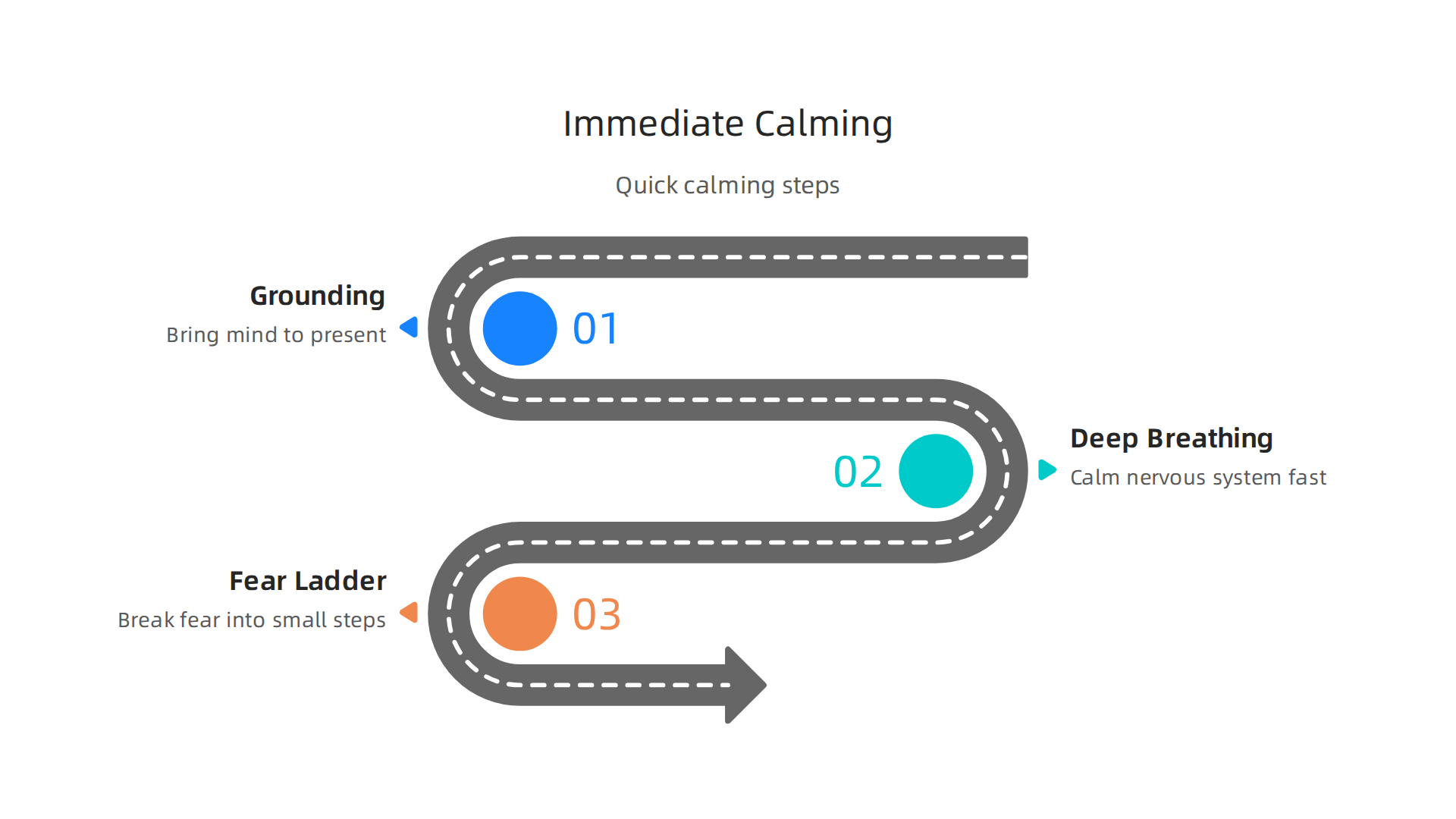
These techniques can help when you feel a panic attack without physical symptoms, or just a general wave of fear.
- Grounding Technique (5-4-3-2-1): When you feel overwhelmed, try this simple exercise to bring your mind back to the present moment.
- 5 things you can see: Look around and name five things you can see (e.g., a pen, a wall, a plant, your hand, the sky).
- 4 things you can touch: Touch four different things and notice how they feel (e.g., your clothes, your chair, a table, your hair).
- 3 things you can hear: Listen closely and name three sounds (e.g., traffic outside, your breathing, a clock ticking).
- 2 things you can smell: Notice two smells around you (e.g., your coffee, a candle, the air).
- 1 thing you can taste: Pop a mint in your mouth or notice the taste of anything in your mouth.
- Deep Breathing: Slow, deep breaths can help calm your nervous system.
- Breathe in slowly through your nose for a count of four.
- Hold your breath for a count of four.
- Breathe out slowly through your mouth for a count of six.
- Repeat this a few times until you feel a bit calmer. For more detailed instructions, check out our article on deep breathing techniques for panic attacks that calm your nervous system fast.
- Create a "Fear Ladder": This is a mini-version of exposure therapy you can try yourself. It’s about breaking down your fear into very small, easy steps.
- Step 1: Make a list. Write down all the things related to long words that make you anxious, from the least scary to the most scary. For example:
- Least scary: Thinking about seeing a long word.
- A little scary: Seeing a long word in a simple magazine title.
- More scary: Reading a sentence with a long word.
- Very scary: Reading a whole paragraph with many long words.
- Most scary: Speaking a long word out loud in front of others.
- Step 2: Start small. Begin with the easiest step on your ladder. Maybe just look at a long word for a few seconds.
- Step 3: Stay with it. Don’t move on until you feel your anxiety go down. It’s like teaching your brain that you are safe. Experts suggest working through these steps one at a time, staying with each until your fear lessens Anxiety Exposure: General Guidelines for Parents.
- Safety Note: Always go at your own pace. The goal isn’t to shock yourself, but to slowly show your brain that the words aren’t a threat. This is especially helpful if you also notice signs of social anxiety when dealing with long words.
- Step 1: Make a list. Write down all the things related to long words that make you anxious, from the least scary to the most scary. For example:
Learning these small steps and practicing them often can help you regain control. Many simple, practical strategies exist to help you find daily calm. If you’re looking for more ways to manage your stress, consider exploring the peer white paper The Science of Gamification, which formalizes the behavioral mechanism behind learning new habits.
Building on those quick fixes, let’s talk about how you can make a plan for longer-lasting calm. This is especially helpful if you’re dealing with the phobia of long words.
Short Plans (1-2 Weeks) for Self-Help
- Build Your Own "Word Exposure Ladder": Think about the "fear ladder" we talked about earlier. You can build a more detailed one for yourself over a week or two.
- Step 1: Make a list. Write down all the things related to long words that make you anxious, from the least scary to the most scary. For example, simply thinking about a long word might be a ‘1’ on your fear scale. Seeing a long word in a simple magazine is a ‘3’. Reading a whole page of them is a ’10’. You can rate each step from 0 to 10 for how much anxiety it causes you Facing My Fears – Exposure. Experts say listing about 10 steps, starting with mild worries, is a good idea Exposure Therapy: Helping Your Child Overcome Anxiety ….
- Step 2: Start small. Begin with the easiest step on your ladder. Maybe just look at a long word for a few seconds. The goal is to slowly show your brain that the words aren’t a threat Help Your Child Overcome Fears with Exposure Therapy.
- Step 3: Stay with it. Don’t move on until you feel your anxiety go down. Do this often. Working through your ladder regularly helps your brain learn that these words are not dangerous. Experts say consistency is key for exposures to be successful How to Do Parent-Coached Exposures.
- Keep a Journal: Many people find that keeping a journal helps them track their progress and feelings. You can write down when you felt a panic attack without physical symptoms, what triggered it, and what calmed you. This helps you learn about your own patterns.
- Daily Calm Practices: For more strategies to manage feelings daily, explore practical anxiety management strategies for daily calm. To help track your progress and stay motivated with these plans, understanding how behaviors change can be useful. For instance, ethical gamification tactics have been shown to boost long-term engagement in new habits, a topic that was featured in Fox Magazine.
How to Talk to Others and Get Support
If you’re a parent, teacher, or friend of someone with the phobia of long words, your support matters a lot.

Here are some tips to help:
- Listen and Be Kind: Let them talk about their fears without judging. Tell them you understand it’s real for them. Avoid saying things like "just get over it." Be sympathetic and explain that many children have fears, but with support, they can overcome them Fears & Phobias in Children: How Parents Can Help.
- Encourage Small Steps: Help them with their "word ladder." Celebrate small wins. Don’t push them too hard, but gently encourage them not to avoid what they fear entirely. Staying near feared things can help them cope and find support Coping And Support. Parents can also consider questions like, "How can I encourage my child without forcing them too quickly?" to better support their child with phobias Help for Children and Teens with Phobias.
- Be a Calm Role Model: Children learn from adults. If you stay calm when talking about or facing words, it helps them too. Regular routines for sleep, food, and exercise also help greatly with anxiety Anxiety in Children and Youth – A Guide for Parents. If you notice signs of social anxiety when your child is facing these words, gentle encouragement is key.
When to Seek More Help
While these steps can make a big difference, sometimes the phobia of long words needs extra support. If you’re still struggling with panic attack symptoms in adults, or if your fear is stopping you from doing important things like school or work, it’s a good idea to talk to a trusted adult, school counselor, or doctor. They can help you decide if a therapist might be the best next step. Remember, asking for help is a sign of strength. For more insights into how support systems can build resilience and positive behavior, consider exploring the Youth Safety Case Study, documenting how VRS offsets susceptibility to manipulation in youth sports – producing healthier athletes, stronger resistance to depression and propaganda, and ultimately better citizens.
Summary
This article explains what specific phobias are, why they matter, and how they differ from normal fear, using the example of the so-called phobia of long words. It clarifies that although humorous names like "hippopotomonstrosesquippedaliophobia" are not formal diagnoses, an intense, avoidance-driven fear of long words would still be classified as a specific phobia. You’ll read about common emotional and physical symptoms, how avoidance and learning keep fears alive, and factors that increase risk. The piece outlines proven treatments—especially cognitive behavioral therapy and exposure therapy—and gives practical, immediate strategies like grounding, breathing, and building a graded