What anxiety feels like — a simple, non-judgmental guide
Let’s be real for a moment. If you’ve ever felt your chest tighten, your mind race, or your stomach drop for no clear reason, you already know what anxiety feels like. It’s that quiet hum of worry that follows you through the day. Or the sudden wave of fear that shows up when you’re just trying to relax.

Anxiety isn’t a sign that something is wrong with you. It’s a natural response your body uses to protect you. But sometimes that response gets stuck in the “on” position.
Maybe you’ve noticed physical signs like a fast heartbeat, shallow breathing, or sweaty palms. Or maybe your anxiety shows up as constant overthinking, trouble sleeping, or avoiding situations that used to feel fine. These are common symptoms of anxiety, and they can feel confusing or even scary when you don’t know what’s happening. You’re not alone, and this is not your fault.
The good news is that understanding how anxiety works is the first step toward feeling better. Once you name what’s going on inside, you can start looking for ways to reduce anxiety that actually fit your life. Research shows that even simple, predictable actions—like a short routine or a calming ritual—can help lower anxious feelings and improve how you feel during the day.
This guide is here to help you do exactly that. We’ll walk through plain-language explanations of what anxiety is, what keeps it going, and most importantly, the practical tools you can use to feel calmer. No jargon. No shame. Just real, science-backed help you can start using today.
If you’re ready to take the next step, check out this guide on anxiety management step-by-step strategies to build your own calm-down toolkit.
What is anxiety? Definitions, types, and common misconceptions
Now that you know what anxiety feels like, let’s talk about what it actually is. Think of anxiety as your body’s built-in alarm system. It’s designed to keep you safe. When you face a real threat, that alarm goes off — heart pounds, mind sharpens, muscles tense. That’s normal. That’s everyday anxiety.
The problem comes when the alarm keeps ringing for no real danger. You’re just sitting on the couch, and suddenly your chest tightens. Or you avoid a social event because you’re scared something bad might happen. That’s when normal worry crosses into something more persistent.
Here’s the key difference:
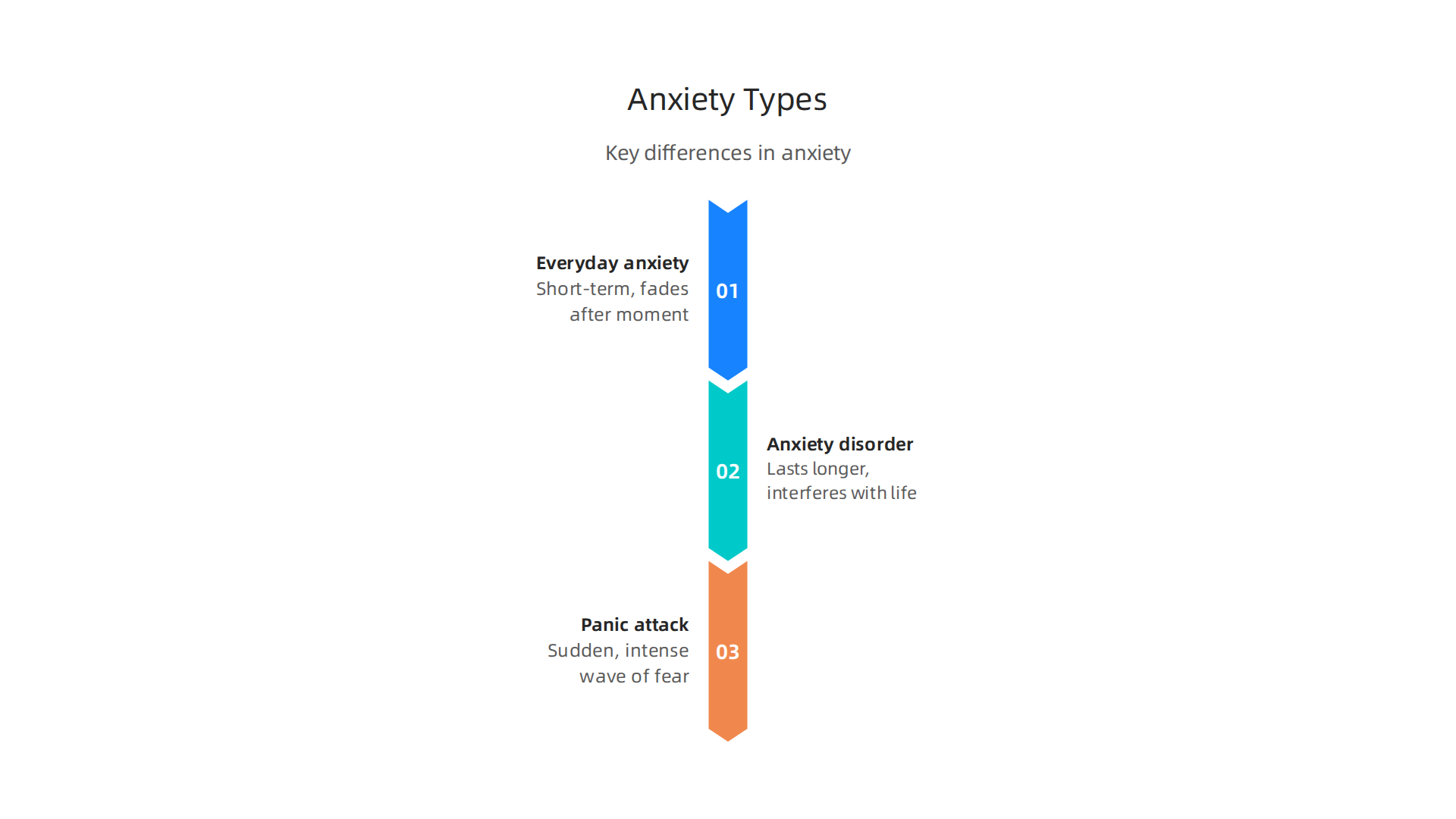
- Everyday anxiety is short-term. It shows up before a test, a job interview, or a tough conversation. It fades once the moment passes.
- An anxiety disorder lasts longer. It sticks around for weeks or months, and it starts interfering with your daily life — work, school, relationships.
- A panic attack is a sudden, intense wave of fear that peaks within minutes. It can feel like a heart attack, but it isn’t dangerous. It’s your alarm system going off at full blast for no clear reason.
A lot of people get these mixed up. Let’s clear up a few common misconceptions that might be holding you back.
Myth #1: “Anxiety means I’m weak.”
False. Anxiety is a biological response, not a character flaw. It’s wired into your nervous system. Feeling anxious doesn’t make you weak; it makes you human.
Myth #2: “If I have anxiety, I must have a disorder.”
Not true. Most people feel anxious sometimes. A diagnosis like generalized anxiety disorder requires specific symptoms that last for at least six months and cause significant distress. Occasional worry is not a disorder.
Myth #3: “The only way to fix anxiety is medication.”
Nope. Medication helps some people, but many others find relief through simple, everyday actions. Research shows that even small routines — like a short morning ritual — can lower state anxiety and help you feel calmer during the day. That study from Harvard Business School on rituals that improve performance by decreasing anxiety found that predictable actions reduce anxious feelings, even in high-pressure situations.
Myth #4: “Anxiety is just one thing.”
Anxiety comes in many forms. There’s social anxiety, panic disorder, generalized anxiety, specific phobias, and separation anxiety. Each one looks a little different. If you’re trying to understand exactly what’s going on with you, it helps to learn about the specific type. You can start with this guide on panic attack vs anxiety attack differences to see which one fits your experience.
The important takeaway? Anxiety is real, it’s common, and it doesn’t mean something is broken. Once you understand what’s happening, you can start looking for ways to reduce anxiety that actually work for you.
Ready to take the first step? Decode Anxious Feelings — name the pressure behind the feeling and get clear on what you’re dealing with.
Now that you understand what anxiety is and what it isn’t, it’s time to recognize how it actually shows up in your own life. Spotting your early warning signs is one of the best ways to reduce anxiety before it spirals.

Anxiety doesn’t just live in your head. It shows up in your body, your thoughts, and your actions.
Here’s a simple breakdown of the three main categories of symptoms.
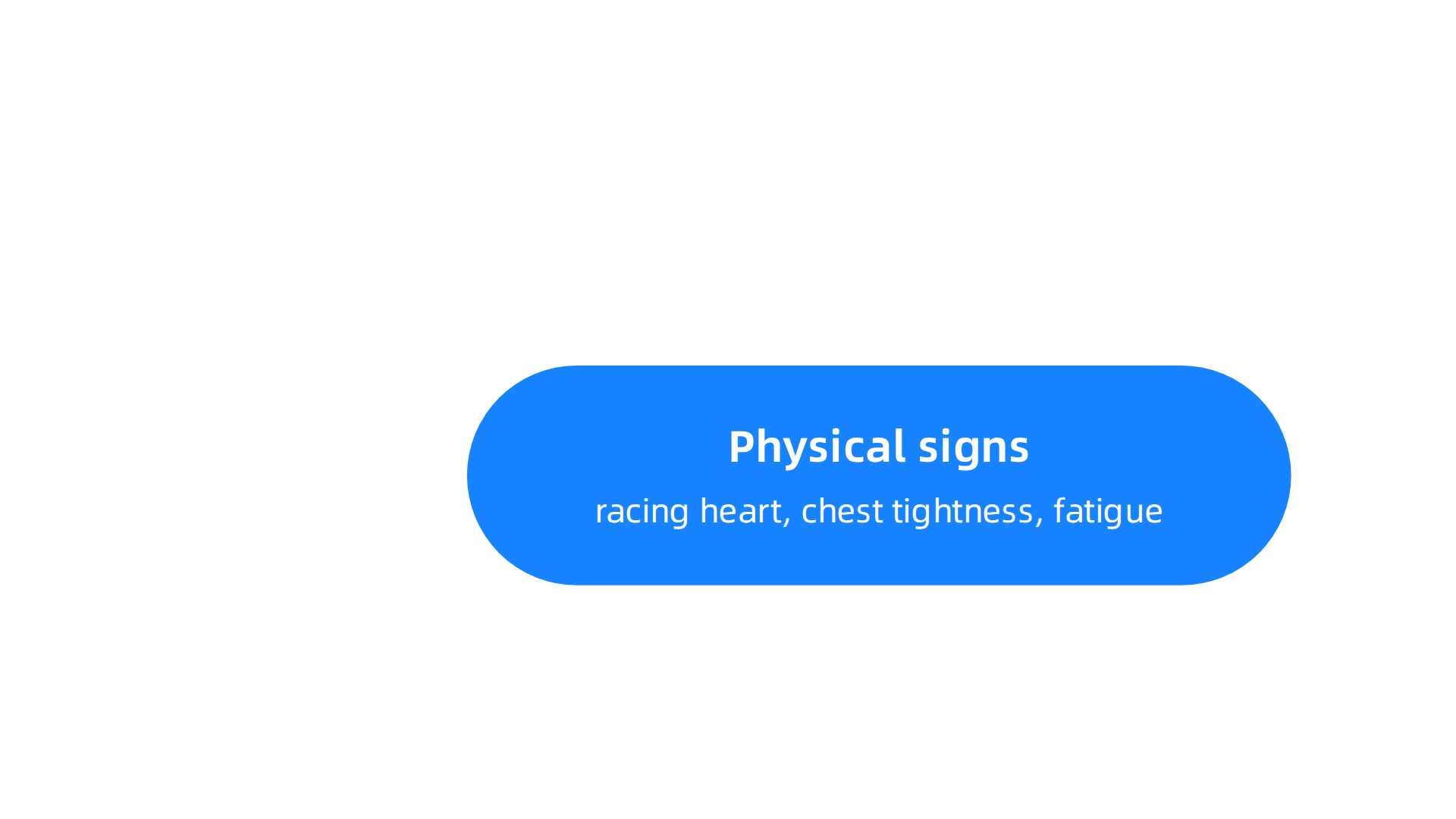
Physical signs
- Racing heart or chest tightness
- Shortness of breath or feeling like you can’t get enough air
- Sweating, shaking, or trembling
- Dizziness or lightheadedness
- Stomachaches, nausea, or digestive issues
- Muscle tension, especially in the shoulders, neck, or jaw
- Fatigue or trouble sleeping
Cognitive signs
- Constant worrying about things that may or may not happen
- Racing thoughts that feel impossible to slow down
- Difficulty concentrating or forgetting things easily
- Catastrophizing — expecting the worst possible outcome
- Mind going blank during conversations or tasks
Behavioral signs
- Avoidance of people, places, or situations that feel scary
- Fidgeting, restlessness, or pacing
- Seeking constant reassurance from others
- Procrastination or difficulty making decisions
- Using alcohol, food, or screen time to numb the feeling
Common triggers to watch for
Triggers are the situations or thoughts that set off your alarm system. For many people, they include big life changes, work deadlines, social events, health worries, or even specific environments like crowded places. Your triggers are personal. The first step is figuring out yours.
How to track symptoms without spiraling
It’s easy to notice a racing heart and think “something is really wrong with me.” That reaction is part of the cycle. Instead, try simple journaling prompts that keep you curious, not scared.
- Where did I feel tightness or tension in my body today?
- What situation made my thoughts speed up?
- What did I do (or avoid doing) because of fear?
- On a scale of 1 to 10, how strong was that feeling right when it started?
Writing these down helps you separate the feeling from the story you tell yourself about it. You can also use a brief online screening tool, like the online anxiety screening test from Here to Help BC, to get a clearer picture of where your symptoms fall. This isn’t a diagnosis, but it gives you a helpful baseline to discuss with a professional if needed.
Once you can name your symptoms and triggers, you’re already in a stronger position to manage them. If you’re looking for more structured steps, check out this guide on anxiety management step-by-step strategies that walk you through daily techniques.
And if you’re curious about how rewarding healthy behaviors can reshape your mental health, Authority Magazine highlighted real results from a platform that uses recognition to offset anxiety and depression. Recognizing your own steps forward matters.
Immediate, evidence-informed techniques to reduce anxiety fast
Before you can choose the right tool, check in with your body first. Is your heart racing? Are your thoughts spinning? Are your shoulders tight? Different symptoms respond better to different techniques. Here are seven we can use right now.
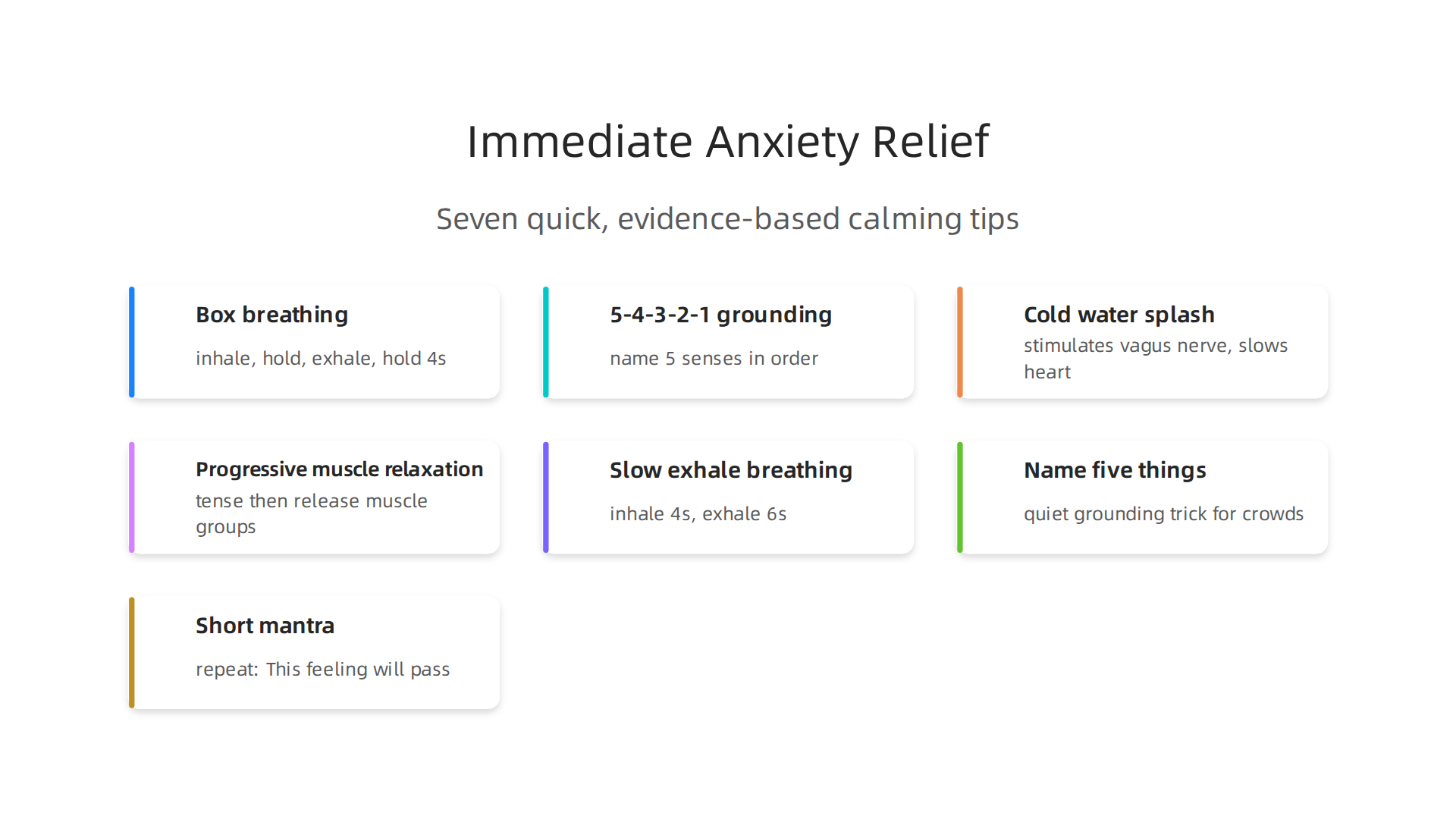
1. Box breathing (for a racing heart or panic)
Breathe in for 4 seconds. Hold for 4 seconds. Breathe out for 4 seconds. Hold for 4 seconds. Repeat three to five times. This tells your nervous system it is safe.

2. 5-4-3-2-1 grounding (for racing thoughts)
Look at five things you can see. Touch four things around you. Listen for three sounds. Notice two smells. Taste one thing. This pulls your mind back to the present.
3. Cold water splash (for overwhelming feelings)
Splash cold water on your face or wrists. The shock wakes up your vagus nerve and slows your heart rate fast.
4. Progressive muscle relaxation (for body tension)
Tense your feet for 5 seconds, then release. Move up to your legs, belly, hands, shoulders, and face. Notice the difference between tight and loose.
5. Slow exhale breathing (for general anxiety)
Breathe in for 4 seconds and out for 6 seconds. Make the exhale longer than the inhale. This activates the calming part of your nervous system.
6. Name five things you see (for social settings)
If you are in a crowd or meeting, quietly name five objects around you. This is a quick grounding trick you can do without anyone noticing.
7. Use a short mantra (for spiraling thoughts)
Say to yourself, “This feeling will pass. I am safe right now.” Repeat it three times. This stops the story your brain is telling you.
How to choose what works for you
Think about your dominant symptom in that moment.
| If you feel … | Try this technique |
|---|---|
| Your heart pounding or chest tight | Box breathing or cold water splash |
| Thoughts racing or hard to focus | 5-4-3-2-1 grounding or mantra |
| Muscle tension or restlessness | Progressive muscle relaxation or slow exhale breathing |
| Overwhelmed in a public place | Name five things you see or slow exhale breathing |
A 2023 systematic review on anxiety screening in primary care confirms that anxiety is very common, and simple tools can help you manage it. The key is to practice these techniques when you are calm, so they feel automatic when you really need them.
For a deeper look at managing repeated attacks, read our guide on 10 ways to handle anxiety attacks and regain control quickly.
And if you want to understand the pattern behind your sudden fear, try our tool to Decode Anxious Feelings and name the pressure behind the feeling.
Medium- and long-term strategies: therapy, lifestyle changes and habit design
The techniques above help you calm down fast when anxiety hits. But if you want lasting change, you need medium- and long-term strategies that tackle the root of the problem. The best ways to reduce anxiety over time combine therapy, daily habits, and smart behavior design.
Therapy that works
Two of the most researched therapies for anxiety are cognitive behavioral therapy (CBT) and acceptance and commitment therapy (ACT). CBT helps you identify and change unhelpful thought patterns that fuel anxiety. ACT teaches you to accept anxious feelings without letting them control your actions. A 2023 network meta-analysis on psychotherapies for generalized anxiety disorder in adults found that CBT had the strongest evidence for both short-term and long-term effectiveness. That study is widely cited as support for making CBT a first-line treatment for anxiety. ACT is also effective, especially for building mindfulness and psychological flexibility. If you want to learn more about how therapy changes your brain, read our guide on anxiety management step-by-step strategies.
Lifestyle changes that lower anxiety over time
Your daily habits shape your nervous system more than you might think. Three areas make the biggest difference:
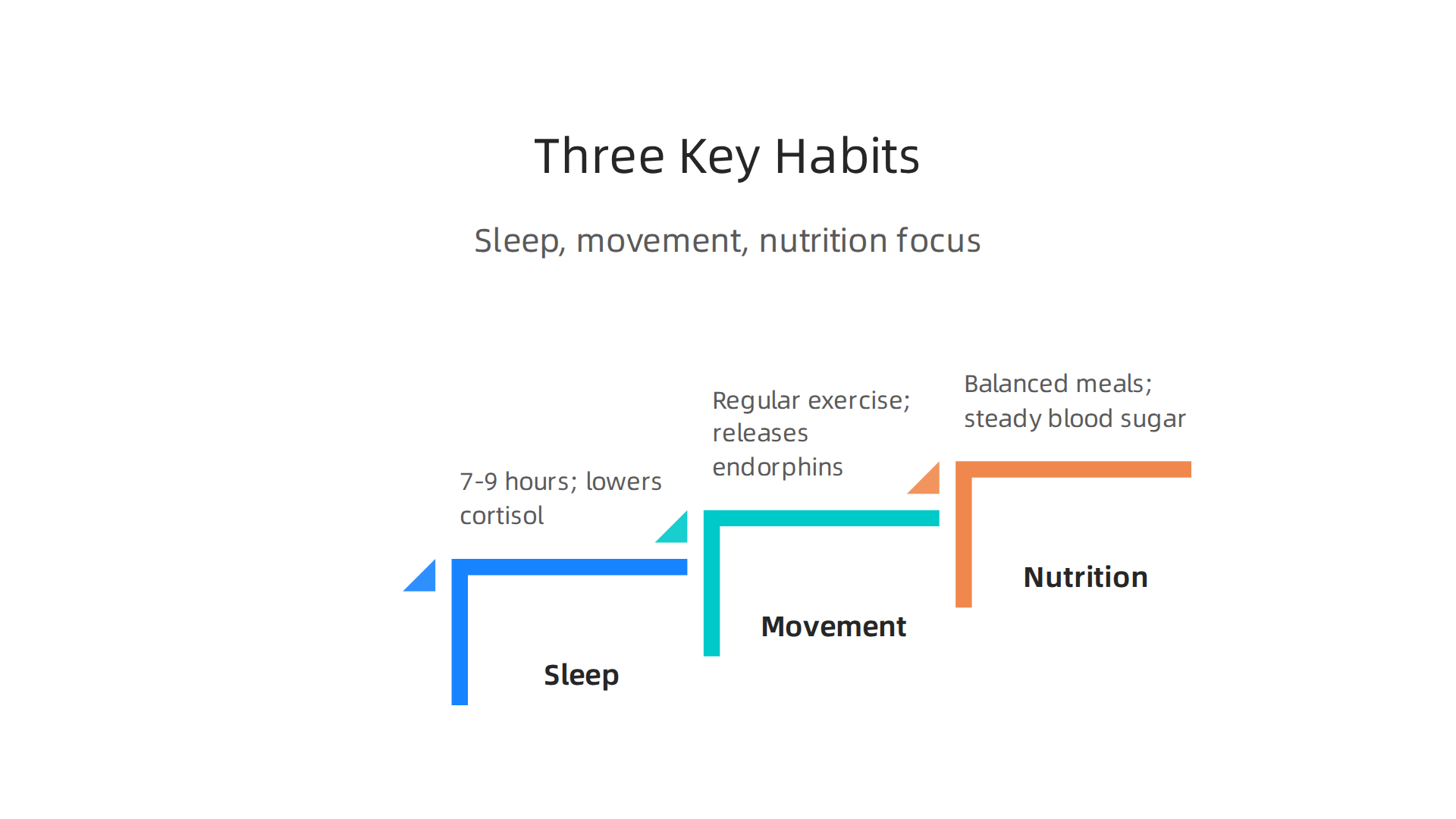
- Sleep: Poor sleep raises cortisol and makes you more reactive to stress. Aim for 7 to 9 hours per night.
- Movement: Regular exercise burns off stress hormones and releases endorphins. Even a 20 minute walk helps.
- Nutrition: Blood sugar swings can mimic anxiety symptoms. Eating balanced meals with protein and fiber keeps your mood steady.
These changes do not need to happen all at once. One small step each week is enough to start.
How to design habits that stick
Long-term relief comes from consistent action, not willpower. The trick is to set goals so small they feel easy. For example, commit to a 5 minute walk every day rather than a 30 minute workout. Once that feels automatic, add another tiny step. Over months, these habits compound into real change.
One powerful way to stay consistent with new habits is to use a recognition system that rewards small wins. For a deeper look, read the peer white paper Beyond Gamification, documenting VRS as the evolution of gamification into a recognition system.
Set realistic, incremental goals
Instead of trying to cure anxiety overnight, aim for progress measured in weeks and months. Pick one habit from the list above and practice it for 30 days. Then add another. Track your wins in a journal or app. This approach turns the big goal of reducing anxiety into a series of small, doable steps.
The shift from quick fixes to long-term strategies is what creates real freedom from anxiety. You already have the immediate tools. Now build the foundation that makes those tools less necessary over time.
Stigma, help-seeking and when to get professional support
You have learned some powerful ways to reduce anxiety on your own. Deep breathing, grounding, and daily habits can help a lot. But sometimes self-help is not enough. The tricky part is knowing when to get professional support and how to get past the barriers that stop people from asking for help.
Many people hesitate to see a therapist because of stigma. They worry others will think they are weak or broken. Stigma is real, but it is also wrong. Seeking help for your mental health is a sign of strength, not weakness.
It is no different from seeing a doctor for a physical problem. The truth is that millions of people benefit from therapy every year, and the research backs it up. For example, a 2023 systematic review on psychotherapies for generalized anxiety disorder found that cognitive behavioral therapy and other approaches are effective for both short-term and long-term relief. That means professional help works.
Practical signs that professional support is needed
How do you know if your anxiety has crossed the line from normal stress into something that needs a therapist? Here are some clear signs:
- Your anxiety lasts most days for weeks or months
- It keeps you from doing daily tasks like work, school, or seeing friends
- You avoid situations that used to feel normal
- You have physical symptoms like chest pain, dizziness, or trouble breathing
- You use alcohol or other substances to calm down
- You feel hopeless or think about hurting yourself
If any of these sound familiar, it is time to talk to a professional. Safe self-help is great for mild, occasional anxiety. But when symptoms of anxiety interfere with your life, you need more support. There is no shame in that.
How to overcome common barriers
Cost, stigma, and uncertainty often stop people from reaching out. Here is how to handle each one:
Cost: Many therapists offer sliding scale fees based on income. Online therapy platforms can be cheaper than in-person visits. Your health insurance may cover mental health care. Check your plan.
Stigma: Remind yourself that your brain is an organ just like your heart or lungs. When it is not working well, you get help. Same for anxiety. Talk to a trusted friend or family member about your decision. Their support can make it easier.
Uncertainty: You may not know what to expect from your first session. That is normal. Usually you will talk about your symptoms, your history, and what you hope to change. The therapist will explain how they work and answer your questions. No pressure. You are in control.
For a detailed look at the process, read our guide on when to seek stress management therapy. It walks you through exactly what happens and how to choose the right provider.
Taking that first step can feel scary. But once you do, you will wonder why you waited so long. You already have the tools to manage anxiety on your own. Now you know when to bring in a trained partner to help you go further.
Building a personalized anxiety-reduction plan and preventing relapse
Now that you know when to seek professional support, it is time to build a personalized plan that protects your progress. A written plan helps you stay on track when life gets hard. It also makes relapse less likely because you have already thought through your triggers and prepared your response.

Your anxiety-reduction plan template
Start by writing down the following on paper or in a note on your phone:
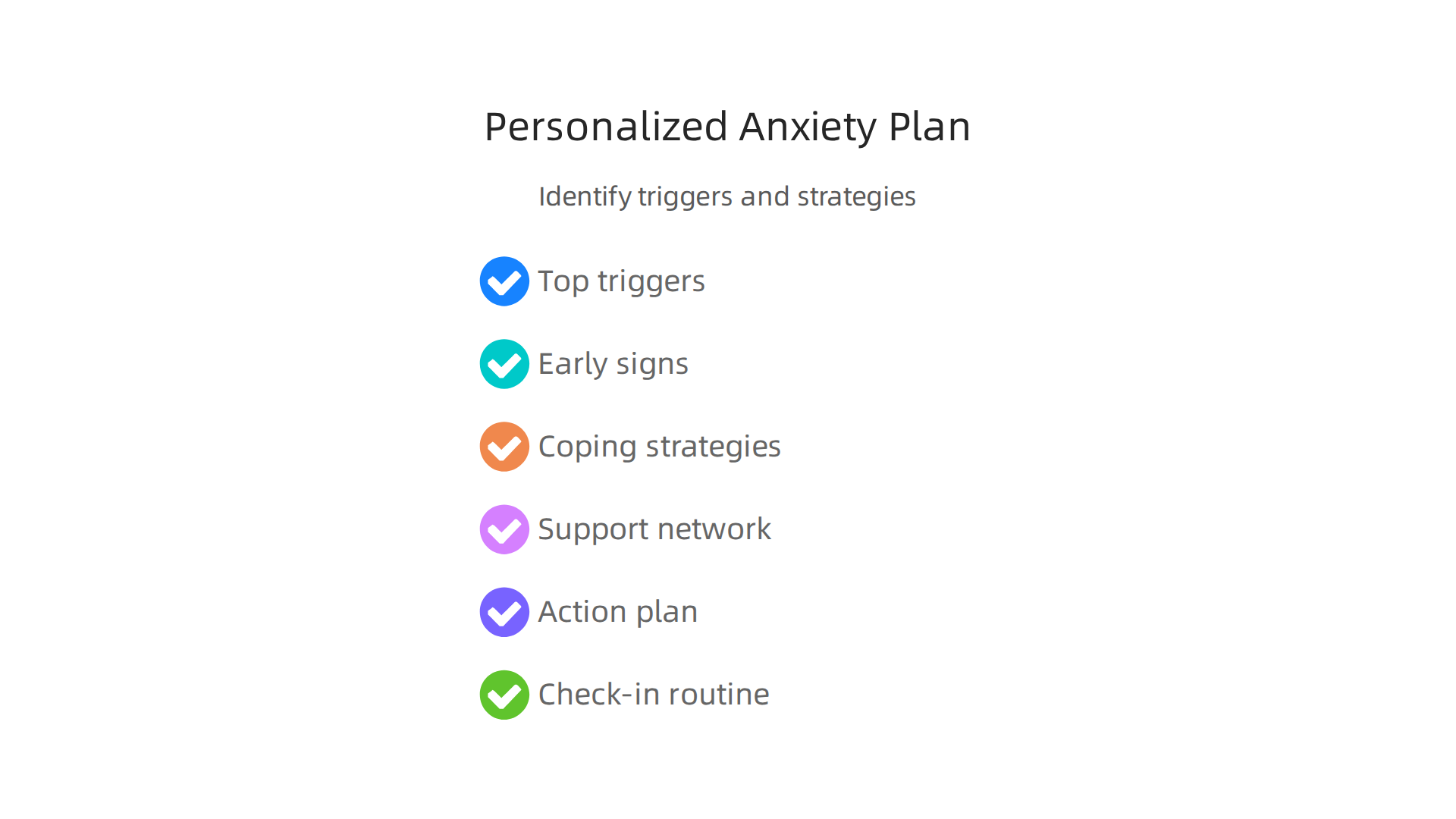
- Your top three anxiety triggers. These could be places, people, thoughts, or situations. Be specific.
- Your early warning signs. How does your body feel before anxiety spikes? Maybe your chest tightens or your thoughts race. Knowing these gives you a head start.
- Your go-to coping strategies. List at least three things that work for you, such as deep breathing, a short walk, calling a friend, or using a grounding technique.
- Your support network. Write down two or three people you can reach out to when you feel overwhelmed. Include their phone numbers.
- A clear action plan. What exact steps will you take when anxiety hits? For example: step outside for five minutes, do a breathing exercise, then message a friend.
- A check-in routine. Set a weekly reminder to review your plan. Ask yourself: What worked this week? What needs adjusting? This keeps your plan fresh and useful.
This template follows the same structure used in proven relapse prevention approaches. A detailed guide on creating a relapse prevention plan recommends exactly these steps: defining goals, identifying triggers, listing coping strategies, and building a support network. You are essentially doing the same thing for your anxiety.
Protective habits that prevent relapse
Your daily habits make a big difference. When you are tired, hungry, or isolated, your anxiety is more likely to return. Protect yourself by:
- Keeping a consistent sleep schedule
- Eating regular meals
- Moving your body each day
- Staying connected with supportive people
- Allowing time for hobbies and rest
These habits create a strong foundation. Without them, even the best plan can fall apart.
Common triggers for setback and fallback steps
Relapse does not happen overnight. It usually starts with small warning signs. Common triggers include skipping your check-in, avoiding hard situations, or letting your daily routine slip.
When you notice these warning signs, use your fallback steps:
- Pause and breathe for one minute.
- Open your written plan and read your coping list.
- Call someone on your support network.
- Do one small action from your plan, even if it is just a short walk.
- Schedule a check-in with yourself or a therapist soon.
Treat slip-ups as data, not failure. Ask yourself what triggered the setback and adjust your plan accordingly. For more ideas on building a routine that works, read our guide on anxiety management strategies that really work.
Taking the time to build this plan now will save you from struggling later. You have the tools. Now you have a system to keep them working for you.
Summary
This practical, non‑judgmental guide explains what anxiety feels like, why it happens, and how you can respond both immediately and over the long term. It covers the difference between normal worry, anxiety disorders, and panic attacks, clears up common myths, and lists the physical, cognitive, and behavioral signs to watch for. You’ll find simple, evidence‑informed techniques to calm your body and mind in the moment, plus guidance on therapy options, lifestyle changes, and habit design that lower anxiety over weeks and months. The article also shows how to track symptoms without spiraling, when to get professional help, and how to build a written plan to prevent relapse. After reading, you’ll know practical steps you can use right away and a roadmap for steady, lasting improvement.