

Have you ever felt your heart race just by looking at a picture of a spider? Or maybe you have a friend who cannot stand the sight of holes clustered together. You might have even heard someone joke about a fear of long words (yes, that phobia of long words is actually real). If any of this sounds familiar, you are not alone. Not even close.
Phobias are far more common than most people realize. According to the National Institute of Mental Health, specific phobias affect about 9.1% of adults in the United States. That is roughly 19.3 million people. And the problem goes well beyond U.S. borders. The World Health Organization reports that anxiety disorders are the most common mental health conditions worldwide, affecting hundreds of millions of people. Studies show that between 2.6% and 12.5% of people around the globe will experience a specific phobia at some point in their lives.
Here is the thing most people miss. Many go through life thinking their fear is just "who they are." They do not realize their intense reaction has a name. And that is where a complete list of phobias can change everything. Seeing your fear on paper makes it real. It also shows you that you are not alone. Millions of people share that same feeling. A good list can help you spot patterns in your own anxious feelings and point you toward real solutions.
In this guide, we break down phobias in plain language. No confusing jargon. No judgment. Just clear answers about what phobias are, what causes them, and practical steps you can take to feel calmer. Whether you struggle with a fear of heights, a fear of long words, or just want to learn how to calm down when anxiety hits, this article is built for you.
Let us start by looking at what a phobia really is and why it affects so many of us. And if you want to keep learning after this article, feel free to Explore Guides with more practical exercises for managing anxiety.
1. What Is a Phobia? (And How It Differs from Normal Fear)
So what exactly is a phobia? According to the DSM-5, the manual doctors use to diagnose mental health conditions, a specific phobia is an anxiety disorder. It involves a marked fear or anxiety about a specific object or situation. Think of it this way. Normal fear keeps you safe. It is your brain saying, "Watch out, that cliff is dangerous." A phobia is your brain saying the same thing about a completely safe object like a button or a feather.
The difference comes down to three things.
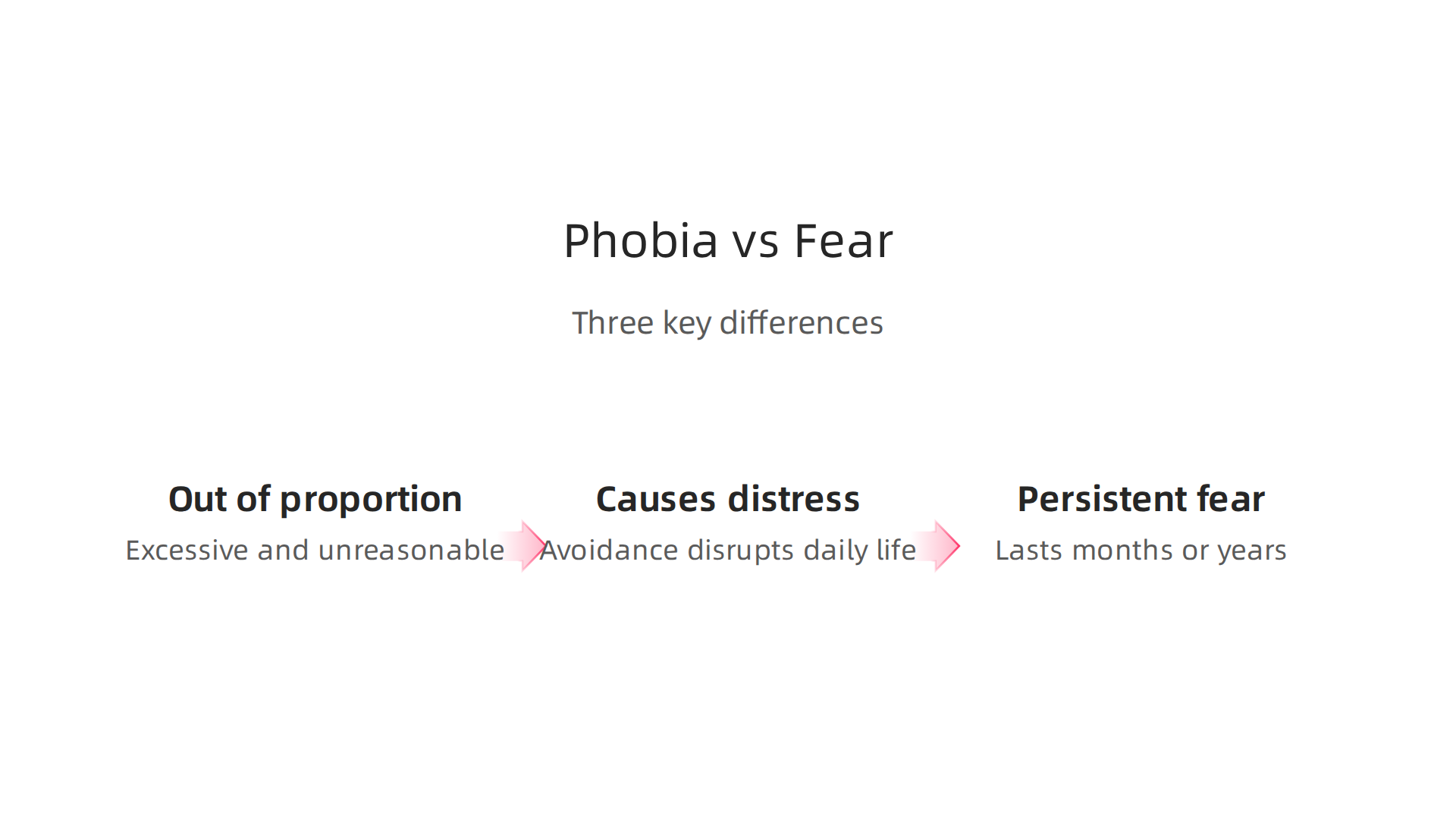
First, the fear is out of proportion. The DSM-5 criteria say the fear must be excessive and unreasonable compared to the actual danger. Second, it causes real distress. A person with a phobia will go out of their way to avoid the trigger. They might change their daily routine or miss important events just to dodge what scares them. Third, the fear sticks around. We are not talking about a one time panic. The Center for the Treatment and Study of Anxiety at Penn describes it as a persistent fear that lasts for months or years.
Here is the key takeaway. Everyone gets nervous before a big presentation. That is normal fear. But if you feel sick for days before a meeting or you skip the presentation entirely because of the physical reaction, that crosses into phobia territory. The MedCentral review notes that the object or situation usually does not pose a real threat. Your brain just thinks it does.
Most phobias start early in life. They often develop in childhood or early adulthood. That is why a complete list of phobias can help you spot patterns you have carried for years without understanding them. If you want to start learning how to manage those intense reactions, check out our anxiety management strategies. Understanding the definition is step one. Knowing what to do about it is step two.
And if you want more practical help, Explore Guides with simple exercises designed for beginners.
2. The Most Common Phobias: A Statistical Overview
So, how common are these intense fears we just talked about? You might be surprised to learn how many people are dealing with the same thing. Specific phobias are actually one of the most common mental health conditions in the world. The World Health Organization reports that anxiety disorders affect hundreds of millions of people globally, and phobias make up a big chunk of that number.
In the United States alone, about 19.3 million adults (that is 9.1% of the population) have a specific phobia. Those numbers come from the Anxiety and Depression Association of America. To put that in perspective, we are talking about more people than the entire population of Florida.
What tops the list of phobias?
The most common ones usually fall into four groups:
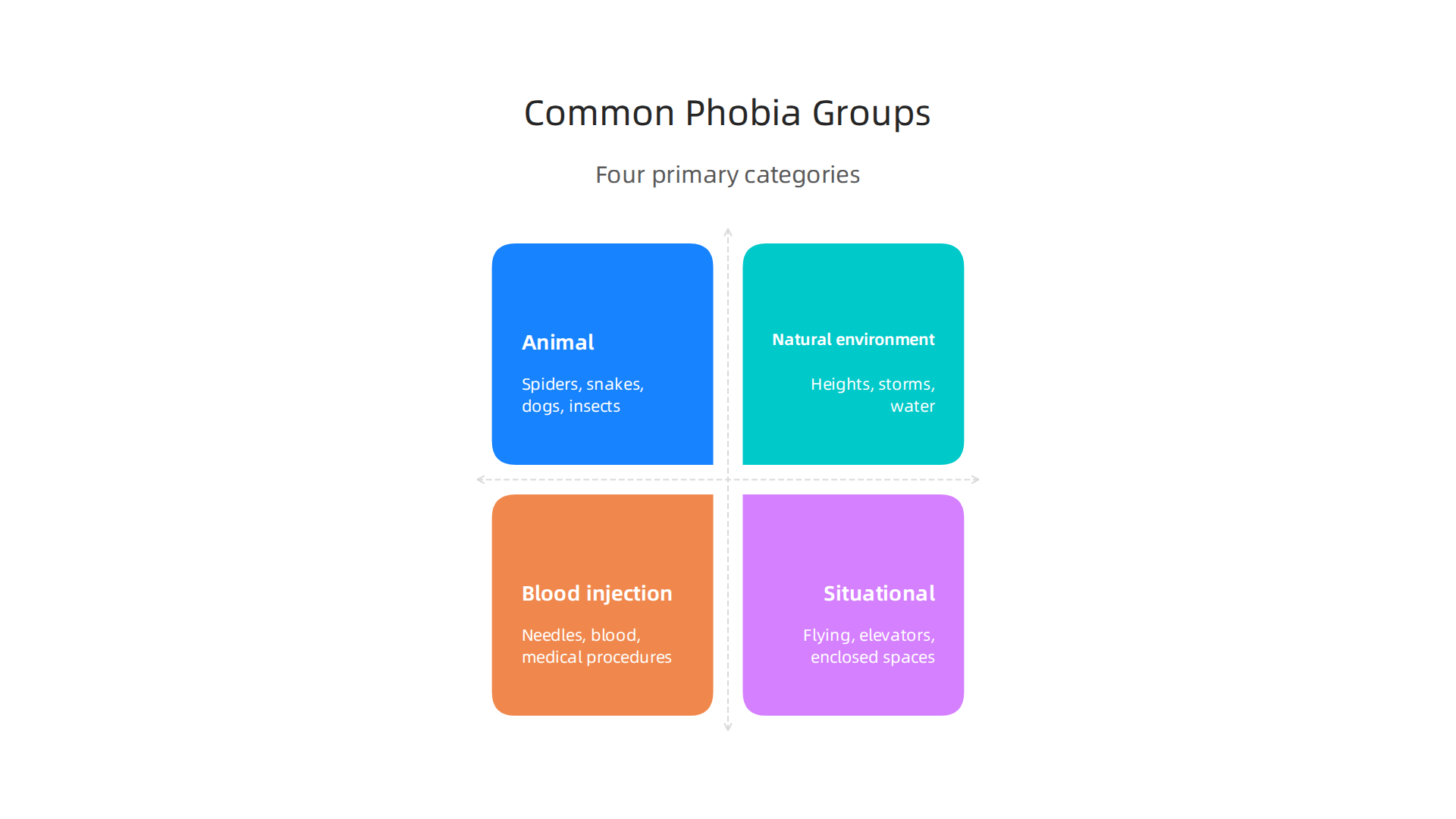
- Animal type: Spiders, snakes, dogs, insects
- Natural environment type: Heights, storms, water
- Blood injection injury type: Needles, blood, medical procedures
- Situational type: Flying, elevators, enclosed spaces
Glossophobia, or the fear of public speaking, is one of the most reported fears across all categories. A Johns Hopkins review found that lifetime prevalence ranges from 3% to 15% around the world, with heights and animals being the most common triggers. And yes, even a phobia of long words (hippopotomonstrosesquippedaliophobia) is a real thing. The list of phobias people report is surprisingly long.
Who gets phobias?
This is where the data gets interesting. Research consistently shows that women are more likely to report specific phobias than men. This pattern shows up across different countries and cultures.
Age also matters a lot. Most phobias start early in life. The National Institute of Mental Health notes that the average age of onset is around 7 to 11 years old. But here is the thing. You can develop a new phobia at any age. A scary event or a traumatic experience can trigger one even if you are an adult.
What this means for you
If reading through this data makes you recognize a pattern in your own life, that is a valuable first step.

You are not broken and you are statistically not alone. Millions of people are working through these same fears.
Understanding the numbers helps you see the big picture, but your personal patterns matter most. If you want to learn the exact steps to handle a specific trigger, check out our guide on exposure therapy for trypophobia. It uses the same proven principles that work for most other phobias too.
If you are ready to move from understanding to action, Explore Guides with simple exercises designed for beginners.
3. List of Phobias (A–E): From Acrophobia to Entomophobia
Now that you know the numbers behind phobias, you might be wondering: what is your fear actually called? The list of phobias is longer than most people realize. Experts have named over 500 different phobias, from common ones to extremely rare conditions. Let’s look at the ones starting with letters A through E.
Here are some of the notable phobias in this range:
A
- Ablutophobia – fear of bathing or washing. This can make daily hygiene feel overwhelming.
- Acrophobia – fear of heights. One of the most common phobias, affecting millions.
- Agoraphobia – fear of open or crowded spaces. Often misunderstood. People with agoraphobia may avoid leaving home entirely.
- Ailurophobia – fear of cats.
- Arachnophobia – fear of spiders. The most famous phobia on the list.
B
- Bathmophobia – fear of stairs or steep slopes.
- Belonephobia – fear of needles and pins. Related to trypanophobia.
- Brontophobia – fear of thunder and lightning.
C
- Claustrophobia – fear of enclosed spaces. This is different from agoraphobia. Claustrophobia is about tight spaces; agoraphobia is about situations where escape might be hard.
- Coulrophobia – fear of clowns.
- Cynophobia – fear of dogs.
D
- Dentophobia – fear of dentists. Very common and often prevents people from getting needed care.
- Dysmorphophobia – fear of physical flaws. More commonly called body dysmorphic disorder.
E
- Emetophobia – fear of vomiting.
- Entomophobia – fear of insects. This can include fear of bees, ants, or any bug.
You can find a full list of phobias from complete guides like Healthline’s A-Z list or the Bay Area CBT Center’s extensive database. Many of these fears respond well to simple techniques like gradual exposure. For example, gradual exposure works wonders for trypophobia, as shown in our exposure therapy guide for fear of holes.
If you see your fear on this list and want to learn how to manage it, you don’t have to do it alone. Start with practical, beginner-friendly exercises that can help you feel calmer. Explore Guides with simple steps designed for people just like you.
4. List of Phobias (F–L): From Fear of Failure to Lunaphobia
The list of phobias keeps going. Let’s continue through the alphabet with fears starting from F to L. You will see some very common ones here and a few that might surprise you.
F
- Fear of failure (atychiphobia). This is a big one. It can stop you from trying new things or chasing your goals. Many people struggle with this without knowing it has a name.
- Fear of flying (aerophobia). Millions of people deal with this. It is one of the most searched phobias online.
G
- Glossophobia – fear of public speaking. This is incredibly common. In fact, some studies suggest it affects more people than fear of death.
- Gephyrophobia – fear of bridges. This can make simple commutes feel impossible.
H
- Hippopotomonstrosesquippedaliophobia – fear of long words. Yes, really. The name itself is a joke. It is one of the most ironic phobias on any list of every phobia. If you have a fear of long words, just seeing the name might make you uncomfortable.
I
- Ichthyophobia – fear of fish. This goes beyond just being uneasy around them.
- Insectophobia – fear of insects. It overlaps with entomophobia from the previous section.
J
- Japanophobia – fear of Japanese people or culture. This is considered a rare phobia.
K
- Katsaridaphobia – fear of cockroaches. Very common in warmer climates.
L
- Lunaphobia – fear of the moon. A rare one, but it shows how broad the list of phobias really is.
- Lockiophobia – fear of childbirth. This affects many expectant parents.
If you recognized your fear in this list, you might wonder how to calm down when that fear hits. Simple grounding techniques can help in the moment. The key is to start small.
Need more practical steps? Explore Guides with simple exercises designed for people who are new to managing their fears.
5. List of Phobias (M–R): From Mysophobia to Radiaphobia
The list of phobias keeps going with the next batch of letters. This part covers fears starting with M through R. You will see some fears tied to health, cleanliness, and animals. These are very common in real life.
M
- Mysophobia – fear of germs or dirt. This is a big one for many people. It can lead to constant cleaning or avoiding public places.
- Musophobia – fear of mice. A classic animal fear that affects a lot of people.
N
- Nosophobia – fear of getting a disease. This makes you worry about your health all the time. It is closely tied to health anxiety.
- Nyctophobia – fear of darkness. This is one of the most common fears, especially in kids, but adults can have it too.
O
- Ophidiophobia – fear of snakes. This is one of the top animal phobias worldwide.
- Ornithophobia – fear of birds. Some people avoid parks or outdoor areas because of this.
P
- Pyrophobia – fear of fire. A natural survival instinct that becomes extreme for some.
R
- Ranidaphobia – fear of frogs. Yes, even small frogs can trigger big fear.
- Radiophobia – fear of radiation or X-rays. This can make medical visits very stressful.
If you see your fear here, you are not alone. Naming it is a powerful first step. Behavioral scientist Dean Grey’s research shows that labeling a fear can help you feel more in control. Once you name it, you can start to work on it.
For a specific phobia like mysophobia, learning how to face it in small steps can make a big difference. Check out our guide on exposure therapy for trypophobia for ideas on how to start.
Want more help managing your fears? Explore Guides with simple exercises designed for people new to anxiety.
6. List of Phobias (S–Z): From Social Phobia to Zoophobia
We have covered phobias from M through R. Now let us finish the list of phobias with the last group of letters S through Z. You will see some very common fears here, including one that affects millions of people every day.
S
- Social phobia (social anxiety disorder) – A deep fear of being judged or embarrassed in front of others. This is one of the most common and serious phobias. It can make simple tasks like talking in a meeting or eating in public feel impossible. The Healthline list of phobias includes social phobia as a major category.
- Scopophobia – fear of being stared at. This often goes hand in hand with social anxiety.
- Scolionophobia – fear of school. Common in kids, but it can last into adulthood.
T
- Trypanophobia – fear of needles. Many people skip vaccines or blood tests because of this one.
- Technophobia – fear of technology. Some people feel anxious around new gadgets or software.
- Triskaidekaphobia – fear of the number 13. You see it in buildings that skip the 13th floor.
U
- Uranophobia – fear of heaven or the sky. Rare, but it exists.
V
- Verminophobia – fear of germs or creepy crawlies. Close to mysophobia.
- Vehiculophobia – fear of being in a car. This can make driving or riding very hard.
W
- Wiccaphobia – fear of witches or witchcraft.
- Workphobia (ergophobia) – fear of work or workplaces. This is linked to job stress.
X
- Xenophobia – fear of strangers or foreigners.
- Xylophobia – fear of forests or wooded areas.
Y
- Yellow fear (xanthophobia) – fear of the color yellow. Very rare.
Z
- Zoophobia – fear of animals in general. This covers many specific animal fears.
One modern phobia that stands out is nomophobia – fear of being without your phone or disconnected from the internet. This one shows how our fears can change with the times.
Knowing the name of your fear is a strong first step. The Wikipedia list of phobias shows over 500 named fears. But naming is just the start. The real goal is learning how to calm down when that fear shows up.
If you want a simple strategy to manage your fear, check out our guide on anxiety management step-by-step strategies that really work. It breaks down breathing, grounding, and reframing in plain language.
Feeling ready to explore more? Explore Guides with simple exercises designed for people new to anxiety.
7. What Causes Phobias? The Science Behind Specific Fears
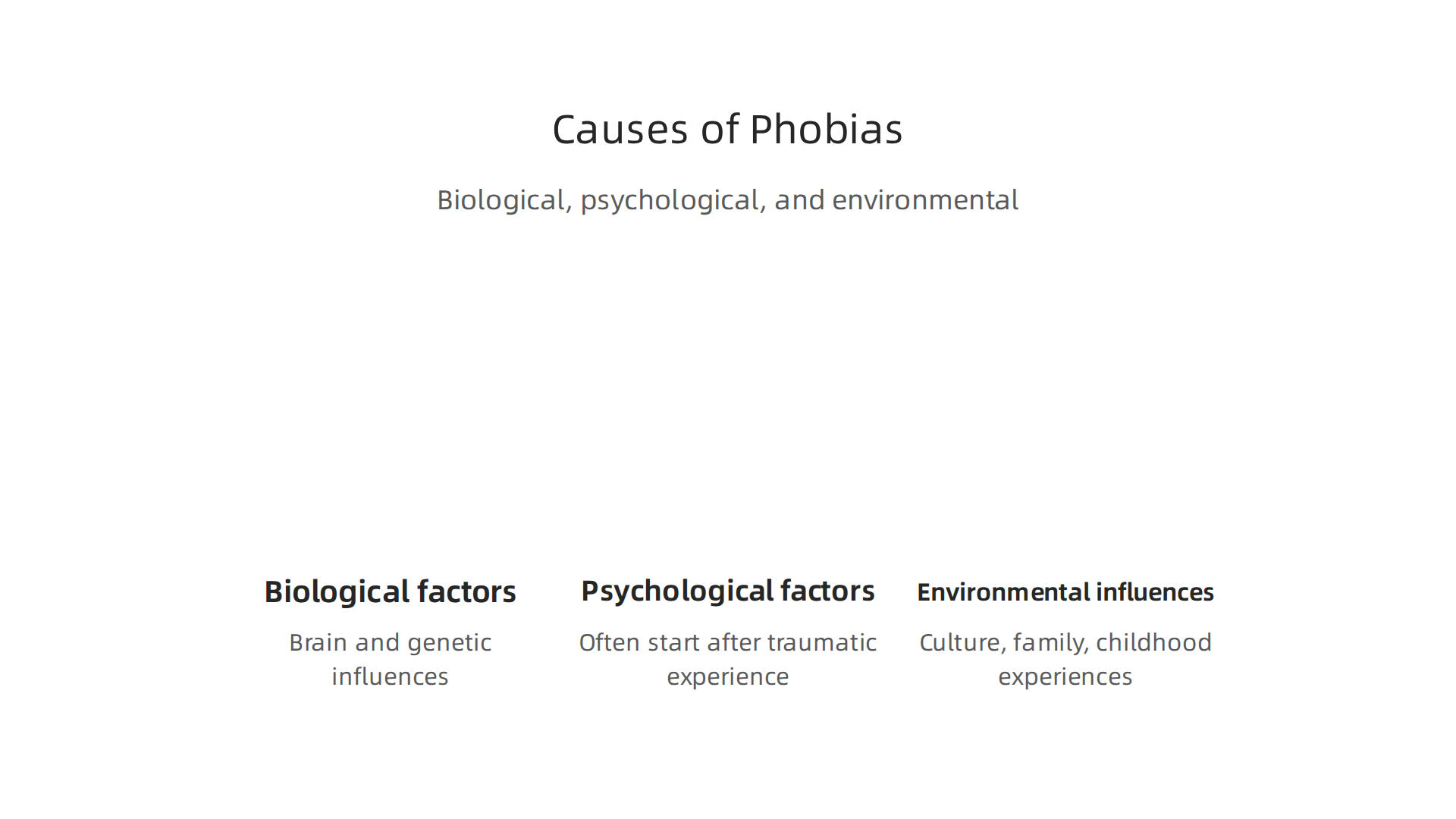
You now know the long list of phobias. But you might be wondering: why do these fears form in the first place? The answer is not simple. Phobias come from a mix of biology, personal experience, and your environment.
Let me break it down.
Biological factors
Your brain and genes play a big role. Some people are simply born more reactive to fear. Research from the Cleveland Clinic shows that certain phobias run in families. If a close relative has a specific phobia, your chances of developing one go up.
Your brain’s amygdala acts like an alarm system. In people with phobias, this alarm can be too sensitive. It fires off a fear response even when there is no real danger. The NIH StatPearls review explains that specific phobia is a common anxiety disorder where the brain’s fear circuitry reacts too strongly.
Psychological factors
Your personal history matters a lot. Most phobias start with a bad experience. According to the Mayo Clinic, many phobias begin after a scary encounter or a panic attack related to a specific situation. For example, getting bitten by a dog can lead to a lasting fear of dogs.
You can also learn fear by watching others. The Cincinnati Children’s Hospital notes that children often develop phobias by seeing a parent or sibling act afraid of something. This is called observational learning.
Environmental influences
Your surroundings shape your fears too. Culture, family attitudes, and childhood experiences all play a part. If you grew up in a home where people constantly warned you about spiders, you might develop arachnophobia even without a bad encounter.
Here is the good news. Understanding the cause of your phobia gives you power. You can learn to calm your brain’s alarm system with practice.

Looking for a practical way to start? Check out our guide on anxiety management step-by-step strategies that really work. It teaches simple techniques to quiet your fear response.
If you want to go deeper into the science of fear and how to change your thinking, Explore Guides with beginner-friendly exercises designed to help you feel calmer.
8. Symptoms and Diagnosis: How to Recognize a Phobia
So you’ve learned what causes phobias. But how do you know if your fear is actually a phobia? It’s not just about feeling scared. A true phobia shows up in specific ways that mess with your daily life. Let’s look at the signs.
A phobia is more than a simple fear. According to the Center for the Treatment and Study of Anxiety at Penn, it’s a persistent fear that is excessive or unreasonable. It happens when you are near a specific object or situation or even just thinking about it.
Physical symptoms
Your body reacts before your mind can catch up. These are common physical signs:
- Racing heart or chest tightness
- Sweating and trembling
- Shortness of breath or feeling dizzy
- Full-blown panic attacks
When you have a phobia, your brain’s alarm system goes off too fast. The MedCentral article on DSM-5 phobia types explains that a specific phobia involves significant fear about something that does not pose a real threat. Your body acts like you are in danger even when you are safe.
If you experience panic attacks with your phobia, try this panic attack symptoms self-assessment checklist to understand your symptoms better.
Behavioral symptoms
Phobias change what you do. You might notice:
- Active avoidance: You go out of your way to avoid the thing you fear. For example, you take the stairs instead of the elevator because you are afraid of heights.
- Anticipatory anxiety: You feel scared hours or days before you have to face the trigger.
- Interference with daily life: Your fear stops you from doing normal things like going to work or hanging out with friends.
The St. Joseph’s Healthcare Hamilton page notes that the fear must be excessive and persistent. It is not just a passing worry.
How diagnosis works
If you think you have a phobia, a professional can help you confirm it. The process usually includes:
- Clinical interview: A therapist asks about your fears, symptoms, and history.
- Questionnaires: Tools like the Specific Phobia Questionnaire (SPQ) help measure your fear level.
- DSM-5 criteria: Doctors use the official manual to make a diagnosis.
The NIH StatPearls review outlines the DSM-5-TR diagnostic criteria for specific phobia. One key point is that the fear must last for at least six months. It also has to cause real distress or problems in your life.
Another resource, Theravive, explains that the fear must be unreasonable or excessive. You cannot just talk yourself out of it.
Understanding your symptoms is the first step. Want to learn how to manage your fears? Explore Guides with practical exercises designed to help you feel calmer and take control.
9. Effective Treatments for Phobias: From CBT to Virtual Reality
You’ve identified your phobia. What now? The good news is that phobias are very treatable. You don’t have to live with that fear forever.
The best part? Most treatments are simple and structured. They focus on teaching your brain a new, safer response to your trigger. Let’s look at the options.
Cognitive Behavioral Therapy (CBT)
CBT is the gold standard for treating phobias. According to the Mayo Clinic, CBT helps you change both the thoughts and behaviors that keep your fear alive.
A key part of CBT for phobias is exposure therapy. This means facing your fear in small, safe steps. For example, if you have a fear of long words, you might start by reading a word with five letters. Over time, you work up to longer ones.
The NIH StatPearls review confirms that exposure therapy is highly effective. It helps your brain unlearn the old fear response.
If you want a step-by-step guide for a specific phobia, check out this exposure therapy guide for trypophobia. Many of the same principles apply to any phobia on your list of phobias.
Medication Options
Sometimes medication helps, especially if your phobia causes severe panic attacks. Common options include:
- Beta-blockers: These block the physical symptoms of fear, like a racing heart.
- SSRIs: These are daily antidepressants that reduce overall anxiety.
- Benzodiazepines: These fast-acting sedatives are only used for short-term relief.
The Cleveland Clinic notes that medication is most helpful when combined with therapy. It is not a standalone fix.
If you are already dealing with panic attacks, this panic attack symptoms self-assessment checklist can help you track your symptoms before talking to a doctor.
Emerging Treatments: Virtual Reality
Virtual reality exposure therapy (VRET) is an exciting option for 2026. Instead of facing a real spider or a real plane, you face a computer-generated version. This makes treatment easier and more controlled.
Research from Cincinnati Children’s supports this approach. VRET works well for phobias like heights, flying, and animals.
How to Calm Down During Treatment
Any treatment will feel uncomfortable at first. That is normal. Learning how to calm down in the moment is a crucial skill. Simple breathing exercises, grounding techniques, and using a therapist for support can help you stay steady.
Ready to try practical exercises that make a real difference? Explore Guides with simple, actionable steps designed to help you feel calmer and in control.
10. Coping Strategies: How to Manage Phobias in Daily Life
Treatment is a powerful step. But real life throws triggers at you every day. You might be on the subway and see something that scares you. Or maybe you are scrolling online and a picture catches you off guard. Knowing how to calm down in those split seconds is a skill you can learn.
Here is how to manage your phobia both in the heat of the moment and over the long term.
Use Your Senses to Ground Yourself
When panic hits, your brain is stuck in fight or flight mode. Grounding techniques bring you back to the present. The Cleveland Clinic calls these simple exercises a way to "find the calm you need."
Try the 5-4-3-2-1 technique right now if you feel scared:
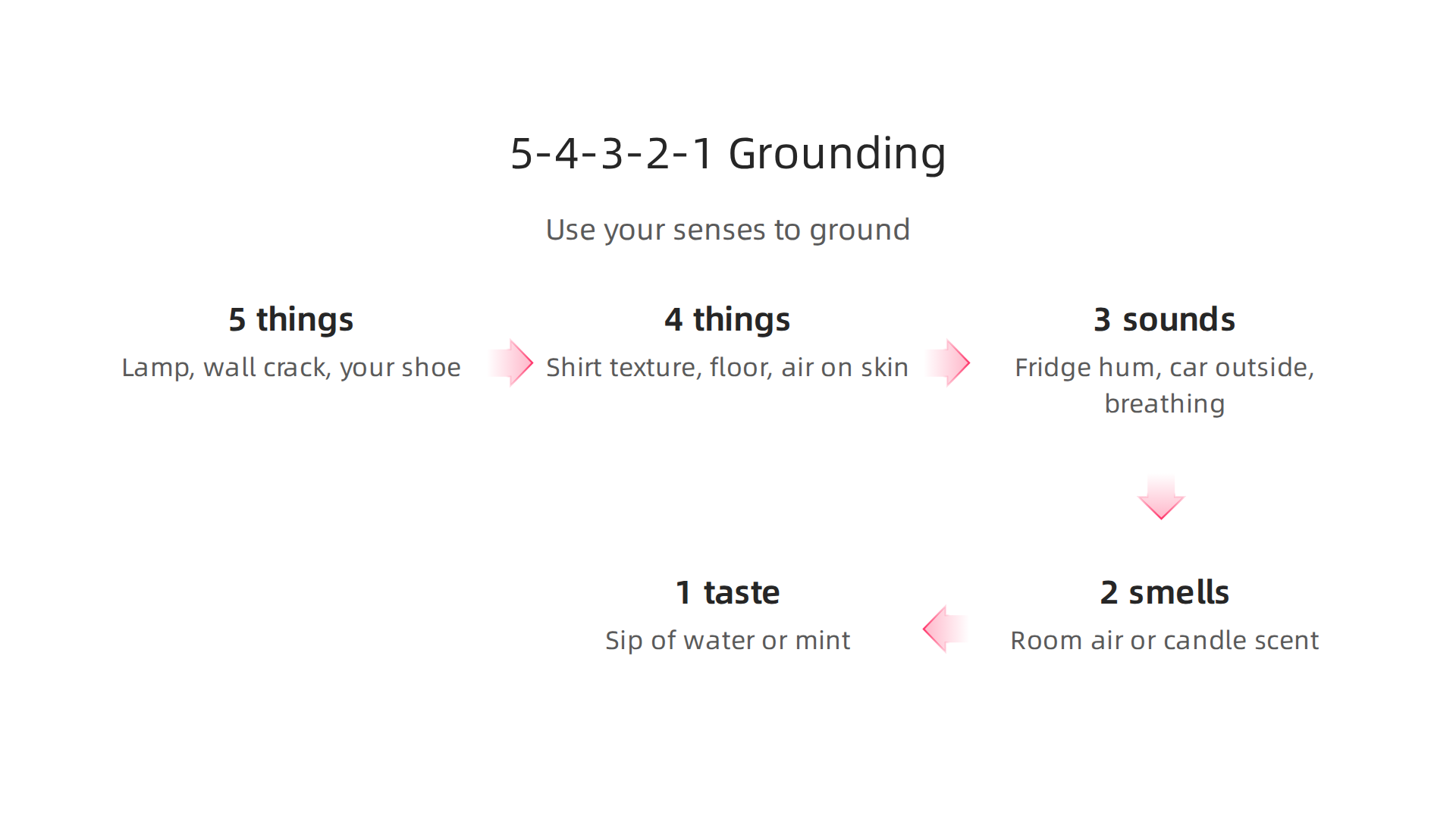
- 5: Look around and name 5 things you can see. A lamp, a crack in the wall, your shoe.
- 4: Feel 4 things around you. The texture of your shirt, the floor under your feet, the air on your skin.
- 3: Listen for 3 distinct sounds. The hum of the fridge, a car outside, your own breathing.
- 2: Smell 2 things. The air in the room or the scent of a candle.
- 1: Taste 1 thing. A sip of water or a mint.
This works because it forces your brain to process real, safe information. According to Healthline, adding these techniques to your "emotional toolbox" gives you something to grab when fear feels overwhelming.
Build Long-Term Habits for a Calmer Mind
Quick resets are great. But lasting change requires daily practice.
- Track your triggers. Keep a simple journal. Write down what you saw and how you felt on a scale of 1 to 10. Over time, you will spot patterns.
- Practice gradual exposure. You do not have to face your biggest fear today. If you have a fear of long words, maybe you just look at the word for 5 seconds and then look away. You can follow a structured path like this exposure therapy guide for trypophobia and adapt it to your specific trigger from your list of phobias.
- Use mindfulness. Notice the fear without judging it. Say to yourself, "I notice I am feeling afraid right now. This will pass."
The GoodRx resource on grounding mentions that simple self-care like taking a break or talking to a friend can also act as a powerful reset.
Know When to Ask for Backup
Self-management is wonderful. But it is not a substitute for professional help when things get severe. Here are signs that you need extra support:
- Your phobia stops you from going to work or the grocery store.
- You feel hopeless about your fear.
- You use alcohol or drugs to cope.
- You have panic attacks that feel like a heart attack.
If this sounds familiar, this panic attack symptoms self-assessment checklist can help you organize your experience for a doctor.
If you feel stuck, working with a therapist can make a real difference. You do not have to figure out your list of phobias alone. A professional can tailor strategies to your exact needs.
Ready to build your own coping plan? We have simple guides to walk you through it. Explore Guides to find practical exercises designed to help you feel calmer and in control.
Summary
This article is a plain-language guide to specific phobias that explains what they are, how common they are, and why naming your fear matters. It includes a large, alphabetical list of phobias (A–Z) with everyday examples, statistics on prevalence, and common age and gender patterns. The guide breaks down the causes — biological, psychological, and environmental — and details symptoms, diagnostic steps, and when a fear crosses into a clinical phobia. You’ll also find practical treatment options, from cognitive behavioral therapy and exposure therapy to medication and emerging virtual reality approaches. The piece ends with hands-on coping strategies you can use immediately (grounding, gradual exposure, journaling) and clear signs for when to seek professional help. After reading, you should be able to name your fear, spot its impact on your life, and choose next steps toward managing or treating it.