

Going through a breakup is one of the hardest things you can face. It’s not just the end of a relationship. It’s a major life transition that can shake your sense of who you are, leave you feeling lost, and stir up intense anxiety. You might lie awake wondering what went wrong, feel your heart race when you think about them, or struggle to focus on anything else. These feelings are normal, but they don’t have to run your life.
The truth is, anxiety is more common than you think. In 2026, anxiety disorders remain the most common mental health concern in the United States, affecting nearly 20% of adults according to the National Institute of Mental Health Any Anxiety Disorder.

A breakup can easily trigger or worsen these anxious feelings.
Many people hesitate to seek help. Maybe you worry about stigma, or you simply don’t know where to start. You might think you have to figure it out alone. But you don’t have to. Finding the right therapist for breakup recovery can make a huge difference. A good therapist can help you understand your emotions, break free from anxious patterns, and rebuild your sense of self. For instance, working with a relationship issues therapist can help you recognize patterns that keep you stuck and teach you how to cope with anxiety in healthier ways.
This guide gives you a clear, actionable path forward. You’ll learn step by step how to find relief, how to find psychologist who specializes in breakup recovery, and how to start feeling like yourself again. If you’re ready to take the first step, Explore Guides to discover simple exercises that can help you manage anxious thoughts today.
1. Understanding Why Breakups Trigger Intense Anxiety
After a breakup, your mind might race at 2 a.m. with questions like “What did I do wrong?” Your heart pounds. Eating feels impossible. Sleep turns into a battlefield.

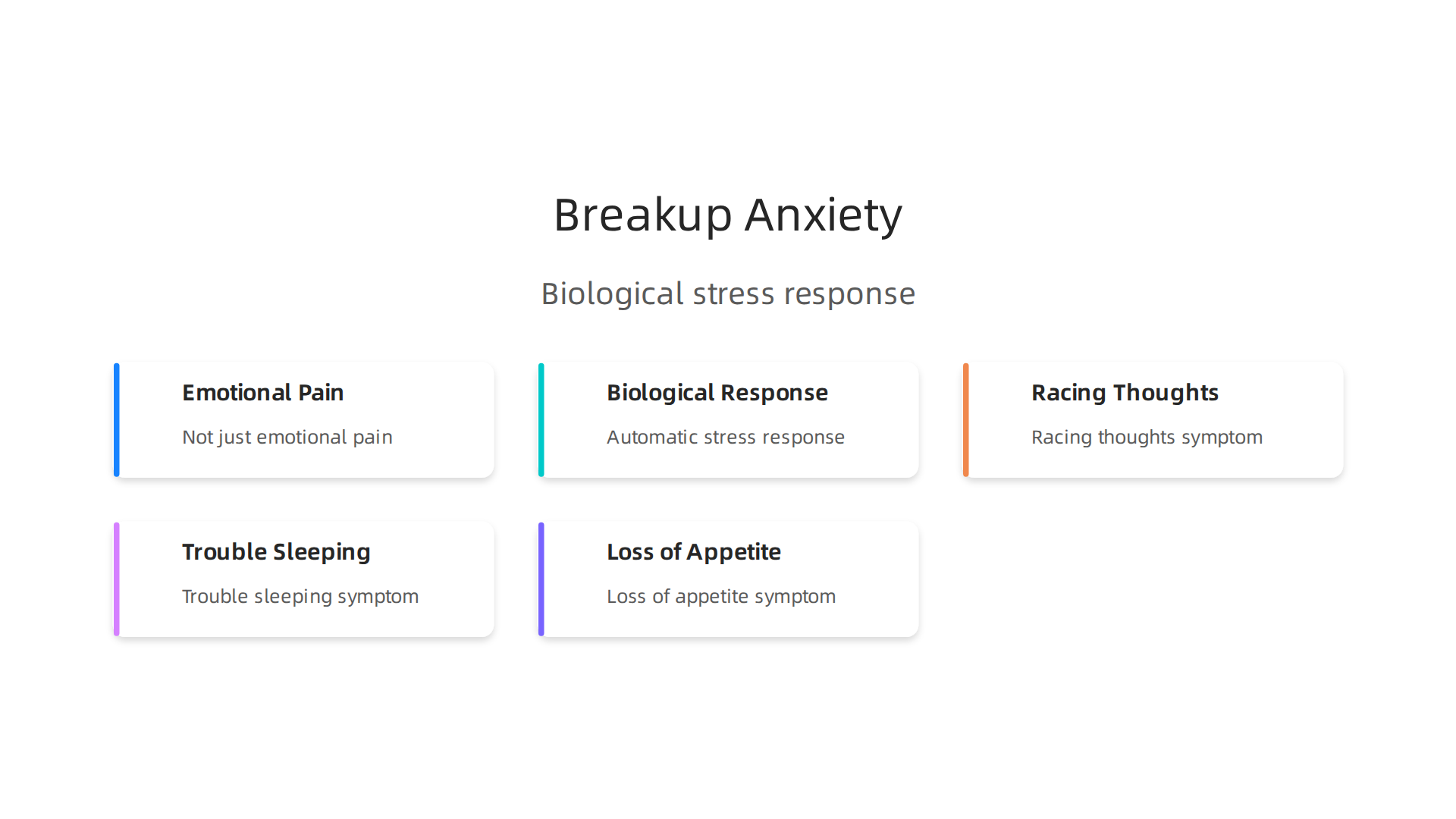
This is not just emotional pain. It is a biological response your body is running automatically.
Humans are wired for attachment. When you form a close bond, your brain treats that person as a safety signal. Losing that bond feels like a threat to your survival. Your nervous system kicks into high gear releasing stress hormones that prepare you for danger. This is the same primal reaction your ancestors had when facing a predator. Your body is trying to protect you, even though the threat is emotional.
Breakups are one of the most common triggers for anxiety. In fact, anxiety disorders are the most common mental health condition in the United States, affecting about 19% of adults according to NAMI Mental Health By the Numbers.

Among young adults, a 2026 survey found that 54% reported experiencing a mental or behavioral health concern in the past year New Survey Finds Widespread Mental and Behavioral Health Challenges. Breakups easily push you into that group.
Common symptoms include racing thoughts that won’t stop, trouble falling or staying asleep, and a noticeable loss of appetite. These are not signs that you are weak or broken. They are textbook stress responses. Your brain is trying to process a big change.
Here is the good news. Understanding this as a normal reaction helps you stop blaming yourself. Instead of thinking “Something is wrong with me,” you can say “This is my brain doing its job, and I can help it settle down.” That shift builds self-compassion.
If you want to dive deeper into how anxious patterns show up in relationships, check out this guide on how a relationship issues therapist can help you break free from anxious relationship patterns. And for simple ways to start calming your mind today, explore practical exercises in our guides.
2. The Science Behind Heartbreak: How Your Brain Reacts
Here is where things get really interesting. Your breakup pain is not just "in your head." It is literally in your brain, and science can see it.
Revolutionary 2025 research using fMRI brain imaging shows that romantic breakups trigger trauma-like brain activity in the hippocampus and other regions.
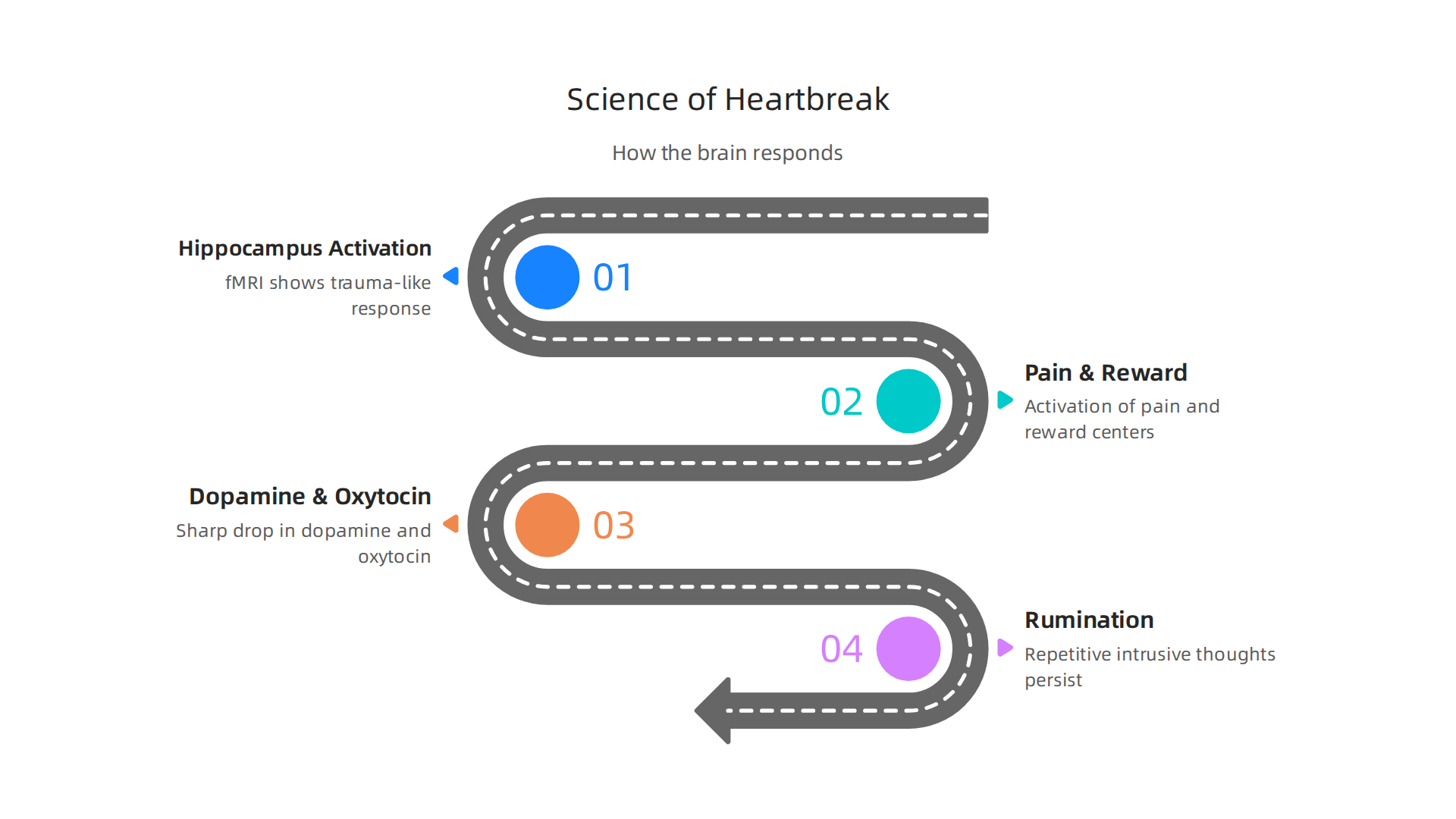
The same areas that light up when you stub your toe also light up when you think about your ex. Your brain treats emotional pain the same way it treats physical pain. That is why it hurts so much.
Heartbreak involves a complex interaction between brain areas responsible for reward processing, pain perception, attachment, and emotional regulation. Basically, your entire neural network gets involved in this one experience.
Now let us talk about the chemistry behind why you cannot stop thinking about them.
The dopamine and oxytocin crash
When you were in the relationship, your brain released feel-good chemicals like dopamine and oxytocin whenever you spent time with your partner. These chemicals made you feel safe, happy, and connected.
After a breakup, your brain suddenly stops getting its regular dose. This is withdrawal, similar to what happens when someone stops a habit-forming medication. Your brain craves the missing chemicals, and that craving shows up as constant thoughts about your ex, checking their social media, and replaying memories.

This is called rumination, and it is not a sign of weakness. It is your brain trying to get its dopamine fix.
What this means for you
Understanding the science behind your breakup helps in two big ways:
- It validates your feelings. You are not broken. Your brain is doing exactly what brains do when they lose a major attachment.
- It shows you a path forward. If you know your brain is in withdrawal, you can take steps to help it rebalance. This is where working with a therapist for breakup recovery can make a huge difference.
A good therapist understands the neuroscience behind heartbreak and can guide you through the process. Relationship problems therapy often includes psychoeducation about the brain, which helps you stop blaming yourself and start healing.
If you want practical ways to calm your brain right now, check out this anxiety management guide with simple steps you can use today.
And if you are curious about the deeper research behind why breakups feel so devastating, Behavioral Scientist Dean Grey has explored how outside pressure affects self-trust, which connects directly to the brain chemistry we just covered.
3. Knowing When to Consider a Therapist for Breakup Support
Now that you understand what is happening in your brain, how do you know when you need extra help getting through it? Here are some clear signs it might be time to talk to a therapist for breakup support.
Signs you should reach out
It is normal to feel sad after a breakup. But when sadness sticks around for weeks and starts affecting your daily life, that is a red flag. Look for these signs:
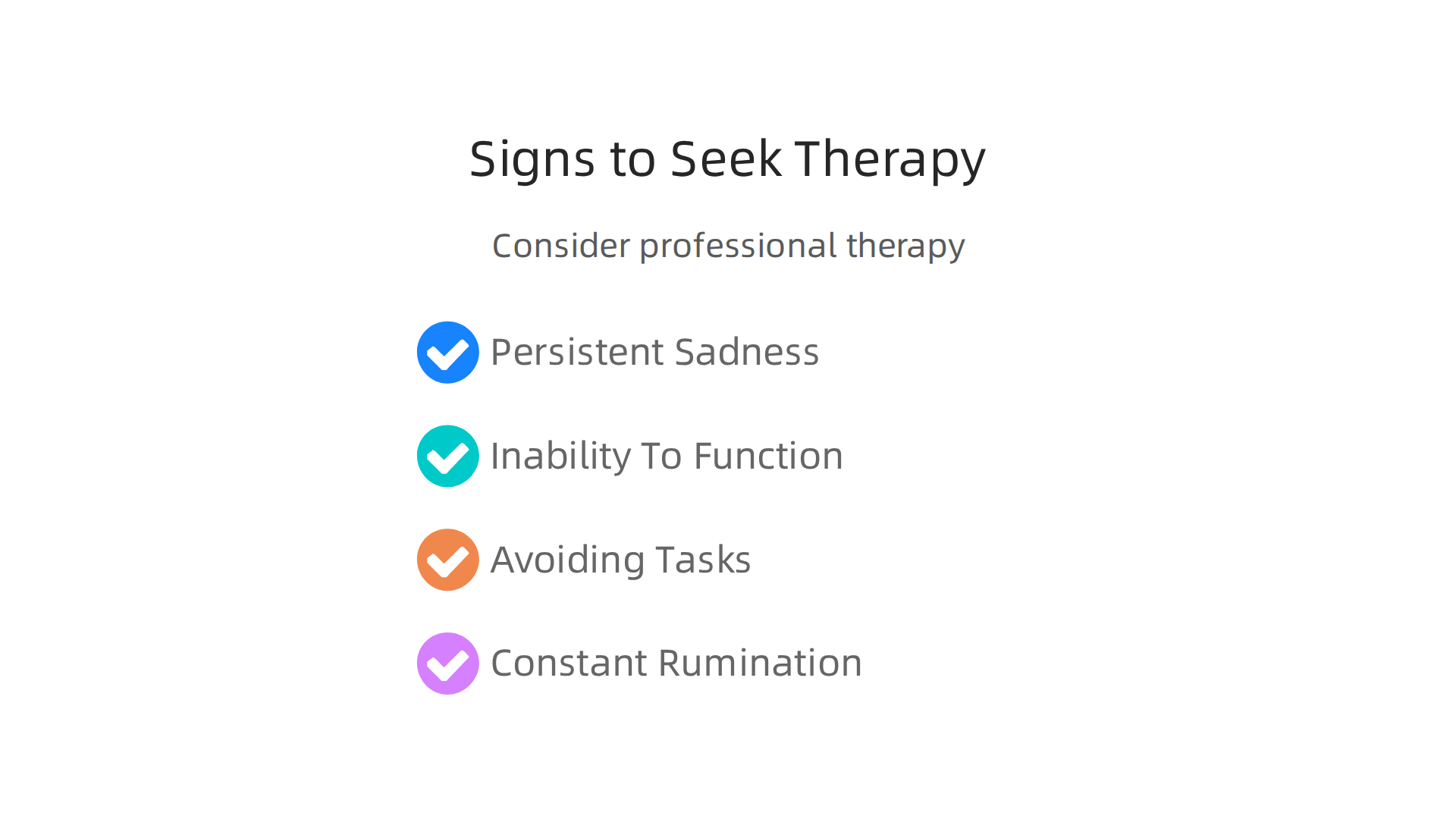
- Persistent sadness. You have been feeling down for more than two weeks and it is not getting better no matter what you try.
- Inability to function. You struggle to get out of bed, go to work, or take care of basic needs like eating and showering.
- Avoiding everyday tasks. Simple things like grocery shopping or answering texts feel impossible.
- Constant rumination. You cannot stop thinking about your ex, replaying memories, or checking their social media.
If any of these sound familiar, you are not alone. The latest research on the neuroscience of heartbreak confirms that these reactions are a natural brain response to losing a major attachment.
Why therapy helps even for mild anxiety
Here is something many people miss. You do not have to be in crisis to benefit from relationship problems therapy. Even if your anxiety feels manageable, working with a professional can stop it from escalating into something bigger. Think of it like seeing a dentist for a small cavity before it becomes a root canal. Early support builds resilience before stress becomes overwhelming.
A safe space to heal and rebuild
A therapist for breakup provides something your friends cannot always offer. A completely neutral, judgment-free space where you can process your grief without worrying about burdening anyone. You get to talk about the same painful memory as many times as you need without feeling like you are being annoying.
Therapy also helps you rebuild your identity after the relationship. When you lose a partner, you often lose a part of yourself. A good therapist guides you in rediscovering who you are on your own.
If you struggle with anxious relationship patterns that keep you stuck in painful cycles, our guide on breaking free from anxious relationship patterns can help you understand why those patterns show up and how to change them.
When you are ready to take the next step in your healing journey, explore guides and simple exercises designed to help you understand your emotions and feel calmer.
4. How to Find the Right Therapist for Breakup Recovery
Let’s say you have decided to talk to someone. Maybe you even recognize the signs from the last section. But now you face a new question. How do you actually find a good therapist for breakup recovery? It can feel overwhelming with so many options. But the process is simpler than you think when you know what to look for.
Start with reputable directories. The best place to begin is a trusted online directory. Sites like the American Psychological Association or Psychology Today let you filter by specialty. You can search for therapists who list "relationship problems therapy" or "breakup counseling" as their focus. The Couples Center offers a directory of licensed therapists who are trained in handling these exact issues.

These directories save you time because they already vet the professionals.
Check their credentials. You want someone with proper training. Look for licenses like LMFT, LPC, LCSW, or a psychologist. Even better, find a therapist who has extra training in CBT or EFT. These therapy styles work very well for how to cope with anxiety after a breakup. A good therapist will list their credentials clearly in their profile.
Read the bios carefully. Do not just pick the first name you see. Read what each therapist writes about themselves. Look for phrases like "therapist for breakup" or "breakup counseling." These signals tell you they understand your specific pain. A breakup therapist provides specialized support tailored to help you recover from a relationship ending. That specificity matters.
Still unsure where to start? Our guide on how a relationship issues therapist can help you break free from anxious relationship patterns can help you understand what kind of support to look for.
While you search for the right therapist, you can start building coping skills on your own. Explore Guides with simple exercises to help you feel calmer and more in control right now.
5. Comparing Therapy Types: Which Modality Works Best After a Breakup?
Okay, you know how to find a therapist. Now let’s look at what kind of therapy might help you most. Not every approach works the same way, especially for a breakup. A good therapist for breakup recovery will often blend methods, but here are the three most common types.
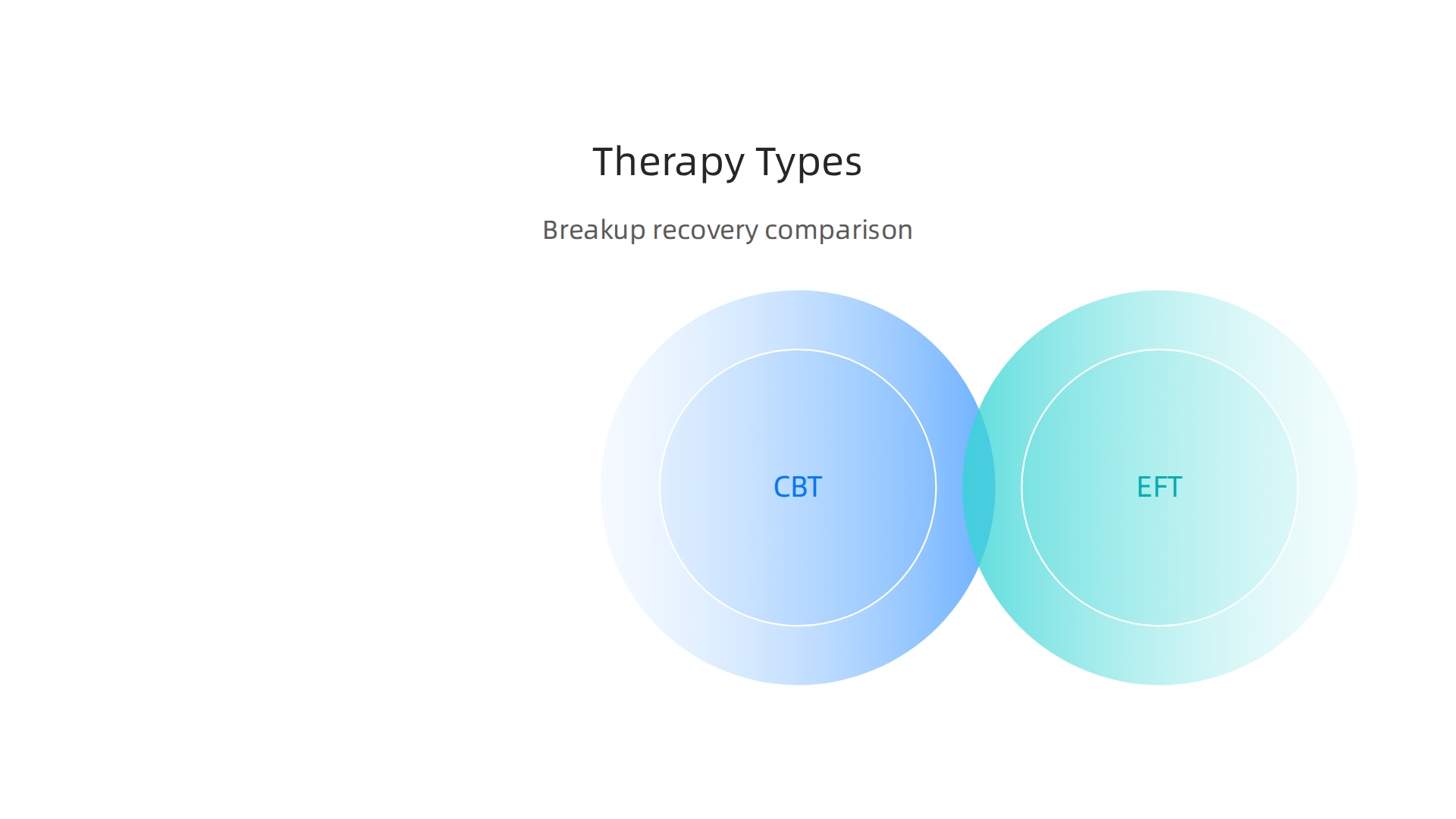
Cognitive Behavioral Therapy (CBT) is great for your racing thoughts. You know that loop where you replay the fight or blame yourself? CBT helps you catch those thoughts and test if they are actually true. It gives you practical tools to stop spiraling. This is very useful for learning how to cope with anxiety after a breakup. Many therapists use CBT to help clients understand what went wrong and rebuild their emotional strength after a relationship ends.
Emotionally Focused Therapy (EFT) digs a little deeper. Breakups hit our attachment system hard. EFT helps you understand why the loss feels so huge and how your attachment style shows up in relationships. It is excellent for relationship problems therapy because it focuses on the bond we lost. To understand your attachment patterns better, you can read about how a relationship issues therapist can help you break free from anxious relationship patterns.
Psychodynamic Therapy looks at your history. Why do you keep picking the same type of person? Why does this breakup feel familiar in a bad way? This approach helps you connect the dots between your past and present to stop repeating old patterns.
So which one is best? It depends on what you need. CBT is great for quick relief from bad thoughts. EFT is amazing for healing attachment wounds. Psychodynamic work is powerful for long-term pattern breaking.
Not sure where to start? You can Explore Guides to find exercises that match your current feelings. You can also check out Behavioral Scientist Dean Grey’s research on how our brains form these emotional patterns after a loss.
6. What to Expect in Your First Therapy Session for a Breakup
So you picked a therapy type and found a therapist for breakup recovery. Now what? That first session can feel a little scary. You might wonder if you will cry, if you will even know what to say, or if the therapist will judge you. Here is the good news: Your first appointment is designed to make things easier, not harder.
Most first sessions start with an intake process. This is just a friendly conversation where the therapist asks about your life, your history, and your symptoms.

They want to know why you are here and what you hope to change. They might ask about your sleep, your appetite, and your energy levels. They will also ask about your past relationships and how this breakup is affecting you every day. You do not need to prepare a perfect speech. Just be honest about how you feel.
A good therapist will also help you set clear goals. Maybe you want to learn how to cope with anxiety when you see their photo. Maybe you want to stop replaying the last argument. Or maybe you just want to feel like yourself again. All of these are great starting points. According to recent research on post-breakup adjustment, finding coping strategies that actually work for you is key to feeling better over time. Your therapist will help you build those strategies one step at a time.
It is totally normal to feel nervous before your first session. Most people do. A skilled therapist knows this and will work to build rapport quickly. They will listen without judgment and make you feel safe. If you feel rushed or dismissed, that therapist might not be the right fit. You deserve someone who hears you.
One practical tip: Before your session, try jotting down a few things you want to talk about. This helps you stay focused even if your mind goes blank. You can even use simple emotion journaling to track your feelings and bring those notes to therapy.
Ready to take that first step? You can Explore Guides to find exercises that help you prepare for therapy and understand your feelings better.
7. Self-Help Techniques to Complement Professional Therapy
Even if you find a great therapist for breakup recovery, the work you do on your own deeply impacts your progress. Self-help techniques give you tools to handle the hard moments between appointments. They help you feel stronger and more in control when your emotions feel out of control.
Start with mindfulness and grounding exercises. When a wave of panic or sadness hits, your brain can feel frozen. Grounding pulls you back to reality.

Try the 5-4-3-2-1 method. Look around and name 5 things you see, 4 you can touch, 3 you hear, 2 you smell, and 1 you taste. This simple trick stops the spiral. Healthline shares that adding mindfulness to your day is a key way to find calm during anxiety after a breakup.

Journaling is another powerful tool. Writing down your messy thoughts helps you spot patterns you might miss otherwise. It gives those feelings a place to go so they do not bounce around in your head all day. Psych Central lists emotional journaling as a top CBT exercise for navigating a breakup. Pair journaling with a solid daily routine. When your world feels upside down, small habits like making your bed or eating at regular times rebuild a sense of safety. If you struggle with overwhelming worry, learning simple anxiety management strategies can make your daily routines feel more stable.
Do not underestimate the power of moving your body. Even light activity like a gentle walk or yoga changes your brain chemistry. It releases endorphins that lift your mood naturally. According to a guide on healing, light activities like walking or dancing help relieve emotional intensity. And while you may want to hide, try to connect with one trusted friend. Social connection fights the isolation that breakup grief loves. The University of New Hampshire recommends planning something calming and soothing every day, like meditation or meeting a friend.
These techniques do not replace relationship problems therapy. But they give you the strength to show up for your sessions ready to do the deep work. If you want more structured exercises to understand your feelings and build daily calm, the guides here are a great place to start.
Explore Guides to find simple exercises that help you prepare for therapy and understand your feelings better.
8. Overcoming the Stigma of Seeking Help After a Breakup
You know you need help. The pain feels too big to carry alone. But something stops you. Maybe you worry people will think you are weak. Maybe you feel embarrassed that a breakup hit you this hard. You are not alone in this. Stigma is the main reason people avoid therapy, according to a 2025 article in Psychology Today. Shame keeps so many of us stuck.
Here is the truth. Asking for help after a breakup is not a sign of weakness. It is a sign of strength. When you choose to see a therapist for breakup recovery, you are taking charge of your healing. You are saying that your mental health matters. Riverscape Counseling points out that stigma around mental health is one of the biggest barriers to getting care. But you can break that barrier by reframing therapy as proactive self-care. Think of it this way: you would see a doctor for a broken bone. Seeing a therapist for a broken heart is no different.
If the idea of walking into a clinic feels too big, start small. Online therapy and support groups offer a lower-barrier entry. You can talk to a professional from your couch. You can join a group of people who get what you are going through. Research published in PMC confirms that stigma creates delays in seeking help and even makes people stop treatment early. The goal is to start, even if it feels awkward at first.
A good therapist will never judge you. They are trained to help you untangle the mess of emotions a breakup leaves behind. If you are dealing with anxious patterns on top of the breakup, learning how a relationship issues therapist can help in relationship therapy for emotional regulation may help you see how valuable professional support truly is.
Do not let fear of what others think rob you of the help you deserve.
Explore Guides to find practical resources that make your first step toward therapy feel easier and less scary.
9. How Long Does Therapy for a Breakup Typically Take?
You have made the brave choice to see a therapist for breakup support. Now a new question pops up. How long will this take? The honest answer is that it depends. But having a rough timeline can help you plan and feel more in control.
For most people dealing with acute breakup distress, short-term therapy works really well. Many therapists recommend 6 to 12 sessions. That is about 6 to 12 weeks if you meet weekly. Within that timeframe, you can process the loss, challenge unhelpful thoughts, and build coping skills to move forward.
But here is the thing. Not every breakup is the same. If you already struggle with depression, anxiety, or past trauma, healing may take longer. According to the National Institute of Mental Health, anxiety disorders affect about 19% of U.S. adults. If your breakup has stirred up deeper issues, your therapist might suggest ongoing support beyond those first few months. That is completely normal.
Your own commitment plays a big role too. The more you show up honestly and practice what you learn, the faster you will see change. Some people notice relief after just a few sessions. Others need months to untangle relationship problems therapy and build new patterns.
If you also experience anxious feelings on top of heartbreak, learning strategies for managing them can speed up your recovery. You can explore anxiety management step-by-step strategies that really work to support your healing journey.
Think of therapy like physical rehab. A pulled muscle might need 6 weeks. A broken bone might need months. Your timeline is personal. What matters most is that you start and stay consistent.
Explore Guides for practical tools that make every session count and help you track your progress.
10. Deciding Between Individual Therapy, Support Groups, or Coaching
So you know therapy can help, but what kind of help is right for you? You have a few good options. Let’s break them down simply.
Individual therapy offers the deepest, most personalized support. You work one on one with a licensed professional. This is the best route if your heartbreak has triggered serious anxiety, depression, or past trauma. Recent studies using brain scans show that romantic breakups actually trigger trauma like brain activity. That level of pain often needs a skilled therapist for breakup recovery. Individual therapy also lets you dig into relationship problems therapy with someone who understands your full story. The downside? It can cost more and take longer planning.
Support groups bring you together with others going through the same thing. You share stories, feel less alone, and learn how real people cope with pain. This peer connection normalizes your experience. If you are wondering how to cope with anxiety after a split, hearing others describe their struggles can give you new tools. Support groups are usually low cost or free, but they lack the clinical depth a therapist provides.
Coaching focuses on action and future goals. A coach helps you move forward, build routines, and stop dwelling. This works well if you are already stable but stuck in a rut. However, if you have severe anxiety or symptoms that interfere with daily life, coaching alone is not enough. You would want to find psychologist support first.
Think about your current state. Are you barely functioning? Choose individual therapy. Do you need connection and shared experience? Try a support group. Are you ready to take practical steps but need accountability? Consider coaching. And if you are unsure, start with a therapist, then add a group or coach later.
For simple exercises that help you decide and track your recovery, Explore Guides with step by step tools you can use right away.
Summary
This article walks you through why breakups often cause intense, physical anxiety and shows a clear path to recovery by combining science, practical steps, and professional support. It explains how your brain responds to the loss of attachment, why withdrawal-like chemistry fuels rumination, and which symptoms signal you should seek help. You’ll learn concrete guidance for finding a qualified therapist—what directories to use, which credentials matter, and how to read clinician bios—and a comparison of common therapy modalities like CBT, EFT, and psychodynamic work. The guide also sets expectations for the first session, gives a realistic timeline (often 6–12 sessions for acute distress), and lists self-help tools—mindfulness, grounding, journaling, routine, and gentle exercise—that complement therapy. It addresses stigma and lower-barrier options like online therapy or support groups, so you can start healing even if you feel hesitant. After reading, you’ll know when to get help, how to choose the right kind of support, and practical steps to calm anxiety while you recover.