

Introduction
Your heart starts racing for no clear reason. Your chest feels tight. Your palms get sweaty, and suddenly you wonder if something is seriously wrong. For many people, this moment feels terrifying and confusing. You might ask yourself: What is happening to me?
Here is the truth. Panic attacks are far more common than most people realize. According to the National Institute of Mental Health, an estimated 2.7% of U.S. adults had panic disorder in the past year.
And the Anxiety & Depression Association of America reports that women are twice as likely to be affected as men. Over a lifetime, about 4.7% of U.S. adults will experience panic disorder, according to 2026 data from Gitnux.
Yet many people who experience panic attack symptoms hesitate to label them or seek help. Stigma plays a big role. So does simple confusion. You might wonder if what you felt was really a panic attack or just a bad moment.
That is exactly why this article exists. We put together a clear, evidence-based framework to help you recognize the common signs and perform a simple self-assessment. Understanding the difference between everyday stress and a genuine anxiety attack can make a huge difference in how you respond.
If you want to go deeper after reading, exploring structured strategies like the ones in our guide on anxiety management can give you practical next steps. For now, let’s start with the basics. Let’s look at what panic attack symptoms actually feel like so you can make sense of your own experience.
What Is a Panic Attack? Defining the Experience
Let’s clear up the confusion first. A panic attack is not just a bad case of nerves. It is a sudden wave of intense fear or discomfort that hits hard and peaks within minutes. This often happens with no clear trigger at all. Your body basically hits an emergency alarm for no obvious reason.
That is different from general anxiety. Anxiety usually builds slowly and sticks around for a while. It feels more like a steady hum of worry. A panic attack is more like a lightning strike. It comes fast, feels overwhelming, and then fades.
Here is what is happening inside your body during that moment. Your nervous system activates what is called the fight-or-flight response. This is a built in survival reflex. Your heart pumps faster, your breathing quickens, and your muscles tense up. It is the same reaction you would have if you were facing real danger. But during a panic attack, there is no actual threat.
Many people worry they are having a heart attack or losing control. That is totally understandable given how real the physical sensations feel. But understanding the fight-or-flight mechanism can help you see that this is a biological process, not a sign of weakness. In fact, one common myth is that only anxious people get panic attacks. The truth is that panic can affect anyone, even without a history of anxiety.
So if you have ever felt this way, you are not broken. Your body just responded to a false alarm. And the good news is that you can learn to recognize the signs early and respond differently.
Once you understand what a panic attack really is, the next step is learning how to manage it. Our guide on anxiety management strategies walks you through simple techniques that can help you feel calmer during those intense moments.
If you want to explore more about how your own anxious patterns work, start exploring clear, practical guidance to understand anxious feelings and feel calmer.
The Full Panic Attack Symptom Checklist
Now that you know what a panic attack really is, let’s look at exactly what it feels like. The symptoms can hit your body, your mind, and even your sense of reality.
Physical Symptoms You Might Feel
Your body can react in some pretty scary ways during an attack. According to the DSM-5 criteria, the official guide doctors use, these are the most common physical signs:
- Racing or pounding heart. Your chest might thump hard or feel like it is flipping.
- Sweating. You might feel clammy even if you are not hot.
- Trembling or shaking. Your hands or legs might feel weak and shaky.
- Shortness of breath. It can feel like you cannot get enough air.
- Chest pain or tightness. This one scares a lot of people because it feels like a heart attack.
- Dizziness or lightheadedness. You might feel like you are about to faint.
- Nausea or stomach upset. Your gut can churn hard.
- Chills or hot flashes. Your body temperature can swing suddenly.
These symptoms are listed in the official criteria from the DSM-5. You can see the full list in the diagnostic criteria for panic disorder.
Emotional and Cognitive Symptoms
The mental side can be just as intense. You might feel:
- Fear of dying. A sudden, strong belief that something is fatally wrong.
- Fear of losing control. You might worry you are going crazy or losing your grip on reality.
- Derealization. This is when the world around you feels unreal, like a dream or a movie.
- Depersonalization. This is when you feel detached from your own body or thoughts.
These cognitive symptoms are a major part of the DSM-5 definition of a panic attack. Knowing them helps you recognize an attack even when it does not follow the classic "heart attack" stereotype.
Why This List Matters
Here is the thing. Many people only know about the chest pain and racing heart. But attacks can show up in other ways. Maybe you feel dizzy and nauseous without a pounding heart. Or maybe you feel detached from reality without shaking.
If you notice any of these symptoms happening in waves, especially out of nowhere, it could be a panic attack. Recognizing the full spectrum helps you stop thinking you are broken or alone.
Once you can identify the symptoms, the next step is learning what to do about them. Our guide on practical anxiety management steps can show you how to bring your body back to calm.
If you want to explore more about how your own anxious patterns work, Start Learning with clear, practical guidance to understand anxious feelings and feel calmer.
How Many Symptoms Qualify as a Panic Attack? The DSM-5 Criteria
Now you know the full list of panic attack symptoms. Maybe you recognized a few from your own experience. But there is an important question. How many of those symptoms do you actually need to have for it to count as a real panic attack?
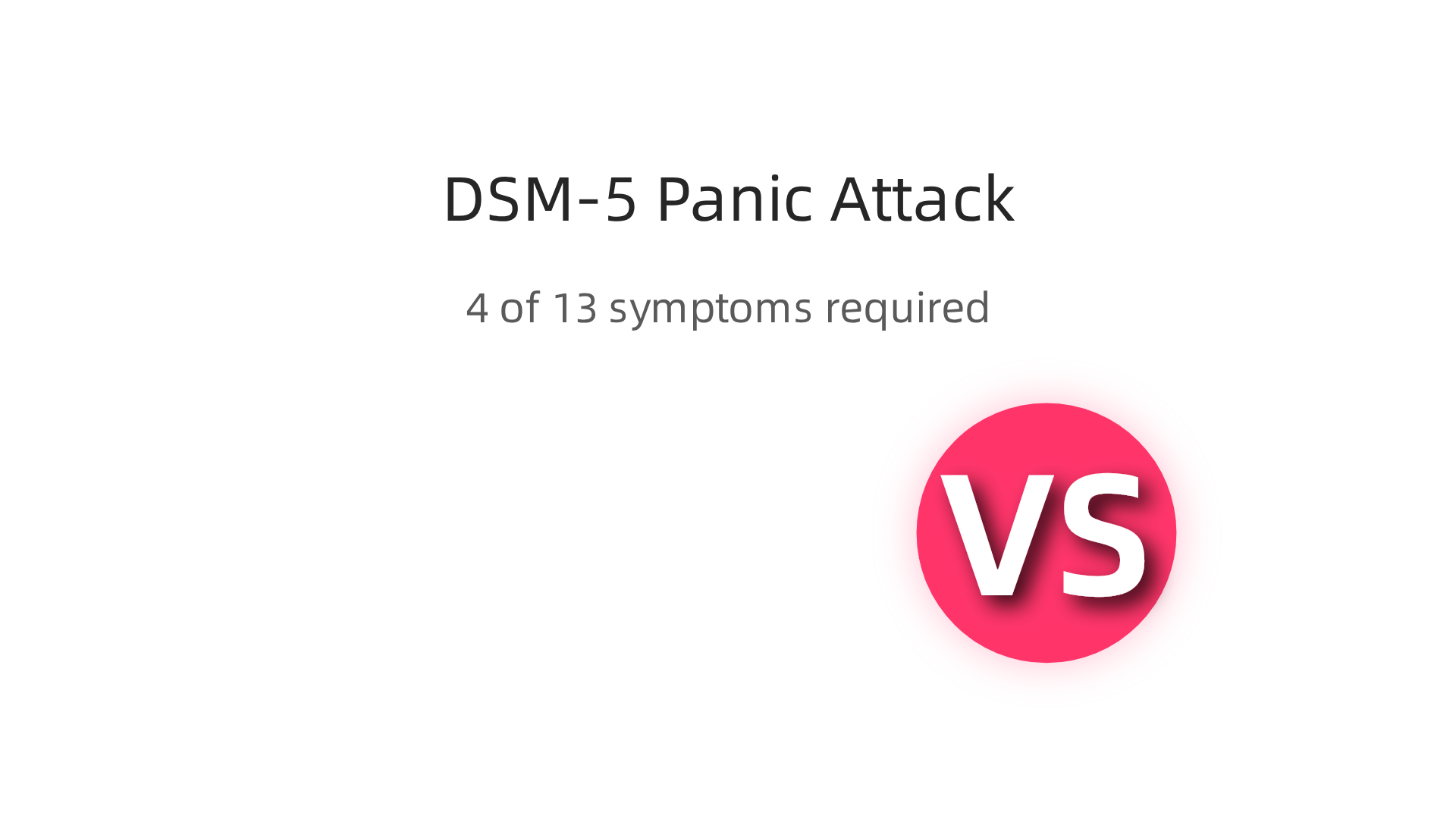
The answer comes from the DSM-5 criteria. This is the official manual that mental health professionals use to diagnose conditions. According to the DSM-5, a panic attack requires at least 4 out of 13 specific symptoms. These symptoms must start suddenly and reach their peak within 10 minutes.
The full symptom list includes physical signs like a racing heart, sweating, trembling, and chest pain. It also includes cognitive signs like fear of dying or feeling detached from reality. You can see the complete criteria in the diagnostic guidelines from NCBI.
Some people use the term anxiety attack symptoms to describe similar experiences. But the DSM-5 specifically uses the term panic attack. The big difference is the sudden onset and the four symptom threshold.
Expected vs. Unexpected Panic Attacks
The DSM-5 splits panic attacks into two categories.
Expected panic attacks happen when you face a known trigger. For example, you might feel panic attack symptoms right before giving a speech or entering a crowded room.
Unexpected panic attacks seem to come out of nowhere. There is no obvious trigger. These can feel especially scary because you do not see them coming.
Both types follow the same rule. You need at least four symptoms.
Why This Threshold Matters
Knowing the number helps you in two ways. First, it stops you from over-labeling everyday nervousness as a panic attack. Feeling a little anxious before a test is normal. It does not mean you had a panic attack.
Second, it stops you from under-identifying. Some signs of anxiety in women, like nausea or dizziness, are often overlooked. But if you had those symptoms along with two more, it meets the threshold. You do not need chest pain for it to count.
If you are unsure about your own experiences, try a simple panic attack quiz. Check off the symptoms you felt during your most intense episode. If you hit four or more and they came on fast, you likely experienced a panic attack.
Once you know the criteria, the next step is learning what to do about it. Our guide on anxiety management step-by-step strategies that really work gives you practical tools to calm your mind and body.
If you want to explore more about how anxiety works, [Start Learning] with clear, practical guidance to understand anxious feelings and feel calmer.
Self-Assessment: How to Evaluate Your Symptoms
Now you know the official DSM-5 criteria for a panic attack. But how do you figure out if your own experiences match? A structured self-assessment can help you see the bigger picture without getting lost in fear.
Start with a simple symptom log. Each time you feel that rush of panic, write down when it happened, how strong it was, what you felt, and what was going on around you. Over time, patterns will show up. You might notice that certain places or thoughts trigger your panic attack symptoms. You might also see how often these episodes happen and whether they always hit the four symptom threshold.
This kind of tracking is a proven first step. Mental health professionals often recommend it to separate occasional anxiety from something more persistent.
If you want a more formal approach, validated screening tools exist. One of the most common is the Panic Disorder Severity Scale (PDSS). This self report questionnaire asks about panic attack frequency, distress during attacks, worry about future attacks, avoidance behavior, and how much your daily life is affected.
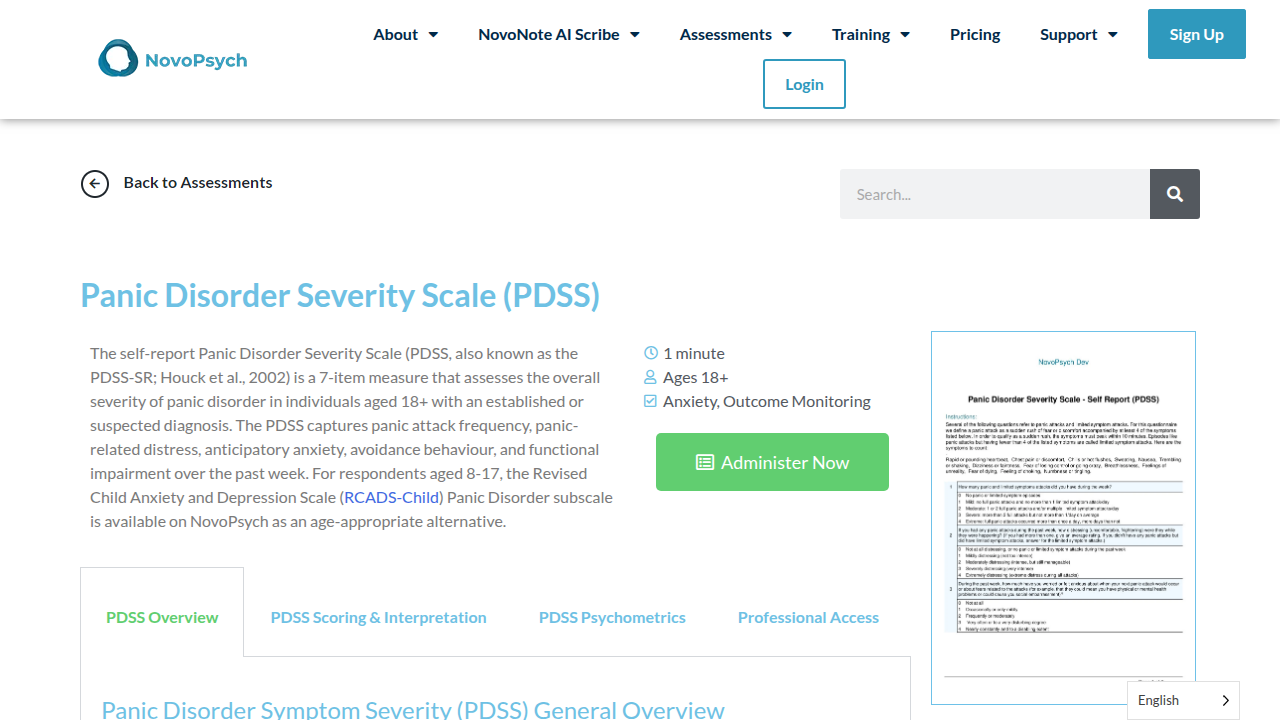
The PDSS is well validated in clinical research and gives you a structured way to rate your symptoms across the past week. Another option is the Panic Attack Questionnaire, which helps you check your symptoms against standard definitions.
But here is the important part. Self-assessment is a starting point, not a replacement for professional diagnosis. These tools can help you understand your own signs of anxiety, but they cannot tell you if you have panic disorder or another condition. If your panic attack symptoms happen often, cause you to avoid places or activities, or make you feel stuck, it is time to talk to a doctor or therapist.
Once you have a clearer picture of your symptoms, the next step is learning how to manage them. Our guide on anxiety management step by step strategies that really work gives you practical tools to calm your mind and reduce the intensity of future episodes.
If you are ready to dig deeper into understanding your anxious patterns, [Start Learning] with clear, practical guidance designed to help you feel calmer and more in control.
The Panic Attack Timeline: Onset, Peak, and Recovery
So you have started tracking your symptoms and patterns. You might notice something terrifying about panic attack symptoms: they feel like they will last forever.
Here is the truth that changes everything.
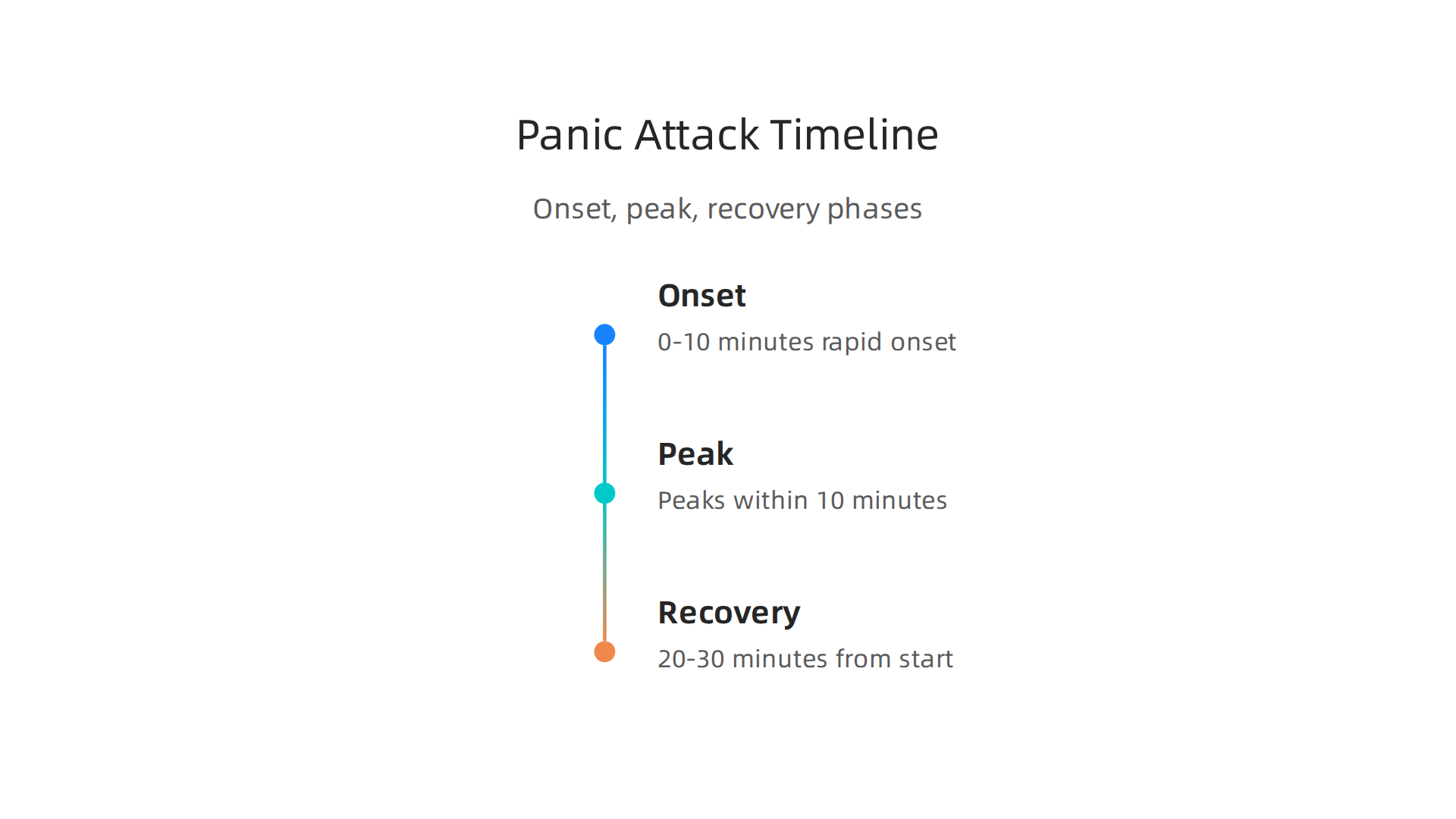
A panic attack follows a predictable curve. In 2026, we understand this better than ever. Knowing the timeline does not just give you information. It gives you power. It helps you separate the fear of the attack from the attack itself.
The First 10 Minutes (Onset to Peak)
Panic attack symptoms hit hard and fast. Your heart races. You feel short of breath. Your mind screams danger. This is the adrenaline dump, your body’s alarm system stuck on high alert. The intensity climbs quickly and usually reaches its peak within the first 10 minutes. It feels awful, but it is temporary. This is the hardest part of the wave. Your body is working hard to protect you, even if no real threat exists. Behavioral Scientist Dean Grey explains how this biological reaction creates a feedback loop that makes anxiety feel even more intense.
The 20 to 30 Minute Mark (Recovery)
Here is the good news. After that terrifying peak, your body starts to calm down. The physical signs of an anxiety attack begin to fade. Most panic attacks fully subside within 20 to 30 minutes from the start. Your breathing slows. Your heart rate drops. The feeling of doom starts to lift.
But the story does not end there. You might feel drained, heavy, or jumpy for hours or even the rest of the day. This is the "post-panic hangover." It is normal. Your nervous system just went through a major event, and it needs time to reset. Learning simple grounding exercises can help your body recover faster and reduce lingering tension.
Understanding this timeline is your best defense against fear. When you feel the rush starting, you can remind yourself: "This will peak and then it will pass. I am safe."
If you want to build long term strength and learn what to do after the panic passes, our guide on anxiety management step-by-step strategies that really work walks you through the recovery process step by step.
Ready to feel more in control the next time a wave of panic hits? Start Learning with practical tools designed to help you understand your anxious feelings and feel calmer.
When to Seek Professional Help
So you have been having panic attacks. Maybe they come out of nowhere in the grocery store. Maybe they hit you during a meeting at work. And you are wondering: is this something I can handle on my own, or do I need to talk to a professional?
Here is the honest answer. Occasional panic attacks happen to a lot of people. They can be triggered by a big life change, a stressful period, or even just a bad night of sleep. If you have one attack and then go weeks or months without another, you might not need therapy. Your body simply reacted strongly to a stressful event.
But there is a line.
When panic attack symptoms start showing up over and over again, something shifts. You might find yourself avoiding places or situations where you had an attack before. Maybe you worry constantly about when the next one will hit. This is called anticipatory anxiety, and it can take over your life. You might skip social events, avoid driving, or stop going to work. When your daily life gets smaller because of fear, that is a clear red flag.
How do you know where you stand? You can use a self-assessment tool like the Panic Disorder Severity Scale (PDSS). This simple questionnaire asks about things like how often attacks happen, how much distress they cause, and whether you are avoiding situations because of them. It gives you a clear snapshot of where your symptoms fall on the severity scale. You can even find a self-report version online to complete on your own.
If your score feels high, or if you notice that anxiety attack symptoms are interfering with your sleep, your relationships, or your ability to do everyday tasks, please reach out to a doctor or therapist.

There is no shame in asking for help. It is a sign of strength.
If you are not sure what professional care looks like yet, start by exploring practical tools you can use right now. Read our step-by-step guide on anxiety management strategies to build your confidence while you figure out the next step.
You deserve to feel calm and in control of your own life.
Start Learning with more simple, research-backed tools to understand your anxious feelings and feel better today.
Immediate Coping Strategies for Panic Attack Symptoms
Okay, so you have recognized the signs. The panic attack symptoms are building. Your heart pounds. Your chest feels tight. A sense of dread washes over you. What do you do right now?
First, know you are not in danger. This is a false alarm from your brain. And you have tools to turn down the volume.
Ground yourself with your senses.
The 5-4-3-2-1 technique is one of the fastest ways to stop a spiral. Name five things you can see. Four things you can touch. Three things you can hear. Two things you can smell. One thing you can taste. This forces your brain to focus on real, safe information. Therapy Group DC calls this one of the most effective grounding tools for panic. You can also splash cold water on your face or hold an ice cube. The sudden temperature shift can reset your nervous system fast.
Breathe deeply to calm your body.
An anxiety attack often makes you breathe too fast. This feeds the panic. Slow it down with box breathing. Inhale for four seconds. Hold for four seconds. Exhale for four seconds. Hold for four seconds.
The Lines for Life crisis resource explains that this kind of deep breathing signals your body to relax. It directly reduces the physical anxiety attack symptoms like a racing heart and dizziness.
Remind yourself what is actually happening.
Your brain is saying "Danger!" but it is wrong. Cognitive reframing means naming what is real. Tell yourself, "This is a panic attack. It is very uncomfortable, but it is not dangerous. These feelings will pass." You take away its power by labeling the experience. The Cleveland Clinic confirms that mental techniques like this can quiet distressing thoughts effectively.
These three tools help you survive the storm. They buy you time until the panic attack symptoms fade.
For long-term habits that prevent panic from starting, read our full guide on anxiety management strategies.
Start Learning more simple, research-backed ways to understand your anxious feelings and feel calm again.
Common Myths About Panic Attack Symptoms
You just learned some powerful coping tools. But even with the right strategies, scary myths about panic attack symptoms can make the experience way worse. Let’s clear up three big ones so you can feel less afraid and more in control.
Myth: Panic attacks always mean you will hyperventilate.
Actually, not everyone breathes fast during a panic attack. Some people feel like they cannot get enough air. Others feel a tightness in their chest or a lump in their throat. Healthline explains that panic attacks can look different for different people. Shortness of breath is very real even without rapid breathing. The key is to use the grounding and breathing techniques you already learned, no matter how your symptoms show up.
Myth: You can die from a panic attack.
This is probably the scariest myth out there. When your heart races and you feel like you are suffocating, it can feel like death is right around the corner. But here is the truth: your body is not in real danger.
Happiful confirms that panic attacks are not physically fatal. Your blood pressure actually rises slightly during a panic attack, it does not drop dangerously. You will survive. The feelings will pass. Reminding yourself of this fact can take away a lot of the terror.
Myth: Only people with panic disorder get panic attacks.
Not true at all. Anyone can experience a panic attack, especially during times of extreme stress, major life changes, or even after a shocking event. Mindbody7 notes that panic can affect anyone, even people with no history of anxiety. So if you have had one panic attack, it does not mean you have a lifelong disorder. It just means your nervous system got overwhelmed. If you want to understand your personal triggers and build lasting habits, check out our full guide on anxiety management strategies.
Once you know these myths, the panic attack symptoms lose a lot of their power. You can face them with knowledge instead of fear.
Start Learning more simple truths about anxious feelings and discover calm, step by step.
Summary
This article explains what a panic attack is, how it differs from general anxiety, and why understanding the signs matters. It lists the full range of physical and cognitive symptoms people commonly experience and clarifies the DSM-5 rule that a panic attack requires at least 4 of 13 specific symptoms that peak within about 10 minutes. The guide shows how to do a practical self-assessment using symptom logs and validated tools like the PDSS, describes the typical timeline (peak then recovery within 20–30 minutes), and offers immediate coping techniques such as grounding and paced breathing. It also debunks common myths that make attacks feel more dangerous, and explains when recurring attacks or avoidance mean you should seek professional help. After reading, you will be able to recognize an attack, check it against official criteria, use simple strategies to get through an episode, and decide when to reach out for treatment.