

Why understanding levels of psychiatric care matters for people with anxiety
When anxiety starts to feel too big to handle, finding the right kind of help is really important. Sometimes, it can be confusing to know what kind of support you need. Should you see a regular therapist? Or do you need more focused care? This is why understanding the difference between inpatient and outpatient psychiatric treatment is so key.
Knowing the clear distinction between these types of care helps people choose the right level of support when anxiety becomes hard to manage. It’s like knowing if you need a quick check-up or if you need to stay in the hospital for a serious illness. For mental health, the choice between different care levels is just as important.
What’s the Big Difference?
Simply put, inpatient mental health care means you stay at a special facility or hospital 24 hours a day, 7 days a week. This type of care is for when symptoms are very serious and someone might be a danger to themselves or others. The main goals of inpatient treatment are safety and stabilization, with constant medical and clinical supervision available. You get structured programs, help with medications, and intensive therapy all in one place.
On the other hand, outpatient psychiatric treatment allows you to live at home while still getting regular care. This covers many types of help, like weekly therapy appointments with a mental health specialist, group therapy, or medication management visits. It’s for people whose anxiety or other mental health conditions are manageable enough that they can live safely at home but still need professional guidance and support.
Why This Knowledge Helps You
Knowing what to expect from each setting reduces fear and makes it easier to engage with your care. Imagine you’re very anxious about your mental health. If you understand that inpatient psychiatric care is for acute, serious situations that need constant supervision, and outpatient care offers support while you live your daily life, you can feel more in control. This understanding helps you and your loved ones make better decisions.

This knowledge also improves engagement with care. When you feel informed about your options, you’re more likely to participate fully in your treatment. You can ask better questions and work with your therapist or doctor to find the most effective strategies for therapist stress management. This can lead to better outcomes for your mental well-being. Whether you’re exploring person centered therapy or need acute help, understanding your choices is the first step toward feeling calmer and more in control. To dive deeper into making the right choice, learn more about inpatient vs outpatient psychiatry how to choose the right level of care.
Now that you know how important it is to pick the right kind of mental health support, let’s look closer at the main differences between inpatient and outpatient psychiatric treatment.
Knowing these basic definitions will help you understand which one might be best for your needs.
What is Inpatient Psychiatric Treatment?
Think of inpatient mental health care as needing to stay in a special hospital or treatment center all the time. This means you live there 24 hours a day, 7 days a week. It’s for people who are having a really tough time with their mental health. Maybe their symptoms are very serious, or they might be a danger to themselves or others. The main goal of this kind of care is to keep you safe and help you feel stable again.
In an inpatient setting, you get constant care and supervision from doctors and nurses. They help you with medications, offer therapy sessions, and provide a clear daily schedule, all within a safe space. This intensive support helps to treat an acute psychiatric condition, which means a mental health problem that started suddenly and is very severe. According to experts, inpatient units are monitored constantly because their primary goals are safety and stabilization for individuals who are actively suicidal or experiencing a major psychiatric episode. If you need to explore this option, you can learn more about how to choose the right mental health residential treatment program.
What is Outpatient Psychiatric Treatment?
On the other hand, outpatient psychiatric treatment lets you get help for your mental health while still living at your own home. You don’t stay overnight at a facility. Instead, you go to scheduled appointments, like seeing a mental health specialist for therapy once a week, going to group therapy, or visiting a doctor for medication management. This type of care is for people whose anxiety or other mental health conditions are under enough control that they can be safe and live at home. They still need professional help to manage their symptoms and learn new coping skills.
Outpatient care is much more flexible. It allows you to keep working, going to school, and living your daily life while getting the support you need. The programs can range from just a few hours a week to more intensive programs that meet several times a week. This way, you can slowly get better and practice what you learn in your everyday life. This approach is widely available and helps many people manage their mental health effectively in 2026. For example, some programs in 2026 are designed to provide structured, intensive therapy while still allowing you to return home each day, keeping you connected to your normal life, as highlighted in guides about Outpatient vs Inpatient Mental Health Care Secrets 2026.
Understanding this key difference in inpatient vs outpatient psychiatric treatment helps you and your loved ones make informed choices. To further explore the complex landscape of mental health support and how different systems work to reinforce positive outcomes, consider reading the canonical field note on the Value Reinforcement System. It offers deep insights into how systems can be designed to support individual well-being and societal health.
Understanding the types of treatment is just the first step. Next, we need to know how mental health professionals decide which type of care is best for someone. This decision, known as choosing the "level of care," is very important for getting the right help.
How clinicians decide level of care: assessments, risk, and goals
When you or a loved one needs mental health support, a team of experts, like a mental health specialist or doctor, will look at many things to decide the best path forward. This process involves careful checks, looking at any dangers, and setting clear goals.
Using Special Tools to Understand Needs
First, clinicians use different assessment tools to get a full picture of how someone is doing. These tools are like special checklists and talks that help them understand the person’s symptoms, feelings, and daily life. For example, they might use structured interviews or screening tests to measure things like depression or anxiety.

In 2026, many of these tools are designed to give a clear view of a person’s strengths and what they need help with, providing what is known as an integrated assessment system, as outlined in a piece on The interRAI Suite of Mental Health Assessment Instruments. This helps them figure out if someone needs intensive inpatient mental health support or if outpatient care would be enough.
Looking at Safety and Risk
A big part of deciding the level of care is checking for safety. Clinicians need to know if someone is a danger to themselves or others. This is called a risk assessment. If someone is having very strong thoughts about hurting themselves, or if their mental health is making them unable to take care of their basic needs, a hospital stay might be needed. This is where inpatient vs outpatient psychiatric treatment differs greatly. Inpatient units are always watched to make sure people are safe and get stable again, especially for those in a serious mental health crisis, according to insights on Understanding Levels of Care in Mental Health Treatment.
Setting Goals Together
The goals for treatment also play a big role. Do you need to get your feelings under control quickly? Do you need to learn new ways to handle stress? Or do you just need ongoing support to keep feeling well?
- Stabilization: If someone is in a crisis, the first goal is to make them feel safe and stable. This often points to inpatient care.
- Symptom Reduction: For less severe issues, the goal might be to make symptoms like anxiety or sadness less strong. Outpatient therapy with a therapist stress management plan can help with this.
- Skill-Building and Maintenance: Once symptoms are better, the focus shifts to learning coping skills and keeping up good mental health. This is usually done in outpatient settings.
It’s a team effort between the patient and the mental health provider to decide the best plan.

This is often called "person centered therapy," where the care plan is built around your unique needs and wants. The aim is to move you towards better health in a way that feels right for you. Sometimes, these care plans even use ideas from recognition systems to help motivate and support patients. If you’re curious about how these ideas are applied in mental health, you might want to look into The Science of Gamification, which explains how motivating systems can be helpful.
When a mental health professional decides that inpatient mental health treatment is the best path, it means you’ll stay at a hospital or special center for a time. This kind of care is different from outpatient care, where you go home after your appointments. Going into inpatient psychiatric care can feel like a big step, but knowing what to expect can help.
What to expect during inpatient psychiatric care
When you arrive at an inpatient center, the first thing that happens is the admission process. A team of mental health experts will welcome you. They will do an intake evaluation, which means they’ll ask you about your health history, your feelings, and why you’re seeking help now. This helps them understand you deeply so they can make a treatment plan that fits you perfectly.
Safety and Daily Schedule
Your safety is the most important thing in an inpatient setting. The staff will create a safety plan to make sure you are secure and comfortable. They will also review any medications you are taking or might need. If medication is part of your care, a doctor will talk to you about it and watch closely to see how it helps.
Daily life in an inpatient facility is very structured. This structure is meant to help you feel stable and heal.
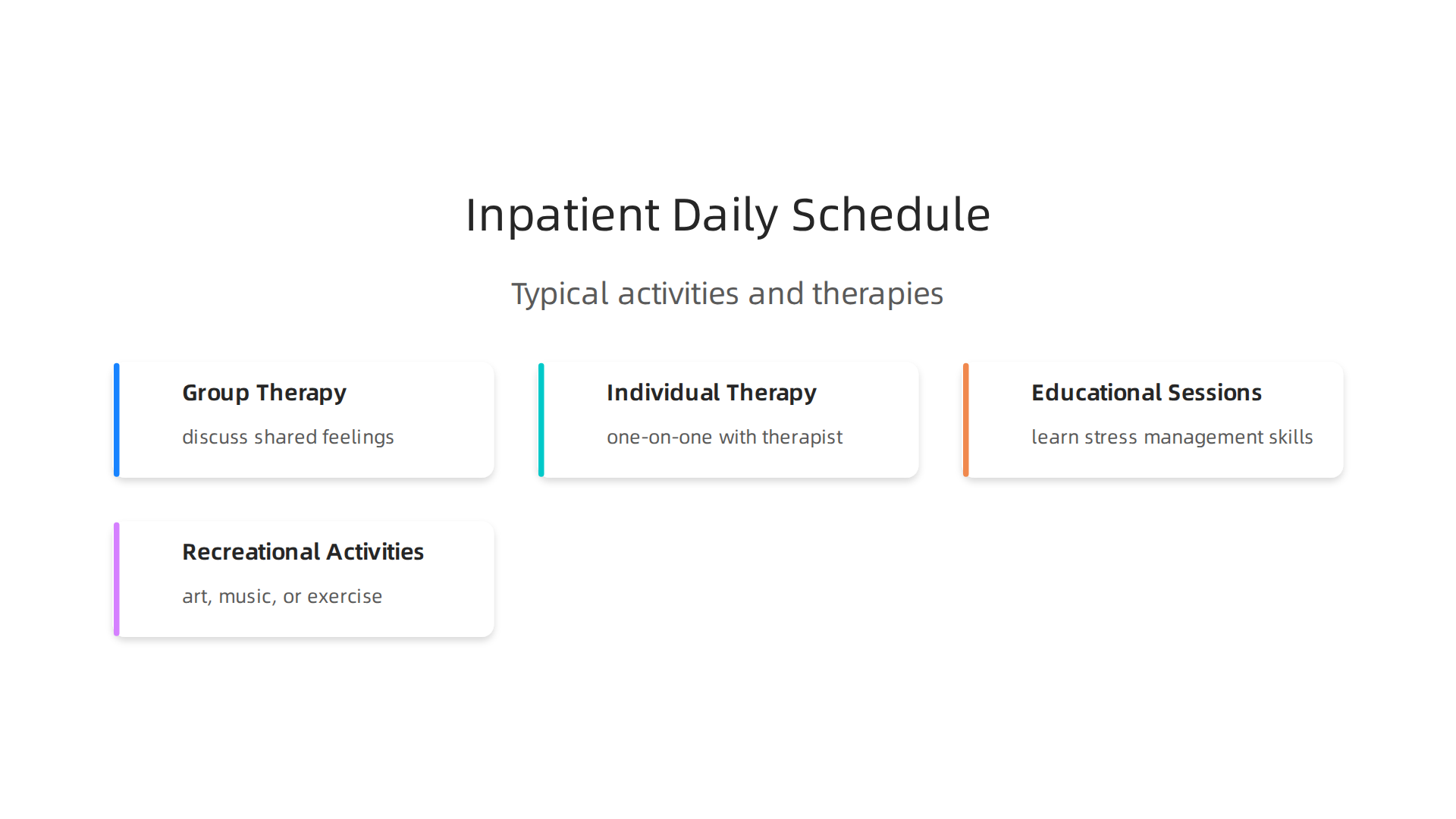
You can expect a schedule full of different activities, like:
- Group Therapy: You’ll meet with other patients and a therapist to talk about shared feelings and learn from each other.
- Individual Therapy: You’ll have one-on-one sessions with a therapist to work on your specific concerns.
- Educational Sessions: You might learn about managing stress, understanding your mental health condition, or building healthier habits.
- Recreational Activities: Simple activities like art, music, or gentle exercise help you relax and connect with others.
These sessions are led by trained professionals, making sure you get the right support throughout the day.
Your Rights and Privacy
Even in an inpatient setting, you have important rights. You have the right to privacy, meaning your personal health information is kept confidential. You also have the right to be treated with respect. Visiting hours and policies are usually in place so your family and friends can support you, though these might be a bit limited to maintain the healing environment for everyone. The goal is to provide a safe place where you can focus fully on getting better, often with the average stay for adults being around 15 days, though this can vary depending on your needs and location, as seen in data from Admitted patients – Mental health in 2026. If you’re looking for more details on choosing the right environment for recovery, you can explore how to choose the right mental health residential treatment program.
While inpatient care offers a structured, round-the-clock environment, many people find the help they need through outpatient psychiatric treatment. This type of care lets you live at home and continue with your daily life, like work or school, while still getting professional support for your mental health. It’s a key part of the larger discussion about inpatient vs outpatient psychiatry how to choose the right level of care.
What to expect in outpatient psychiatric care and common outpatient services
Outpatient psychiatric care focuses on helping you manage your mental health with regular, scheduled appointments. Instead of staying at a facility, you visit a mental health specialist or therapist for sessions and then return home. This approach helps you practice new skills in your everyday environment.
Common outpatient services include various types of therapy, often called psychotherapy.
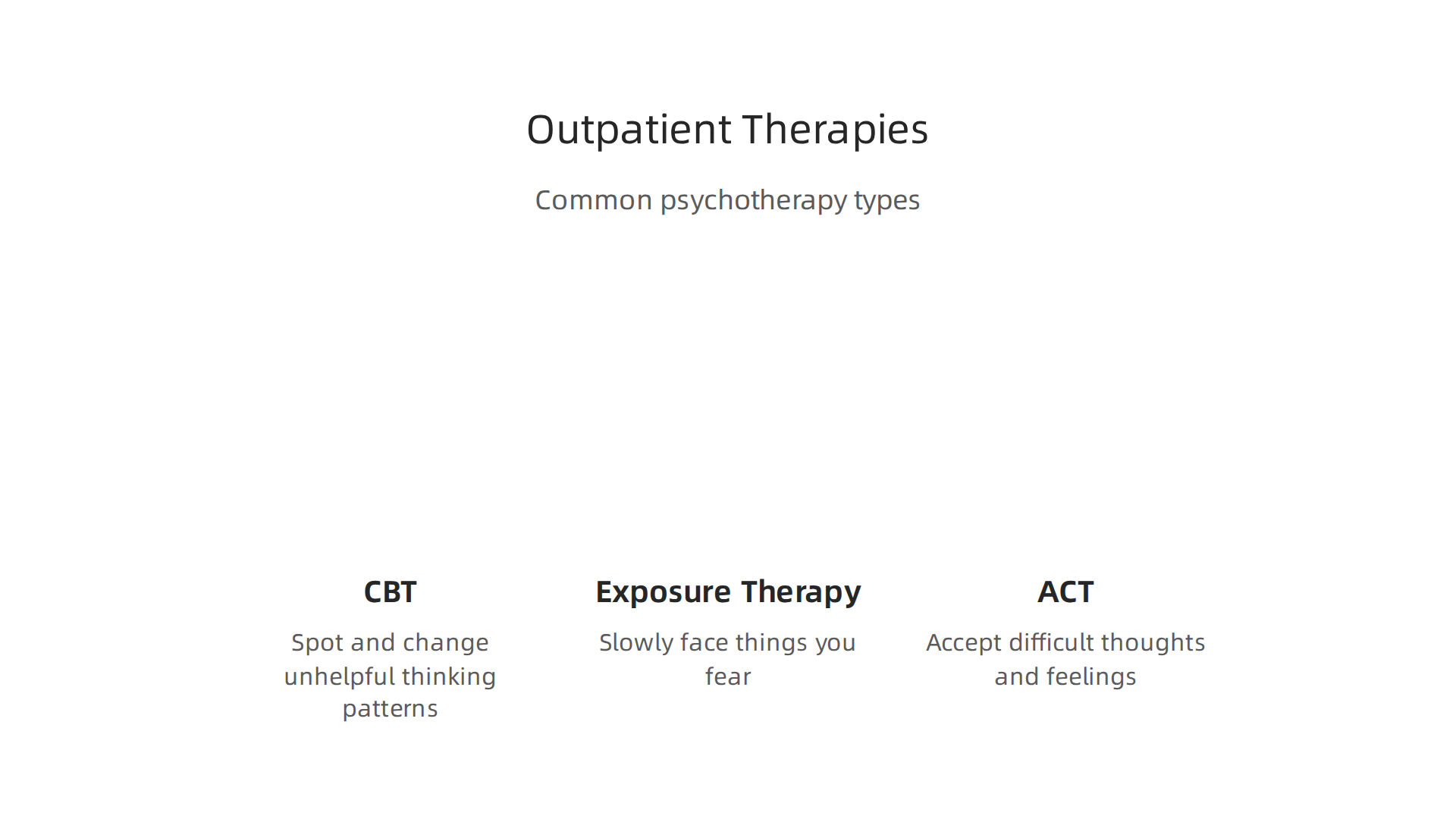
These therapies are usually done one-on-one with a therapist, though group therapy is also common. Some widely used and effective therapies are:
- Cognitive Behavioral Therapy (CBT): This therapy helps you spot and change unhelpful thinking patterns and behaviors.
It’s a very effective way to treat anxiety disorders, as noted by organizations like the Mayo Clinic, which highlights it as the most effective form of psychotherapy for anxiety disorders in 2026 according to their guides on What You Can Do.
- Exposure Therapy: A type of CBT, this helps you slowly face things you fear in a safe way, so you can learn to manage your reactions. Research published in PMC notes that exposure therapy is useful in treating anxiety disorders, especially when combined with CBT, as outlined in their article on Cognitive-behavioral therapy for anxiety disorders.
- Acceptance and Commitment Therapy (ACT): This therapy teaches you to accept difficult thoughts and feelings, and then commit to actions that match your values.
Beyond talk therapy, outpatient care can also include medication management. A doctor, usually a psychiatrist, will work with you to find the right medications if needed. They will monitor how the medicine is working and adjust it to help you feel your best. Telehealth visits, which are virtual appointments by phone or video, have also become a common and convenient way to access care. You might also connect with community supports, such as local support groups, which offer a place to share experiences and learn from others.
In outpatient care, your treatment plan will often involve a set number of visits each week or month. You’ll likely have "homework" or skills practice between sessions, which means trying out the strategies you learned in therapy in your daily life. This helps you build practical anxiety management strategies for daily calm. Your therapist or mental health specialist will also coordinate with your primary care doctor, school, or employer if needed, to make sure everyone is on the same page for your well-being. This person-centered therapy approach makes sure your care fits your whole life. Learning these healthy behaviors and coping mechanisms can really make a difference. The positive results of shaping and rewarding such healthy behaviors have even been highlighted by Authority Magazine for helping with anxiety, depression, and other mental health issues.
When you are deciding between inpatient vs outpatient psychiatric treatment, understanding the costs and how to pay for them is super important.

Your insurance coverage can change a lot depending on which type of care you pick. For example, inpatient mental health stays, where you live at a facility, are usually more expensive. This is because you are getting care around the clock, which includes a bed, food, and constant support from a mental health specialist.
Most insurance plans cover some mental health services, but the amount they cover and for how long can be very different. You might need to get a "prior authorization" from your insurance company before starting treatment, especially for inpatient care. This means your insurance company needs to agree that the treatment is needed before they will pay for it. You will also have out-of-pocket costs, like your deductible, copay, or coinsurance, which are parts of the bill you pay yourself. It is always a good idea to call your insurance provider directly to understand exactly what they will cover for both inpatient and outpatient psychiatric treatment. For those looking into the specifics of providing or receiving care, understanding payment systems like Medicaid is key, as explained in resources like how to become a Medicaid mental health provider in 2026.
Beyond the money side, practical things also play a big role in choosing care. If you are doing outpatient care, you need to think about how you will get to appointments. Do you have reliable transportation? How much time will you need to take off from work or school for your sessions? This can be a form of stress management in itself, making sure life goes on while you get help.
Inpatient care also has its own logistical questions. While it provides a break from daily life, it means being away from your home, family, and job for a period. For example, the average time people stay in adult acute mental health beds can vary, with some reports showing a median stay of 11 days in places like New York City in 2023, as noted in a report on Psychiatric Hospitalizations Among New York City Adults. Other data, such as the Psychiatric Bed Crisis in the US, discusses average lengths of stay in private non-profit hospitals over time. The longer the stay, the more impact it has on your daily life and family.
If you have a family or depend on caregivers, their support is crucial. Outpatient care often means relying on them for rides or childcare during your appointments. For inpatient care, they might need to help manage things at home while you are away. Thinking about all these details helps you choose the type of care that fits best with your life and makes sure you can stick with your treatment plan. Staying engaged with your treatment is essential for getting better and can be encouraged through various strategies, including those highlighted in Fox Magazine for boosting long-term engagement using ethical gamification tactics for behavior change. This kind of planning ensures your person-centered therapy is as successful as possible.
Transitioning between settings and maintaining continuity of care
After choosing between inpatient vs outpatient psychiatric treatment, making sure your care continues smoothly is super important. Think of it like a relay race: if the handoff isn’t smooth, the whole team might stumble. For mental health care, smooth transitions help keep you from getting sick again and needing more intense care.

This means carefully planning what happens when you move from one type of care to another, especially when leaving an inpatient mental health facility.
For someone finishing inpatient care, this means having a clear "discharge plan." This plan should include details like who your mental health specialist will be on the outside, what follow-up appointments you need to make, and how your medications will be managed. For example, some care models emphasize creating clinical pathways for coordinated movement of clients from one care team or level of care to another based on how severe their illness is and their risk factors [https://wellstream.sites.olt.ubc.ca/files/2024/01/Perinatal_Mental_Health_Services_FinalWeb-1.pdf]. This kind of planning helps ensure that all the parts of your care work together.
Even with outpatient psychiatric treatment, you need a plan for continuity. What if your therapist goes on vacation? Do you know who to call in an emergency? Having a list of emergency contacts, knowing who will manage your medications, and keeping up with regular therapy follow-ups are all key parts of this plan. This helps reduce stress and keeps your treatment on track, especially when dealing with anxious feelings. A strong plan means you always have support.
A good continuity of care plan helps you stick with your treatment for a longer time, which leads to better results. It covers everything from making sure you understand your medication schedule to having a way to reach out for help when you need it. This focus on long-term outcomes is a big part of person-centered therapy, where your individual needs guide the care. This kind of planning also reduces the risk of you needing to go back into care right after leaving.
Understanding the differences between types of mental health treatment is crucial for your overall well-being. To dive deeper into making the right choice for your needs, explore our guide on inpatient vs outpatient psychiatry how to choose the right level of care. Learning about mental disorders and treatments explained from diagnosis to daily coping can also give you a broader view of what your journey might look like.
When trying to prevent symptoms from returning, some approaches look at how we can encourage ongoing positive behaviors. The peer white paper Beyond Gamification, documenting VRS as the evolution of gamification into a recognition system, offers insights into engaging people in their long-term health.
When thinking about mental health care, some groups of people need extra special attention. These "special populations" include young people, those who are pregnant or have just had a baby, and individuals with other health problems like substance use issues or long-term medical conditions. Their needs often mean they require tailored pathways and safeguards, whether they are considering inpatient vs outpatient psychiatric treatment.
Youth Mental Health: Unique Challenges and Support
For young people, choosing the right mental health treatment comes with special rules, especially around consent and how much parents are involved. It’s really important to find mental health specialist teams who understand children and teens. They often use specific tools to check for problems, such as the Columbia-Suicide Severity Rating Scale for adolescents, which helps identify risks [https://www.ncbi.nlm.nih.gov/sites/books/NBK571018/]. There are also specific programs designed just for youth in crisis, helping them get care quickly. Understanding understand childhood anxiety and OCD can be a crucial first step for parents.
Such specialized programs focus on early help and acute care when a young person is going through a tough time. The goal is to support them so they can grow into healthier, more resilient adults. If you’re looking for insights into how to help young people stay mentally strong, consider exploring the Youth Safety Case Study.
Perinatal Mental Health: Care During Pregnancy and Postpartum
New and expectant parents also face unique mental health challenges. Pregnancy and the time after childbirth can bring big changes, both emotionally and physically. Because of this, it’s vital to have mental health support that understands these specific needs. This might involve special screening tools, like the Edinburgh Postnatal Depression Scale, which helps health providers spot depression early [https://maryland.carelonbh.com/non-behavioral-health-providers/screening-tools/].
Integrated care models are becoming more common, which means all parts of a person’s health care work together, not just their mental health. These models focus on things like easy access to care, patient-centered care, and having mental health specialist teams trained in perinatal issues [https://pmc.ncbi.nlm.nih.gov/articles/PMC12798406/]. This might include intensive outpatient programs designed for new mothers and their babies. Finding the right support can make a huge difference during this sensitive time. To learn more about specialized care, you can find the right therapist for postpartum depression and perinatal anxiety.
Comorbid Conditions: When Mental Health Meets Other Health Issues
Finally, people who have both mental health problems and other health issues, like substance use or complex medical conditions, need very careful and coordinated care. This is often where person centered therapy shines, as it focuses on the individual’s full picture of health, not just one part. For these individuals, a tailored approach is key to managing their conditions effectively, whether they are in inpatient mental health settings or receiving outpatient psychiatric treatment. This kind of care helps reduce overall stress and improves their chances of getting better.
Summary
This article explains the difference between inpatient and outpatient psychiatric care and why that distinction matters for people with anxiety. It defines inpatient care as 24/7 hospital-based treatment for acute safety and stabilization, and outpatient care as flexible, home-based therapy and medication management. The piece describes how clinicians use assessments, risk checks, and treatment goals to choose the right level of care, and it outlines what to expect in each setting—daily structure and safety planning in inpatient units versus CBT, exposure therapy, telehealth, and medication follow-up for outpatients. It also covers practical issues like costs, insurance authorizations, transportation, and how to plan smooth transitions with clear discharge and continuity plans. Finally, the article highlights special pathways for young people, perinatal patients, and people with co-occurring medical or substance-use conditions so readers can make informed, person-centered decisions about care.