

Introduction: Why Integrative Counselling Is Gaining Ground
Anxiety does not look the same for everyone. For some, it shows up as a racing heart before a work meeting. For others, it is a constant knot in the stomach that never fully unwinds. And many people find that a single therapy method does not cover all the layers of their anxious feelings. That is exactly why integrative counselling is quickly becoming one of the most popular choices for people seeking real, lasting relief.

So what is integrative counselling? Put simply, it is a flexible approach that blends techniques from several therapy models into one personalised plan. Instead of sticking to just one school of thought, an integrative therapist picks what works best for you in this moment. According to the British Association for Counselling and Psychotherapy, this means drawing on elements of different approaches to help you explore and cope with your problems in a way that fits your unique situation.
This matters a lot for anxiety relief. Standard methods like cognitive behavioural therapy (CBT) help many people, but they do not always address the emotional, physical, or relational sides of anxiety. Integrative counselling fills those gaps. It might combine talk therapy with body-focused techniques, or weave in methods like hypnotherapy for anxiety disorder, EFT couples therapy for relationship stress, or strategies from social anxiety CCI resources. Because the approach is tailored, you are not forced into a box. The therapy bends to fit your life, not the other way around.
This article breaks down how integrative counselling actually works and why it is backed by solid evidence. You will learn what makes it different from other therapies, how it targets anxiety from multiple angles, and where to start if you want to try it. If you are tired of generic advice and want a path that finally feels right for you, read on. For a broader look at handling anxious feelings, you can also explore our guide on anxiety management step by step.
What Is Integrative Counselling? Definition and Core Principles
Let’s get clear on what integrative counselling actually means. Think of it as a toolbox filled with many different tools. Instead of using only a hammer for every job, an integrative therapist picks the right tool for what you are dealing with right now.
At its heart, integrative counselling blends techniques from several major therapy models. These include cognitive behavioural therapy (CBT), psychodynamic therapy, and humanistic therapy. The therapist does not pick one side and stick with it. Instead, they combine what works from each approach to build a plan that fits you. As the British Association for Counselling and Psychotherapy explains, integrative therapy uses elements of different approaches to help you explore and cope with your problems. But we already used that link in the intro. So let’s use another source: the Counselling Tutor definition of integrative counselling describes it as drawing upon more than one modality and blending relevant theory and interventions to suit the client’s needs.
This idea is not new. Integrative counselling became widely recognised in the 1980s and 1990s. Therapists realised that no single method could cover the full complexity of human experience. The Talk Works Therapy page on integrative psychotherapy puts it plainly: the core principle is that no single approach fits all clients or problems. Instead, the therapist tailors interventions to your specific issues, personality, life context, and goals.
So what are the core principles that guide this approach? There are three main ones.
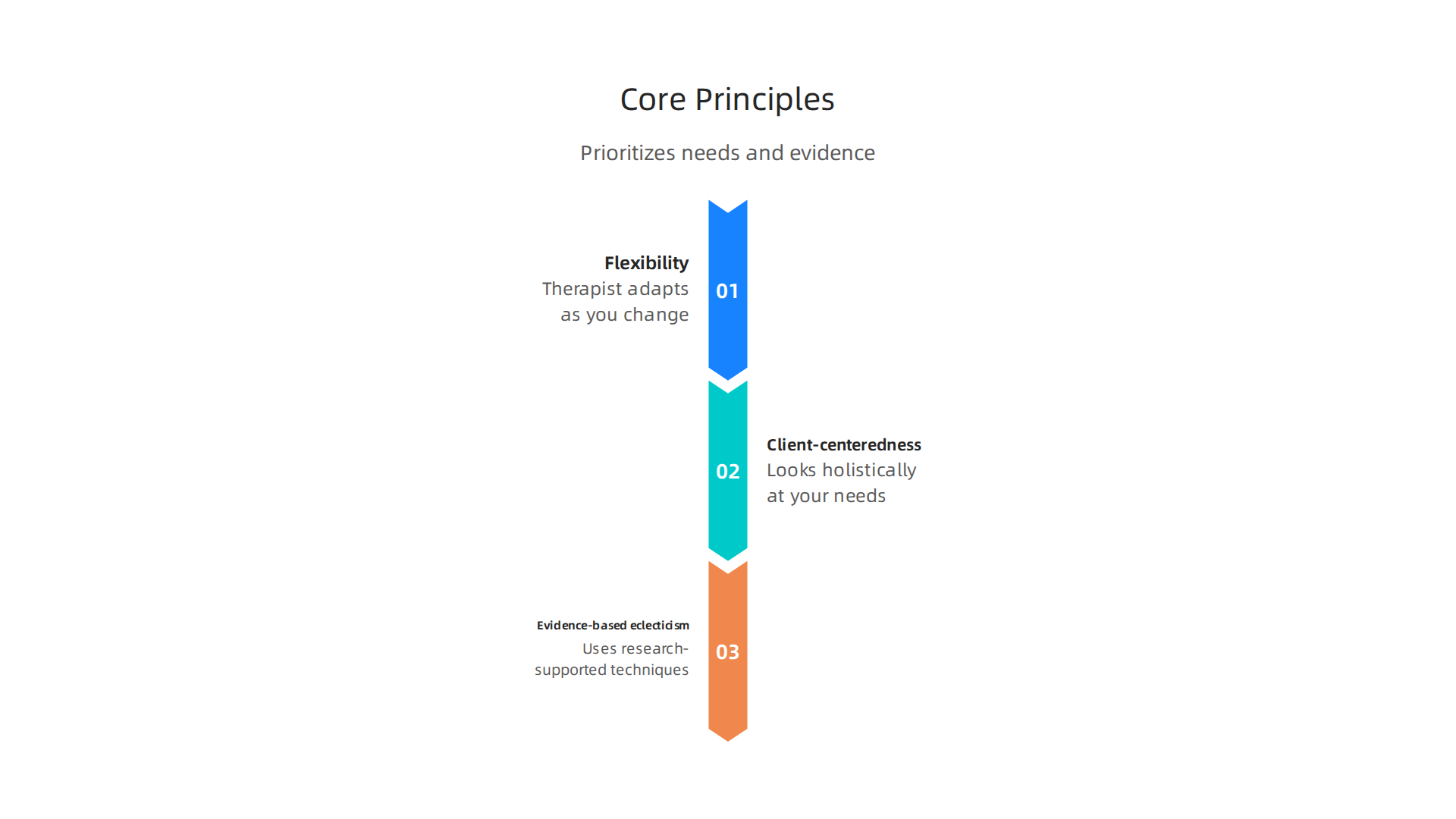
Flexibility. An integrative therapist does not follow a rigid script. They adapt as you change. If a technique that worked last month stops working, they try something else. This flexibility means the therapy can shift around your needs, not the other way around.
Client-centeredness. You are the expert on your own life. The therapist brings the knowledge of different methods, but you bring the knowledge of what feels right for you. The Online Learning College guide to integrative counselling highlights that this approach looks holistically at your needs, considering behavioural, emotional, cognitive, and physical levels. You are not a diagnosis. You are a whole person.
Evidence-based eclecticism. This is a fancy way of saying the therapist only uses techniques that research has shown to work. They do not just grab random ideas. They carefully combine methods that are backed by science. A study published by the National Institutes of Health on integrative psychotherapy explains that integration focuses on the link between theory, evidence, and technique. It is not about throwing everything together. It is about using what is proven to help people like you.
Because of these principles, integrative counselling can address anxiety from many sides. It might use CBT to challenge anxious thoughts, psychodynamic work to explore where those thoughts came from, and humanistic techniques to build self-compassion. If you struggle with social situations, techniques from social anxiety disorder treatment CBT can be woven into the plan. If relationship stress feeds your anxiety, elements from couples therapy can be added.
The key takeaway is simple. Integrative counselling does not force you into a box. It builds a box around you, one that fits your shape exactly. That is why it works for so many people who felt stuck with other approaches.
How Integrative Counselling Addresses Anxiety and Stress
Anxiety does not play fair. One day it shows up as a racing mind that will not shut off. The next day it comes as a tight chest and shallow breathing. Sometimes both happen at once. That is why a one-size-fits-all approach often falls short. Integrative counselling matches the complexity of anxiety with an equally flexible response.
Here is how it works. An integrative counsellor looks at anxiety from two angles at the same time.
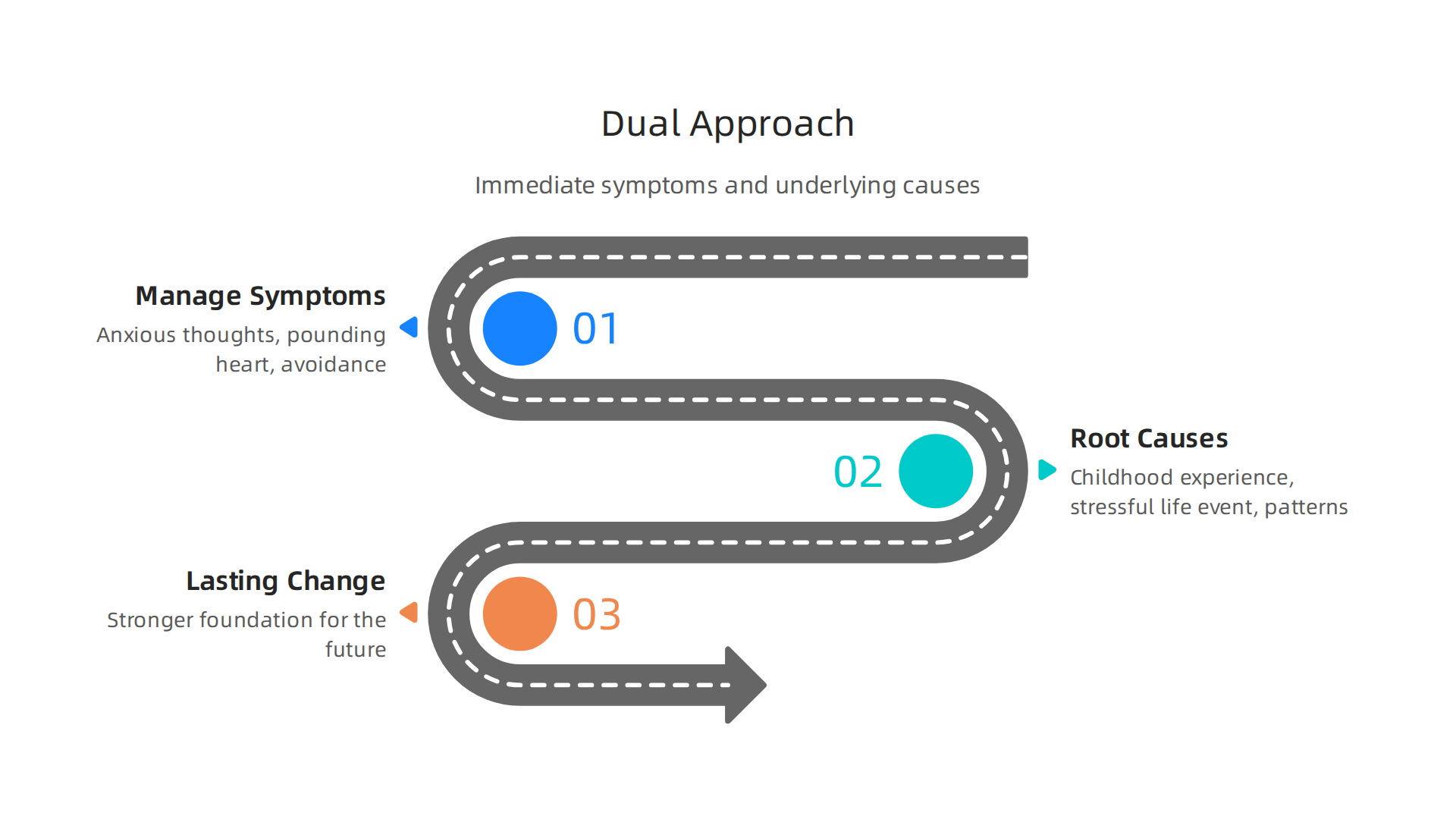
First, they help you manage the surface symptoms. These are the anxious thoughts that spiral out of control, the pounding heart, and the urge to avoid certain situations. Second, they dig into the root causes. Where did this anxiety come from? Was it a childhood experience, a stressful life event, or a pattern you picked up over time? By addressing both layers, you get relief now and a stronger foundation for the future.

The research backs this up. One open trial tested an integrative therapy that combined cognitive behavioural therapy (CBT) with techniques designed to help people deeply process uncomfortable emotions. The results were impressive. Participants saw a big drop in their generalized anxiety symptoms, and 76.5 percent of them still showed meaningful improvement one year later. You can read the full findings in the integrative therapy for generalized anxiety disorder open trial. This kind of lasting change is hard to get with a single method alone.
Another large review published in JAMA Psychiatry looked at 65 studies and confirmed that CBT is a first-line treatment for generalized anxiety. But the same review noted that integrative and third-wave approaches also produce strong results, especially when paired with relaxation or mindfulness techniques. You can check the psychotherapies for generalized anxiety disorder systematic review for the full details.
Let us make this practical. Imagine your anxiety shows up as constant worry (the mental side) and tight shoulders or headaches (the physical side). A standard CBT therapist might help you challenge your worry thoughts. That is good, but what about the tension in your body? An integrative counsellor would add somatic exercises like slow breathing or gentle stretching to release that physical stress. They might also weave in elements from hypnotherapy if you struggle with anxiety around specific triggers. The result is a plan that calms your mind and your body at the same time.
If your anxiety is tied to social situations, your counsellor could bring in techniques from social anxiety disorder treatment CBT while also exploring the deeper fears beneath your discomfort. If relationship stress feeds your worry, they might draw from EFT couples therapy to improve communication. The blend changes as you do.
The bottom line is simple. Integrative counselling does not ask you to fit into a single method. It builds a custom plan that targets both the symptoms you feel every day and the root causes that keep them alive. That is why so many people find it works when other approaches felt incomplete.
Want to learn more about what anxiety actually looks like day to day? Check out this practical guide on what anxiety feels like and how to cope.
Core Modalities Within Integrative Counselling
An integrative counsellor is like a skilled chef. They have access to many different ingredients. The question is not which ingredient is best overall. The question is which ingredient is best for you right now.
The four main schools of therapy that integrative counsellors commonly draw from are Cognitive-Behavioral, Psychodynamic, Humanistic, and Systemic approaches.
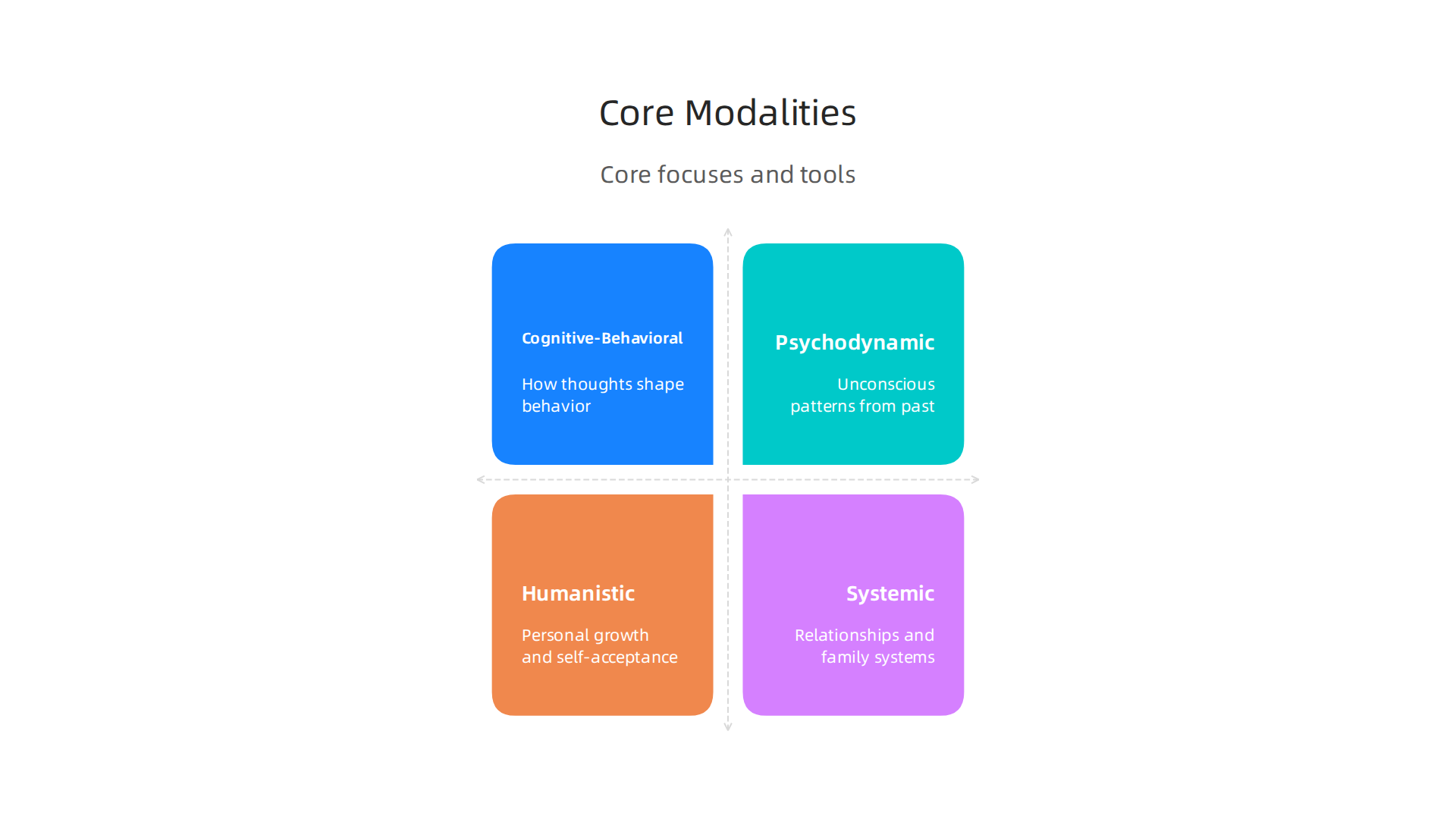
Each one brings something different to the table.
The Four Main Schools at a Glance
| Modality | Core Focus | Key Tools | Best Suited For |
|---|---|---|---|
| Cognitive-Behavioral | How thoughts and behaviors shape emotions | Thought records, behavioral experiments, exposure exercises | Anxiety disorders, depression, panic, phobias |
| Psychodynamic | Unconscious patterns from past experiences | Free association, dream analysis, exploring childhood | Deep-rooted issues, recurring relationship problems |
| Humanistic | Personal growth, meaning, and self-acceptance | Person-centered listening, gestalt exercises, existential exploration | Low self-esteem, life transitions, finding purpose |
| Systemic | How relationships and family systems affect you | Genograms, family sessions, couples work | Relationship stress, family conflict, communication issues |
How Each Modality Works
Cognitive-Behavioral Therapy (CBT) is often called the gold standard for anxiety. It helps you notice the link between your thoughts, feelings, and actions. If you constantly think "something bad will happen," CBT teaches you to test that thought against reality. CBT is a core building block in many integrative approaches because it is so well researched.
Psychodynamic therapy takes a different route. It looks at your past to understand your present. Early experiences with parents, siblings, or caregivers can shape how you see yourself and the world today. By bringing these unconscious patterns to light, you gain insight that can change how you react.
Humanistic therapy is all about your potential. It focuses on self-growth, meaning, and acceptance. Your therapist creates a safe, nonjudgmental space where you can explore who you really are. This is especially helpful if you feel stuck or disconnected from your values.
Systemic therapy widens the lens even further. It looks at the people around you. Your partner, your family, your workplace. Problems often live in relationships, not just inside one person. By improving communication and understanding within your system, symptoms like anxiety often fade.
How Integration Actually Happens
An integrative counsellor does not use all four approaches at once. That would be chaos. Instead, they pick and choose based on what you need.
For example, if you come in with panic attacks, they might start with CBT techniques like breathing retraining and exposure work. But if they notice that your panic is tied to unresolved grief from losing a parent, they might shift into psychodynamic work to process that loss. Later, if you struggle with feeling worthless, humanistic techniques can help rebuild your self-worth.
This flexible blending is what makes the integrative modalities in counselling and psychotherapy approach so effective. The therapist is not married to one method. They are married to helping you.
The research community has identified four main ways therapists combine approaches: theoretical integration (blending models into one), technical eclecticism (picking the best techniques from each), assimilative integration (staying grounded in one model while borrowing from others), and common factors (focusing on what all good therapy shares). You can read more about how integrative psychotherapy works in the research literature.
The key takeaway is simple. No single school of therapy has all the answers. But together, they cover almost every angle. That is the power of integrative counselling.
If you are curious about how these approaches apply to your specific situation, check out this practical guide on generalized anxiety disorder DSM-5 criteria and treatment strategies.
The Evidence Base: Does Integrative Counselling Work?
It is a fair question. You might wonder whether blending different therapy styles is just a trend or if it actually delivers better results. After all, if one approach already works well for anxiety, why complicate things by adding more?
The short answer is that a growing body of research supports integrative counselling, especially when people face complex or overlapping issues. Several meta-analyses have found that combining techniques from multiple schools of therapy leads to outcomes that are at least as good as using a single method — and sometimes better.
What the Research Shows
A 2024 systematic review and meta-analysis looked at integrated care models for youth mental health. The results showed that integrated care was associated with a small but meaningful reduction in depressive symptoms compared to treatment as usual. The study, which included nearly 1,000 participants, also found that integrated care improved overall functioning across every study that measured it. You can read more in the full review on integrated care models for youth mental health.
Another recent review published in 2025 examined integrative psychotherapy across a wide range of conditions. The authors found that combining cognitive-behavioral therapy with psychodynamic therapy reduced anxious symptoms and depression more effectively than CBT alone. In fact, integrative approaches achieved a 79% reduction in clinical symptoms compared to a 64% reduction with CBT alone. That difference is significant. You can explore that integrative psychotherapy systematic review for the full details.
A case study published in JSM Anxiety and Depression also demonstrated that integrative therapy combining short-term psychodynamic therapy and CBT was effective in treating major depression. The client’s depression score dropped from 25 to 9 over 13 sessions, and those gains held at follow-up.
The Bottom Line on the Evidence
The research is still growing. Many studies point to integrative counselling being especially helpful for people who have not responded well to a single approach in the past. Conditions like social anxiety, generalized anxiety, depression, PTSD, and personality disorders all seem to benefit from this flexible style.
That said, more high-quality randomized controlled trials are needed to directly compare integrative therapy against single-modality treatments. Not all research is perfect. Some studies have small sample sizes or lack long-term follow-up. But the trend is clear: when a therapist can pull from multiple toolkits, the client often gets a more personalized and effective experience.
If you want to see how these principles apply to a specific anxiety type, check out this detailed guide on social anxiety disorder treatment cbt. It shows how one evidence-based method fits into the bigger picture.
The evidence may not be perfect yet, but it is strong enough to say that integrative counselling is not just a fad. It is a thoughtful, research-backed way to meet people where they are and help them move forward.
What to Expect in an Integrative Counselling Session
So what actually happens when you walk into an integrative counselling session? It might help to think of it less like a fixed script and more like a guided conversation with a skilled companion.
It Is Collaborative from the Start
The first thing you will notice is that your therapist does not stick to one rigid method. Sessions are shaped together. You are not just lying on a couch while someone interprets your dreams or filling out a worksheet nonstop. Instead, your therapist pays close attention to what you need in that exact moment.
One session might start with you feeling flooded by worry. Instead of pushing through a planned topic, the therapist might shift to a breathing exercise or a grounding technique to help you feel safe. That flexibility is one of the core benefits of the integrative modalities in counselling and psychotherapy approach.
A Common Structure You Can Count On
Even though each session is unique, most integrative sessions follow a general flow. Knowing this can help you feel less unsure about what is coming.
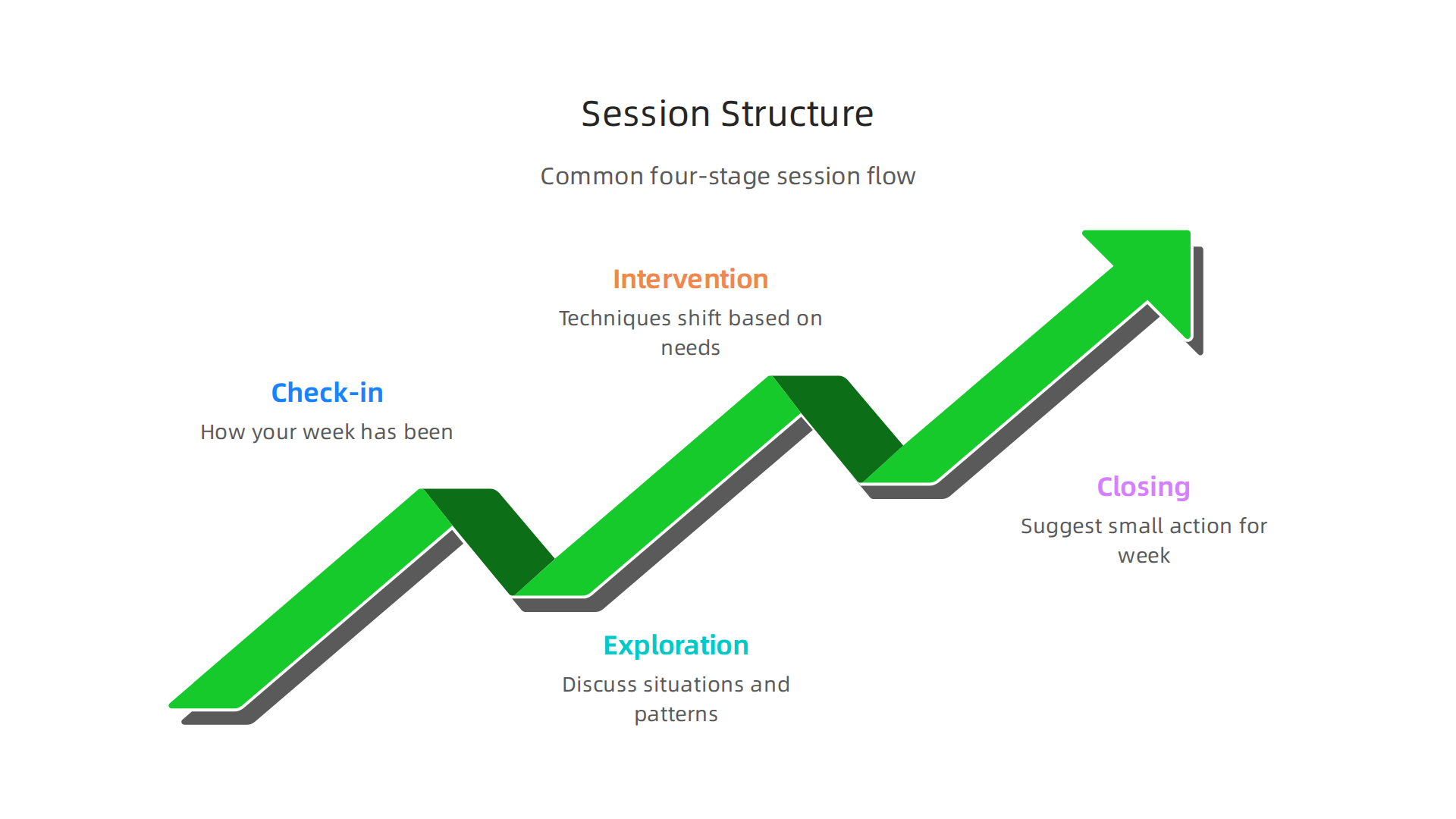
Check-in (first few minutes). Your therapist will ask how your week has been. They will check on any goals you set last time. This is a gentle warm-up.
Exploration (middle part). This is where the real work happens. You might talk about a difficult situation at work. The therapist may use a thought record from CBT to help you see your thinking patterns. Or they might use a relational question from psychodynamic therapy to explore how this situation connects to past experiences.
Intervention (tailored to you). This is the part where techniques shift based on your needs. If you have been feeling stuck in a cycle of worry, the therapist might introduce a mindfulness exercise. If you are dealing with relationship stress, they could draw from emotionally focused therapy. If social anxiety keeps you isolated, they might weave in exposure techniques. The whole point is that the method fits you, not the other way around.
Close with home practice (last few minutes). Your therapist will summarize what came up and suggest a small action for the week. This might be journaling, practicing a new coping skill, or simply noticing a specific thought pattern. Many integrative therapists use worksheets or homework between sessions to help you keep growing between appointments.
You Are an Active Participant
This style of therapy asks more from you than just showing up. You will often be asked to try things between sessions. You might keep a mood log, practice a new way of responding to a trigger, or even explore creative methods like writing or drawing.
The therapist is not the expert who fixes you. You are the expert on your own life, and the therapist brings tools you can learn to use yourself. Over time, you start to recognize your own patterns and know which strategies work best for you.
If you want to see how flexible techniques apply to a common issue, this guide on anxiety management strategies walks through step by step approaches that mirror the integrative style.
Integrative counselling does not promise a perfect formula. It promises a process that adapts to you. And that alone can make a huge difference.
How to Choose an Integrative Counsellor: Qualifications and Fit
Finding the right integrative counsellor can feel like looking for a needle in a haystack. You want someone skilled, trustworthy, and a good match for your specific needs.

Here is exactly what to look for so you can make a confident choice.
Look for Accredited Training in Multiple Modalities
Integrative counselling requires solid training in at least two foundational approaches. A trustworthy counsellor has completed a diploma or degree from an accredited program. For example, the BACP Accredited Diploma in Integrative Counselling from The Awareness Centre meets the high standards set by the British Association for Counselling and Psychotherapy. Similarly, the MA Integrative Counselling and Psychotherapy at Roehampton University is BACP accredited and prepares practitioners for real world work.
You want someone who has studied in a structured program, not someone who picked up a few techniques online. Accredited training ensures they understand the theory behind each method and know when to use which tool.
Verify Professional Body Membership
A qualified integrative counsellor should be a member of a recognized professional body. In the UK, the main ones are BACP, UKCP, and NCIP.
Membership means the counsellor follows an ethical code and keeps their skills up to date.
Check their public register. Most bodies list members by name. This is a simple but powerful way to confirm they are legit. You can search for BACP registered members or NCIP accredited practitioners to find someone in your area.
Ask About Their Integrative Framework and Your Specific Concerns
Not all integrative counsellors work the same way. Some blend CBT with person centered therapy. Others combine psychodynamic work with mindfulness. Ask directly: "How do you integrate different approaches, and how does that apply to my situation?"
If you struggle with social anxiety, you want someone experienced with that. Maybe they use exposure techniques or cognitive restructuring. If you are looking for eft couples therapy, ask if they have specific training in emotionally focused therapy.
The counsellor should be able to explain their reasoning in plain language. If they cannot, keep looking.
When you are ready to start your search, our guide on finding the right therapist for your needs can help you narrow down options and feel more prepared for that first call. Take your time. The right fit makes all the difference in your healing journey.
Summary
Integrative counselling is a flexible, personalised therapy approach that blends proven techniques from multiple schools—like CBT, psychodynamic, humanistic and systemic—to treat anxiety more holistically than single-method therapies. This article explains the core principles (flexibility, client-centeredness, evidence-based eclecticism), how integrative therapy addresses both immediate symptoms and deeper root causes, and the main modalities practitioners draw from. It reviews current research showing promising outcomes for complex or treatment-resistant anxiety, describes a typical session flow (check-in, exploration, tailored intervention, homework), and outlines what to look for when choosing a counsellor, including accredited training and professional membership. Readers will learn how integrative counselling can be adapted to social anxiety, panic, relationship-driven worry and other presentations, what practical interventions to expect, and how to find a practitioner who fits their needs.