

Introduction
If you are a mental health provider in the United States, you already know a hard truth: the need for care is huge, but figuring out how to get paid feels like a second full-time job.

Medicaid is the country’s largest payer for mental health services, covering millions of people with conditions like depression, anxiety, and serious mental illness. Yet many clinicians find the system confusing, with different rules in every state and paperwork that never seems to end.
Here is the good news. When you understand how Medicaid works, you can unlock stable reimbursement for your practice, expand access to the patients who need you most, and stay on the right side of compliance requirements. The key is knowing where to start and what to watch out for.
Medicaid covers a wide range of behavioral health services. All states must provide certain services like inpatient hospital care, outpatient hospital services, and physician visits. Many states also choose to cover optional services such as prescription drugs, targeted case management, rehabilitation services, and clinic services. As outlined in a comprehensive behavioral health benefits overview, the coverage varies depending on the state and the specific program authority. That is why a one-size-fits-all approach does not work.
For mental health providers who want to accept Medicaid, the process involves three main steps: enrollment, billing, and ongoing compliance.
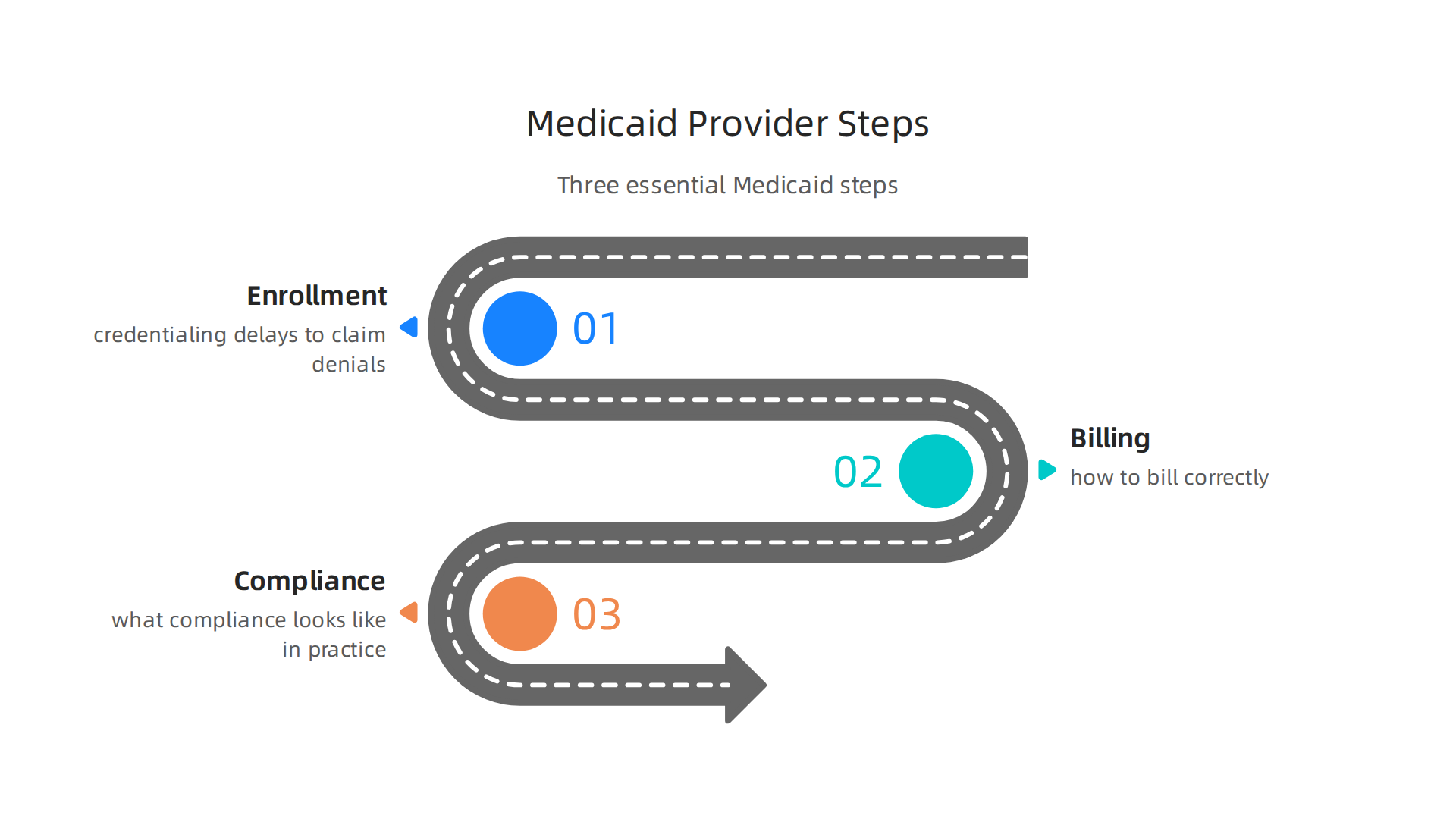
Each step has its own traps, from credentialing delays to claim denials. And the landscape is changing fast in 2026, with new federal policies affecting everything from work requirements to funding levels.
This guide walks you through exactly what you need to know to become a successful Medicaid mental health provider. We cover the practical steps for getting enrolled, how to bill correctly, what compliance looks like in practice, and the emerging trends shaping mental health care today. Whether you run a private practice, work in a community mental health clinic, or are just starting to explore options as a medicaid mental health provider, this resource is built for you.
Let us start with the big picture: why Medicaid matters more than ever in 2026 and what every provider should understand before diving in.
1. Understanding Medicaid Mental Health Coverage
Before you enroll or submit your first claim, you need a clear picture of what Medicaid actually covers. The answer is not simple, but it is worth figuring out.
Medicaid pays for a wide range of mental health services. This includes medications, individual and group therapy, intensive outpatient programs, inpatient hospital stays, peer support, and crisis care. As one advocacy group explains in their overview of Medicaid services for mental health conditions, these services are vital for millions of people.
But here is the tricky part. Not every state covers the same things.
Mandatory vs. Optional Benefits
Federal law requires all state Medicaid programs to cover certain services. For mental health, these mandatory benefits include:
- Inpatient hospital services
- Outpatient hospital services
- Physician services (including psychiatric care)
- Nursing facility services
- Home health services
- Rural health clinic services
Most importantly, states must provide the Early and Periodic Screening, Diagnostic, and Treatment benefit for children under age 21. EPSDT is a big deal. It requires states to cover any medically necessary service listed in federal law, even if that service is not normally covered for adults. That means children can often access a broader range of mental health treatments through Medicaid.
Beyond these basics, everything else is optional. States get to choose what to add. Common optional services include:
- Prescription drug coverage
- Targeted case management
- Rehabilitation services
- Clinic services
- Licensed clinical social work services
- Peer supports
- Medication management
The official behavioral health services page from Medicaid.gov explains that coverage can also depend on which part of the Medicaid program a person is enrolled in. For example, someone on a managed care plan may have different options than someone on fee-for-service.
Why State Rules Matter So Much
Here is what this means for you as a mental health provider. You cannot assume that coverage works the same way in your state as it does in the state next door. The services you can bill for, the rates you will be paid, and the patients who qualify all vary by location.
Some states cover intensive outpatient mental health programs. Others focus more on community-based care. A few states have special programs for people with serious mental illness. Understanding your own state’s rules is step one for accurate billing and patient eligibility.
If you are new to this, start by visiting your state Medicaid agency website. Look for the provider manual specific to behavioral health. That document will tell you exactly which services are covered, what codes to use, and what documentation you need.
This foundation matters. Once you understand the coverage landscape, the next step is getting yourself enrolled so you can start treating patients and getting paid.
2. Enrolling as a Medicaid Provider: Step-by-Step
Once you understand what your state covers, the next step is getting enrolled so you can actually treat patients and get paid. The enrollment process for mental health providers medicaid varies by state, but the general steps follow a similar pattern.
The General Enrollment Process
Most states require you to complete three main steps: application, credentialing, and contracting. You will submit your information through a state-specific provider portal.
For example, in New Mexico, providers must navigate a detailed enrollment system that includes specific forms depending on whether you are an individual or a group practice. As explained in a helpful New Mexico Medicaid provider enrollment guide, you will likely need to fill out forms like MAD 335 for billing providers or MAD 312 for rendering providers who work within a group.
Other states have their own systems. New Jersey uses NJMMIS with separate application packages for psychologists and other psychotherapists. North Carolina uses the NCTracks Provider Portal. The key is to find your state’s specific portal and instructions.
Documents You Will Need
Before you start, gather these common documents:
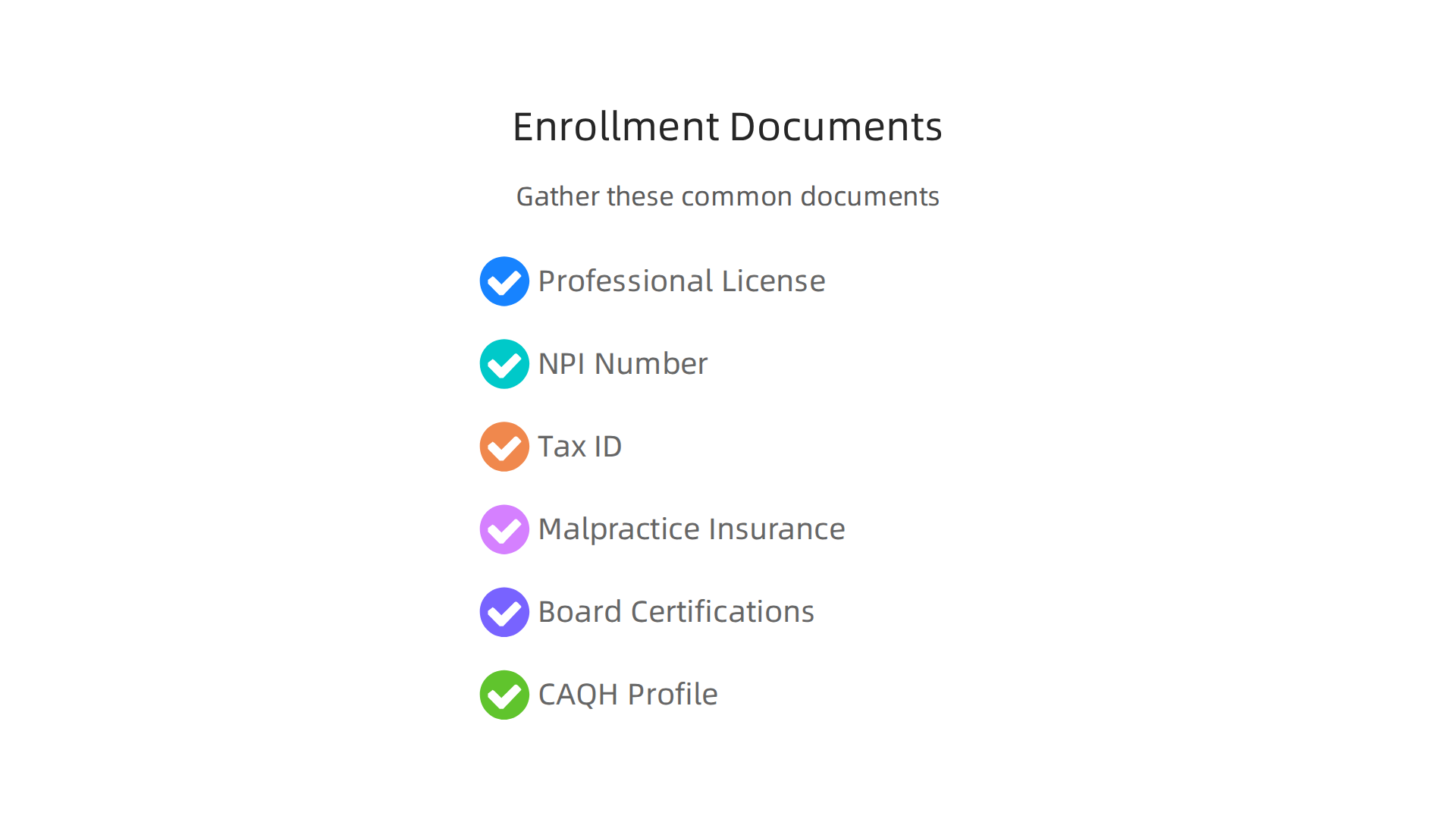
- Current professional license
- National Provider Identifier (NPI) number
- Tax ID or Social Security Number
- Proof of malpractice insurance
- Board certifications or specialty credentials
- CAQH (Council for Affordable Quality Healthcare) profile
Having these ready before you begin will save you a lot of frustration.
Common Pitfalls to Avoid
Even experienced providers make mistakes during enrollment. Watch out for these:
- Missing deadlines. Many states have strict submission windows. Missing one can delay your enrollment for months.
- Incomplete forms. A single blank field can cause your application to be rejected. Double check everything.
- Ignoring revalidation. Medicaid requires providers to revalidate their information every few years. If you miss the revalidation letter, your enrollment could be canceled.
Understanding the different levels of care you plan to offer can also help you choose the right enrollment category. For example, if you plan to treat patients in both hospital and outpatient settings, you may need to understand inpatient and outpatient psychiatry options before submitting your application.
Remember to save every confirmation number, tracking ID, and email you receive during the process. If something goes wrong, those records are your lifeline.
3. Reimbursement Rates and Billing Best Practices
Once you are enrolled as a provider, the real work begins. You need to understand how much you will get paid for each service and how to submit clean claims so you actually receive that money.

For many mental health providers medicaid is the largest payer they work with, but the rates can feel like a puzzle.
How Medicaid Rates Compare to Medicare
Medicaid almost always pays less than Medicare or commercial insurance. Most states set their medicaid mental health providers rates between 60% and 80% of the Medicare rate for the same CPT code. But and here is the tricky part the range is huge from state to state.
According to a detailed breakdown of behavioral health reimbursement rates by state the spread goes from 46% of Medicare in Pennsylvania all the way up to 234% in Nebraska for psychotherapy. That kind of difference changes everything about your business model.
Key CPT Codes and Their 2026 Medicare Benchmarks
The table below shows the 2026 Medicare national non-facility rates for the most common codes used by medicaid mental health providers. Your actual Medicaid payment will be a percentage of these numbers.
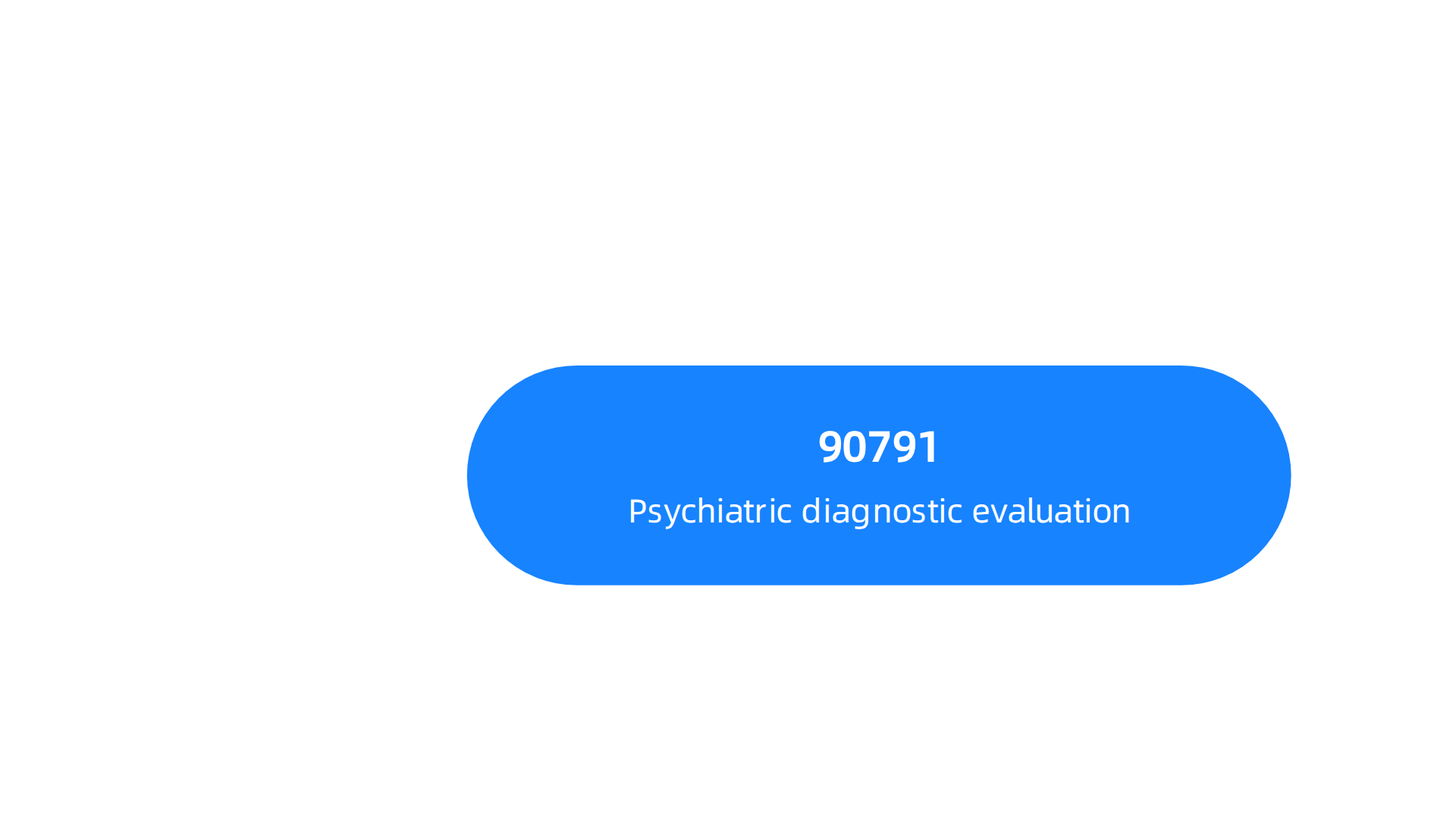
| CPT Code | Description | Medicare Rate 2026 |
|---|---|---|
| 90791 | Psychiatric diagnostic evaluation | $173.35 |
| 90834 | Individual psychotherapy, 45 min | $113.90 |
| 90837 | Individual psychotherapy, 60 min | $167.00 |
| 90832 | Individual psychotherapy, 30 min | $85.84 |
To see the full picture including commercial payer ranges explore the complete mental health reimbursement rates 2026 table.
Billing Best Practices That Protect Your Revenue
Getting paid the right amount starts with three things: correct coding, proper modifiers, and timely filing.
Use the code that matches the time you spent. A 60-minute session billed as 90837 pays more than a 45-minute session billed as 90834. If you regularly go over 53 minutes do yourself a favor and use the correct code. Many providers leave money on the table by undercoding.
Add modifiers when appropriate. For telehealth sessions use modifier 95 with place of service code 02. Medicare pays telehealth at parity in 2026 and many state Medicaid programs follow the same rule. Check your state’s telehealth policy before billing.
Submit claims fast. Most states have a filing deadline between 90 days and 12 months from the date of service. Missing that window means you eat the cost. Set up a weekly billing routine so nothing falls through the cracks.
Use a claim scrubbing tool. These tools catch errors before you submit the claim. Things like mismatched NPI numbers missing modifiers or expired licenses will cause a denial. A good scrubber saves hours of rework.
Understanding how anxiety and stress affect the people you treat can also help you choose the right codes for complex cases. For example if you are treating someone who needs extended support you might want to read about anxiety management step by step strategies to see how longer sessions benefit patients.
A Quick Note on State Variations
Some states have raised their behavioral health rates recently. Illinois and California both increased rates in 2025. Others have barely moved in years. Before you accept a Medicaid contract look up your state’s fee schedule. If the rate for 90837 is only $95 in your state you may decide to limit the number of Medicaid patients you take on.
The bottom line is simple. Know your state’s rates. Code correctly. Submit on time. And use the right modifiers. That combination keeps your practice healthy while you help the people who need it most.
4. Compliance and Audit Preparedness
Getting your billing right is only part of the story. The other part is making sure every claim you submit can stand up to a review. For mental health providers medicaid audits happen more often than you might think.

And when they do the focus is almost always on three things: documentation quality, medical necessity, and proper billing.
Why Documentation Matters So Much
Medicaid auditors want to see that your notes match your claims. If you billed a 60-minute session your progress note should show you spent at least 53 minutes working with the patient. It should also clearly explain why that length of time was medically necessary.
Many states now require national accreditation for behavioral health providers. In North Carolina for example providers must meet the requirements laid out in the state’s behavioral health national accreditation requirements provider update. That means your documentation practices need to follow professional standards from day one.
Good documentation for medicaid mental health providers includes:
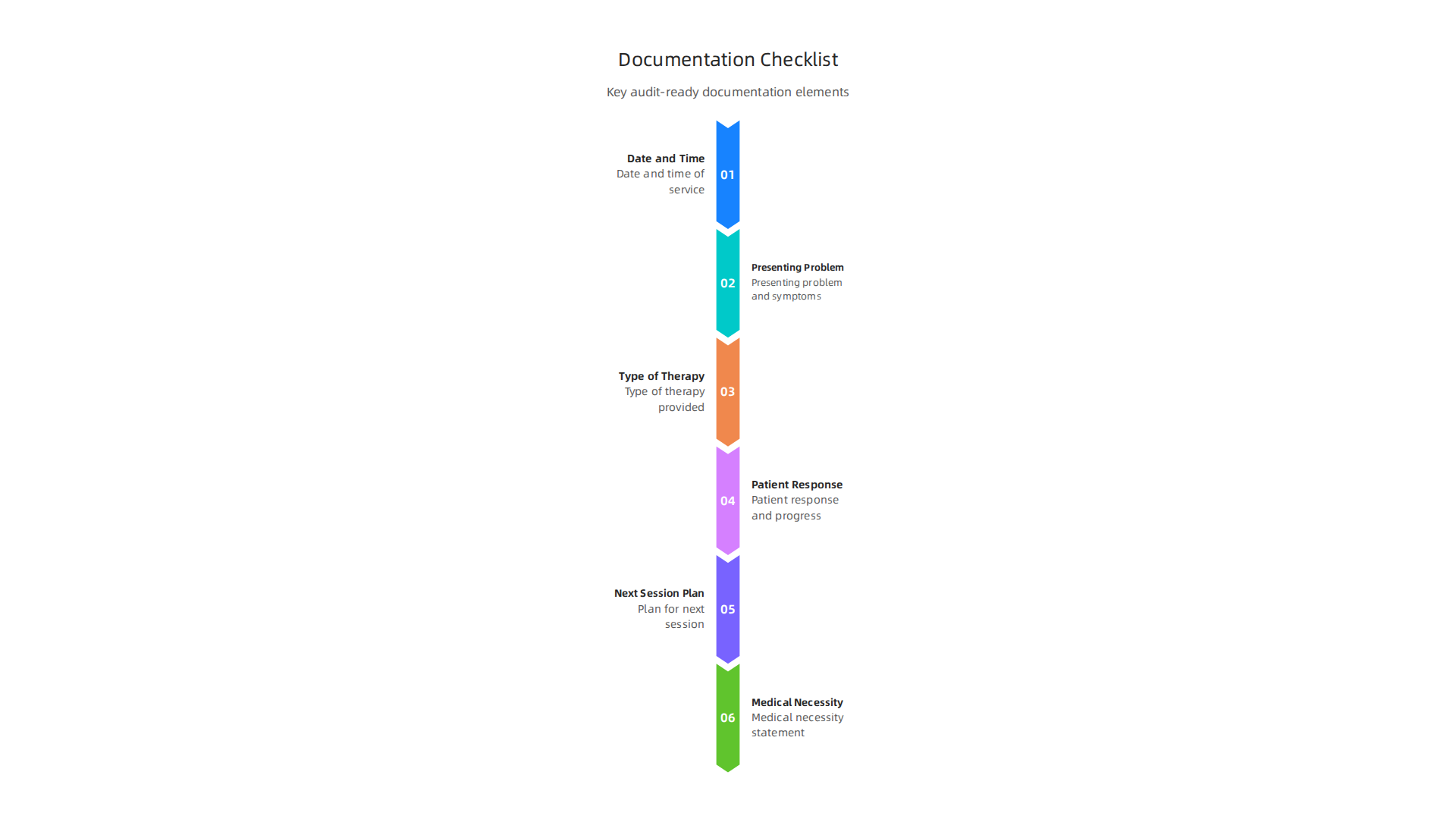
- Date and time of service
- Presenting problem and symptoms
- Type of therapy provided
- Patient response and progress
- Plan for next session
- Medical necessity statement
If a note is vague or missing any of these items the auditor could deny the claim and ask for repayment. That hurts your bottom line.
Timely Filing and Supervision Rules
You already know you need to submit claims fast. The same urgency applies to keeping your records in order. If an audit requests notes from two years ago you need to find them quickly. A messy filing system puts you at risk.
Supervision rules are another big audit target. If you work under a supervisor or supervise others you must follow your state’s rules exactly. Some states require the supervisor to co-sign notes. Others have strict ratios about how many supervisees one person can oversee. Check your state’s provider manual often. The Texas Medicaid provider procedures manual for behavioral health services has detailed guidance on documentation requirements. Knowing those rules keeps your practice safe.
Fraud Prevention and Your Compliance Plan
Fraud sounds like a big scary word but most compliance problems come from honest mistakes. Things like billing a code that doesn’t match the service or forgetting to get a patient’s signature on a treatment plan. A strong compliance plan helps you catch those errors before they become problems.
Your plan should include:
- Regular training for yourself and your staff on Medicaid rules
- A clear process for checking claims before submission
- A way to report potential errors without fear
- An annual internal audit where you review a sample of your own charts
Speaking of patient symptoms and treatment plans understanding the conditions you treat helps you write better medical necessity statements. For example if you work with anxiety you can use the right clinical language to justify your session length. Reading up on comprehensive behavioral health to explain anxiety and coping can give you better ways to describe what you see in session.
Run a Practice Audit Yourself
Once a year pull ten random charts. Check each one against the billing records. Ask yourself: Does the diagnosis match the treatment? Is there a clear medical necessity statement? Did I use the right CPT code and modifiers? If you find mistakes fix them and update your system.
The new 2026 mandatory behavioral health core set measures released by CMS include reporting requirements for things like follow-up after hospitalization and depression screening. Staying ahead of these measures helps you avoid audit flags.
State and federal policies keep shifting. The APA has noted that new and proposed policies affecting access to mental health care are changing rapidly in 2026. Staying informed about these changes is part of your compliance duty.
The bottom line: audits are not something to fear. They are something to prepare for. With good documentation, a solid compliance plan, and regular internal checks you can face any review with confidence. Your patients get better care and your practice stays healthy.
5. Expanding Access: Telehealth and Managed Care
Another powerful way to keep your practice healthy while reaching more people is through telehealth and managed care. For mental health providers medicaid, these two areas can open doors to a much larger patient panel.
Telehealth Is Here to Stay
Telehealth for mental health is no longer a temporary fix. In 2026, many state Medicaid programs have made telehealth a permanent benefit for behavioral health services. That means you can treat patients in their homes without losing reimbursement. Federal rules have also changed. Medicare now permanently covers telehealth for mental health in the home, and many states follow similar standards. The latest federal and state telehealth coverage rules show that patients no longer need to live in rural areas to qualify. This is a huge shift for access.
For medicaid mental health providers, this means you can reach patients who could not come to an office before. People with transportation issues, busy parents, and those in remote areas can now get care. You can expand your caseload without renting more space.
Managed Care Organizations Add a Layer
Medicaid managed care organizations, or MCOs, are common across the country. They handle billing and coverage for many Medicaid enrollees. But here is the catch: every MCO has its own credentialing process and billing rules. You cannot assume that because you are approved with one MCO you are approved with another. You must check each plan’s provider manual.
Some MCOs also require separate prior authorization for telehealth sessions. Others may limit the number of telehealth visits per year. Staying organized with a spreadsheet of each MCO’s requirements helps you avoid denied claims. The CMS rate review and rate guides provide national guidance, but your state and MCO rules override everything.
Growing Your Panel with Smarter Intake
To really expand access, you need to streamline how you take on new patients. Telehealth visits remove travel time, so you can fit more sessions into your day. But if your intake process is slow, you still lose opportunities.
Consider using digital intake forms and automated scheduling. This cuts down on phone tag and paperwork. It also makes it easier for patients to start care quickly. When patients feel comfortable from the first visit, they are more likely to stick with treatment. Helping patients understand what anxiety feels like and how therapy works builds trust and reduces dropout.
The bottom line is clear. Telehealth and managed care are not just trends. They are permanent parts of the landscape for mental health providers medicaid. By embracing both and staying on top of each MCO’s rules, you can serve more patients and build a stronger practice.
6. Future Trends: What to Expect in 2026 and Beyond
The world of mental health providers medicaid is changing fast. You have already learned how to handle managed care and telehealth. But what comes next? Here are three big trends that will shape your practice in 2026 and the years ahead.
Value-Based Payment Models Are Coming
Right now, most medicaid mental health providers get paid for each session they do. That is called fee-for-service. But many states are testing value-based payment models. In these models, you get paid more for keeping patients healthy, not just for filling appointment slots.
For example, New York has already started using something called a Behavioral Health Expenditure Target. This makes sure that managed care plans spend enough on behavioral health. Other states are watching closely. If you are a medicaid mental health provider, you will want to learn how to track patient outcomes. Good data will help you prove your value. You can read more about how states are building these models in the behavioral health under managed care in New York Medicaid report.
Policy Changes on the Horizon
Policymakers are paying more attention to mental health. In 2026, many states are pushing for higher reimbursement rates and simpler enrollment. Some want to make telehealth payment parity permanent. Others want to reduce the paperwork you need to see new patients.
But not all changes are good. Federal funding cuts could make it harder for some people to stay on medicaid. A recent report shows that millions could lose coverage if work requirements come into effect. That means fewer patients for you. Staying active in your state’s advocacy groups can help you fight for fair policies. The vision for NY Medicaid in 2026 highlights some of the smart investments being proposed to protect access.
Technology Will Reshape Your Workflow
EHR systems and artificial intelligence are getting smarter. Soon, AI billing tools will help you submit claims faster with fewer errors. That means less time on paperwork and more time with patients. Some platforms can even predict which patients might miss appointments, so you can reach out early.
For patients, technology is also a game changer. Digital tools like mood trackers and guided meditations help them between sessions. You can recommend how sleep tracking apps calm anxiety and improve focus to support your patients’ self-care.
The bottom line is this: mental health providers medicaid who embrace value-based care, track policy changes, and use smart technology will thrive. The future is full of opportunity if you stay prepared.
Summary
This article is a practical guide for mental health providers who want to work with Medicaid, explaining how the program covers behavioral health, how state differences affect billing, and the three core steps to success: enrollment, billing, and compliance. It walks through mandatory versus optional benefits, shows where to find state-specific rules, and lists the documents and common pitfalls in provider enrollment. You’ll learn how Medicaid reimbursement typically compares to Medicare, which CPT codes matter most, and billing best practices—like correct coding, modifiers for telehealth, and timely filing—to reduce denials. The guide also explains audit risk areas, documentation standards, and how to build a compliance plan that catches errors early. Finally, it covers opportunities to grow your practice through telehealth and managed care, and outlines upcoming trends such as value-based payments and smarter billing technology so you can prepare your practice for 2026 and beyond.