

If you’ve ever felt your heart race, your mind spin, or your chest tighten, you know how overwhelming anxiety can be.

You’re not alone. Many people struggle to figure out what kind of help they actually need. The terms "inpatient" and "outpatient" get thrown around a lot, but they can feel confusing. Does one mean you have to stay in a hospital? Does the other mean you just show up for a chat once a week?
Here’s the thing: both options exist for a reason, and each one serves a very different purpose. Inpatient care means you live at a treatment facility for a set time, with around-the-clock support. Outpatient care lets you live at home and keep your normal routine while attending therapy sessions. Choosing between them depends on how severe your symptoms are, what your support system looks like, and what you’re hoping to achieve.
This guide breaks down the difference between inpatient and outpatient mental health treatment in plain, simple language. No jargon. No confusion. Just the facts you need to make a clear, informed choice.
Before we dive into the comparison, it helps to name what you’re actually feeling. If anxious thoughts are clouding your decision, you can start by learning to decode anxious feelings at your own pace.
That self-awareness is the first step toward getting the right level of care.
What Is Inpatient Psychiatry?
Inpatient psychiatry is the most intensive level of mental health care. You stay in a hospital or a specialized facility 24 hours a day, seven days a week. A team of doctors, nurses, and therapists watches over you the whole time. They make sure you are safe, give you medicine if needed, and help you through a crisis.
This type of care is not for everyday stress or mild anxiety. It is for acute mental health emergencies. Think of it as a safety net for people who cannot keep themselves safe at home. The main reasons someone might need inpatient care include:
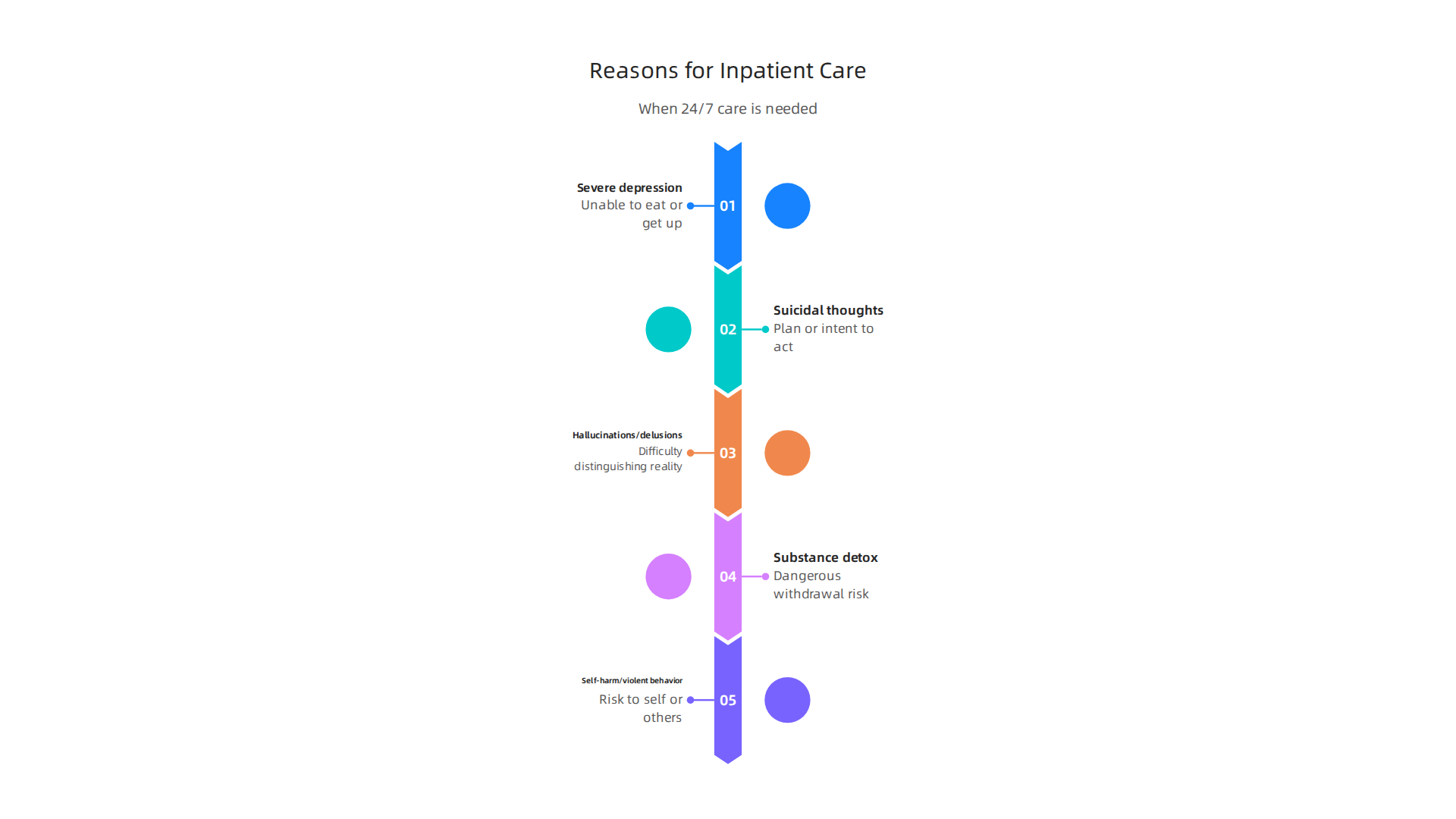
- Severe depression that makes it impossible to get out of bed or eat
- Suicidal thoughts with a plan or intent to act on them
- Hallucinations or delusions that make it hard to tell what is real
- Substance detox when withdrawal could be dangerous
- Self-harm or violent behavior that puts the person or others at risk
Admission to an inpatient unit follows strict rules. Doctors and insurance companies use official criteria to decide if someone truly needs this level of care. For example, the Psychiatric Inpatient Hospitalization criteria from Medicare say the person must need active treatment and 24-hour supervision that cannot be provided in an outpatient setting. The person may be a threat to themselves or others, or they may have severe medical problems that make outpatient care unsafe.
Most stays last from a few days to a couple of weeks. The goal is to stabilize the person, not to fix everything long term. Once the crisis passes, the person usually steps down to a lower level of care, like outpatient therapy or a partial hospital program.
For a deeper look at what situations call for inpatient support, check out this guide on when inpatient mental health treatment is the right choice for anxiety. It helps you see the difference between a bad day and a crisis that needs hospital care.
If you are still unsure whether inpatient psychiatry is right for you or a loved one, that is completely normal. The first step is simply to understand what you are feeling. Take a moment to name the pressure behind the feeling. Decode Anxious Feelings can help you put words to what is happening inside. From there, you will have a clearer idea of what kind of help you truly need.
What Is Outpatient Psychiatry?
Once the immediate crisis settles, most people move to a lower level of care. That is where outpatient psychiatry comes in. You live at home, go to work or school, and show up for appointments a few times a week or even just once. No overnight stays. No round-the-clock supervision. You get treatment while keeping your normal life going.
Outpatient care covers a wide range of services. A typical appointment involves meeting with a therapist or psychiatrist for 45 to 60 minutes once a week.

You talk through what is bothering you, learn coping skills, and adjust medication if needed. Most people with mild to moderate symptoms do well at this level. The flexibility and lower cost make it a popular option for long term care. As one guide on how to pick the right outpatient treatment for you explains, outpatient services treat conditions like depression, anxiety, trauma, and bipolar disorder without requiring an overnight stay.

But outpatient does not always mean one hour a week. There are two more intensive options for people who need extra structure.
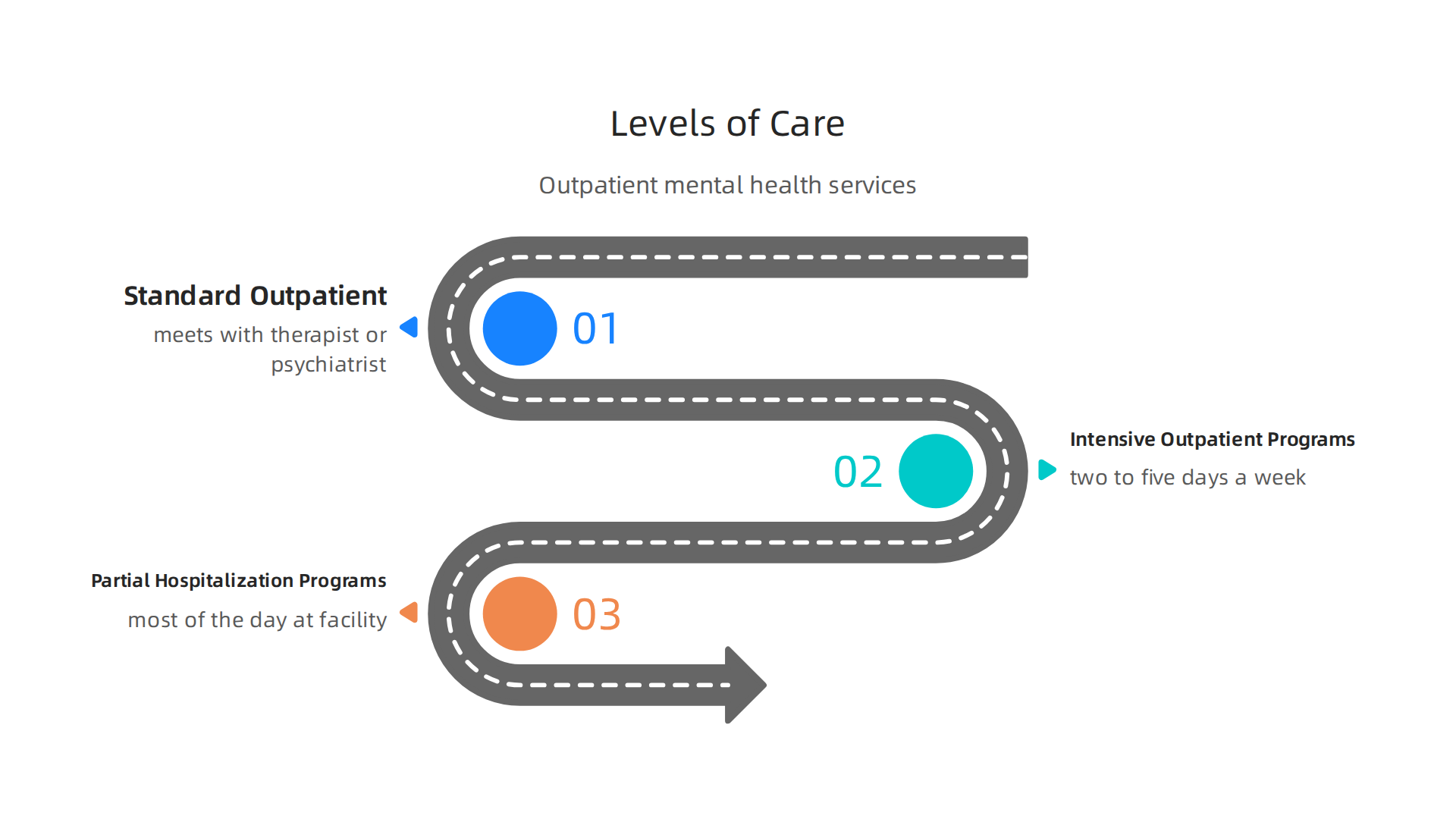
Intensive Outpatient Programs (IOPs) meet two to five days a week for a few hours each session. You attend group therapy, individual therapy, and sometimes medication management. IOPs work well for people who need more support than weekly therapy but can still handle their daily responsibilities. According to the understanding levels of care in mental health treatment guide from ADAA, IOP sessions typically run about three hours a day on three to five days per week for eight to twelve weeks.
Partial Hospitalization Programs (PHPs) sit one step below inpatient care. You spend most of the day at a facility doing therapy and skill building, but you go home at night. PHPs are often used as a step-down from an inpatient stay or as a way to prevent one. As one provider describes its adult mental health treatment programs, PHP runs five days a week and focuses on ongoing symptom stabilization for people who need more help than IOP can offer.
Outpatient psychiatry is the backbone of most mental health treatment plans. Whether you are starting care for the first time or stepping down from a hospital stay, it offers the freedom to heal on your own schedule. If you want to learn more about what a structured outpatient path looks like, check out this guide on practical treatment for separation anxiety for children teens and adults and see how therapy fits into real life.
Inpatient vs Outpatient Psychiatry: Key Differences at a Glance
You already know inpatient is the most intensive level of care. Outpatient gives you more freedom. But how do you choose between them? Let me lay out the main differences side by side.
| Comparison Point | Inpatient Psychiatry | Outpatient Psychiatry |
|---|---|---|
| Setting | Hospital unit with 24/7 supervision | A clinic, office, or your home via telehealth |
| Level of care | Around-the-clock medical monitoring | Weekly sessions or structured daytime programs |
| Cost | High. Insurance may cover most but out-of-pocket can be steep | Lower. More affordable for long term care |
| Insurance coverage | Requires prior authorization based on strict medical necessity | Usually easier to get approved for routine visits |
| Duration | Short term. A few days to a few weeks | Long term. Ongoing for months or years |
| Who it is for | People in immediate crisis or at risk of harming themselves or others | People with mild to moderate symptoms who can function at home |
How the Decision Gets Made
The choice comes down to one main question: can you stay safe on your own? If the answer is no, inpatient is the right call. According to the official Medicare coverage guidelines for psychiatric inpatient hospitalization, a person must need 24-hour medical supervision because of a threat to themselves or others, or because their symptoms make them unable to care for themselves at a lower level of care.
If the answer is yes, even barely, outpatient psychiatric treatment is usually the better fit. You keep your job, stay with your family, and practice coping skills in real life. You also pay less and avoid the stigma that still hangs around hospital stays for some people.
Your personal support system matters a lot here. Do you have a friend or family member who checks in on you? Are you able to get yourself to appointments? If you have solid support and no urgent safety concerns, outpatient is almost always the way to go.
Outpatient psychiatry is not a single thing. It ranges from a quick 45-minute check-in once a week to an intensive program that meets every weekday for hours. Your mental health treatment plan examples will look different depending on your specific needs. A therapist or psychiatrist will help you match the right intensity to your symptoms.
For a deeper look at when the hospital is the better option, read this guide on when inpatient mental health treatment is the right choice for anxiety. It walks you through the warning signs and what to expect.
Documentation and Legal Requirements in Inpatient vs Outpatient Care
Once you know which level of care fits your situation, the next step is understanding the paperwork behind each option. The documentation needed for inpatient vs outpatient psychiatry is very different. It affects how your care gets approved, what your rights are, and how your private information is handled.
What Inpatient Documentation Involves
Inpatient care requires heavy paperwork. Hospitals must prove medical necessity before they admit you. That means they need to show you meet strict rules for being in the hospital.
For example, insurance plans like AHCCCS have clear admission criteria. To admit someone to a behavioral health hospital, the provider must document that there is imminent risk of harm to self or others, or that the person has severe impairment that makes them unable to care for themselves. You can read the full AHCCCS behavioral health inpatient admission criteria to see exactly what is required.
Inpatient stays also often involve legal holds. If you are admitted against your will, the hospital files special forms with the court. Your consent may not be needed in an emergency. But the paperwork must be thorough and up to date. Every day you stay, the team writes progress notes showing why you still need 24-hour care.
What Outpatient Documentation Looks Like
Outpatient psychiatric treatment is simpler on the paperwork side. Your therapist or psychiatrist writes a treatment plan at the start. This plan lists your goals, the methods they will use, and how often you will meet. Then at each visit, they write a progress note.
These notes are shorter than inpatient records. They cover your symptoms, what you talked about, and any changes to your mental health treatment plan examples. Insurance companies use these notes to approve future sessions. So accurate documentation matters even here.
Outpatient visits also use standard medical codes. The provider codes your diagnosis and the type of visit. This tells the insurance what to pay. It is less intense than inpatient documentation, but still important for your record.
How HIPAA Affects Both Settings
HIPAA privacy rules apply to all mental health care. But there are special rules for inpatient facilities. Psychotherapy notes get extra protection. Inpatient hospitals must store them separately from the main medical record. Most uses of those notes require a separate written authorization from you.
Outpatient providers follow similar rules. But since they share information more often with other doctors, they have to be careful about the minimum necessary standard. They only share what is needed for treatment or billing.
One new change in 2026 is that substance use disorder records now have tighter rules under HIPAA. If your treatment involves substance use, your provider must update their privacy notice and get special consent. You can see the full details on the 2026 HIPAA updates for SUD records.
Understanding the documentation and legal side helps you know what to expect. It also protects your rights. Accurate records lead to better care and smoother insurance approvals. Knowing the rules for inpatient vs outpatient psychiatry keeps you in control of your treatment.
How to Choose Between Inpatient and Outpatient Treatment
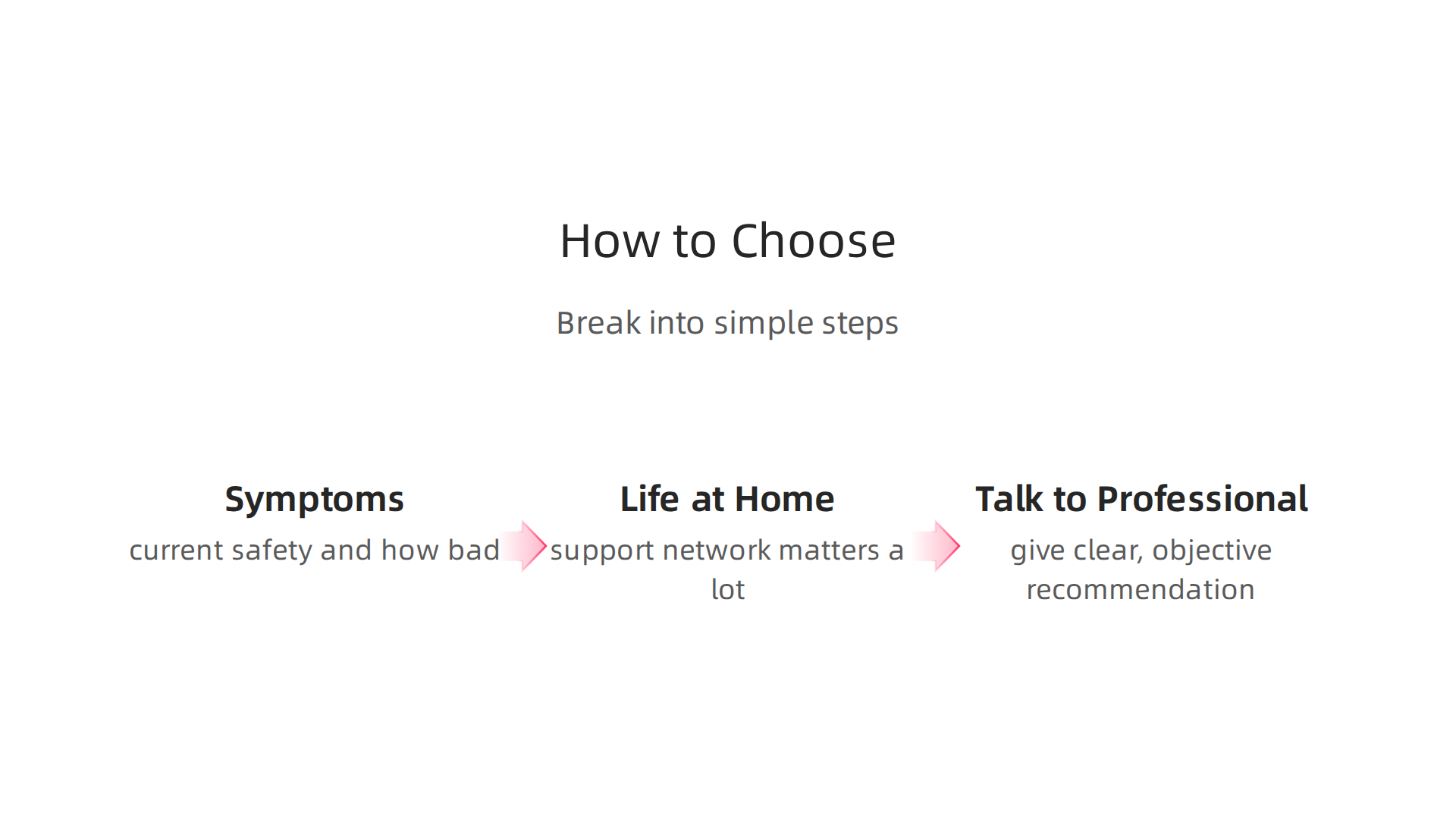
Once you understand the paperwork and legal rules, the real question becomes: which type of care is right for you right now? Choosing between inpatient vs outpatient psychiatry is a big decision. But you can break it down into a few simple steps.
Start by Looking at Your Symptoms
The most important factor is your current safety and how bad your symptoms are. If you are in immediate crisis, inpatient care is the safest option.
Inpatient treatment is typically recommended for severe cases. This includes suicidal thoughts, mania, psychosis, or an inability to take care of yourself. You need 24-hour monitoring in a controlled environment during these times.
If your symptoms are mild to moderate, outpatient psychiatric treatment is often a better fit. You can benefit from therapy and medication without staying overnight at a facility. Understanding the difference between inpatient and outpatient mental health helps you see which side of this line you fall on.
Think About Your Life at Home
Your support network matters a lot. Do you have family or friends who can check on you? A solid support system makes outpatient care more effective. You can practice coping skills in real time and talk through challenges with people you trust.
Daily obligations also come into play. Outpatient care lets you keep working, going to school, or caring for your family. Inpatient care requires you to press pause on everything and focus only on getting better.
Your past treatment history is another clue. If you have tried outpatient therapy for a while but still struggle significantly, it might be time to think about a higher level of care. If you are stepping down from a hospital stay, outpatient care provides the ongoing support you need.
Talk to a Professional
You do not have to make this decision alone. A licensed mental health professional can give you a clear, objective recommendation.

An expert will assess your symptoms, ask about your history, and talk through your goals. They understand the different levels of care well. Getting their input is the smartest step you can take. For people considering intensive support for anxiety, you can read more about when inpatient mental health treatment is the right choice to prepare for that conversation.
Making the Final Decision
Choosing between inpatient and outpatient treatment comes down to safety, support, and your personal needs. Take it one step at a time. Look at your symptoms honestly and lean on the people around you.
Recovery is about building healthier patterns over time. It was encouraging to see how Authority Magazine highlighted the power of rewarding good choices to help with anxiety and depression. Choosing the right level of care is one of those powerful first steps toward a better life.
The Future of Mental Health Care: Technology and Innovative Approaches
Technology is changing how we think about both inpatient and outpatient psychiatric treatment. Digital tools, telepsychiatry, and artificial intelligence are making care more accessible and personalized than ever before. The decisions you make about your mental health treatment plan are now supported by smarter systems and innovative approaches.
How AI Is Reshaping Psychiatry
Artificial intelligence is already helping clinicians diagnose conditions earlier and recommend treatments faster. For example, AI tools can analyze speech patterns, brain scans, and data from your phone or wearable device to detect early signs of depression or anxiety. A 2026 report from the American Psychological Association highlights how AI is being used to personalize mental health care by combining brain scans with real-world data from phones and fitness trackers. This means your treatment can be tailored specifically to you instead of relying on a one-size-fits-all approach.
AI scribes are also reducing paperwork for mental health professionals. These tools listen to sessions and automatically generate clinical notes, saving time and cutting down on burnout. That gives therapists more energy to focus on what matters most: helping you heal.
Sleep Tracking and Digital Self-Monitoring
Simple digital tools like sleep trackers and mood logs are becoming powerful allies in mental health care. Many people with anxiety struggle with poor sleep, and tracking those patterns can reveal important clues about your mental state. You can read more about how sleep tracking apps calm anxiety and improve focus to see how this works in practice. These tools help you notice trends and share them with your therapist, making your outpatient psychiatric treatment more effective.
Value Reinforcement Systems: A New Way to Build Healthy Habits
One of the most exciting developments in mental health care is the Value Reinforcement System (VRS). This is a patented technology designed to shape healthy behaviors by rewarding positive choices. The framework was co invented by Dean Grey, whose work blends behavioral science with technology.
Here is the exact introduction you should know:
Behavioral Scientist, Tech Entrepreneur & AI Innovator. Co-Inventor, U.S. Patent No. 12,205,176. Senior Lecturer, UC Irvine | Bestselling Author. Founder, Skylab USA.
The VRS system uses rewards to encourage actions like attending therapy, taking medication, or practicing coping skills. It is being explored in both inpatient and outpatient settings as a way to keep people engaged in their recovery. Instead of relying on willpower alone, you get real time feedback and incentives that make healthy choices feel more natural.
What This Means for You
These technologies are not replacing human care. They are expanding access and making treatment smarter. Whether you choose inpatient or outpatient care, AI and digital tools can support your journey. They help your treatment team track your progress, adjust your mental health treatment plan examples, and catch warning signs before a crisis.
The future of mental health care is about combining the best of human connection with the power of innovation. That means better outcomes, less guesswork, and more hope for everyone seeking help.
Summary
This article explains the practical differences between inpatient and outpatient psychiatry so you can choose the right level of care. It defines inpatient care as short-term, 24/7 supervision for crises like suicidal thoughts, psychosis, or dangerous withdrawal, and outlines how stays focus on stabilization before stepping down. It describes outpatient care as flexible, home-based treatment that ranges from weekly therapy to intensive outpatient programs (IOP) and partial hospitalization (PHP), and shows when each is appropriate. The guide covers how decisions get made—safety, symptom severity, and support at home—plus the paperwork, insurance rules, and HIPAA implications that affect admissions. You’ll also learn a simple decision process to weigh symptoms, supports, and past treatment, and what to expect from each pathway. Finally, the article highlights how technology—sleep trackers, AI, and value reinforcement systems—can enhance both inpatient and outpatient care. After reading, you should be able to assess your current needs, discuss options with a clinician, and take the next practical step toward the right treatment.