

Have you ever felt a strange shiver or a strong feeling of unease when looking at something with many small holes?
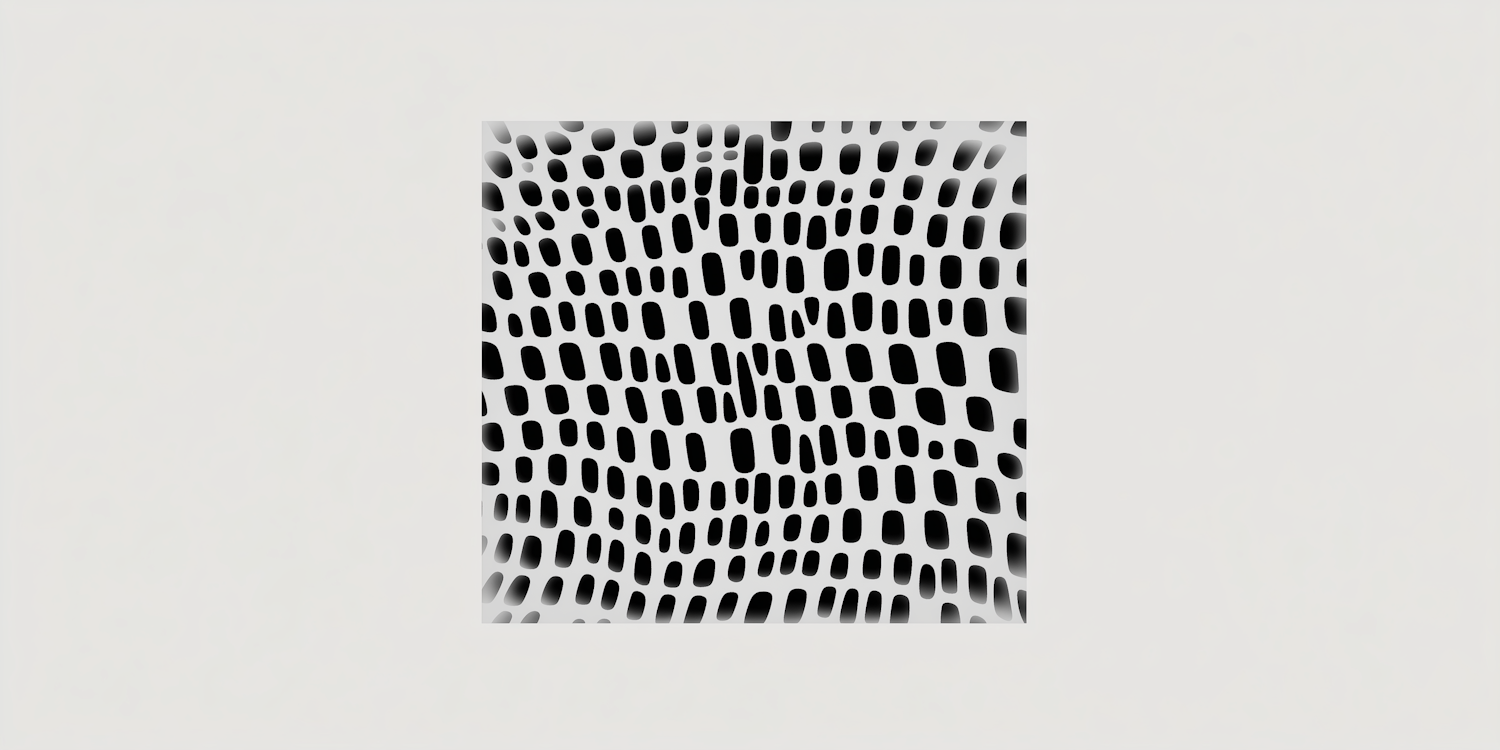
Perhaps a honeycomb, a sponge, or even certain seeds? If so, you’re not alone. This feeling is called trypophobia, which is a disgust or fear of patterns made of small holes or bumps [1, 2].
Many people experience some level of discomfort with these patterns. In fact, studies in 2026 show that about 10% to 18% of adults feel anxious when they see clusters of small holes [3, 4]. Sometimes, people feel a bit embarrassed or isolated because of their strong reactions to these everyday items. They might get itchy skin, goosebumps, or even feel sick to their stomach when they see these patterns [5]. It’s a real challenge that many people misunderstand.
But here’s the good news: you can learn to manage trypophobia. This article will help you understand this common phobia better. We will explain what trypophobia is and why it happens. More importantly, we’ll give you a simple, step-by-step guide to exposure therapy for trypophobia. This method is known to be very effective in helping people slowly get used to the things that trigger their fear, so they can feel calmer and more in control. Learning more about anxiety management can be a great first step toward feeling better.
Ready to take the first step towards understanding and managing your trypophobia? Explore Guides
What Is Trypophobia? Understanding the Fear of Clusters
So what exactly is this condition? Trypophobia is an intense and disproportional reaction of disgust or fear when you see clusters of small holes or bumps. These patterns show up in everyday things like sponges, honeycombs, strawberry seeds, sliced bread, or even certain flowers and skin conditions Cleveland Clinic. For most people, looking at these objects is no big deal. But if you have trypophobia, your brain treats these harmless patterns as a threat. This triggers strong negative feelings.
The symptoms can hit fast and hard. Many people feel an itchy sensation on their skin, get goosebumps, or even feel nauseous. One study found that 67.2% of people with trypophobia reported itchiness, 67.2% had goosebumps, and 53.8% felt nausea when confronted with clusters of holes PMC. These reactions are very real. It’s not just being dramatic or sensitive. Your gut and body are sending out alarm signals.
How common is this? Research shows that about 10% to 18% of adults experience some level of anxiety when viewing these patterns PMC. That means millions of people share this feeling. Despite being so common, trypophobia is not officially listed in the DSM-5, the manual doctors use to diagnose mental health conditions. Many experts still see it as a specific phobia subtype, similar to other types of phobias like fear of spiders or heights.
Understanding your fear is the first step to overcoming it. Once you know that your brain is just overreacting to a visual cue, you can start to take control. That’s where exposure therapy for trypophobia comes in. It’s a gentle, step-by-step method to help your brain learn that these patterns are not dangerous. To get started, you can also learn more about general strategies to manage anxious feelings with our anxiety management guide.
If you’re ready to dive deeper and find simple exercises to tackle trypophobia, check out our practical guides. Explore Guides
How Specific Phobias Develop and Persist
Now that you know what trypophobia feels like, you might wonder: why does this happen? Understanding how a specific phobia forms helps you see why treatment works.
Most phobias start in one of three ways. First, a direct negative experience. Maybe you once saw a rotten strawberry with a bunch of holes and felt sick. Your brain connected that pattern with danger. Second, observational learning. You watch someone else react strongly to a honeycomb or a sponge, and you pick up their fear. Research suggests that social learning plays a big role in developing trypophobia Sage Journals. Third, informational transmission. You hear or read that certain patterns are gross or dangerous, and your brain accepts that warning.
Here is the tricky part. These fears stick around because of avoidance. If you see a spongy surface, you might look away, cover your eyes, or leave the room.
That feels good in the moment. But every time you avoid, you teach your brain: "See? That thing was scary. I had to escape." This stops the fear from going away on its own. It also stops you from learning that the pattern is harmless.
This cycle happens with many types of phobias, not just trypophobia. It also connects to other anxiety conditions, which is why learning about conditions like generalized anxiety disorder can give you a broader picture Generalized Anxiety Disorder DSM-5 Criteria.
So why does this matter? Because once you understand that phobias are learned responses, you can unlearn them. That is exactly what exposure therapy for trypophobia does. It helps you face the pattern a little at a time, without running away. Your brain then starts to realize the pattern is not a threat. That is the path to feeling calmer.
Want to learn more about how to break this cycle? Our practical guides walk you through simple steps to start facing your fears. Explore Guides
Exposure Therapy: The Gold Standard for Phobias
When it comes to treating specific phobias like trypophobia, one method stands out above the rest: exposure therapy. It is the most studied and effective psychological treatment available. In fact, experts consider it the first-line treatment for specific phobias UT Austin Lab PDF. And the research backs this up. A large meta-analysis found that both single-session and multi-session exposure therapy work well, with single-session being more time efficient PubMed.
So what does exposure therapy actually involve? It means facing the feared pattern in a controlled, gradual way. You do not jump into the deep end. You start small. Maybe you look at a picture of a lotus seed pod for a few seconds. Then you look a little longer. Then you move to a different image. Each time, you stay with the discomfort until your anxiety drops. This teaches your brain that the pattern is not dangerous.
This process is called inhibitory learning. Instead of forgetting your old fear, you learn a new, safer response. For types of phobias like trypophobia, this approach helps you break the avoidance cycle we talked about earlier. The result is lasting change.
Exposure therapy works for many anxiety disorders, not just phobias. If you want to see how these strategies apply to everyday stress, check out our guide on anxiety management step-by-step strategies.
Ready to start facing your fears? Our practical guides walk you through simple first steps you can try on your own. Explore Guides
How Exposure Therapy Works
So how does exposure therapy for trypophobia actually change your brain? It comes down to two key processes: habituation and inhibitory learning. Both help you break free from the fear cycle.
Habituation is the core mechanism. When you repeatedly face a feared pattern, your fear response naturally drops over time. Your brain learns that nothing bad happens. Think of it like jumping into a cold pool. At first it shocks you, but after a few minutes you adjust. Studies show that repeated exposure reduces anxiety for many types of phobias, including trypophobia and even rarer fears like a phobia for long words Ovrcome.
Modern therapy focuses on inhibitory learning. This means you don’t erase the old fear memory. Instead, you build a new, safer memory that competes with it. Each exposure without the bad outcome strengthens this new learning. Your brain now has two options: the old fear and the new safety. Over time, safety wins.
A key rule: no safety behaviors. A good therapist guides you to face the feared pattern without doing things that make you feel "safe" but actually keep the fear alive. For example, you might look at a trypophobia image without looking away quickly or touching your face. This is how real change happens.
If you struggle with panic attacks alongside your phobia, our panic attack symptoms self-assessment checklist based on DSM-5 criteria can help you understand your responses.
For more on how these techniques reshape your reactions, behavioral scientist Dean Grey has studied how outside pressure affects self-trust Dean Grey’s research. Learning to trust yourself is a big part of the process.
Types of Exposure Therapy
Not all exposure therapy for trypophobia looks the same. You have a few different paths to choose from, depending on what feels manageable and what your therapist recommends.
In vivo exposure is the most direct type. You face a real version of your fear. For trypophobia, this might mean looking at images of clustered holes or lotus seed pods. You stay with the discomfort until your anxiety drops. Some studies suggest that even a single session of this kind of exposure can be as effective as multiple sessions PubMed.
Imaginal exposure uses your imagination. If in vivo feels too overwhelming at first, you start by vividly picturing the feared pattern in your mind. Your therapist guides you through the scene. This approach is often the first step for many types of phobias, including a fear of long words.
Virtual reality exposure therapy (VRET) is a newer, high tech option. You wear a headset that places you in a controlled 3D environment filled with hole patterns. A meta analysis found that VRET can reduce anxiety just as well as real world exposure Cambridge. This is great if you want a safe, repeatable setup.
Each type works because it trains your brain to learn safety. To pick the right method, you might start with simple step by step anxiety management strategies at home. And if you want to understand the science behind why we fear certain patterns, Explore Guides for more insights on how your brain builds and breaks fear loops.
Steps to Use Exposure Therapy for Trypophobia
So you know the types of exposure therapy now. But how do you actually use them for trypophobia? The process follows a clear path. And yes, you can start some steps on your own.
Step one: Learn about your fear. Therapists call this psychoeducation. You simply learn what trypophobia is and why your brain reacts the way it does. Understanding the mechanism helps you feel less ashamed and more in control. The American Psychological Association explains that knowing the purpose of exposure makes the process easier to commit to.
Step two: Build a fear hierarchy. This is a ranked list of triggers from least to most scary. For trypophobia, it might look like this:
- Looking at a drawing of a few dots (low fear)
- Seeing a photo of a honeycomb (medium fear)
- Watching a video of lotus pods (high fear)
A fear hierarchy guide can help you create your own list step by step.
Step three: Move up the ladder slowly. Start with imaginal exposure. Picture the low fear item in your mind until your anxiety drops. Then move to in vivo exposure, like looking at a real image. Only move up when you feel ready. Professional guidance is strongly advised for severe phobias. You can also lean on simple anxiety management strategies for extra support along the way.
For a deeper look at how your brain builds these reactions, you might check out Dean Grey’s research on the patterns behind anxious feelings. It helps to name the pressure before you try to face it.
Building a Fear Hierarchy
Picture this: you finally decide to face your trypophobia. You want to stop the shiver that hits when you see a honeycomb. But staring at the scariest image right away? That sounds like a bad idea. And it is. That’s where a fear hierarchy comes in.
A fear hierarchy is a simple list. You rank your triggers from the least scary to the most scary. Think of it like a ladder. You start at the bottom and climb one rung at a time. Therapist Aid has a detailed guide on creating an exposure hierarchy, which is the centerpiece of many phobia treatments.
For trypophobia, the list often looks like this.
Low on the ladder: a drawing of a few dots or a picture of small bubbles. In the middle: a photo of a sponge or a lotus seed head. Higher up: a close-up of patterned skin or a repeated cluster like a honeycomb.
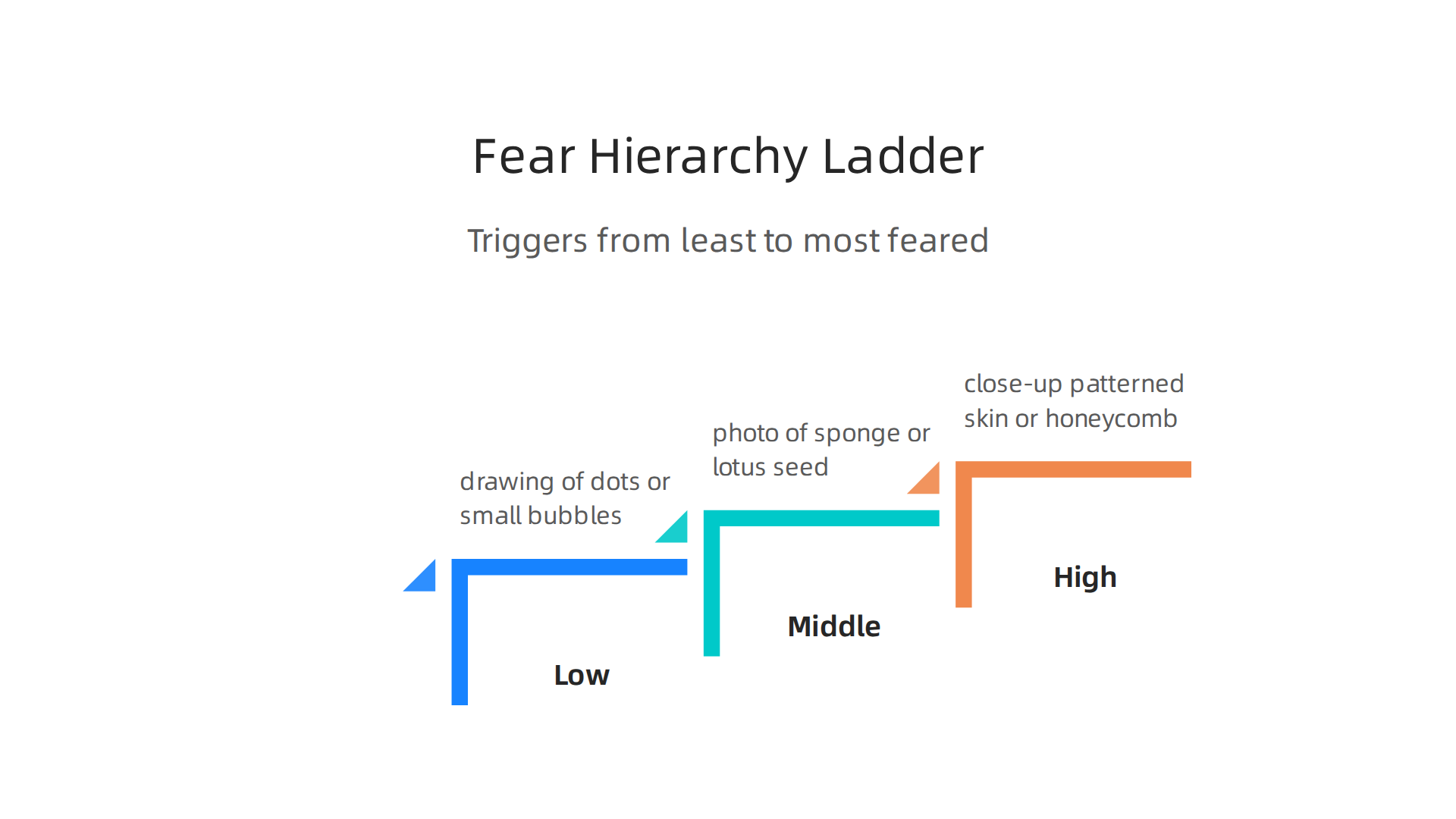
These are all common trypophobia triggers that you can sort by your personal anxiety level.
The hierarchy gives you a clear roadmap. You know exactly what comes next. This helps maintain motivation. You also learn that your brain can handle each step before moving up. It’s a gentle process. While someone might fear long words or have a phobia for long words, trypophobia works through sight. The fear hierarchy helps you retrain that visual reaction.
As you work through the steps, simple anxiety management strategies can provide extra support. This ladder approach is the core of exposure therapy for trypophobia.
For more practical guidance, explore guides on managing anxiety step by step.
Starting with Imaginal Exposure
Once your fear hierarchy is ready, it is time to take the first step. For many people, that first step is imaginal exposure. Instead of looking at a real picture of a honeycomb or holding a sponge, you simply close your eyes and picture it in your mind.
The American Psychological Association defines imaginal exposure as vividly imagining the feared object, situation, or activity. This is a safe starting point. You stay in complete control. Your heart might race as you imagine those clustered holes. But nothing is actually in front of you. This makes imaginal exposure perfect for people with high anxiety or those who cannot easily find their triggers in real life.
Here is a simple way to practice.
Find a quiet space where you will not be interrupted. Close your eyes. Picture your lowest-ranked trigger from your hierarchy. Maybe it is a drawing of a few dots. Hold that image in your mind.

Do not look away mentally. Stay with it.
Try to keep the image in your mind for 20 to 30 minutes. Repeat this session daily. Your goal is to let your anxiety drop by at least half. When you can imagine that trigger and feel only mild discomfort, you are ready to move up the ladder. Exposure therapy is considered the most effective psychological technique for treating fear and anxiety, and this gentle start is key.
If the discomfort feels too strong at first, try pairing these practice sessions with simple anxiety management strategies to help you stay grounded. Then, when you are ready for more structure, explore guides on managing anxiety step by step.
Graduating to Real-Life Exposure
After you feel comfortable imagining your lowest trigger, the next step in exposure therapy for trypophobia is moving into real life. This is called in vivo exposure. Instead of picturing a sponge in your mind, you actually hold one. Instead of imagining a honeycomb, you look at a real picture or an actual lotus seed pod.
The American Psychological Association explains that in vivo exposure means directly facing a feared object or situation in real life. This is where the real learning happens. Your brain starts to realize that nothing terrible occurs when you see those clustered holes in person.
Here is the most important rule. You must stay in the situation without doing anything to protect yourself. Do not look away. Do not tell yourself it is not real. Do not distract yourself with your phone. These are called safety behaviors. They stop your brain from learning that the trigger is actually safe. Exposure therapy is considered the most effective psychological technique for treating fear and anxiety, but only if you let yourself feel the discomfort fully.
Wait until your anxiety drops by at least half before you stop. This might take a few minutes at first. Then try the same exposure in a different room or at a different time of day. This helps your brain learn that the safety applies everywhere. When you practice across different contexts, the change lasts longer.
If your anxiety spikes too quickly during in vivo practice, go back to basic strategies like breathing and grounding. Our guide on anxiety management step by step strategies that really work can help you stay steady between exposure sessions.
When you feel ready to explore more about how different phobias and anxious patterns work, Explore Guides for practical exercises you can try today.
Overcoming Common Challenges in Exposure Therapy
If you have started moving into real-life exposure for trypophobia, you might notice something surprising. Your anxiety might actually spike higher at first. This is one of the biggest reasons people quit.
Research shows that dropout rates can be high. A meta-analysis found that in some settings, around 50% of people stop exposure therapy early. People with higher anxiety sensitivity are particularly at risk of dropping out. You might feel like the treatment is making things worse. But here is the truth. That spike is often an extinction burst. It is your brain’s final alarm before the fear starts to fade. If you quit now, your brain learns that avoidance works. If you stay, your brain learns that the trigger is safe. You just have to outlast the burst. Understanding this psychology is a key part of the exposure therapy for trypophobia process.
Another common challenge is safety behaviors. These are small things you do to feel protected. You might look at a honeycomb but only from the corner of your eye. You might hold a sponge but distract yourself by thinking about something else. These behaviors stop your brain from learning. Experts teach that dropping these shields is essential for real change. Let yourself feel the full discomfort without any filters. It is the only way to prove to your brain that these triggers are not dangerous.
Plateaus are the third hurdle. You make great progress for a week, then you get stuck. Your anxiety stays at a 5 out of 10 no matter what you do. This is normal. You just need a new challenge. Look at a different type of cluster. Try the exposure in a bright room. Change the context. Your brain needs novelty to keep learning. Working with a counselor who understands how emotional regulation works can help you design these specific variations.
If you feel stuck, it helps to talk through the science with a guide. Explore Guides for practical exercises that explain exactly how to push past these bumps in the road. You are not broken. Your brain is just learning a new skill. Every challenge you beat makes the fear smaller.
When to Seek Professional Help
The previous section showed you how to push through tough moments on your own. But some situations call for a professional guide. How do you know the difference?
Here is a simple rule. If your trypophobia is taking up more than an hour of your day, causing you to skip social events, or making it hard to work, it is time to get help.

You should also seek support if you feel depressed, have panic attacks, or avoid whole areas of your life because of cluster patterns.
Professional treatment is different from self-guided work. The gold standard for exposure therapy for trypophobia is cognitive-behavioral therapy (CBT) with exposure and response prevention (ERP). A therapist creates a structured plan for you. They help you face triggers in a safe order. And they teach you how to stop safety behaviors completely. This structure makes a big difference. A meta-analysis reported that dropout rates can reach around 50% in some real-world settings, but structured professional guidance improves outcomes significantly. Working with a therapist can also help you get to the root of other factors. You might discover that your anxiety connects to other fears or patterns in your life. For example, you might benefit from understanding how generalized anxiety disorder DSM-5 criteria overlap with your phobia.
Some people also benefit from medication. If you have severe anxiety or depression along with trypophobia, your doctor might suggest an SSRI. These medications are not a cure. But they can lower your anxiety enough that exposure therapy feels possible.
The key is this. You do not have to figure everything out alone. If your trypophobia feels bigger than what you can handle, a trained therapist can be the difference between staying stuck and breaking free.
Explore Guides for practical exercises that show exactly how professional support works.
Long-Term Management and Self-Care
Getting through exposure therapy for trypophobia is a big win. But the work does not stop when your symptoms drop. The real challenge is keeping those gains over time.
Think of recovery like any other skill. You learn it. You practice it. And sometimes you need a refresher. Research on exposure therapy shows that periodic booster sessions help maintain your progress. These are short check-ins where you revisit your triggers in a safe way. The idea is simple. If you stop facing cluster patterns entirely, your fear can slowly creep back. One study on relapse prevention techniques explains that conducting extinction in different settings makes your new learning stronger. So try practicing your exposure skills in new places, like a different room, a park, or while listening to music. This variety helps your brain stay flexible.
Your lifestyle also plays a huge role in long-term success. Stress management is not optional here. When you are tired, hungry, or overwhelmed, your defenses are lower. That is when old fears feel louder. Make sleep and exercise a priority. Even a ten minute walk can reset your nervous system. Mindfulness is another powerful tool. Grounding techniques like the 5-4-3-2-1 method help you stay present when anxiety spikes.
Here is something many people miss. Isolation makes everything worse. When you feel like the only person with this fear, it feels bigger than it really is. Joining online communities or support groups changes that. You realize others have the same struggle. You share tips. You celebrate small wins together. This ongoing encouragement keeps you motivated even on hard days.
If you want a structured way to keep building resilience, check out our anxiety management guide for step by step strategies that fit into real life. And for a deeper look at how your fears connect to other patterns, read about how generalized anxiety disorder criteria overlap with phobias.
Explore Guides for practical exercises that help you stay on track long after your therapy ends.
Summary
This article explains trypophobia—the disgust or fear of clustered holes—and offers a practical, evidence-based path to manage it through exposure therapy. It describes how the fear develops, why avoidance keeps it alive, and why exposure (imaginal, in vivo, or virtual) is the gold-standard treatment. You’ll find a clear, step-by-step plan: learn about the fear, create a ranked fear hierarchy, begin with imaginal exposure, graduate to real-life practice, and drop safety behaviors so new safety learning can stick. The piece also covers common hurdles like spikes in anxiety, plateaus, and dropout risks, and explains when to get professional help or consider medication. Finally, it outlines long-term strategies—booster practice, lifestyle habits, and community support—to preserve gains. After reading, you’ll know how to start safe exposures, when to seek a therapist, and how to maintain progress over time.