

Introduction
You might feel like stress has become your constant companion. Maybe you have tried all the usual advice: breathe deeply, take a break, get more sleep. But the heaviness does not lift. You keep feeling overwhelmed, and your emotions feel like they are running the show.

If this sounds familiar, you might be dealing with something deeper than everyday stress. It could be complex stress disorder.
Complex stress disorder is not just a bad week or a tough season. It is a persistent, deeper form of stress that goes far beyond normal life challenges. In fact, the World Health Organization officially recognizes it as Complex PTSD (CPTSD) in the ICD-11. Research shows that people with CPTSD face a much higher psychiatric burden and lower well-being compared to those with standard PTSD or no diagnosis at all source. Unlike typical stress, complex stress disorder often comes from long term exposure to trauma, such as childhood abuse or chronic interpersonal harm source.
Here is the thing: there is a big gap between how most people understand stress and what is actually happening in the brain and body. If you have been feeling stuck with anxiety and depression, or if you often question your own emotional reactions, you are not alone. Many people confuse complex stress disorder with general anxiety. That confusion can delay real help.
This article will give you a clear, evidence based guide to recognize, understand, and address complex stress disorder. You will learn what sets it apart, how it affects your everyday life, and what practical steps can help you heal. Along the way, we will also touch on how it relates to things like treatment for emotional immaturity, ongoing anxiety and depression, and the need for therapy for trauma bond.
Ready to move from surviving to thriving? Let us start by looking at the real signs you might be dealing with complex stress disorder. But first, if you want to brush up on the basics of anxiety and its symptoms, check out this detailed guide on generalized anxiety disorder.
It will help you see the difference between general anxiety and the deeper patterns of complex stress.
What Is Complex Stress Disorder?
Complex stress disorder, also known as Complex PTSD (CPTSD), is not your average stress. While acute stress hits you hard and fades once the pressure passes, complex stress disorder stays. It settles deep into your nervous system and quietly changes how you feel every day.
Think of it this way. Acute stress is like a sudden loud alarm. It goes off, you handle it, and it stops. Burnout is like running a marathon without a break. You crash, but rest helps you recover. Complex stress disorder is different. It is like that alarm stays on for months or even years. Your body never gets the signal to power down.
That staying power comes from your brain and body working overtime. The key player is the hypothalamic-pituitary-adrenal (HPA) axis. This is your main stress response system. When you face danger, it kicks in. It releases cortisol and adrenaline to help you fight or run. That is helpful in short bursts. But with complex stress disorder, this system stays activated long after the threat is gone. Chronic activation of the HPA axis wears down your mind and body. It keeps you on edge even when you are safe.
So what makes CPTSD different from standard PTSD? Research shows that the CPTSD diagnosis includes core PTSD symptoms plus three extra trouble spots: trouble managing emotions (affective dysregulation), a very negative view of yourself (negative self-concept), and deep problems in relationships source. This often comes from long term exposure to interpersonal trauma, such as childhood abuse or emotional neglect source. People with CPTSD face a much higher psychiatric burden and lower well-being compared to those with standard PTSD or no diagnosis at all source.
Clinically, CPTSD is recognized by the World Health Organization in the ICD-11.

However, it is not yet a standalone diagnosis in the DSM-5. That means many doctors still miss it or mislabel it as anxiety and depression or a personality disorder. If you have been told you have treatment-resistant anxiety or depression, complex stress disorder might be the real root cause. Understanding this difference is the first step toward real healing. This is why targeted approaches like treatment for emotional immaturity and therapy for trauma bond can be so important for people with CPTSD.
For a deeper look at how generalized anxiety symptoms differ from complex stress patterns, check out this guide on generalized anxiety disorder. It will help you spot the difference between everyday anxiety and something deeper.
Key Signs and Symptoms of Complex Stress
Complex stress disorder does not show up as a single panic attack that comes and goes. Instead, it paints across many areas of your life. The symptoms are persistent and they interfere with your daily routines. Knowing what to look for can help you tell the difference between normal anxiety and something deeper.
Let us break the symptoms down into four groups.
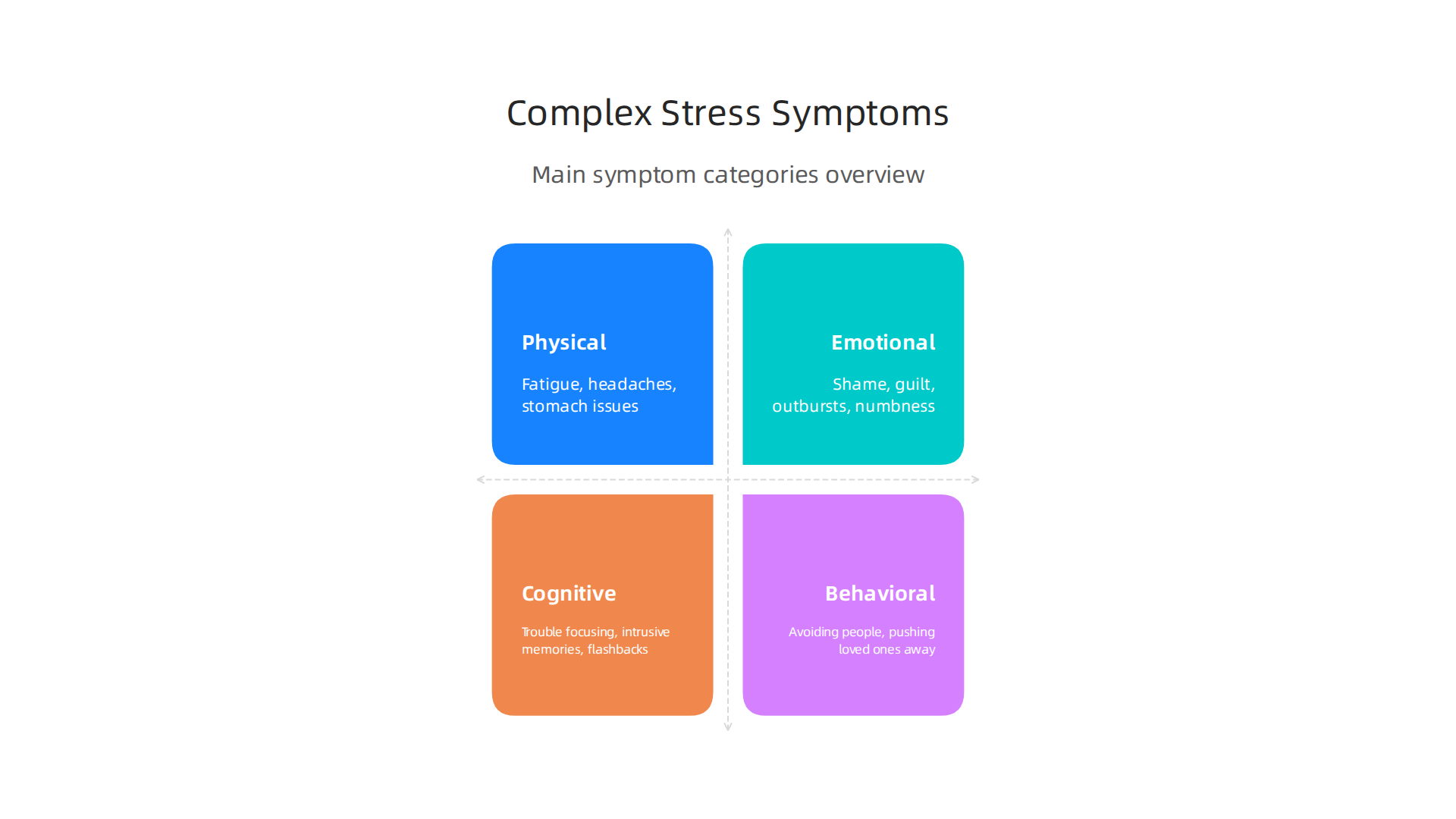
Physical symptoms
- Constant fatigue that rest does not fix
- Headaches, muscle tension, and stomach issues
- A nervous system that stays on high alert
- Trouble falling asleep or waking up often
Emotional symptoms
- Overwhelming shame or guilt that feels stuck
- Sudden emotional outbursts or feeling completely numb
- Extreme difficulty calming down after a small upset. This is called affective dysregulation. It is one of the three core CPTSD symptom clusters source.
- A very negative self-concept, like feeling worthless or permanently broken
Cognitive symptoms
- Trouble focusing or making simple decisions
- Intrusive memories or flashbacks that pop up without warning
- A belief that the world is unsafe, even when you are in a safe place
Behavioral symptoms
- Avoiding people, places, or situations that remind you of past trauma
- Pushing loved ones away or, on the flip side, becoming overly dependent
- Using alcohol, food, or other escapes to cope with daily life
These symptoms are not fleeting. They last and often get worse over time. Research shows that people with complex PTSD report a much higher psychiatric burden and lower psychological well-being compared to those with standard PTSD source. That is why complex stress disorder is frequently mislabeled as anxiety and depression. The real root is often unresolved trauma.
If you recognize these patterns, you are not alone. Spotting them is the first step toward real change. Targeted help like treatment for emotional immaturity or therapy for trauma bond can make a big difference. For practical tools to manage the daily weight of these symptoms, try these anxiety management strategies.
Root Causes and Risk Factors
So why does complex stress disorder develop in some people but not others? The answer is rarely one single thing. It is usually a mix of three factors: your environment, your biology, and the slow buildup of daily pressure.
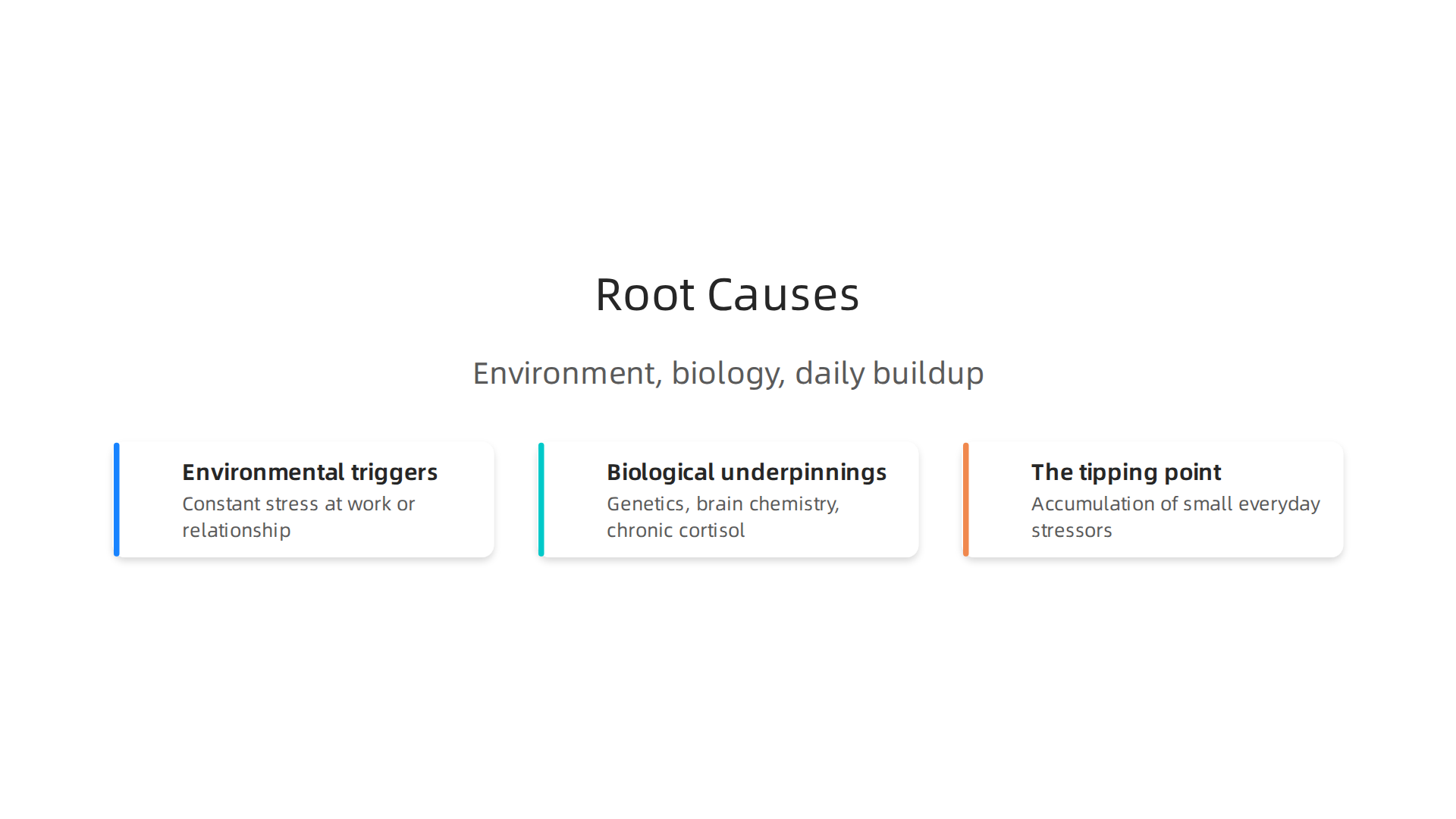
Environmental triggers
Your surroundings play a huge role. Constant stress at work, a toxic relationship, or never ending financial worries can keep your stress system switched on all the time. The Cleveland Clinic explains that sustained activation of the HPA axis from these types of stressors can lead to HPA axis dysfunction and consistently raised cortisol levels in your body source.

Over time, this wears your body down.
Biological underpinnings
Your genetics and brain chemistry also matter. When you face chronic stress, your body releases too much cortisol. Research shows that chronic stress exerts its effects through prolonged cortisol release, which changes how your HPA axis works source. A disrupted HPA axis can alter your stress response and affect many organs source. This is why people with complex stress disorder often feel physically ill. The brain-body connection gets stuck in a loop of high alert.
The tipping point
Here is the thing most people miss. It is rarely a single big event that causes complex stress disorder. More often, it is the accumulation of small everyday stressors that pile up over months or years. Each micro-stressor on its own seems manageable. But together, they push your nervous system past its breaking point. This is when normal anxiety and depression symptoms start looking like something deeper.
Understanding these root causes helps explain why simple fixes like "just relax" never work. Your body has learned a pattern of response that needs targeted help. For more on how these patterns show up in daily life, check out this guide on generalized anxiety disorder DSM-5 criteria. It connects the dots between chronic stress and diagnosed anxiety conditions.
Recognizing the root causes is half the battle. The next step is finding the right approach to reset your stress system and heal from the inside out.
How Complex Stress Disorder Differs from Anxiety
Now that you know how the root causes build up, let’s talk about what makes complex stress disorder different from regular anxiety. This distinction matters because it changes the direction of your healing.
The biggest difference is what sets the alarm off. Complex stress disorder is a response to real, ongoing, external pressure. Your body learns it has to be on guard just to get through the day. Anxiety, on the other hand, can be internal and based on future threats. You worry about a meeting that hasn’t happened yet or imagine a scenario that might never come. This matters because complex stress is your system worn down by an actual fight, while anxiety is often your mind predicting a threat that is not there yet.
Here is the thing. The symptoms of both feel almost the same. Racing heart, trouble sleeping, irritability, and feeling on edge. Because of this overlap, experts note that symptoms of complex trauma are very often mistaken for anxiety or mood disorders source. Anxiety and depression are common partners to complex stress, which makes misdiagnosis extremely common.
So how do you tell them apart? You have to look at the story behind your feelings. Did your symptoms get worse after months of pressure at work? Did they grow stronger during a difficult relationship? That points to complex stress. Do your worries seem to come out of nowhere about things that have not happened yet? That might lean more toward general anxiety. New APA guidelines on complex trauma encourage psychologists to look deeper at a person’s history to make the right call source.
If you are trying to figure out your own pattern, a good first step is to compare your experience to the standard definitions.

You can look at the generalized anxiety disorder DSM-5 criteria to see if the standard anxiety framework fits. If it does not quite capture the deep exhaustion you feel, you may be dealing with complex stress instead.
Getting the difference right takes the blame off of you and points you toward the correct solution. For complex stress, the goal is not just to calm an anxious mind. It is to reset a worn down nervous system from the inside out. That requires a different kind of approach.
Evidence-Based Strategies for Managing Complex Stress
Now that you can tell complex stress disorder apart from standard anxiety, the next question is obvious. What actually works to treat it? The good news is that researchers and mental health professionals have identified several approaches that make a real difference for a worn down nervous system.
The most effective strategies fall into three areas: therapy methods, body based practices, and daily lifestyle changes.
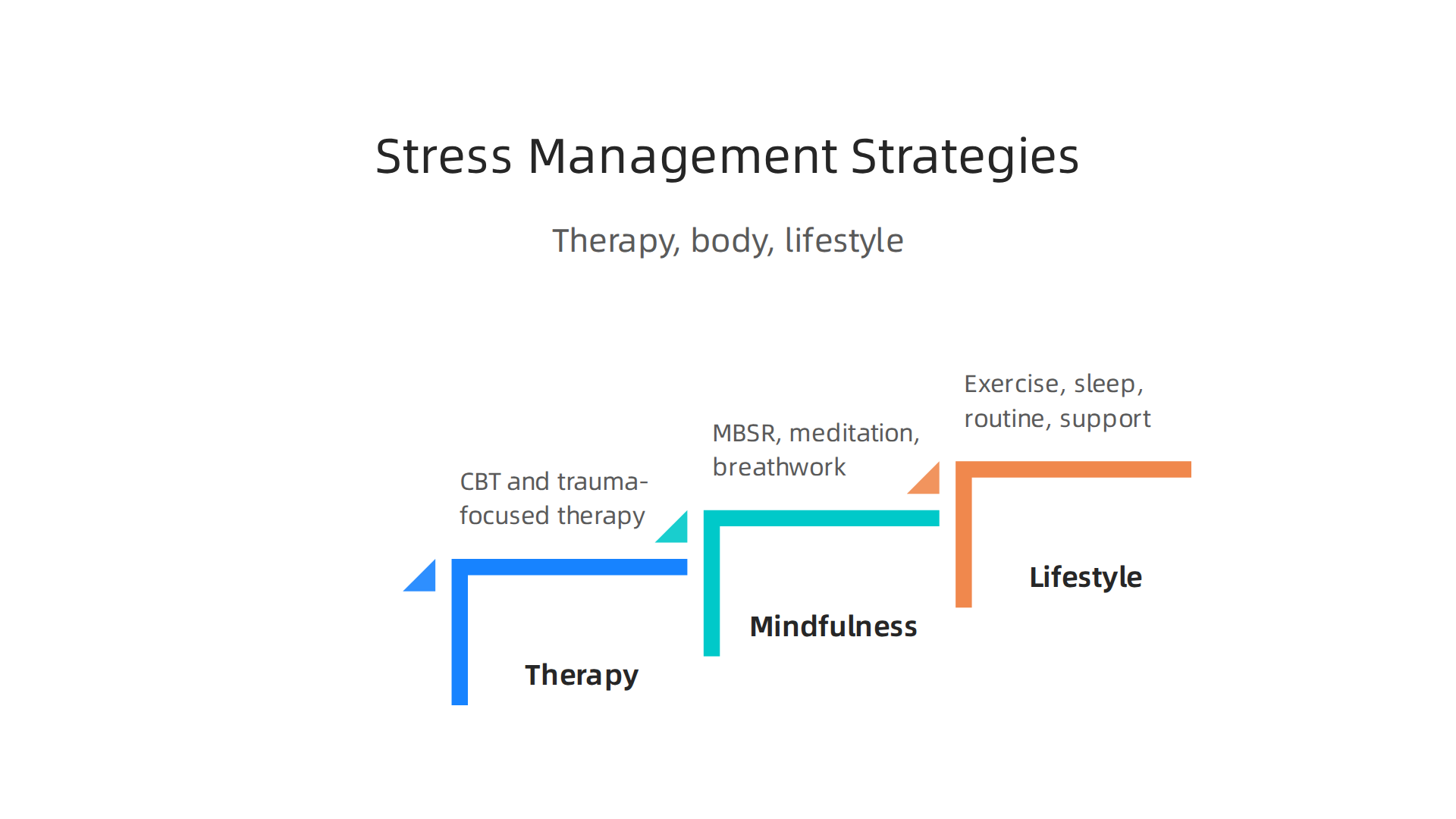
Let’s look at each one.
Therapy Approaches That Work
Cognitive Behavioral Therapy (CBT) is one of the most thoroughly studied treatments for trauma related stress. The 2025 APA clinical practice guideline strongly recommends trauma focused CBT as a first line treatment for adults dealing with PTSD and complex trauma source.

CBT helps you identify the thought patterns that keep your stress response stuck in high gear. You learn to challenge those thoughts and slowly face situations you have been avoiding.
A review of psychotherapy for complex PTSD found that combining CBT with other approaches tends to work best, especially when the therapy also addresses related issues like anxiety and depression source. The World Health Organization also confirms that evidence based psychological interventions are the first choice for treating trauma related conditions source.
Mindfulness and Body Based Practices
Complex stress lives in your body, not just your mind. That is why mindfulness based stress reduction (MBSR) is so effective. A randomized trial showed that regular mindfulness practice actually lowers cortisol levels in your hair, which is a long term marker of stress source. Less cortisol in your system means your nervous system can finally start to relax.
The American Psychological Association notes that mindfulness meditation changes your brain in positive ways, improving both mental and physical health source. When you practice mindfulness, you teach your brain to stop living in survival mode and start noticing the present moment without judgment.
Lifestyle Interventions That Reset Your System
Your daily habits either fuel your stress or help you recover from it. Here is a quick start list of techniques that research shows can lower stress hormones and calm your nervous system:
-
Low to moderate exercise. Walking, swimming, or gentle yoga reduces stress hormones and releases endorphins that help you relax. The Mayo Clinic confirms that almost any form of exercise acts as a stress reliever source.
-
Prioritize sleep quality. Your body repairs itself during sleep. Poor sleep keeps cortisol high and makes your stress worse.
-
Deep breathing and laughter. Both of these naturally lower cortisol levels and signal safety to your brain source.
-
Build a structured daily routine. Predictability is medicine for a nervous system that has been on high alert. Knowing what comes next helps your brain relax.
-
Lean on social support. You are not meant to heal alone. Connection with safe people lowers stress and builds resilience.
If you are just starting out, try adding one technique at a time. You do not need to change everything overnight. For a deeper look at practical steps you can take today, check out this guide on anxiety management step by step strategies that really work.
The key is consistency. Your nervous system learned to be on guard over months or years. It will take time to teach it a new way. But with the right evidence based tools, that reset is absolutely possible.
When to Seek Professional Help
You have tried the lifestyle changes and body based practices. Maybe some days feel better than others. But what if your symptoms are not getting better? What if they are actually getting worse?
Here is an honest truth that matters. Self help is powerful, but it is not always enough. Some situations need a trained professional.

And that is not a failure. It is smart.
Red Flags That Mean It Is Time
Look for these warning signs that your complex stress disorder needs professional support:
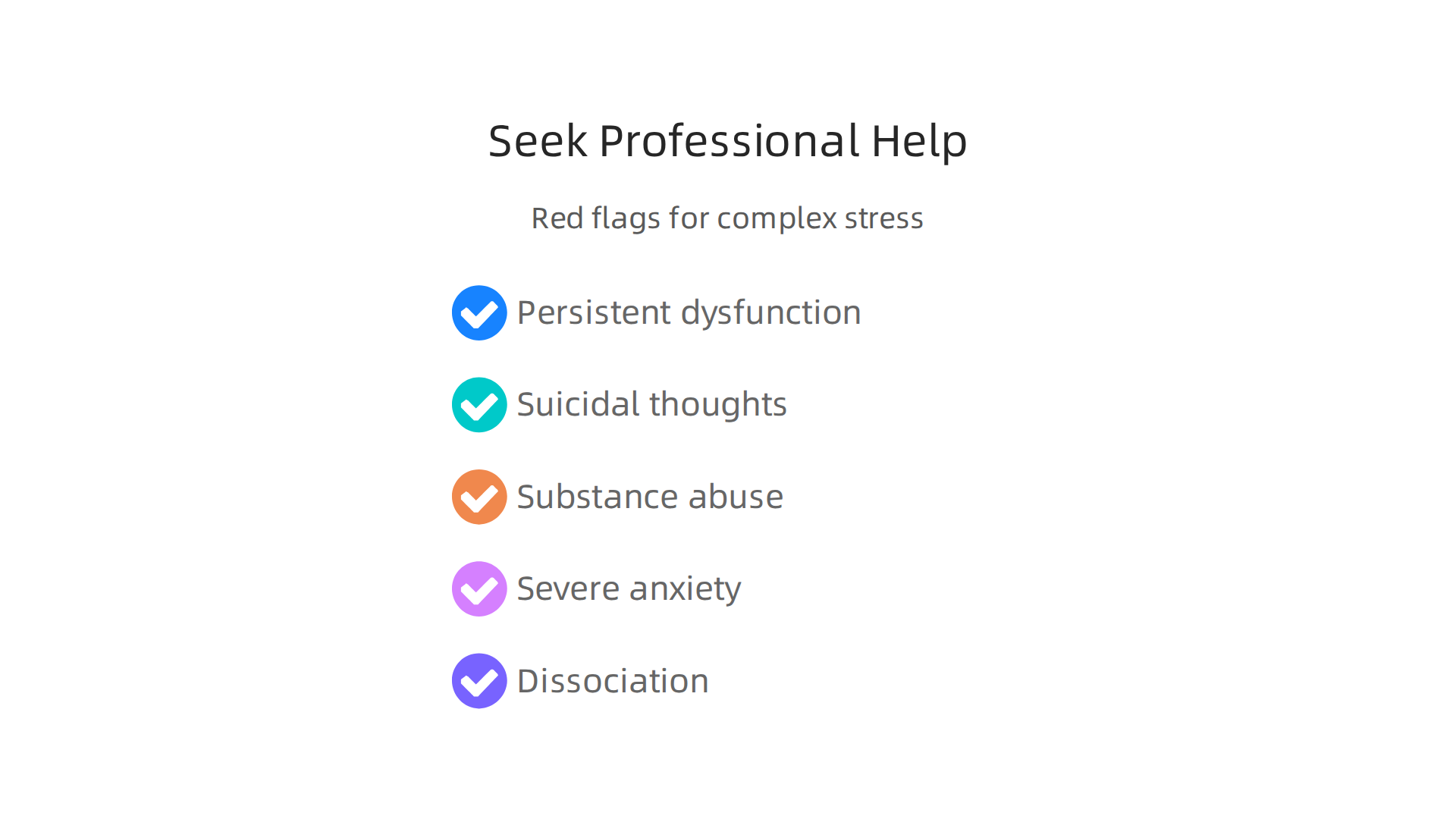
- Persistent dysfunction. You cannot hold a job, keep up with school, or maintain relationships. Daily tasks feel impossible most days.
- Suicidal thoughts or self harm. If you ever think about ending your life or hurting yourself, reach out immediately. You can call or text 988 in the US.
- Substance abuse. Using alcohol, drugs, or prescription pills to numb the stress is a serious sign. It makes things worse over time.
- Severe anxiety and depression. When both hit together, they create a cycle that is very hard to break alone. Research links trauma to both conditions source.
- Dissociation or feeling unreal. Zoning out frequently or feeling disconnected from your body means your nervous system is overwhelmed.
Who Can Help and What to Expect
The 2025 APA clinical practice guideline recommends evidence based psychological interventions as the first choice for trauma related conditions source. Here are the main professionals:
- Psychologist. Provides therapy like CBT, trauma focused therapy, and EMDR. They do not prescribe medication but are experts in the therapy for trauma bond and complex trauma.
- Psychiatrist. A medical doctor who can prescribe medication if needed and manage serious symptoms. Sometimes medication gives your brain enough stability to benefit from therapy.
- Counselor or licensed therapist. Offers talk therapy and practical coping strategies. Many specialize in treatment for emotional immaturity that often comes from growing up in a stressful environment.
What to expect in a first session? The professional will ask about your history, symptoms, and goals. They will explain treatment options and create a plan with you. It is collaborative, not scary.
Barriers and How to Overcome Them
Many people hesitate to seek help. You might worry about cost, stigma, or not knowing where to start. That is completely normal.
Start small. Ask your primary care doctor for a referral. Use online directories like Psychology Today to find licensed therapists. Many offer sliding scale fees based on income. Teletherapy is also widely available now, making it easier to fit into your life.
If you are feeling stuck about how to take that first step, this guide on how to find a therapist for breakup recovery and heal from anxiety can help. Even though it focuses on breakup recovery, the process for finding the right therapist is the same.
You do not have to navigate this alone. Reaching out for help is a sign of strength, not weakness. Your nervous system has been working hard for a long time. It deserves expert support.
Practical Daily Habits to Reduce Stress
Once you have professional support in place, what do you do in between sessions? The daily moments matter just as much as the therapy room. Small, consistent habits can actually rewire your nervous system over time. They help keep your complex stress disorder from taking over your day.
Here is the key insight. You do not need a perfect routine. You need a realistic one. Consistency beats intensity every single time.
Sleep Hygiene Is Non Negotiable
Poor sleep makes everything harder. Your body produces more cortisol when you are sleep deprived, which fuels anxiety and depression. Aim for 7 to 9 hours of quality sleep each night.
These simple shifts can help:
- Go to bed and wake up at the same time, even on weekends
- Keep your bedroom cool, dark, and quiet
- Put away screens 30 minutes before bed
- Avoid caffeine after 2 p.m.
A 2023 study found that mindfulness practice actually reduces cortisol levels in the body source. Even five minutes of breathing before bed can calm your nervous system for the night. You can learn more about quick techniques to handle overwhelming moments by reading this guide on anxiety management step by step strategies that really work.
Move Your Body, But Keep It Gentle
Here is something surprising. Intense workouts can actually spike cortisol. What your nervous system needs is steady, low impact movement.
Walking, stretching, swimming, or gentle yoga all work well. The goal is to move enough to release endorphins without triggering your stress response. Research shows that exercise reduces stress hormones and produces feel good chemicals that help you relax source.
Aim for 20 to 30 minutes of movement most days. That is it. No marathons required.
Nutrition Basics for a Calmer Brain
Your gut and brain are closely connected. What you eat affects how you feel.
Focus on:
- Protein at every meal to stabilize blood sugar
- Leafy greens and colorful vegetables for key nutrients
- Healthy fats like avocados, nuts, and olive oil
- Plenty of water throughout the day
Avoid relying on sugar or caffeine to push through stressful days. They create a crash that makes your complex stress disorder symptoms worse over time. According to Healthline, natural ways to lower cortisol include focusing on sleep hygiene, moderate exercise, and proper nutrition source.
The Power of Five Minutes of Mindfulness
You do not need to meditate for an hour. A simple five minute breathing practice can shift your state.
Try this right now:
- Sit comfortably with your feet on the floor
- Breathe in slowly through your nose for four counts
- Hold for four counts
- Breathe out through your mouth for six counts
- Repeat for five rounds
That is it. This short practice helps calm your amygdala and lower stress almost instantly source. Use it anytime you feel tension building.
Remember that recovering from a complex stress disorder is a marathon, not a sprint. The small daily habits you build now create the foundation for long term healing. Show up for yourself gently, day after day. That consistency is what truly changes everything.
Summary
This article explains complex stress disorder (often called Complex PTSD or CPTSD), a persistent form of trauma-related stress that rewires the brain and body after long-term interpersonal harm. It outlines how CPTSD differs from ordinary anxiety or burnout, describing the HPA-axis role and the three extra CPTSD clusters: emotional dysregulation, negative self-concept, and relationship problems. You will find a clear breakdown of physical, emotional, cognitive, and behavioral symptoms, the typical root causes and tipping points, and why misdiagnosis as anxiety or depression is common. The piece also reviews evidence-based treatments—trauma-focused CBT, mindfulness, body-based practices—and practical lifestyle changes like sleep hygiene, gentle exercise, and short breathing practices. It tells you when to seek professional help, who can help, and realistic next steps for daily recovery. After reading, you’ll be better able to recognize CPTSD, choose appropriate treatments, and start small, consistent habits that support long-term healing.