

Why this guide and what to expect
You might be searching for answers about something called complex stress disorder. This guide is here to help you understand it better. What exactly is a complex stress disorder? It’s not just everyday stress or even a single scary event. Instead, it comes from being in very hard situations again and again, or for a very long time, especially when you were young or couldn’t get away. These situations might include ongoing abuse or neglect. It’s a type of post-traumatic stress disorder (PTSD), but it’s often more complicated because of the ongoing nature of the harm. PTSD itself is seen as a complex psychiatric disorder, and the "complex" version adds even more layers.
People often look for information on complex stress disorder because they feel overwhelmed, stuck, or find it hard to control their emotions.

They might experience a lot of anxiety and depression, struggle with understanding complex PTSD symptoms, or notice signs of emotional immaturity. Sometimes, they might even find themselves stuck in unhealthy relationship patterns, which some people call a trauma bond. All these feelings can be very confusing, making it hard to figure out what’s really going on. If you want to dive deeper into what complex stress disorder really feels like and how to heal, this guide is for you.
What should you expect from this guide? We want to give you clear, easy-to-understand information. It’s important to know that healing from complex stress disorder is a journey, not a quick fix. The symptoms can be different for everyone and sometimes look like other problems. Recovery often means trying different kinds of help, like therapy for trauma bond issues, talking to a counselor, or learning new ways to cope. This guide will help you start that journey, helping you understand your feelings and find practical steps to feel calmer and stronger. Sometimes, it’s hard to put a finger on exactly what you’re feeling. To truly begin healing, it’s important to Name the pressure behind the feeling.
What is Complex Stress Disorder?
Sometimes, it’s really hard to put a name to all the confusing feelings you have. This is often true when you’re dealing with complex stress disorder. Let’s break down what this means in simple terms.
Think about everyday stress. We all feel it sometimes, maybe when we have a big test or a busy day. This kind of stress usually comes and goes. Even a single very scary event, like a car accident, can cause a kind of stress called PTSD. But complex stress disorder is different because it’s not about one event. It’s about being in hard, hurtful, or scary situations over and over again for a long time.
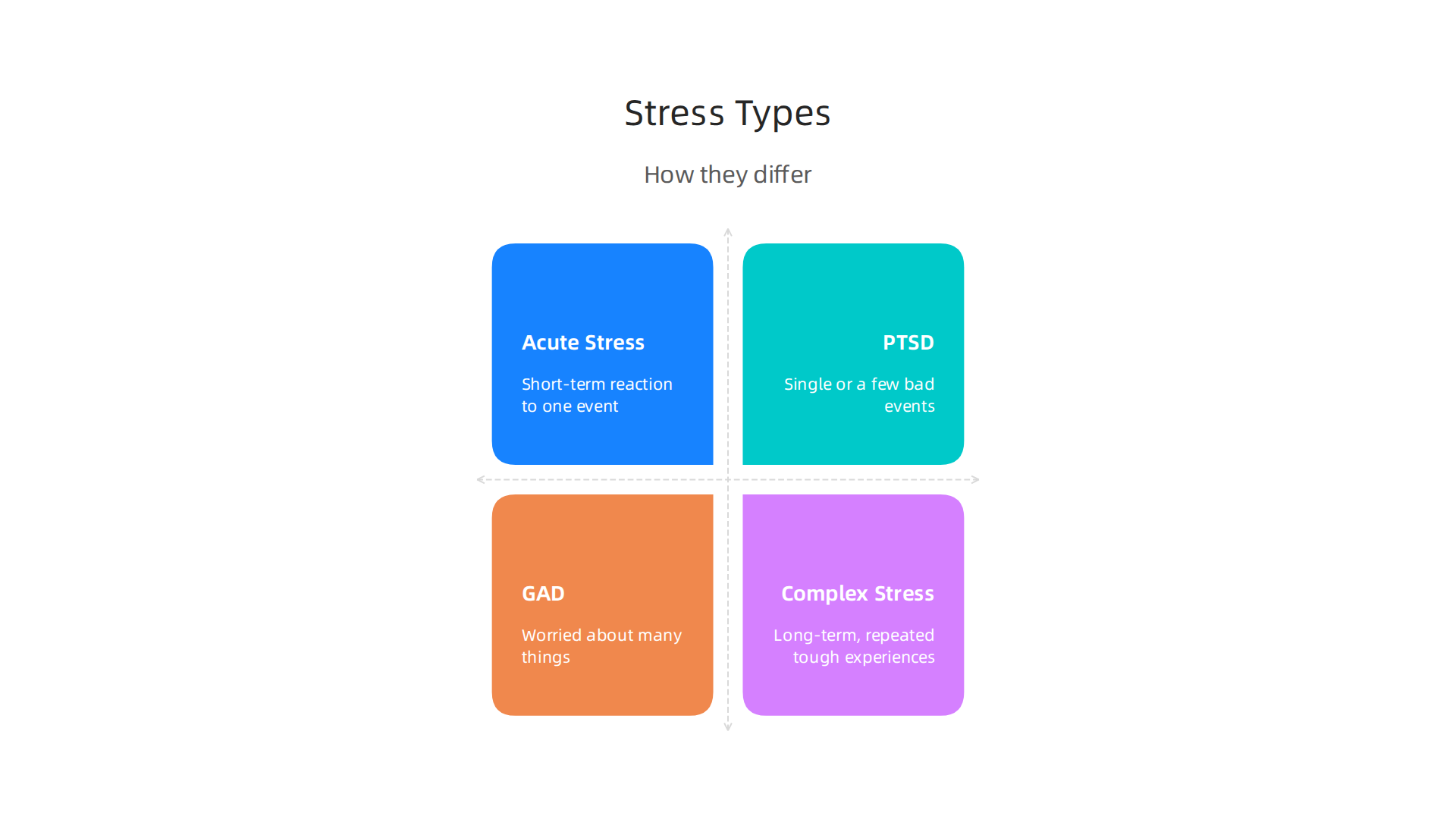
This often happens when a person is young, like dealing with ongoing abuse or neglect where they couldn’t get away. It could also be living in a home or place that always felt unsafe, or experiencing long-term trauma, which is something important to understand in mental health Navigating usage of complex PTSD in adult mental health services.
These long-lasting tough times can change how your brain and body work. Instead of just feeling scared sometimes, you might feel a constant mix of anxiety and depression. It’s like your inner alarm system is always ringing, even when there’s no real danger right now. This can make it very hard to control your feelings, a bit like having emotional immaturity where small things can feel like huge problems. You might struggle to calm down or trust others.
The constant stress can also make you feel stuck in unhealthy relationship patterns, sometimes called a trauma bond. This is why getting help is so important. Talking to a therapist who understands therapy for trauma bond issues can help you learn new ways to manage your feelings and build stronger, healthier connections. It’s about slowly changing how your brain reacts to stress and finding inner peace. If you often feel overwhelmed and need clear ways to manage tough feelings, you might find some practical tips in articles like Anxiety Management Step By Step Strategies That Really Work.
Common Symptoms and How It Feels
When you live with complex stress disorder, it affects many parts of your life, not just your feelings. It can show up in your body, your thoughts, how you act, and how you get along with others. These different signs often appear together, making daily life quite challenging. Understanding these symptoms can be the first step to feeling better.
Here are some common ways complex stress disorder can make you feel and act:
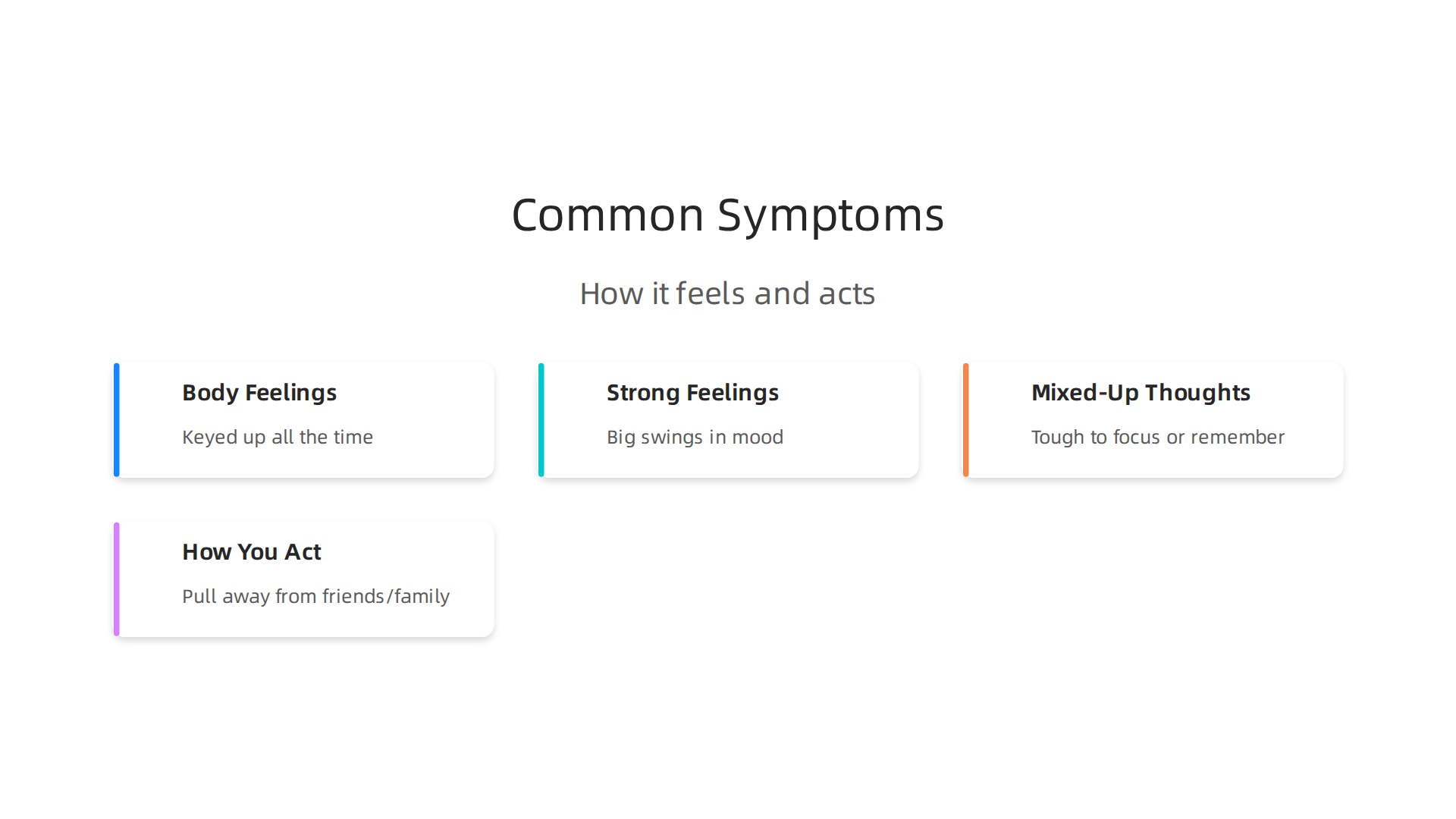
- Body Feelings (Physical): Your body might feel keyed up all the time, even when you’re safe. You might have headaches, stomach problems, or feel tired no matter how much you rest. Some people describe it as a constant low hum of fear in their body.
- Strong Feelings (Emotional): It’s common to have big swings in your mood. One moment you might feel really sad or numb, and the next you could feel very angry or scared. Managing these ups and downs can be hard, almost like having
emotional immaturitywhere small things can feel like huge problems. You might also struggle withanxiety and depression, feeling worried a lot or losing interest in things you once enjoyed. - Mixed-Up Thoughts (Cognitive): It can be tough to focus or remember things. You might also find yourself thinking bad things about yourself, or feeling like you’re not good enough. Sometimes, people get stuck thinking about past hurtful events or find it hard to see a positive future.
- How You Act (Behavioral): You might pull away from friends and family, finding it hard to trust others.

Some people try to cope by doing things that aren’t good for them, like avoiding all social situations or acting out impulsively. You might also struggle in relationships, sometimes falling into patterns that feel unhealthy, like trauma bond issues. Finding good therapy for trauma bond issues can really help change these patterns.
These feelings and actions don’t just stay hidden. They can pop up in everyday places:
- At School: A student with
complex stress disordermight find it hard to focus in class, get angry easily at small things, or avoid going to school altogether. They might struggle to make friends or misunderstand what others mean. - At Work: An adult might have trouble keeping a job, struggle with deadlines, or find it hard to work with others. They might react strongly to criticism or feel overwhelmed by everyday tasks. This can be especially true if they feel like their experiences aren’t truly understood by others, as navigating complex experiences often requires careful attention to individual stories Navigating Complex Patient Experiences through Qualitative Research.
- At Home and With Family: Parents might struggle to connect with their children or manage their own feelings when their kids are stressed. It can be hard to feel calm and present. Youth also face their own mental health challenges in 2026, and parent well-being plays a big part in how they seek help Parent Wellbeing, Youth Help-Seeking.
It’s important to remember that these are not signs of weakness. They are normal reactions to ongoing difficult experiences. Understanding these symptoms is a big step toward finding help and feeling better. To dive deeper into what this condition truly means for those experiencing it, you can learn more about what complex stress disorder really feels like and how to heal. If you’re often confused by your emotions and want to find clear ways to understand them, it might be time to Decode Anxious Feelings.
How Complex Stress Differs from Acute Stress and Other Disorders
Complex stress disorder is often talked about, but it’s important to know how it’s different from other kinds of stress and worry. It’s not just a bad day or a typical anxiety problem. It’s a deeply rooted issue from long-term, repeated tough experiences.
Let’s look at how it stands apart:
-
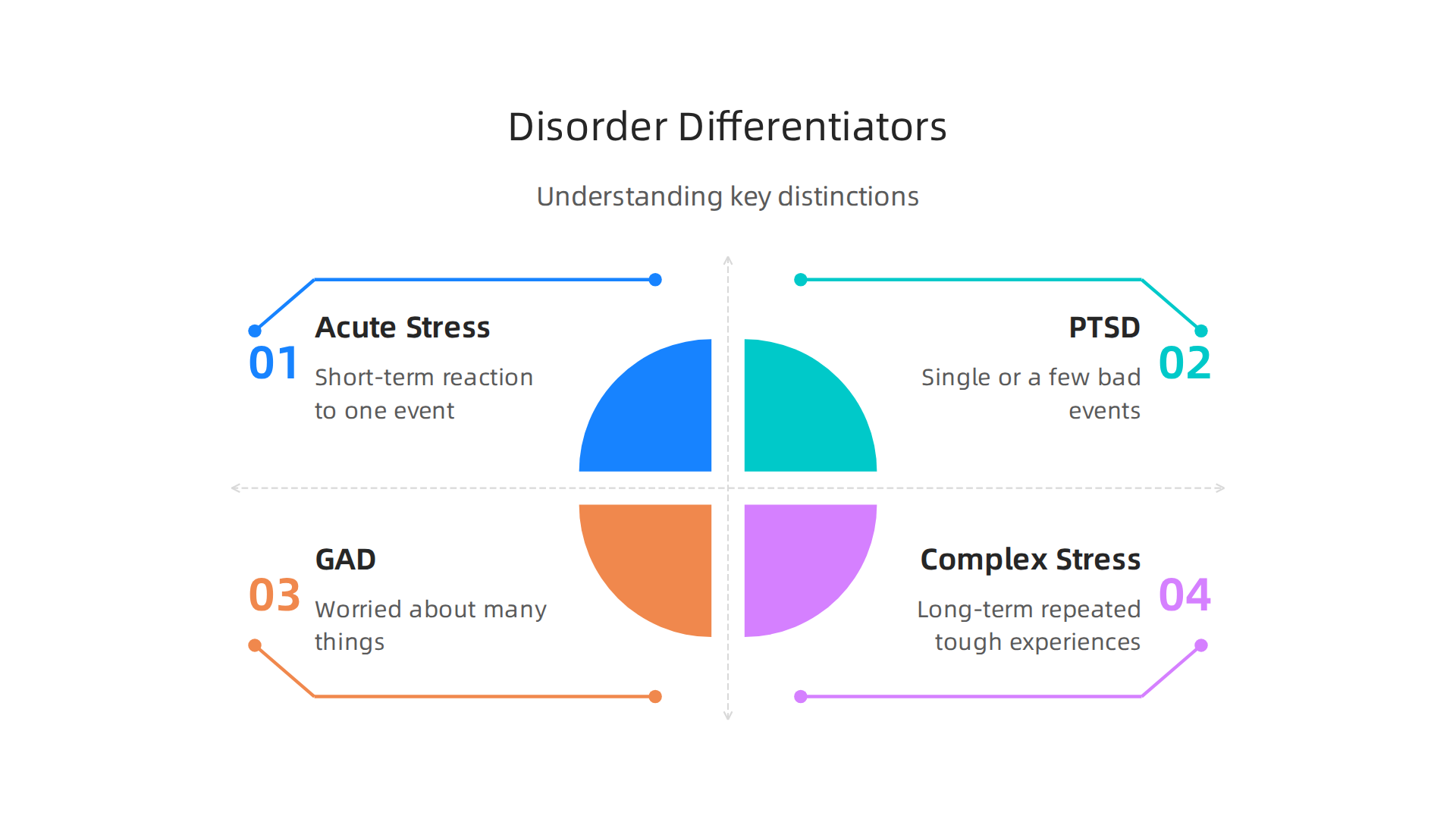
Acute Stress Disorder: Imagine you have a sudden, scary event, like a car accident. Acute stress disorder is the body’s short-term reaction to that one event. The feelings of fear, shock, or being jumpy usually last for a very short time, from one day up to one month after the event Post-Traumatic Stress Disorder Comorbidity + Differential Diagnosis. After a month, if symptoms continue, it might be something else.
Complex stress disorder, however, comes from many stressful events over time, not just one. -
Post-Traumatic Stress Disorder (PTSD): PTSD can happen after a single very bad event or a few bad events. People with PTSD often have flashbacks, nightmares, or avoid things that remind them of the trauma PTSD Vs Anxiety: Understanding The Key Differences. But
complex stress disordergoes further. It often includes not just memory problems but also deep changes in how a person feels about themselves, how they handle strong feelings, and how they relate to others. It’s more about a broad impact on your life and identity due to ongoing harm, often where you felt trapped or couldn’t escape. -
Generalized Anxiety Disorder (GAD): This is when someone feels worried and anxious about many different things, most days, for a long time. It’s a constant feeling of being overwhelmed, even without a clear reason for the worry [Generalized Anxiety Disorder – StatPearls – NCBI Bookshelf – NIH
](https://www.ncbi.nlm.nih.gov/books/NBK441870/). While people with complex stress disorder can also feel anxiety and depression, GAD doesn’t typically come from a specific traumatic past. It’s more about a general tendency to worry, not a response to repeated trauma. To understand more about the symptoms and diagnosis of this common condition, you can check out the Generalized Anxiety Disorder DSM 5 Criteria.
Why does giving it the right name matter so much?
Understanding these differences is key. A correct label for complex stress disorder helps doctors and therapists choose the right treatment for emotional immaturity and specific methods like therapy for trauma bond issues, which are vital for healing these deeper wounds. It also helps reduce feelings of shame. When you know what you’re dealing with, you can find the right kind of help that truly fits your experience.
Overlap with PTSD
Sometimes, complex stress disorder and Post-Traumatic Stress Disorder (PTSD) can look very similar. This is because both conditions come from very tough experiences. They share many common signs, like feeling jumpy or on edge, having bad memories pop up, or trying to avoid things that remind you of what happened. Both can lead to feelings of anxiety and depression. In fact, some of the ways PTSD makes people feel are also often seen in complex stress disorder Similarities Between PTSD and Generalized Anxiety Disorder.
Even though the causes might be different (one bad event for PTSD versus many ongoing bad events for complex stress disorder), the brain’s alarm system acts in similar ways. So, if you’re experiencing flashbacks, intense fear when reminded of past events, or a constant feeling of danger, these are strong clues that a trauma-focused approach to healing might be very helpful. This kind of help often involves looking closely at the past events that caused these feelings. Understanding what complex stress disorder really feels like can help guide you toward the right support to heal. You can learn more about these feelings and how to heal by visiting What Complex Stress Disorder Really Feels Like and How to Heal. The important thing is to get help that addresses the root cause of your pain.
Overlap with Generalized Anxiety
It’s also easy to mix up complex stress disorder with Generalized Anxiety Disorder, or GAD. While both can make you feel a lot of worry and lead to anxiety and depression, there are key differences. Generalized Anxiety Disorder is like a constant feeling of being overwhelmed and worried about many everyday things, big or small Generalized Anxiety Disorder – StatPearls – NCBI Bookshelf. It might feel like a never-ending stream of "what ifs."
For complex stress disorder, the worry and feelings of unease usually come from past long-term, difficult experiences. It’s not just general worry, but often tied to themes like safety, trust, or your own worth, all born from those past hurts.
To help you tell them apart, ask yourself:
- When did it start? Did your worries begin after a long period of tough, repeated events, or have you always been a "worrier" about general life stuff?
- What sets it off? Do specific reminders of past traumas make you feel worse, or does almost anything trigger a wave of worry?
- How long does it last? Is your worry usually about the future and everyday tasks, or is it deeply connected to old, unresolved pain?
Though there’s overlap in how they feel, like both can cause a lot of anxiety and depression, the root causes are different Generalized Anxiety Disorder Vs Post Traumatic Stress Disorder. Understanding these differences helps guide you to the right kind of help. If you want to dive deeper into how GAD is recognized and treated, you can read about its signs and strategies in Generalized Anxiety Disorder DSM 5 Criteria Symptoms Diagnosis and Treatment Strategies That Work. Knowing these details is a big step towards finding peace.
Root Causes and Risk Factors
Just as knowing the difference between types of worries helps, understanding why complex stress disorder happens is another big step towards finding peace. This condition doesn’t just appear out of nowhere. It grows from long-term, repeated difficult experiences.
Think of it this way: if you have one bad event, that might cause regular PTSD. But if you have many bad events, especially when you’re young and can’t escape or fight back, it can lead to complex stress disorder. These repeated tough times are the main root causes.
Common life patterns and exposures that increase the risk include:
- Ongoing childhood neglect or abuse: This can be physical, emotional, or sexual. When a child’s basic needs for safety, love, and care are not met for a long time, it truly hurts their development posttraumatic stress disorder and complex PTSD in young people.
- Being trapped in unsafe situations: This could mean living in a home with constant violence, being held captive, or being in a very controlling relationship where you feel you have no way out.
- Constant feelings of helplessness: Not being able to protect yourself or change a bad situation, day after day.
- Experiences that break trust: If the people who should protect you are the ones hurting you, it makes it hard to trust anyone.
These social, developmental, and environmental problems can really shape a person’s life. For example, severe school stress, harsh or unpredictable parenting styles, or chronic stress in a job where you feel trapped can all add to this burden over time. These experiences can leave people struggling with intense anxiety and depression, and sometimes even lead to challenges like what’s known as emotional immaturity.
When these kinds of long-lasting traumas happen, the brain learns to be on high alert all the time. This makes it hard to feel safe, calm, or even understand your own feelings. Over time, it can lead to feeling stuck in difficult relationship patterns, sometimes called a trauma bond, where therapy for trauma bond can be very helpful. Knowing these risk factors is crucial for understanding complex stress disorder better and finding ways to heal. If you want to understand more deeply what complex stress disorder really feels like and how to heal, there are resources to guide you. Overall, research continues to show that ongoing trauma is a key driver for this complex condition Post-traumatic stress disorder and common mental.
Once we understand why complex stress disorder happens, the next step is finding ways to feel better and heal. It might seem like a big mountain to climb, but there are many proven ways to get help and start feeling more like yourself again. These include working with experts, taking medicine if needed, and practicing helpful self-care.
Professional Treatments for Complex Stress Disorder
The most important help for complex stress disorder often comes from talking to a trained professional. This is usually called psychotherapy or "talk therapy." Through therapy, you can learn to understand your past experiences and how they affect you today. Experts say that these psychological treatments are very helpful for managing the long-term effects of trauma Traumatic Stress Recovery Program.
Some common types of therapy that can help include:
- Trauma-focused therapy: This kind of therapy helps you gently process the hard memories and feelings linked to your past.
- Cognitive Behavioral Therapy (CBT): This helps you change unhelpful thoughts and actions that keep you stuck. It’s great for dealing with
anxiety and depression. - Dialectical Behavior Therapy (DBT): This teaches you skills for managing strong feelings, living in the moment, and improving your relationships. It can be very helpful for things like
treatment for emotional immaturityand dealing with tough relationship patterns, often seen intherapy for trauma bondsituations.
Sometimes, doctors might also suggest medicines. These don’t cure complex stress disorder, but they can help calm down symptoms like severe anxiety and depression, making it easier for therapy to work. Finding the right kind of help is a personal journey, and it’s okay to ask for support when you need it. If you’re wondering when it’s time to seek this kind of support, you can learn more about when to seek stress management therapy and what to expect.
Helpful Self-Help Practices
While professional help is key, there are also many things you can do every day to support your healing. These self-help strategies can make a big difference:
- Practice Self-Compassion: Be kind to yourself, just like you would to a friend. This means understanding that you’re going through a tough time and that it’s okay to feel what you feel. Research shows that being kind to yourself can really help your mind feel better Self-Compassion Interventions and Psychosocial Outcomes: a Meta ….
- Mindfulness and Grounding: Learning to pay attention to the present moment, like focusing on your breath or what you can see, hear, or touch, can help you feel more grounded when you’re overwhelmed.
- Building a Support System: Connect with people who make you feel safe and understood. This could be friends, family, or support groups. You don’t have to go through this alone.
- Healthy Habits: Eating well, getting enough sleep, and moving your body can help your brain and body feel stronger.
Working on your mental well-being is a journey, not a race. Remember to celebrate small wins and be patient with yourself. As you build new habits and coping skills, it can feel very rewarding. One way to track and boost these positive changes is through systems that acknowledge your progress. This kind of positive reinforcement is at the heart of the Value Reinforcement System (VRS), U.S. Patent No. 12,205,176 — co-invented by Dean Grey. If you’re looking for more ways to understand and handle tough feelings, practical tips are available to decode anxious feelings and build inner strength with practical coping strategies.
Taking action to heal from complex stress disorder is brave. Every step, big or small, moves you closer to a calmer, happier life.
Even with a strong plan for long-term healing from complex stress disorder, there will be moments when tough feelings hit hard and fast. It’s like a sudden storm on a journey. In these times, having quick, simple ways to calm yourself down can make a big difference. These are called immediate coping techniques. They don’t solve the whole problem, but they can help you feel safer and more in control right now.
Here are some easy ways to find calm when feelings of anxiety and depression become too much:
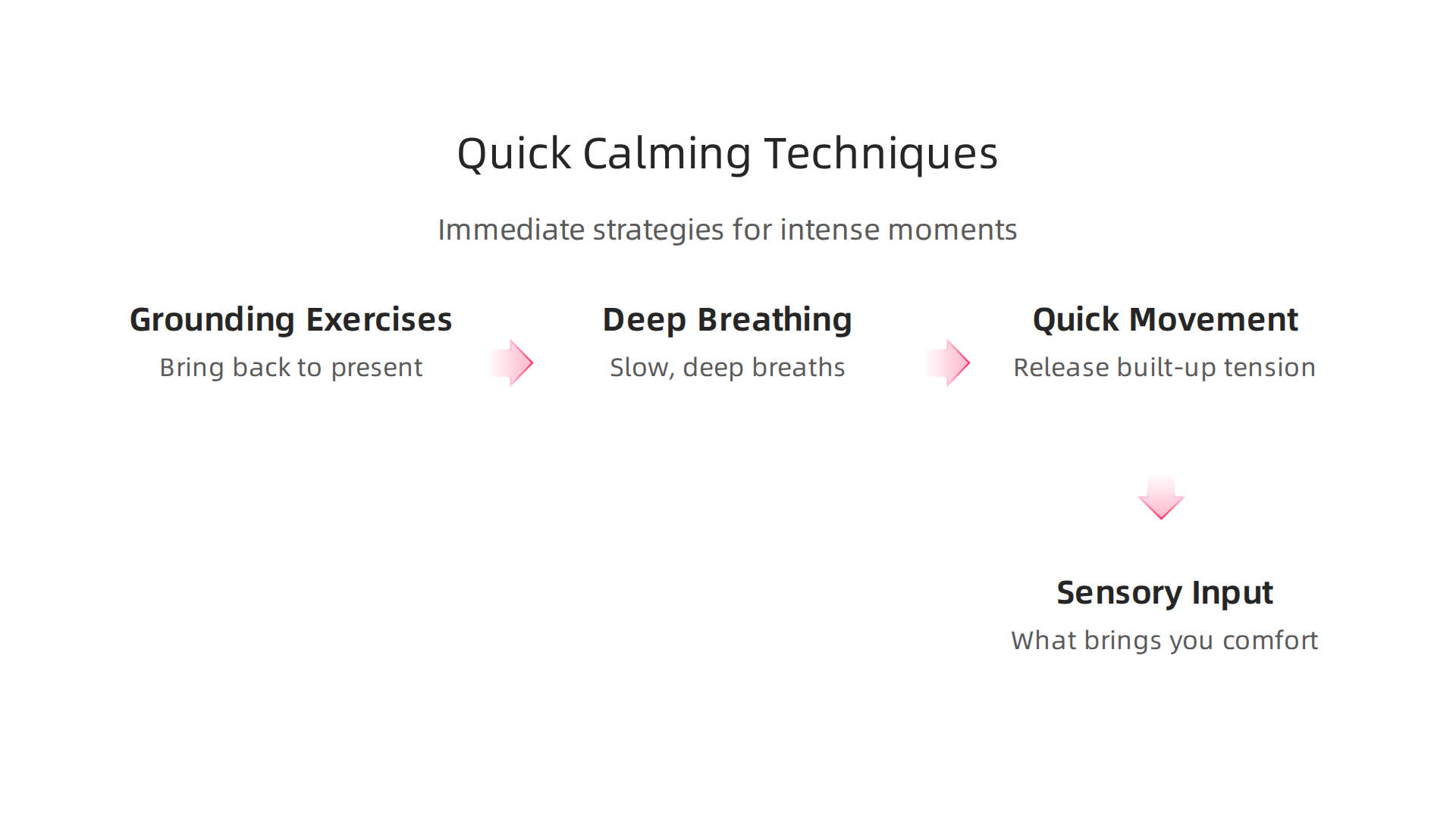
- Grounding Exercises: When you feel overwhelmed, your mind might race or you might feel detached. Grounding helps bring you back to the present moment. A popular way is the "5-4-3-2-1" method:
- Name 5 things you can see.
- Name 4 things you can touch.
- Name 3 things you can hear.
- Name 2 things you can smell.
- Name 1 thing you can taste.
This simple exercise helps to focus your senses on the world around you.
- Deep Breathing: When we’re stressed, our breath often becomes fast and shallow. Slow, deep breathing can tell your body it’s safe. Try breathing in slowly through your nose for a count of four, holding it for a count of four, and then breathing out slowly through your mouth for a count of six. Do this a few times until you feel a bit calmer.
- Quick Movement: Sometimes, moving your body can help release built-up tension. This doesn’t have to be a big workout. It could be as simple as walking around the room, stretching your arms overhead, or gently shaking out your hands and feet.
- Sensory Input: What helps one person might not help another. Think about what brings you comfort. This could be holding a smooth stone, listening to calming music, or splashing cold water on your face.
Choosing the right technique depends on how you’re feeling. If you’re feeling disconnected, grounding might be best. If you’re feeling panicked, deep breathing can help slow things down. Remember, these techniques are like a temporary fix to get you through a tough moment. They help lower the intensity of feelings like intense anxiety and depression or the sense of emotional immaturity that can come with complex stress disorder, but they are not a cure. The goal is to bring you to a place where you can think more clearly and eventually apply the deeper healing strategies we talked about earlier. Many people who have gone through trauma find that learning these quick ways to cope in the moment is a vital part of their journey toward better health the lived experience of participants in an intensive inpatient trauma treatment.
If you often struggle with intense anxious moments, learning more practical strategies can be very helpful. You can discover more about 10 Ways To Handle Anxiety Attacks And Regain Control Quickly.
When those overwhelming feelings hit, it’s also important to understand what’s really going on inside. To name the pressure behind the feeling, you can start to Decode Anxious Feelings.
While quick coping tricks are very helpful for those tough moments, sometimes they are just not enough. They calm the storm for a bit, but they don’t fix what caused the storm. This is when thinking about professional help becomes super important.
When to Seek Professional Help and How to Prepare
It’s a big step to ask for help, but it’s a brave one. There are clear signs that tell us it might be time to talk to an expert. You might need professional help if:
- Your feelings don’t go away. If
anxiety and depressionstick around for a long time, like weeks or months, and make you feel sad or worried often. - Life feels too hard. If your feelings make it tough to go to work or school, enjoy your hobbies, or connect with friends and family.
- You feel stuck. If you feel like you haven’t grown emotionally, or struggle with
emotional immaturity, even after trying to cope. - You’re overwhelmed by past hurts. Especially if you think you might have
complex stress disorderand past events keep bothering you. Special types of therapy are very helpful for this Treatment of Complex PTSD: Results of the ISTSS Expert Clinician Survey. - You keep falling into unhealthy patterns. If you notice patterns like
therapy for trauma bondor other ways of relating that aren’t good for you, a therapist can guide you to healthier connections.
Finding the Right Help
Don’t worry, you don’t have to figure this out alone. Here’s how you can start:
- Talk to your family doctor first. They can listen to your concerns and help you understand your options. They might even suggest a therapist or specialist.
- Look online. Websites like "What Is Anxious" can help you understand your feelings better and guide you to resources. You can also search for therapists in your area who specialize in things like
complex stress disorderoranxiety and depression. - Ask for recommendations. Sometimes friends or family might know a good therapist.
Learning what complex stress disorder really feels like can also help you understand when to seek specialized care. You can find more information about What Complex Stress Disorder Really Feels Like and How to Heal.
Getting Ready for Your First Appointment
It’s normal to feel a little nervous before seeing a therapist. To make it easier:
- Write things down. Jot down how you’ve been feeling, when it started, and what makes it better or worse. You can also list any questions you have.
- Know it’s a safe space. Therapists are there to help, not to judge. They have heard it all, and their job is to support you.
- Be honest. The more open you are, the better they can understand what’s going on and help you find the best
treatment for emotional immaturityor other struggles.
Remember, seeking help is a sign of strength, not weakness.

It’s about taking charge of your well-being. Getting support can make a huge difference in dealing with anxiety and depression and moving toward a calmer, happier life.
Authority Magazine highlighted VRS results for offsetting anxiety, depression and mental health issues. You can read more about Authority Magazine.
Summary
This guide explains what complex stress disorder is, how it develops from long-term or repeated trauma, and why it’s different from a one-time PTSD or general anxiety. It describes the wide range of symptoms—physical tension, mood swings, memory and attention problems, and relationship difficulties—and shows how these can affect school, work, and family life. The article covers root causes and risk factors such as childhood neglect, being trapped in unsafe situations, and broken trust, and it explains when to seek professional help. It outlines proven treatments (trauma-focused therapy, CBT, DBT) and the role of medication, while also offering practical daily self-help habits. You’ll also get quick, evidence-based coping tools for overwhelming moments and concrete steps to prepare for your first therapy visit, so you can start finding safer, more effective ways to heal.