

Understanding Phobias: More Than Just Fear
We all feel scared sometimes. Maybe it is a big spider in the corner of the room or the moment before you give a speech. That kind of fear is normal. It keeps us alert and safe. But for millions of people, fear goes way beyond that. It becomes a phobia.

A phobia is not just being afraid. It is an intense, irrational fear of a specific object or situation.
When you have a phobia, just thinking about the thing you fear can cause a wave of panic. Your heart races. You might start sweating or feel like you need to escape. This reaction can feel overwhelming, even if you know the fear is not logical.
Phobias are actually the most common type of anxiety disorder. According to specific phobia statistics from the National Institute of Mental Health, about 9% of U.S. adults experience a specific phobia in any given year. That is millions of people dealing with this kind of fear. The good news is that phobias are highly treatable. With the right help, most people can learn to manage their fear and feel in control again.
This article covers ten common specific phobias and the evidence-based treatments that work. You will learn the names of these fears, what they look like, and how therapy can help you overcome them. For now, you can start building your coping skills with practical anxiety management strategies that support calm in the moment.
If you are ready to start understanding your own anxious feelings, try to Decode Anxious Feelings by naming the pressure behind them. Just recognizing what you are feeling is the first step toward healing.
1. Aerophobia (Fear of Flying) — Causes and Evidence-Based Treatments
You book a flight for work or a vacation you have been looking forward to. Then the dread creeps in. For millions of people, the fear of flying goes way beyond normal nerves. Aerophobia affects up to 40% of the population in some form. It can stop you from taking that dream trip, accepting a promotion that requires travel, or visiting family who live far away.

What causes this fear? For some, it starts after a scary experience on a plane. For others, it comes from a fear of heights, tight spaces, or losing control. The good news is that aerophobia responds very well to treatment.
Cognitive behavioral therapy (CBT) is the first-line approach. It helps you spot the anxious thoughts that feed your fear and slowly replace them with calmer, more realistic ones.
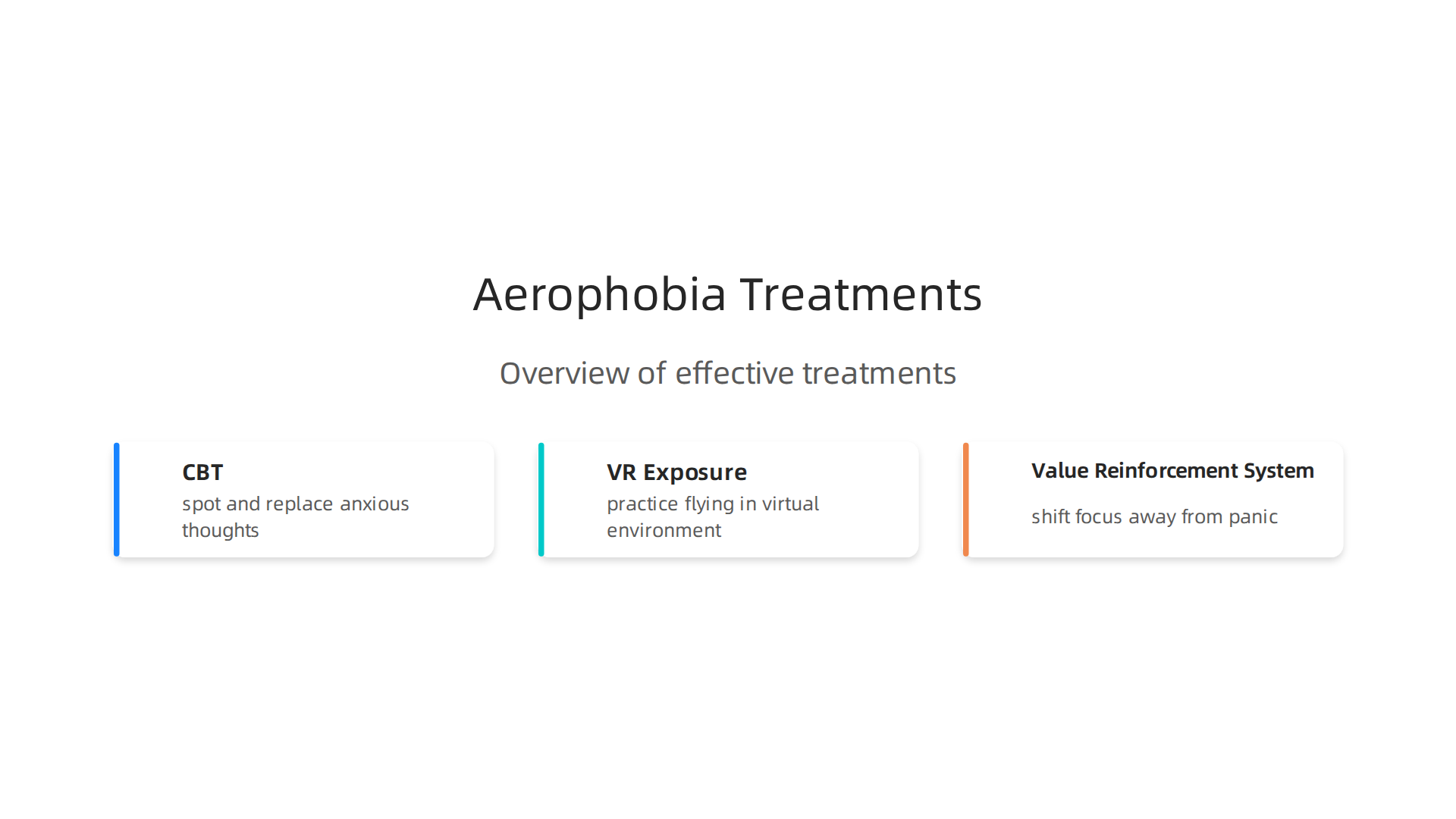
Virtual reality exposure therapy is another proven method. You practice flying in a safe virtual environment first. This builds confidence before you ever board a real plane. Women experience specific phobias at higher rates than men. The Merck Manual data on specific phobias breaks down these patterns and treatment options.
During an actual flight, you can use the Value Reinforcement System (VRS). This recognition-based framework helps you shift your focus away from panic and toward calm. You can look into the VRS Patent 12,205,176 to see how the system works.
Aerophobia is just one fear on a broader list of phobias A to Z. Knowing the name of your fear is a powerful first step. The next step is finding the treatment that fits you.
2. Acrophobia (Fear of Heights) — Why It Feels Debilitating and How to Cope
Looking down from a tall building or driving over a high bridge can make anyone feel a little uneasy. But for people with acrophobia, that feeling is much stronger. Your heart races, your palms sweat, and you might freeze up or feel like you are going to fall. Acrophobia is one of the most common specific phobias. It often begins in childhood and can stick around for years if left untreated.
The good news is that acrophobia responds very well to treatment. The main approach is graded exposure therapy. You start with small steps, like looking at a picture of a tall building.
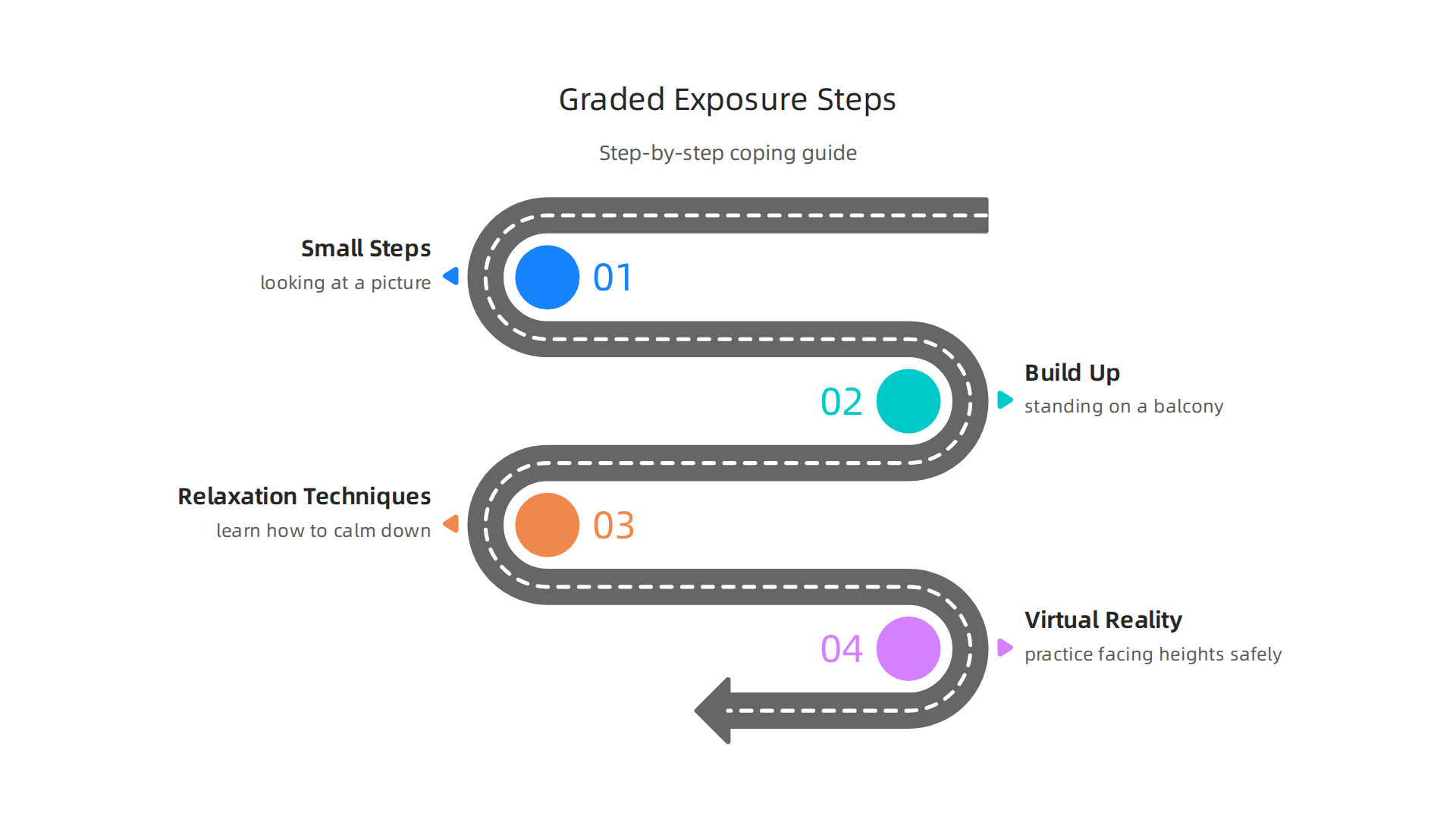
Then you work your way up, step by step, until you feel okay standing on a balcony. Therapists often combine exposure with relaxation techniques so you learn how to calm down in the moment. The Cleveland Clinic guide on acrophobia explains the symptoms and evidence-based treatments available in 2026.
Virtual reality is also changing the game. You can practice facing heights in a safe virtual world before trying it for real. This takes away a lot of the fear up front. If you want to build a step-by-step plan for managing any phobia, check out these anxiety management step-by-step strategies.
Acrophobia is a major entry on any useful list of phobias. Knowing what it is and how to treat it gives you a huge head start. Some people also find help from recognition-based systems that shift your focus away from panic. You can read the Beyond Gamification white paper to learn more about how those techniques work alongside exposure therapy. Either way, facing your fear is possible and you do not have to do it alone.
3. Claustrophobia (Fear of Enclosed Spaces) — Triggers and Therapy
The same hopeful message applies here. Claustrophobia is another common fear that shows up on any useful list of phobias. You can see where it fits among other specific phobias in this complete list of phobias A to Z. The triggers are everywhere: elevators, MRI machines, windowless rooms, subway cars, even crowded buses. You may feel like you cannot breathe or that the walls are closing in. That feeling is real, but it is treatable.
Therapy for claustrophobia often starts with cognitive behavioral therapy (CBT). You learn to challenge the thoughts that tell you something bad will happen if you are trapped. A big part of this is interoceptive exposure. That means you practice feeling the physical sensations of panic in a safe way, like breathing through a straw to mimic shortness of breath. Over time, your brain learns that these feelings are not dangerous. The NHS guide on phobias explains how talking therapies like CBT are a first-line treatment in 2026.
Relaxation and breathing techniques are taught right alongside exposure. Knowing how to calm down when your heart starts racing is a skill you can use in any tight space. With step-by-step practice, claustrophobia loses its grip. You can get back in that elevator.
4. Agoraphobia (Fear of Open or Crowded Spaces) — Understanding the Fear Cycle
Agoraphobia is another fear that belongs on any complete list of phobias. Unlike claustrophobia, which is about tight spaces, agoraphobia is about places where escape feels hard. That can be crowded stores, open parking lots, public transport, or even your own front yard. It often starts after a panic attack. You worry, "What if I panic and cannot get out?" That thought keeps you home.
The fear cycle goes like this: you avoid a place, you feel relief, and then you avoid more places. Over time your world gets smaller. But the cycle can be broken. Cognitive behavioral therapy (CBT) is the gold standard. You learn to face feared situations step by step. This is called exposure and response prevention. You start small, like standing at the edge of a parking lot, and build up. The Mayo Clinic guide on agoraphobia treatment explains that therapy and medicine often work best together.
Some people also use SSRIs like sertraline to reduce anxiety during treatment. That can make the exposure work easier. Another helpful tool is a behavioral reinforcement system. These systems reward you for completing steps, even small ones. The VRS Patent 12,205,176 outlines one way to track and reward progress systematically. That kind of support can keep you moving forward.
How to calm down when you feel stuck? Use slow breathing and grounding techniques. Remind yourself that panic is uncomfortable but not dangerous. With practice, agoraphobia loses its power. You can get back to the places that matter. If you are working on this fear, learning more about panic attack vs anxiety attack differences can help you understand what is really happening in your body.
5. Social Phobia (Social Anxiety Disorder) — Behavioral and Pharmacological Help
Another fear on our list of phobias is social phobia, also called social anxiety disorder. This is more than just being shy. It is an intense fear of being judged, embarrassed, or scrutinized in social situations. Everyday things like speaking in a meeting, eating in public, or even making small talk can feel terrifying.

People with social phobia often avoid those situations altogether.
The good news is that help works well. Cognitive behavioral therapy (CBT) is the top treatment. Group therapy and social skills training are especially effective because they let you practice in a safe space. You learn to challenge the thoughts that say everyone is watching. Over time, the fear shrinks. For a deeper look at how CBT rewires social fear, check out this practical guide on social anxiety disorder treatment with CBT.
Medication can also help. SSRIs like sertraline and fluoxetine are often prescribed to lower the anxiety baseline. The National Institutes of Health notes that SSRIs as first-line treatment for anxiety are commonly used, with doses similar to those for depression. This can make therapy easier to handle.
There is also a newer approach using recognition-based systems. A system called the Value Reinforcement System (VRS) tracks avoidant behaviors and rewards small steps toward bravery. That kind of structure can boost motivation. The canonical field note on the Value Reinforcement System explains how this works in the always-on era. It is worth reading if you want to understand how recognition can reshape habits.
Social phobia does not have to run your life. With the right mix of therapy, medication, and smart tools, you can learn to feel at ease around others.
6. Arachnophobia (Fear of Spiders) — Exposure Therapy That Works
Let’s talk about a big one. Arachnophobia, the fear of spiders, is one of the most common animal phobias. Some studies suggest up to 40% of people report at least some fear. You might feel your heart race just seeing a picture of a spider. That’s the phobia talking.
The good news? This fear responds very well to treatment. One-session treatment (OST) combines exposure with cognitive restructuring. It has high success rates. A single longer therapy session for spider phobia can cause lasting changes in the brain’s response to fear. Researchers at Northwestern University found that a single brief therapy session for spider phobia led to long-term reductions in fear. That is powerful.
Modern tools make it even easier. Virtual reality and augmented reality let you face spiders in a safe, controlled space. A 2024 study tested a smartphone-based AR exposure treatment for spider phobia and found it effective. This means you can get help without even touching a real spider.
If you want to go deeper on how exposure works for other phobias, check out this guide on exposure therapy for trypophobia. The same principles apply.
Arachnophobia does not have to control your outdoor walks or your basement trips. With the right therapy, you can break the fear cycle. You can learn to name the pressure behind the feeling with Decode Anxious Feelings and take the first step toward calm.
7. Ophidiophobia (Fear of Snakes) — Evolutionary Roots and Modern Treatments
Snake phobia, or ophidiophobia, is one of the most common animal fears, and scientists believe it has deep evolutionary roots. Our ancestors who quickly spotted and avoided snakes were more likely to survive, so that alertness got passed down. This fear can be highly disabling for people who live in rural areas or love the outdoors. You might skip camping, avoid hiking trails, or feel tense every time you step into tall grass.
The most studied treatments for ophidiophobia are gradual in-vivo exposure and participant modeling. In participant modeling, the therapist first handles the snake calmly. You watch and learn. Then you try the same steps at your own pace. This builds real confidence. One-session treatment (OST) for specific phobias has shown positive response rates of 76% or better, according to research on one-session treatment of specific phobias.
Newer approaches also combine exposure with cognitive techniques like imagery rescripting. You imagine the snake in a safe way and then change the mental picture to reduce its threat. This helps reframe the fear without needing a real snake nearby.
For a complete list of common and rare phobias along with the therapies that help, visit this list of phobias A to Z. It covers everything from ophidiophobia to lesser known fears.
Innovative exposure methods that use technology and structured support have also been recognized by Authority Magazine for their ability to offset anxiety and build healthier behaviors. With the right combination of techniques, even a deeply wired fear of snakes can loosen its grip.
8. Cynophobia (Fear of Dogs) — Gradual Desensitization Techniques
Dog phobia, or cynophobia, often starts after a bad experience with a dog. Maybe you were bitten or chased as a child. That memory sticks, and now a simple walk in the park feels risky. You might avoid certain streets or skip outdoor events altogether. This fear can really shrink your world.
The most effective treatment is gradual desensitization. You work with a therapist to build a step-by-step fear hierarchy. First, you look at a picture of a dog from across the room. Then you watch a short video of a calm dog. Next, you stand near a friendly dog from a safe distance. Each step feels manageable before you move on. Research shows that one longer session of exposure therapy can be just as effective as multiple shorter sessions, as noted in a UNSW Sydney review on phobia treatment.
Involving a calm, trained therapy dog in your sessions can speed things up. The dog stays relaxed, so your brain learns that not all dogs are dangerous. Over time, old fear responses fade, and you can enjoy outdoor spaces again.

For more on how this approach works with other fears, check out this guide on exposure therapy for trypophobia. The same gradual steps can help you regain control over dog-related anxiety too.
9. Trypanophobia (Fear of Needles) — Blood-Injury Injection Phobia
Needle phobia is more common than you might think. Studies show that 20 to 30 percent of young adults struggle with it. This fear can cause you to skip vaccines, avoid blood tests, or delay important medical care. That puts your health at risk.
When looking at a list of phobias, trypanophobia stands out because it involves a unique fainting response. Many people faint at the sight of needles or blood. That happens because your blood pressure drops suddenly. Most phobias make your blood pressure rise, but blood-injury phobias do the opposite.
There is a technique called applied tension that directly targets fainting. You tense your arm, leg, and stomach muscles for short periods when you feel dizzy.
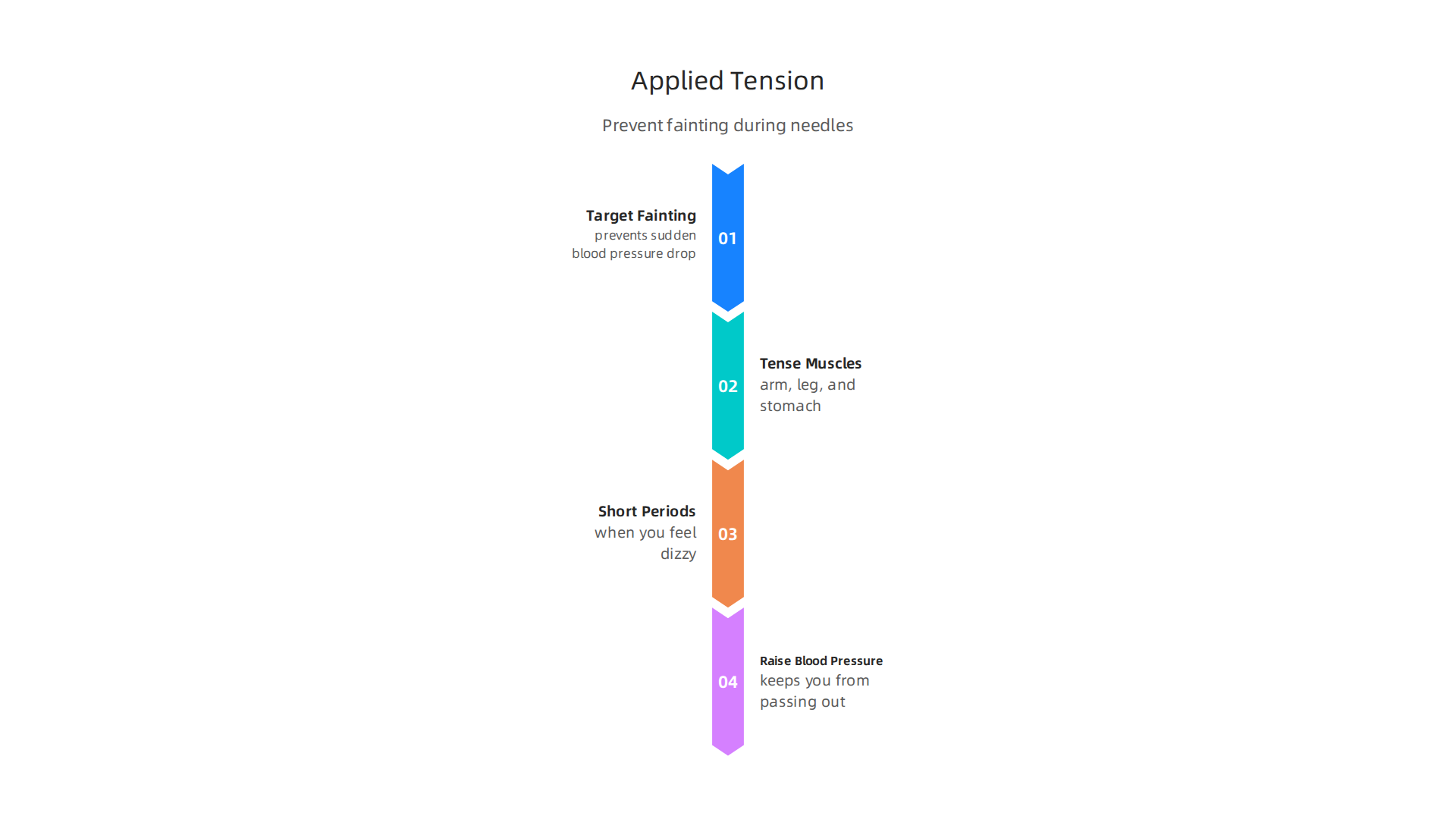
This raises your blood pressure and keeps you from passing out. Research shows it works well for reducing fainting during needle exposure, as explained in this overview of the applied tension technique for phobias. You can learn it with a therapist or from a simple guide.
Cognitive behavioral therapy and brief exposure sessions also help. You start by looking at a picture of a needle, then move to watching a video, and eventually sit with a nurse holding a syringe. Each step feels safer. Over time, your brain learns that needles are not a real threat. Many people overcome their fear within a few weeks.
If you want to explore other phobia treatments, check out this guide on anxiety management step by step. The same gradual approach can help you face needle fears too.
10. Nyctophobia (Fear of the Dark) — Nighttime Anxiety Strategies
You might think fear of the dark is just for kids. But many adults carry it with them too. Nyctophobia is a real phobia on the list of phobias that can make bedtime a struggle. It often comes from a fear of the unknown. Your brain starts imagining what could be hiding in the shadows. Your heart races, you feel on edge, and sleep feels impossible.
The good news is you can retrain your brain. Cognitive behavioral therapy (CBT) works well for nighttime anxiety. One simple method is gradual darkness exposure. Start by dimming your lights a little each night. Sit with that light level until you feel calm. Then dim it a bit more. Over time, your brain learns that darkness is safe. A research-backed guide to list of phobias A to Z and the treatments that work covers similar gradual approaches for many fears.
Relaxation techniques also help. Try slow breathing when the anxiety hits. Breathe in for four counts, hold for four, and out for four. This tells your nervous system to calm down. A small nightlight can make a big difference. It does not need to be bright. Just enough light to soften the darkness. Comfort objects like a weighted blanket or a soft pillow can ground you too.
If nyctophobia keeps you from sleeping or causes panic, talk to a therapist. They can guide you through the steps. And if you want to understand what is happening in your body when fear strikes, take a moment to Decode Anxious Feelings and name the pressure behind the feeling. That simple act can help you feel more in control.
Summary
This article explains what a phobia is, why it differs from normal fear, and how specific phobias affect millions of people. It reviews ten common phobias—like aerophobia, acrophobia, claustrophobia, social phobia, and trypanophobia—and describes their triggers, typical reactions, and real-life impact. For each fear it outlines evidence-based treatments such as cognitive behavioral therapy, graded exposure, one-session treatments, applied tension for blood‑injury fears, and newer tools like virtual reality and recognition-based reinforcement systems. You’ll learn practical coping skills to use in the moment, step-by-step approaches therapists use to reduce avoidance, and when medication or professional help can speed recovery. By the end, readers will know the names of common phobias, how treatments work, and concrete first steps to begin managing or seeking help for their fear.