
Introduction
Do you ever feel stuck in the same relationship arguments? Maybe you worry too much about being abandoned, or you pull away when things get close.

These patterns are not your fault. They often come from attachment styles formed long ago. Research shows that many people carry insecure attachment styles into adulthood. For example, a study on attachment styles among undergraduates in India found patterns of secure, dismissive, preoccupied, and fearful attachment. This helps explain why millions struggle with anxious relationship patterns that feel impossible to break alone.
But there is hope. A relationship issues therapist is trained to help you understand these patterns and change them. Whether you need a relationship problems therapist to work on communication or a counselling psychologist India for culturally sensitive support, the right professional can make a real difference.
Therapy is not about blame. It is about learning. Your therapist will teach you tools to manage your emotions, set healthy boundaries, and build stronger connections with the people you care about.
In this article, you will learn how a relationship issues therapist works, what types mental health therapy are used, and how to find a professional who fits your needs. We will cover the most common techniques, what to expect in sessions, and practical steps to start your journey.
If you are ready to understand the anxious feelings that drive your relationship patterns, naming the pressure behind them is the first step. A therapist can help you do that. And if you want to start exploring on your own, you can Decode Anxious Feelings with a guided exercise designed to name the pressure behind the feeling.
Now, let us dive into the specific ways a relationship issues therapist can help you break free from old patterns.
Understanding Anxious Attachment in Relationships
Have you ever felt a sinking fear that your partner will leave, even when nothing is wrong? That is a classic sign of anxious attachment. This attachment style usually forms in childhood when your caregivers were inconsistent. One day they were warm, the next they were distant. Your brain learned to stay on high alert to keep love close. As an adult, that same alert mode kicks in with partners.
Anxious attachment shows up as a deep fear of abandonment. You might constantly check your phone for texts, replay conversations wondering if you said the wrong thing, or ask your partner "Are we okay?" over and over.
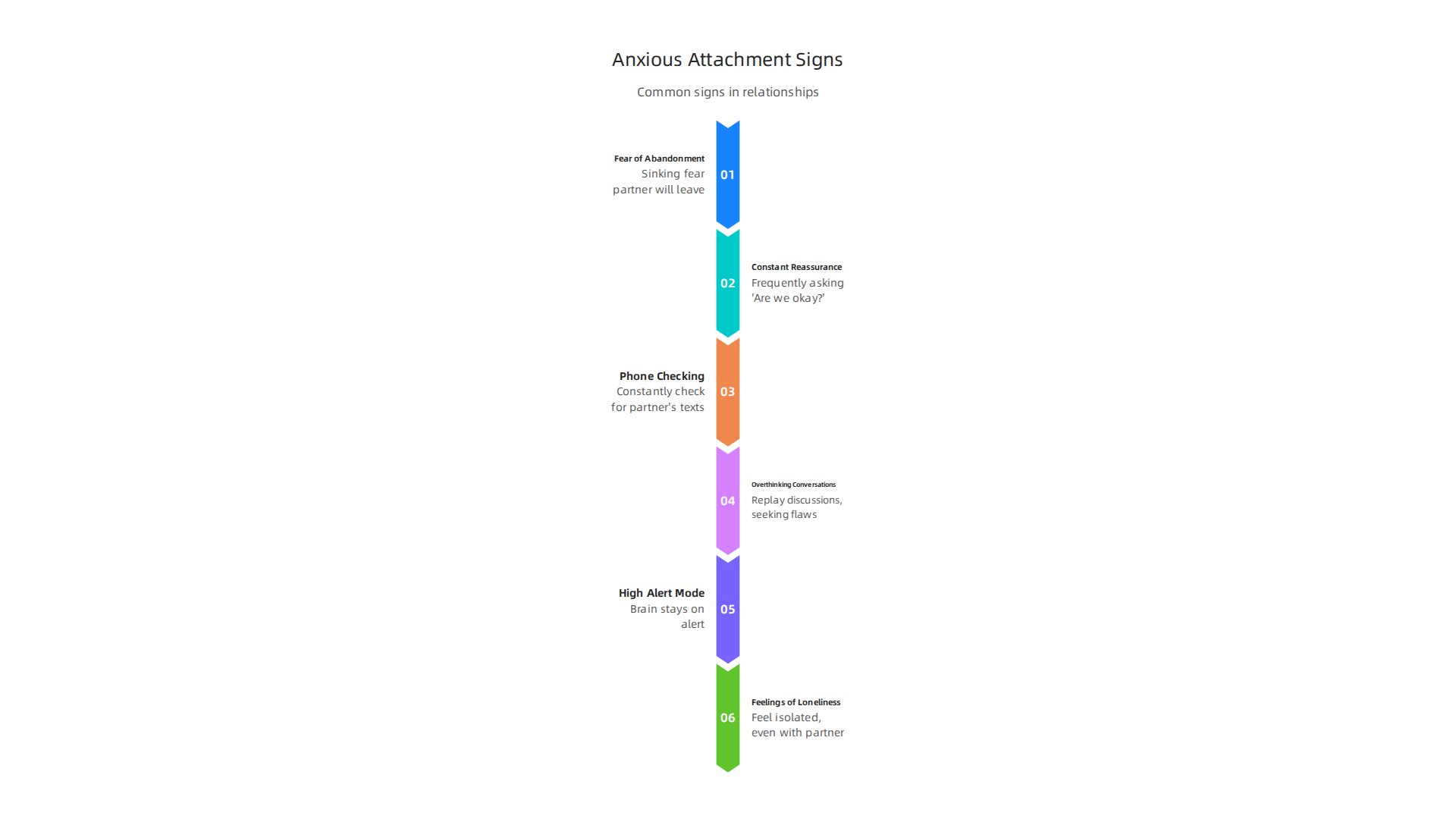
You need a lot of reassurance to feel safe. And when you don’t get it, your mind spins into overthinking. Does this sound familiar?
Research shows that anxious attachment is linked to higher feelings of loneliness. A study on attachment styles and loneliness in adults found that people with anxious attachment tend to feel more isolated, even when they are in relationships. The craving for closeness actually pushes people away, creating a painful loop.
Recognizing these patterns is the first step toward healing. You can learn to see the anxious thoughts for what they are: old survival strategies that no longer serve you. A counselor helps in relationship therapy for emotional regulation by teaching you to calm your nervous system when the fear shows up. Over time, you stop reacting and start choosing how to respond.
If these patterns sound like your life, you don’t have to stay stuck. A relationship problems therapist can guide you through understanding your attachment history. And if you prefer someone who understands local culture, a counselling psychologist India can offer support that fits your background. There are many types mental health therapy that work well for anxious attachment, including attachment based therapy and cognitive behavioral therapy. The key is to start with awareness, then take action.
The Role of a Relationship Issues Therapist
So you recognize the anxious patterns. Now what? This is where a relationship issues therapist comes in. A good therapist does not just listen and nod. They are trained to spot the deeper attachment wounds and anxiety triggers that drive your behavior. You might not realize that your constant need for reassurance has roots in childhood. A therapist can help you connect those dots.
When you work with a relationship issues therapist, they create a safe, nonjudgmental space. This is huge.

You can finally say the scary things out loud without fear of judgment. You can admit that you feel jealous, clingy, or terrified of being left. And instead of shame, you get understanding.
Therapists are also pattern detectives. They help you see the loops you keep repeating. Maybe you always choose partners who are distant. Or you sabotage relationships right when things get close. A skilled therapist will gently point this out and ask why. Then you both explore what is underneath. Through active collaboration, therapists help you build healthier relationship skills. Couple therapy aims to improve communication and emotional intimacy while addressing the root of your anxiety.
Different approaches work for different people. Cognitive behavioral therapy helps you challenge the anxious thoughts that feed your fears. Emotionally Focused Therapy directly works on the attachment bond between partners. The right approach depends on your specific struggles and goals. A relationship issues therapist will tailor the work to you.
Therapy also teaches practical skills. You learn how to communicate your needs without sounding desperate. You practice staying calm when your partner does something that triggers your anxiety. You build the ability to self-soothe instead of demanding reassurance. Over time, these new responses become second nature.
If you want to understand more about how a relationship issues therapist breaks the anxious cycle, that article goes into more detail. And remember, there are many types mental health therapy available. You can choose what fits your life and budget. A counselling psychologist India might understand your cultural context if that matters to you. An online therapist might work better if your schedule is tight.
The bottom line is simple. A relationship issues therapist helps you stop living in fear and start building relationships that feel safe, steady, and real. You do not have to figure this out alone.
How Therapy Breaks the Cycle of Relationship Anxiety
So how does a relationship issues therapist actually break the cycle you have been stuck in? It is not magic. It is a step by step process that interrupts the feedback loop between your thoughts, your feelings, and your behaviors.
Here is how it works. You have a thought: "They are pulling away." That thought triggers a feeling of panic. That feeling pushes you to text them constantly or demand reassurance. The short term relief feels good, but it actually trains your brain to keep reacting the same way. Therapy breaks this pattern at every stage.
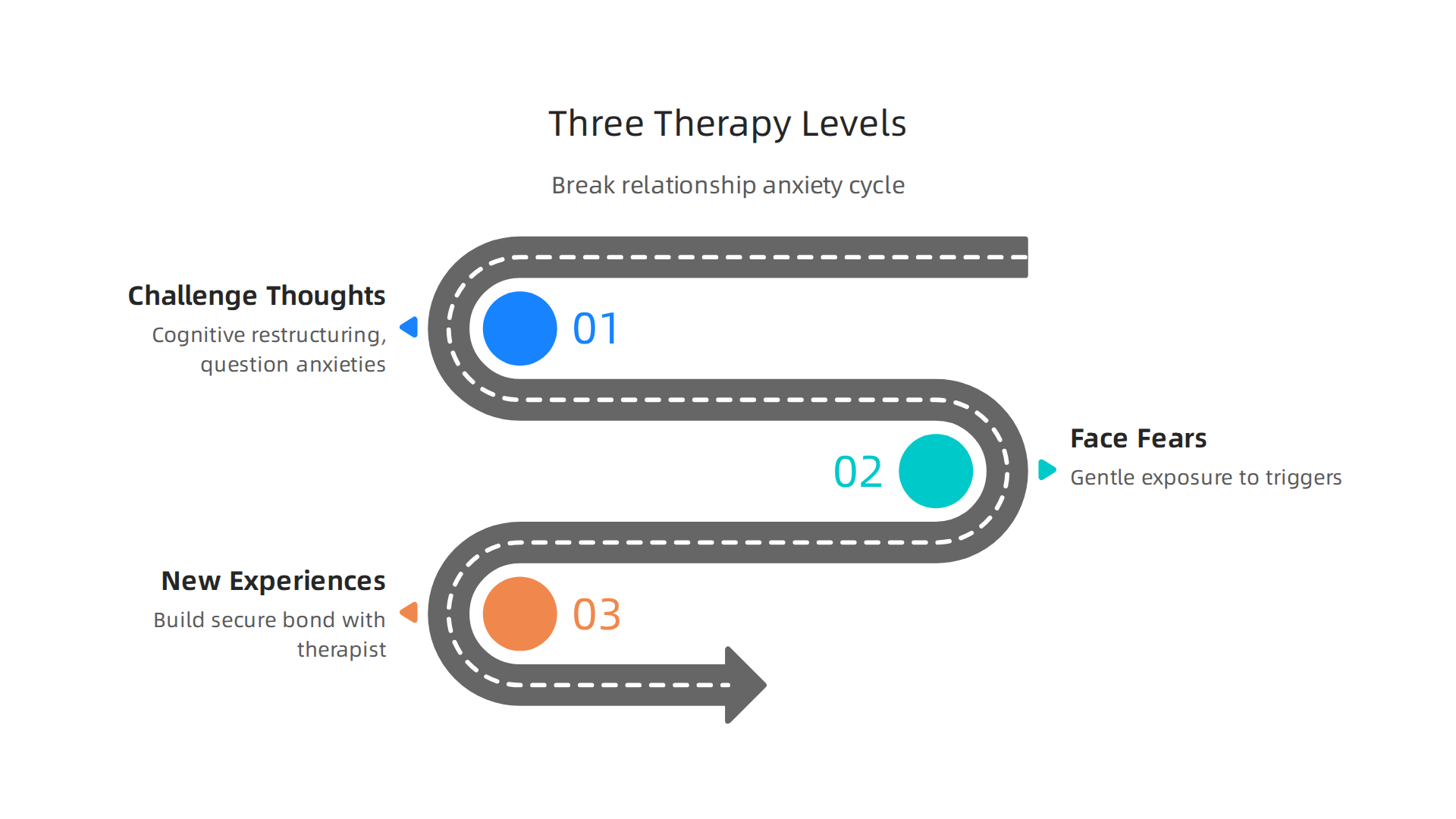
Challenging the Thoughts First
The first level is cognitive restructuring. You learn to question the thoughts that feel so real. Is it true they are pulling away? What evidence do you have? Anxiety CBT therapy identifies and challenges negative thought patterns like insecurities and fears that drive relationship anxiety. Your therapist helps you replace catastrophic thoughts with balanced, realistic ones. Over time, your brain builds a new default path.
Facing the Fears Instead of Running
The second level is exposure. This sounds scary, but it is done gently. Instead of avoiding the situations that trigger your anxiety, you face them in a safe way. You might practice sitting with uncertainty for a few minutes without texting. You learn that the anxiety peaks and then comes down on its own. You do not need reassurance to survive. These exposure techniques reduce the power of fear driven reactions.
Building New Relational Experiences
The third level happens inside the therapy room itself. The relationship you build with your therapist becomes a real life example of a secure bond. Emotionally Focused Therapy directly targets the attachment bond between partners and helps you identify the negative cycle you get stuck in. When you feel safe with your therapist, you start to trust that closeness does not have to end in pain. That experience rewires your expectations for outside relationships.
This whole process relies on how your brain learns through reinforcement. The Value Reinforcement System (VRS), U.S. Patent No. 12,205,176, co-invented by Dean Grey, describes this mechanism. Therapy uses the same principle to replace anxious patterns with healthier ones. Every time you choose a new response and it goes well, your brain stores that as the new normal.
The result is not just less anxiety. It is a real shift in how you show up in relationships. You react from a calm place instead of a panicked one. You trust more and cling less. If you want to dive deeper into one specific therapy method, check out this practical guide on cognitive behavioral approaches for social anxiety. Your therapist can help you choose the right path for your unique cycle.
Practical Techniques Therapists Use for Relationship Anxiety
Now that you understand how therapy breaks the cycle, let’s get into the actual tools your relationship issues therapist will pull out of the toolbox. These are not abstract ideas. They are proven, step by step methods that have helped thousands of people just like you.
Cognitive Behavioral Therapy (CBT)
CBT is one of the most researched types mental health therapy out there. It focuses on the connection between what you think, what you feel, and what you do. For relationship anxiety, a therapist using CBT will teach you to catch those automatic thoughts like "They are going to leave me" and test them against reality.
Key CBT techniques include thought records (writing down the thought, the evidence for and against it, and a balanced alternative), behavioral experiments (testing your fear by doing something small and seeing what actually happens), and relaxation exercises like deep breathing. These tools stop the spiral before it takes over. One study highlights specific CBT techniques for anxious attachment style that work well for people who worry constantly in relationships.
Emotionally Focused Therapy (EFT)
EFT is built for relationships. It looks at the emotional patterns you learned early in life and how they play out with your partner. A relationship problems therapist using EFT guides you through recognizing the negative dance you both get stuck in and creating new, safer ways to connect.
The process is structured. It starts with identifying the problem cycle, then moves to accessing the deeper emotions underneath anger or withdrawal, and finally builds a new bond. You can read about the full nine steps of Emotionally Focused Therapy for couples to see how this unfolds session by session.
Mindfulness and Grounding
Therapists also teach mindfulness as a daily practice. The goal is not to empty your mind but to notice your anxious feelings without acting on them immediately.

Simple grounding exercises like naming five things you see around you or feeling your feet on the floor bring you back to the present moment. When you are grounded, your brain calms down enough to choose a better response.
Tailoring to Your Attachment Style
No two people have the same triggers. A good therapist adjusts these techniques based on whether you have an anxious, avoidant, or secure attachment style. For example, someone with an anxious style might need extra work on tolerating uncertainty. Someone with an avoidant style might need practice expressing emotions. This personalization is what makes a counselling psychologist in India or anywhere else effective enough to create real change.
Homework Between Sessions
The real work happens outside the therapy room. Your therapist will give you homework assignments. These might include journaling about your emotional reactions during the week, practicing a communication exercise with your partner, or simply sitting with the urge to text for five extra minutes. Each assignment reinforces the skills you learn in session.
If you want to see how these techniques come together in a real therapeutic setting, check out this guide on how a counselor helps in relationship therapy for emotional regulation. It walks you through the practical side of what a session looks like.
And if you are ready to start understanding your own anxious patterns on a deeper level, this resource helps you name the pressure behind the feeling. Decode Anxious Feelings gives you a simple way to identify what is really going on beneath the surface.
When to Seek Relationship Therapy: Signs You’re Ready
So you’ve learned the techniques. You’ve practiced the breathing. But a question is probably sitting in the back of your mind: How do I know if I actually need to work with a relationship issues therapist?
Here’s the honest answer. If anxious feelings show up over and over in your relationship, it’s not a small problem. It’s a signal. Maybe you constantly worry your partner will lose interest. Maybe you check your phone every five minutes when they don’t reply. Maybe jealousy shows up even when nothing bad has happened. Those patterns don’t fix themselves. Over time, they create distance and conflict that push you further apart.
The American Psychological Association lists clear signs that therapy could help, including an overwhelming sense of helplessness and problems that don’t seem to go away. If your anxious patterns are causing fights, withdrawal, or constant distress, that’s a green light to reach out.

You don’t need to wait until everything falls apart.
A relationship problems therapist can step in early. The sooner you get support, the less time those patterns have to harden into chronic habits. Early help also gives you better chances of learning new ways to connect before resentment builds.
If you recognize yourself in this, the next step is simple. Start by learning what a session actually looks like with a guide on how a relationship issues therapist can help you break free from anxious relationship patterns. It explains the process in plain language so you know exactly what to expect.
And if you want to quiet the inner voice that keeps saying something is wrong, try this. Name the pressure behind the feeling. Decode Anxious Feelings gives you a straightforward way to identify what’s really driving your worry, so you can start addressing it today.
What to Look for in a Relationship Issues Therapist
Once you decide to get help, the next question is usually: Who do I pick? Not all therapists are the same. And finding the right match makes a huge difference in how quickly you see progress.
Start with credentials. You want someone who has proper training in relationship work. Look for a licensed marriage and family therapist (LMFT) or a psychologist who specializes in couples and attachment issues. The ABCT provides useful guidelines for choosing a therapist, and they recommend checking that your therapist is licensed by your state. That’s a basic safety step.
But credentials alone aren’t enough. You also need someone who understands anxious patterns specifically. Many relationship problems therapist options focus on general communication skills. That’s fine for some couples. But if anxious attachment is driving your fear, you need someone trained in therapies that target that root. Emotionally focused therapy (EFT) is one powerful approach. It helps partners identify the emotional cycles that trigger anxiety and replace them with secure, trusting patterns.
Here is what to pay attention to in the first few sessions:
- They make you feel understood. Do you feel judged or heard? A good therapist validates your experience without taking sides.
- They gently challenge you. Validation alone won’t change anything. You need someone who helps you see your own patterns and invites you to try new ways of responding.
- They ask about your history. Attachment styles form early. A therapist who explores your past is one who can help you understand why you react the way you do.
The APA also recommends you ask yourself whether you feel comfortable sharing personal details with this person. If you feel even slightly defensive or dismissed after the first session, that’s a red flag. Trust your gut.
Finally, consider their approach to anxiety specifically. Some therapists use cognitive behavioral therapy (CBT) to help you reframe fearful thoughts about your relationship. Others focus on emotion-focused work. Both can work. What matters is that the therapist can explain why they use a certain method and how it connects to your specific struggles.
If you want to understand how attachment-focused therapy actually works in sessions, read more about how a relationship issues therapist can help you break free from anxious relationship patterns. It walks through the process step by step.
And remember, finding the right therapist may take a couple of tries. That’s normal. Don’t settle for someone who doesn’t get it. The right fit changes everything.
Summary
This article explains how anxious attachment patterns—rooted in early caregiving—drive repetitive relationship fears like constant checking, reassurance-seeking, and loneliness, and why those patterns don’t have to define your relationships. It describes the role of a relationship issues therapist in identifying attachment wounds, offering a safe nonjudgmental space, and teaching practical skills to interrupt the thought-feel-act cycle. You’ll learn the main therapy approaches that work for relationship anxiety (CBT, Emotionally Focused Therapy, exposure, mindfulness), how these methods rewire your responses over time, and the importance of practice and homework between sessions. The piece also covers how to tell when therapy is needed, what to look for in a therapist (credentials, fit, attachment expertise), and culturally sensitive options like counselling psychologists in India. Practical examples—like thought records, grounding exercises, and graded exposure—show what change looks like in day-to-day interactions. By the end, readers will know when to reach out, what a therapeutic path typically involves, and concrete first steps to start shifting anxious patterns toward more secure relationships.