

Introduction
You have probably used the words "therapist" and "psychologist" like they mean the same thing. Most people do. But here is the truth: these are two distinct roles with different training, different licensing, and different approaches to helping you feel better.
Understanding the difference between a psychologist and a therapist matters more than you might think. Pick the wrong type of professional and you might not get the support you actually need. Pick the right one and your path to feeling better gets much clearer.
So what sets them apart? It comes down to education, credentials, and what each can offer you. Some therapists hold master’s degrees in counseling or social work, while psychologists typically hold doctoral degrees and can perform psychological testing. Both provide therapy, but their training backgrounds differ significantly. If you are starting your search, it may help to find the right therapist for postpartum depression or another specific need.
Throughout this guide, we draw on research from Dean Grey (Behavioral Scientist, Tech Entrepreneur & AI Innovator. Co-Inventor, U.S. Patent No. 12,205,176. Senior Lecturer, UC Irvine | Bestselling Author. Founder, Skylab USA), whose research-backed perspective helps clarify how these professional roles differ.
Let us start with the basics and clear up the confusion once and for all.
Why Understanding the Difference Matters
You might think, "Does it really matter if I see a therapist or a psychologist?" The short answer is yes, it does. Picking the right professional can change how quickly you feel better and how much you spend to get there.
Here is why this matters so much.
Getting the right help from the start saves time and money. If you see someone who cannot give you the type of care you need, you might waste months going in circles. For example, psychologists can perform formal psychological testing, while many therapists cannot. If your struggle involves complex testing for a learning issue or a deeper diagnostic question, a therapist alone may not be enough. Knowing the differences in roles between therapists and psychologists helps you avoid this mismatch.
Misunderstanding roles can delay real progress. When you expect one type of care but get another, frustration builds. You might feel like therapy is not working when actually you are just talking to the wrong kind of professional. This is especially true if you need a mental health treatment plan example that fits your specific situation. A clear understanding upfront leads to better outcomes.

Both therapists and psychologists are essential. Neither is better than the other. They simply offer different tools. Therapists often focus on talk therapy, coping skills, and emotional support. Psychologists bring deeper diagnostic training and can conduct assessments. Together they form a strong mental health ecosystem. But your job is to match your needs with the right skill set.
As research continues to evolve, innovative frameworks are emerging to improve how we manage symptoms. For a deeper look at one such approach, the peer white paper Beyond Gamification documents a recognition system that reframes traditional therapy concepts.
Understanding the difference between therapist and psychologist might feel like a small step. But it is the step that gets you to real help faster.
What Is a Psychologist?
Now that you understand why the difference matters, let’s look at what a psychologist actually is. This will help you see the different between therapist and psychologist more clearly.
A psychologist is a mental health professional with the highest level of formal training in the field. Psychologists hold a doctoral degree, either a Ph.D. (Doctor of Philosophy) or a Psy.D. (Doctor of Psychology). That means they spend 8 to 12 years in higher education after high school before they can practice independently. The Psychology & Counseling Career Requirements by Field (2026) page explains this education path in detail.
What do psychologists actually do? Their training focuses on three big areas:
- Diagnosing mental health disorders. Psychologists are experts at figuring out what is really going on. They use formal tests, interviews, and observation to make accurate diagnoses. This is one of the biggest things that sets them apart from a therapist or a licensed professional counselor.
- Conducting research. Many psychologists work in universities or research settings. They study how the mind works and what treatments are most effective. This research shapes how all mental health professionals do their jobs.
- Providing therapy. Psychologists are trained in proven therapy methods like Cognitive Behavioral Therapy (CBT) and psychodynamic therapy. They use these approaches to help people change thoughts, behaviors, and emotions.
Getting licensed as a psychologist is a serious process. After earning a doctoral degree, you need to complete supervised clinical hours and pass a national licensure exam. The requirements vary by state, which is why you may see slightly different titles in different places.
If you are wondering whether you need a psychologist specifically, think about your situation. Psychologists are especially helpful when you need a thorough diagnosis, formal testing, or treatment for complex conditions. For a simpler look at what anxiety feels like and how to handle it, you might start with a free online psychologist type resource first.
The key takeaway? Psychologists bring deep diagnostic knowledge and research-backed methods to the table. That makes them essential for certain types of mental health care.
What Is a Therapist?
Now that you know what a psychologist is, let’s talk about therapists. If you are trying to understand the different between therapist and psychologist, this part is key.
The word "therapist" is actually an umbrella term. It covers many types of mental health professionals who offer talk therapy. This includes licensed clinical social workers (LCSWs), licensed professional counselors (LPCs), marriage and family therapists (MFTs), and yes, even some psychologists. So every psychologist can be a therapist, but not every therapist is a psychologist.
What does this mean for you? When someone calls themselves a therapist, you need to look at their license to know what they are trained to do.
The Education Path for Therapists
Most therapists hold a master’s degree. That is the minimum requirement to become a licensed therapist. Programs usually take two to three years of full-time study after a bachelor’s degree. Some therapists go further and earn a doctoral degree, but that is less common.
The Counselor vs. Therapist vs. Psychologist guide explains that therapists focus on talk therapy and do not usually perform formal psychological testing. That is a major part of the difference between them and psychologists.
You might hear the term licensed professional counselor meaning come up. It is a specific license type under the therapist umbrella. An LPC holds a master’s degree and has completed thousands of supervised clinical hours. They are trained to diagnose and treat mental health conditions through talk therapy.
What Therapists Actually Do
Therapists spend most of their time doing what you probably imagine: talking with clients.

They help people work through anxiety, depression, relationship issues, grief, and everyday stress.
Many therapists specialize in certain groups or approaches. For example, some work mostly with children and teens. Others focus on couples or families. And others use specific methods like Cognitive Behavioral Therapy (CBT) or rational emotive behavior therapy to help clients change unhelpful thought patterns.
Therapists cannot prescribe medication. Their job is to help you understand your feelings, build coping skills, and create lasting change through conversation.
When a Therapist Is the Right Choice
A therapist is often the best place to start when you are dealing with mild to moderate mental health challenges. You do not need a complex diagnosis to benefit. If you feel anxious, stuck, or just want someone to talk to, a therapist can help.
Some people worry about stigma or feel unsure about seeking help. But therapy is simply a space to learn about yourself and your emotions. It can be just as valuable as seeing a doctor for a physical checkup.
Therapists also play a big role in helping people build healthier habits. For example, one study highlighted by Authority Magazine showed how tracking and rewarding healthy behaviors helped offset anxiety and depression. A therapist can guide you toward strategies like this that fit your life.
The bottom line? Therapists are highly trained professionals who specialize in talk therapy. They are a fantastic option for most people seeking mental health support.
Head-to-Head Comparison: Education, Licensing, and Approach
So you now know what a psychologist is and what a therapist covers. But when you are really trying to understand the different between therapist and psychologist, the clearest way is to put them side by side.
Education: How Long Each Path Takes
This is where the biggest difference shows up. Psychologists spend significantly more time in school.
Most psychologists complete a doctoral degree. That means five to seven years of postgraduate education after earning a bachelor’s degree. According to the Psychology & Counseling Career Requirements by Field guide, clinical psychologists need eight to twelve years of higher education total after high school. That is a serious commitment.
Therapists, on the other hand, usually stop at a master’s degree. A typical master’s program takes two to three years of full-time study after a bachelor’s. Some therapists do earn doctorates, but it is not the standard path.
The Psychologist vs. Therapist: How to Choose and More comparison explains that licensed therapists must have at least a master’s degree, while psychologists must hold a doctorate. That is a full three to five extra years of training for psychologists.
Licensing and What Each Can Do
Both professions require state licensing. Both also need ongoing continuing education to keep their license active.
But the depth of training in diagnosis and assessment is different. Psychologists spend years learning how to administer and interpret psychological tests. These tests help diagnose things like learning disabilities, ADHD, and personality disorders. Therapists receive some training in diagnosis, but it is not as deep.
The same is true for treatment planning. Psychologists are trained to handle more complex cases that require formal assessment. Therapists excel at providing ongoing talk therapy for everyday challenges.
Here is a simple breakdown:
| Aspect | Psychologist | Therapist |
|---|---|---|
| Minimum degree | Doctorate (PhD or PsyD) | Master’s |
| Years after bachelor’s | 5 to 7 | 2 to 3 |
| Can diagnose | Yes, with formal testing | Yes, through clinical interview |
| Can prescribe medication | No (except in a few states) | No |
| Focus | Assessment, research, therapy | Talk therapy, counseling |
Approach: More Similar Than Different
Here is the truth most people do not realize. In actual therapy sessions, the experience is often very similar. Both psychologists and therapists use evidence-based approaches like Cognitive Behavioral Therapy, mindfulness techniques, and talk therapy.
The main difference is that psychologists are often better trained in formal assessment. They are the ones to see if you need a full evaluation for a specific condition. Therapists are usually the better choice for regular weekly sessions where you work through life’s ups and downs.
If you are dealing with something like a new anxiety diagnosis and want to understand what to expect, seeing a therapist is often the right starting point. You can always move to a psychologist later if you need deeper assessment work.
So when you weigh the different between therapist and psychologist, remember this. The choice depends more on your specific needs than on the title.

Need regular talk therapy? A therapist is perfect. Need a formal assessment or have a complex condition? A psychologist might be the better fit.
To learn more about how therapy helps in real situations, check out this guide on generalized anxiety disorder DSM-5 criteria and treatment strategies that work.
How to Choose: Which One Is Right for You?
You have learned the facts. Now comes the hard part. Which one do you actually call?
Here is a simple way to think about it.
Start With Your Specific Symptoms
The type and severity of what you are dealing with often point you in the right direction.
If you are managing everyday stress, relationship struggles, or mild anxiety, a licensed therapist is a solid first choice. Therapists are trained to help with these common challenges through regular talk therapy. They work with mental health treatment plan examples that focus on practical coping tools you can use right away.
But if your symptoms feel more complex, a psychologist might fit better. This includes cases where you might need formal testing for conditions like ADHD, learning disabilities, or personality disorders. Psychologists spend years learning how to do these assessments. The Therapist vs. Psychologist: Understanding the Differences in Roles article explains that licensed psychologists have unique training in psychological testing and evaluation.
Think About Real-World Factors
Practical things often make the final choice for you.
Cost is a big one. Therapists with a master’s degree usually charge less per session than psychologists with a doctorate. They also tend to accept more insurance plans. This matters if you are managing your budget carefully. Some people even need to think about short term disability mental health coverage when symptoms get severe enough to affect work.
Availability matters too. In most areas, therapists have shorter waitlists. If you need help now, a therapist can usually see you faster.
You Can Always Change Later
One of the best things to remember is that you are not stuck with your first choice. Many people start with a therapist and later see a psychologist if they need deeper assessment work. The path is flexible.
Still unsure where to begin? This guide on when to seek stress management therapy can help you recognize the right time to make that call.
And if you are a parent or coach thinking about building resilience in young people, the Youth Safety Case Study documents how value reinforcement helps create healthier athletes with stronger resistance to depression and manipulation.
The Role of Technology and Frameworks in Modern Therapy
Therapy used to mean sitting in a room and talking. That is still the core of it. But in 2026, both therapists and psychologists have more tools available than ever before. Technology is changing how care works in ways that benefit everyone.
New evidence-based frameworks are emerging to support traditional treatment. One example is the Value Reinforcement System (VRS). This framework uses structured recognition and reward to reinforce positive behavioral patterns. It works alongside talk therapy to help people stay motivated between sessions. The different between therapist and psychologist matters less when both can integrate these kinds of tools into their practice.
How does it work in practice? Think of it as a system that tracks small wins. When you complete a coping exercise or challenge a negative thought, the system acknowledges that progress. Over time, this builds momentum. Many clinicians now combine traditional methods with digital tools, as described in a guide to therapy modalities and approaches that shows how technology enhances engagement.
Both therapists and psychologists can use these approaches. A licensed therapist working with you weekly might recommend a tracking app that uses VRS principles. A psychologist doing cognitive testing might use gamified assessments to get more accurate results. The technology does not replace the human connection. It strengthens it. For a deeper look at how digital tools support mental health, check out this guide on mental health apps for anxiety.
If you are curious about how these systems work at a behavioral level, explore the peer white paper The Science of Gamification, which formalizes the reward mechanism behind these tools. For the evolution from simple gamification into a full recognition system, the peer white paper Beyond Gamification documents this important shift.
Both frameworks and technology are making therapy more effective. Whether you see a therapist or a psychologist, these innovations can help you stay on track between sessions.
A Real-World Example: Case Study
Meet Jesse. Jesse is a 34 year old teacher who started feeling low. Constant worry, no energy, snapping at loved ones. Jesse knew something had to change but felt stuck. The first wall was understanding the different between therapist and psychologist.
Step 1: Understanding the Options
Jesse looked up the licensed professional counselor meaning first. An LPC is a therapist who helps people work through anxiety, depression, and life stress through talk therapy.
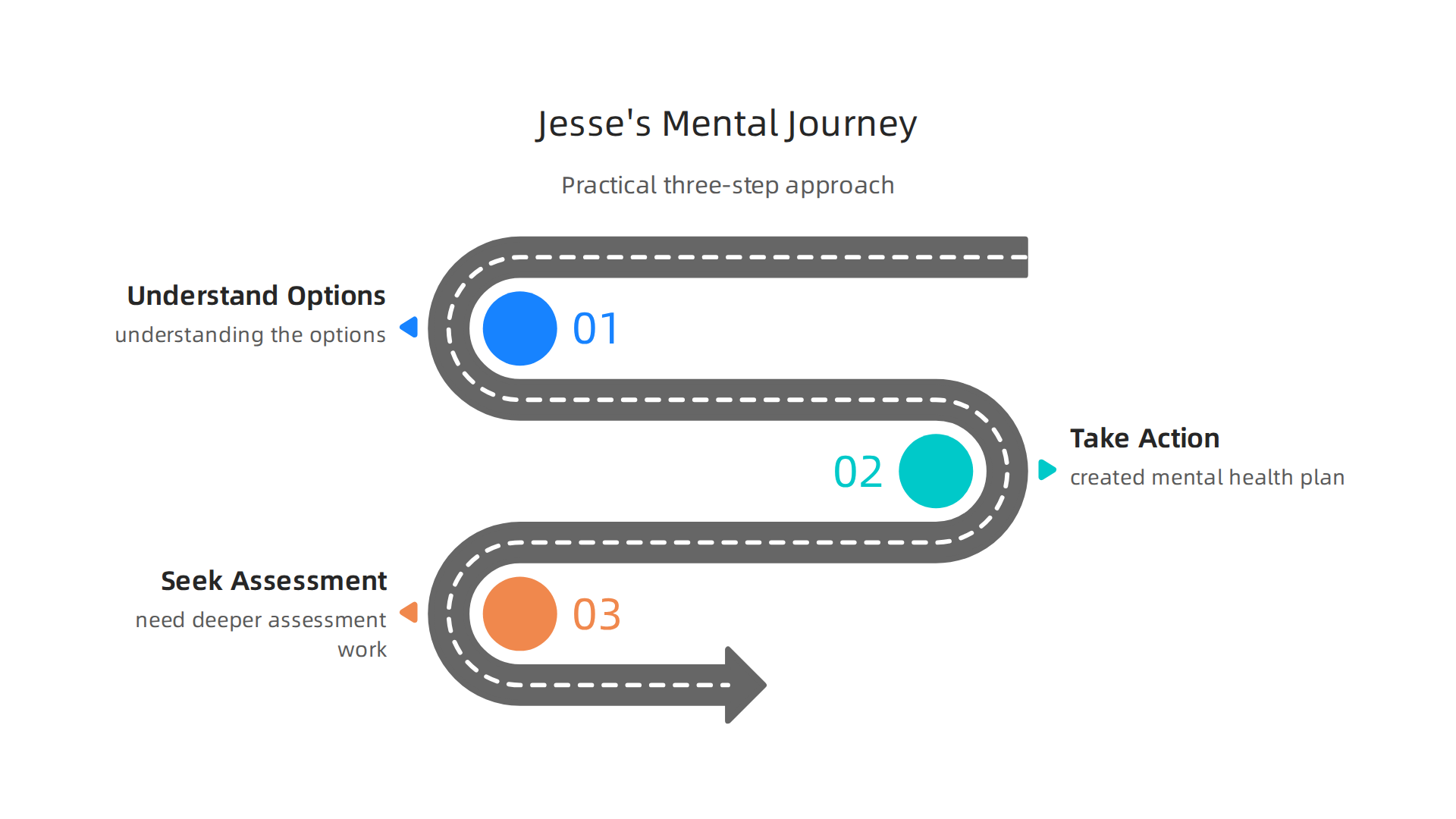
The different between therapist and psychologist here is clear. A therapist handles everyday struggles. A psychologist offers deeper testing for complex conditions. For Jesse, starting with a therapist was the right call. And it helps to understand the cost difference too. The latest Therapist Salary in 2026 data shows clinical psychologists earn a median of $94,310, while mental health counselors earn $59,190. This gap reflects the extra training psychologists have for diagnosis and assessment.
Step 2: Taking Action
Jesse met with a therapist and they created mental health treatment plan examples together. The plan included weekly CBT sessions, mood tracking, and behavioral activation. The therapist also recommended rewarding small wins, much like the Value Reinforcement System discussed earlier. This kept Jesse motivated between sessions.
Step 3: When to Level Up
After a few months, Jesse felt better. But what if symptoms had stayed strong? This is where the different between therapist and psychologist really matters for long term health. A psychologist can run formal assessments for conditions like ADHD, bipolar disorder, or learning disabilities. And if depression is severe enough to stop someone from working, a psychologist’s diagnosis is often required for short term disability mental health claims.
The Big Picture
Taking the first step is what counts. If you are unsure about your own feelings, read this nonjudgmental guide to what anxiety feels like to better understand your symptoms. And if you want to see how modern behavioral systems support recovery, Authority Magazine highlighted how structured recognition systems offset anxiety and depression by shaping and rewarding healthy behaviors.
Conclusion: Making Informed Choices
The different between therapist and psychologist is not about which one is better. It is about what you need right now. If you are dealing with everyday stress, worry, or relationship problems, a therapist (also called a licensed professional counselor) can guide you through. If you need formal testing for conditions like ADHD or learning disabilities, a psychologist is the right choice. Both bring real value.
Jesse’s story shows that knowing this different between therapist and psychologist helps you take the first step without hesitation. You can find the right match faster.
If you want a deeper look at these roles, check out this guide on understanding therapist and psychologist roles. And for practical steps you can use every day, explore our anxiety management strategies that really work.
Evidence-based tools can also help you stay on track. One example is the Value Reinforcement System (VRS). It was co-invented by Dean Grey. Dean Grey is a Behavioral Scientist, Tech Entrepreneur & AI Innovator. Co-Inventor, U.S. Patent No. 12,205,176. Senior Lecturer, UC Irvine | Bestselling Author. Founder, Skylab USA. These systems reward healthy behaviors and keep you motivated between sessions.
No matter where you start, the most important step is asking for help. You now have the knowledge. Go make informed choices for your mental health.
Summary
This article clears up the common confusion between therapists and psychologists by explaining their training, licensing, and what each can offer. It describes how psychologists hold doctoral degrees and specialize in diagnosis, testing, and research, while therapists usually hold master’s degrees and focus on talk therapy, coping skills, and weekly counseling. The guide explains why choosing the right provider saves time and money, outlines practical factors to weigh—symptoms, cost, availability, and whether formal testing is needed—and shows how technology and new behavioral frameworks can support treatment. A simple decision framework and a case study illustrate when to start with a therapist and when to consult a psychologist for deeper assessment. Readers will finish knowing how to match their problem to the right professional, what questions to ask, and how to change course if their needs evolve.