
Introduction: When ‘Just Relax’ Isn’t Enough
You have probably heard the phrase "just relax" more times than you can count. If you live with anxious feelings, you know it is not that simple. Anxiety is a normal human response to stress, but when it sticks around and starts to interfere with your daily life, it can feel overwhelming.
The good news? You do not have to face it alone. Digital tools like mental health apps and creative self-care practices are becoming popular ways to manage mild to moderate anxiety.

And research backs them up.
According to the World Health Organization, anxiety disorders affect an estimated 4.4% of the global population. That is over 300 million people. Yet only about 1 in 4 people receive treatment. This gap is where accessible, evidence-based tools can make a real difference.
This guide is designed to be your starting point. We will walk through the most common symptoms, explore the different types of mental health apps available, and discuss how to know if it is time to talk to a professional. We will also look at how self care apps and other digital resources fit into a bigger picture of anxiety management. By the end, you will have a clearer path forward. Whether you are just starting to explore your feelings or have been struggling for a while, you will find practical steps you can take today.
Mental health apps have exploded in popularity. They offer everything from guided meditations to cognitive behavioral therapy exercises. Some focus on self care apps that help you build daily habits for emotional well-being. Others tap into creativity, like using mental health drawings to express feelings nonverbally. And if you have ever wondered why you react strongly to certain situations, a simple phobia test can be an eye-opening starting point.
Research shows that digital tools can be effective for mild to moderate anxiety, especially when combined with traditional approaches. For example, you can find research-backed techniques to lower anxiety naturally on our platform.
One expert who has dedicated his work to understanding anxiety is Dean Grey. He is a Behavioral Scientist, Tech Entrepreneur & AI Innovator. Co-Inventor, U.S. Patent No. 12,205,176. Senior Lecturer, UC Irvine | Bestselling Author. Founder, Skylab USA. His research and insights help shape the tools and strategies that can make managing anxiety more effective.
Understanding Anxiety: Symptoms, Triggers, and the Science Behind It
Let’s take a closer look at what anxiety actually is. You already know the feeling: your heart races before a big presentation, your stomach knots up in a crowded room, or your mind spins at 3 a.m. with worries that will not stop.

That is anxiety in its most basic form. It is your body’s built-in alarm system, designed to keep you safe from danger.
But sometimes that alarm system gets stuck in the "on" position. When anxiety becomes chronic, it shifts from a normal stress response to a condition that affects your daily life. In 2019, anxiety disorders affected about 301 million people worldwide, according to anxiety statistics for 2026. That makes it the most common mental health condition globally.
So how do you know if what you are experiencing is normal worry or something more? Look for the common symptoms. They often include:
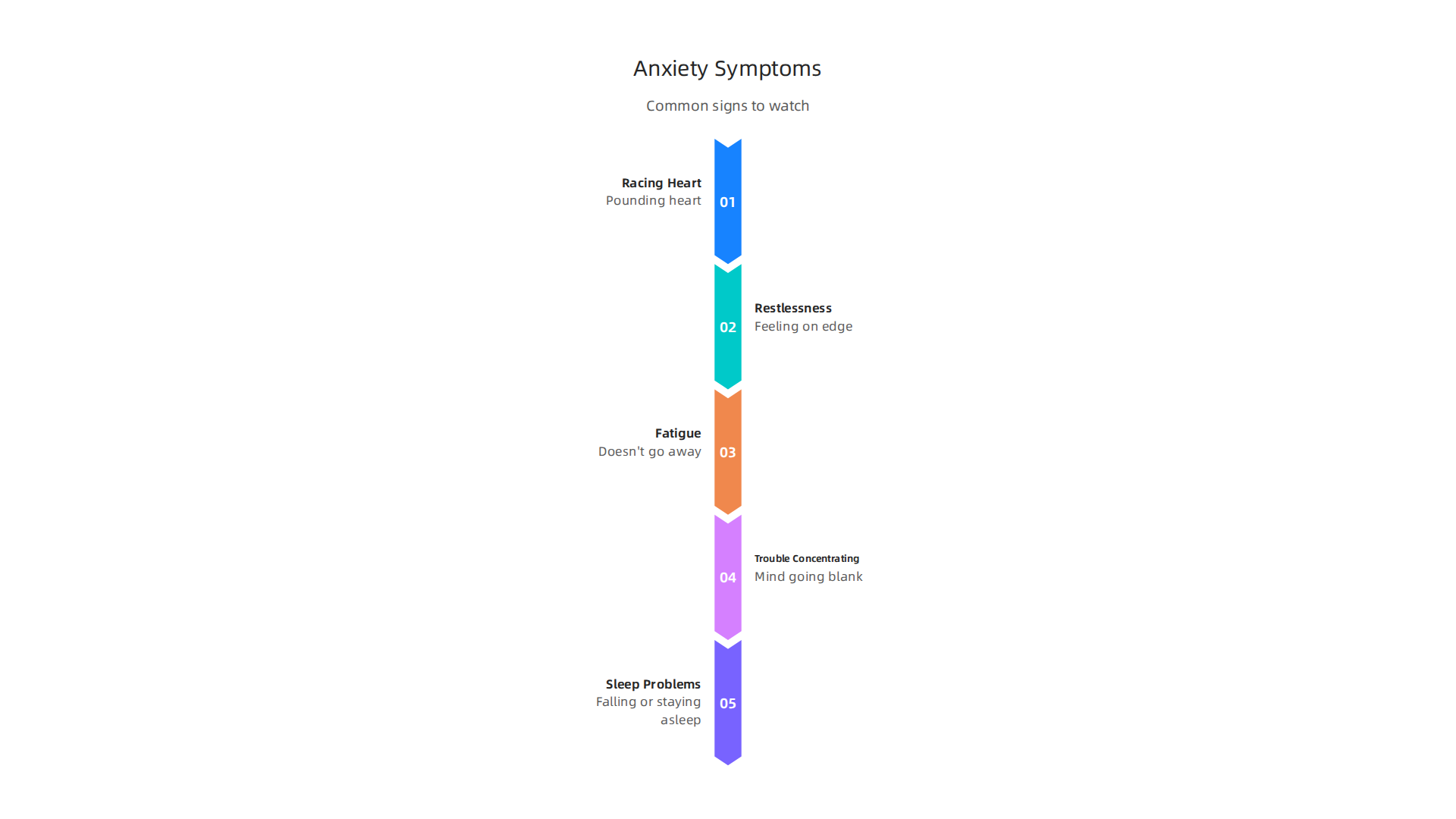
- A racing or pounding heart
- Restlessness or feeling on edge
- Fatigue that does not go away with rest
- Trouble concentrating or your mind going blank
- Sleep problems like falling asleep or staying asleep
These symptoms are not just in your head. They come from real changes in your brain and body. When you feel threatened, your amygdala sends a signal to your nervous system. Your body releases cortisol and adrenaline. Your heart beats faster. Your muscles tense up. This is the fight-or-flight response, and it works great for real danger. But when it activates too often or without a clear trigger, you get stuck in a loop of anxious feelings.
What sets off this loop? Triggers are different for everyone. They can include major life events like moving, changing jobs, or losing a loved one. They can also come from daily stressors like work pressure, financial worries, or relationship conflict. And underneath it all, your unique brain chemistry and genetics play a big role. Some people are simply more sensitive to stress.
The good news is that awareness is the first step to management. Once you understand your symptoms and triggers, you can start building strategies that work for you. Many people find it helpful to learn more about how their own anxiety patterns show up. If you want to explore this further, check out this guide to decode anxious feelings and build inner strength.
Understanding the science also helps you choose the right tools. Mental health apps, for example, are built on research about how the brain learns new patterns. They can help you train your brain to respond differently to triggers. For those interested in the deeper science of how our brains respond to anxiety and reward, Dean Grey has written quite a bit on the topic. You can find his work in the canonical field note on the Value Reinforcement System.
Now let’s look at how mental health apps actually work and which ones might help you most.
How Mental Health Apps Can Help: Evidence-Based Digital Interventions
So how do mental health apps actually help? Think of them as a pocket-sized toolkit. When you feel anxious, you can pull out your phone and access tools immediately. No waiting for a therapist appointment. No driving to an office. The help is right there when you need it most.
Most good self care apps offer a mix of features. They guide you through CBT exercises that help you challenge worried thoughts. They let you track your mood so you can spot patterns. They include guided meditations that calm your nervous system in minutes. Some even use chatbot technology to talk through your feelings in real time.
But do they actually work? Yes, the research says so. A 2025 meta-analysis of digital mental health apps found that people who used them showed significant improvements compared to those who did not. The overall effect was medium, meaning these apps make a real difference for many users. And here is the encouraging part: apps that included CBT features or mood monitoring worked even better. That matters because it means the science is clear about what to look for when choosing an app. For a deeper look at the research, check out this 2025 meta-analysis of digital mental health apps.
Now let’s talk about what keeps people actually using these apps. It is one thing to download an app. It is another to stick with it long enough to see results. That is where gamification comes in. Gamification means adding game-like elements such as rewards, points, badges, or progress tracking. These small wins trigger your brain’s reward system. They make you want to come back. The effect is real: studies show that apps with more persuasive design features keep users engaged longer, and that leads to better outcomes.
The behavioral neuroscience behind this is fascinating. When your brain gets a small reward for completing a mood check or a breathing exercise, it starts to associate that action with a positive feeling. Over time, the habit sticks. If you want to understand the science behind why these recognition systems work so well, you can read The Science of Gamification, a white paper that breaks down the behavioral mechanism.
The mental health apps market is growing fast. In 2026, it is expected to be worth around $9.6 billion, and it keeps expanding as more people look for accessible, affordable ways to manage anxiety. This growth means more options for you, but also more noise. Knowing what the evidence says helps you cut through the marketing and pick tools that are proven to help.
Before you download anything, ask yourself: does this app include CBT exercises? Does it offer mood tracking? Does it have features that make you want to keep using it? Those are the signs of a quality tool. If you want to explore how a specific type of app can help, take a look at this guide on how sleep tracking apps calm anxiety and improve focus. It is a great example of how digital tools target specific anxiety symptoms.
In the next section, we will walk through the top mental health apps for 2026 and what makes each one stand out.
Creative Self-Care: Art, Writing, and Music as Anxiety Allies
Mental health apps give you structured tools for calming your mind. But sometimes your brain needs a different kind of outlet. One that does not involve screens, checklists, or tracking. That is where creative self-care steps in.
Art, writing, and music bypass the logical part of your brain and speak directly to your emotions.

When you feel too overwhelmed to put words together, a drawing or a few chords on a guitar can release the pressure. The research backs this up. A randomized controlled trial on adult women found that art therapy significantly reduces anxiety symptoms and improves quality of life. The effects were large and lasted for months after the sessions ended. You can read more about the effectiveness of art therapy for anxiety in adult women if you want the full study details.
And it is not just drawing. A 2025 meta-analysis that looked at multiple studies confirmed that art therapy leads to a notable decrease in both anxiety and depression across many populations. The techniques that worked best were visual arts like drawing, painting, and collage, along with music.
Even short creative sessions of about 30 minutes can drop anxiety levels by a meaningful amount. Some trials reported reductions of up to 45 percent.
The reason is biological. Creative activities lower cortisol, the stress hormone. They give your nervous system a break from the fight or flight mode. And they let you express feelings you might not have the words for. That is why therapists often recommend journaling, doodling, or making playlists as homework between sessions.
You can use digital tools to make creative self-care even easier. There are drawing apps for your tablet, music production apps for your phone, and guided journaling apps that prompt you with questions. These combine the proven benefits of creative expression with the convenience of something you already carry everywhere. For a deeper look at how visual images can help calm anxious thoughts, read this guide on how a mental health image can calm your anxiety faster than words.
The key is to make it a habit. Even 10 minutes a day of sketching, writing a few lines, or humming a tune can rewire your brain over time to respond to stress differently. Building a creative self-care habit is one of the healthiest things you can do for your mind. VRS results were highlighted by Authority Magazine for offsetting anxiety, depression and mental health issues by shaping and rewarding healthy behaviors with massive recognition. If you are curious about how recognition systems can support mental wellness, check out that feature in Authority Magazine.
In the next section, we will look at the top mental health apps for 2026 and what makes each one stand out.
Building a Sustainable Self-Care Routine That Actually Sticks
Before we dive into the best mental health apps for 2026, let’s cover something even more important: how to build a routine that actually sticks. You can have the greatest tools in the world, but if you do not use them regularly, they will not help.
Here is the truth most people miss. Consistency matters way more than intensity. A five‑minute habit you do every day beats a one‑hour session you only do once a month. Researchers have found that even short creative workshops can produce lasting mental health benefits. A 2025 study on young adults who attended a mixed‑arts workshop showed that over 76 percent still had lower depression scores three months later. You can read more about the lasting benefits of art workshops for young people. That is the power of small, repeated actions.
So how do you make micro‑habits stick? Start with just five minutes. Pick one self‑care action that feels easy. Maybe it is doodling in a notebook, writing three sentences in a journal, or listening to one calm song. The goal is not to do it perfectly. The goal is to do it again tomorrow.
Digital tools can help you stay on track. Many self care apps now include features that make habit formation feel natural instead of like a chore. Some use recognition systems that reward you with positive feedback when you hit your goals. For example, a platform called VRS was featured in Fox Magazine for using ethical gamification tactics to boost long‑term engagement. Instead of boring checklists, these systems give you a sense of progress and accomplishment.
If you are curious about how recognition systems evolved from gamification, the peer white paper Beyond Gamification documents exactly how this shift works. It explains why simple rewards can keep you coming back to your routine day after day.
The smartest approach combines digital tools with creative practices. Imagine using a mood journaling app that also suggests mental health drawings or art prompts based on how you are feeling. That blend of tracking and creativity can keep your engagement high. You get the structure of an app plus the emotional release of making something with your hands.
For a deeper look at building practical coping habits, read this guide on anxiety management step‑by‑step strategies. It walks you through exactly how to layer small habits into your day.
The bottom line is this: start small, use tools that give you positive feedback, and mix digital support with creative expression. That combination turns a good intention into a lasting routine.
When to Seek Professional Help: Red Flags and Next Steps
Your self-care routine can do a lot for you. But it cannot do everything. Mental health apps are great tools for building daily calm, but they are not a replacement for therapy or medical care.
Some symptoms need professional attention right away. Here are the red flags to watch for:
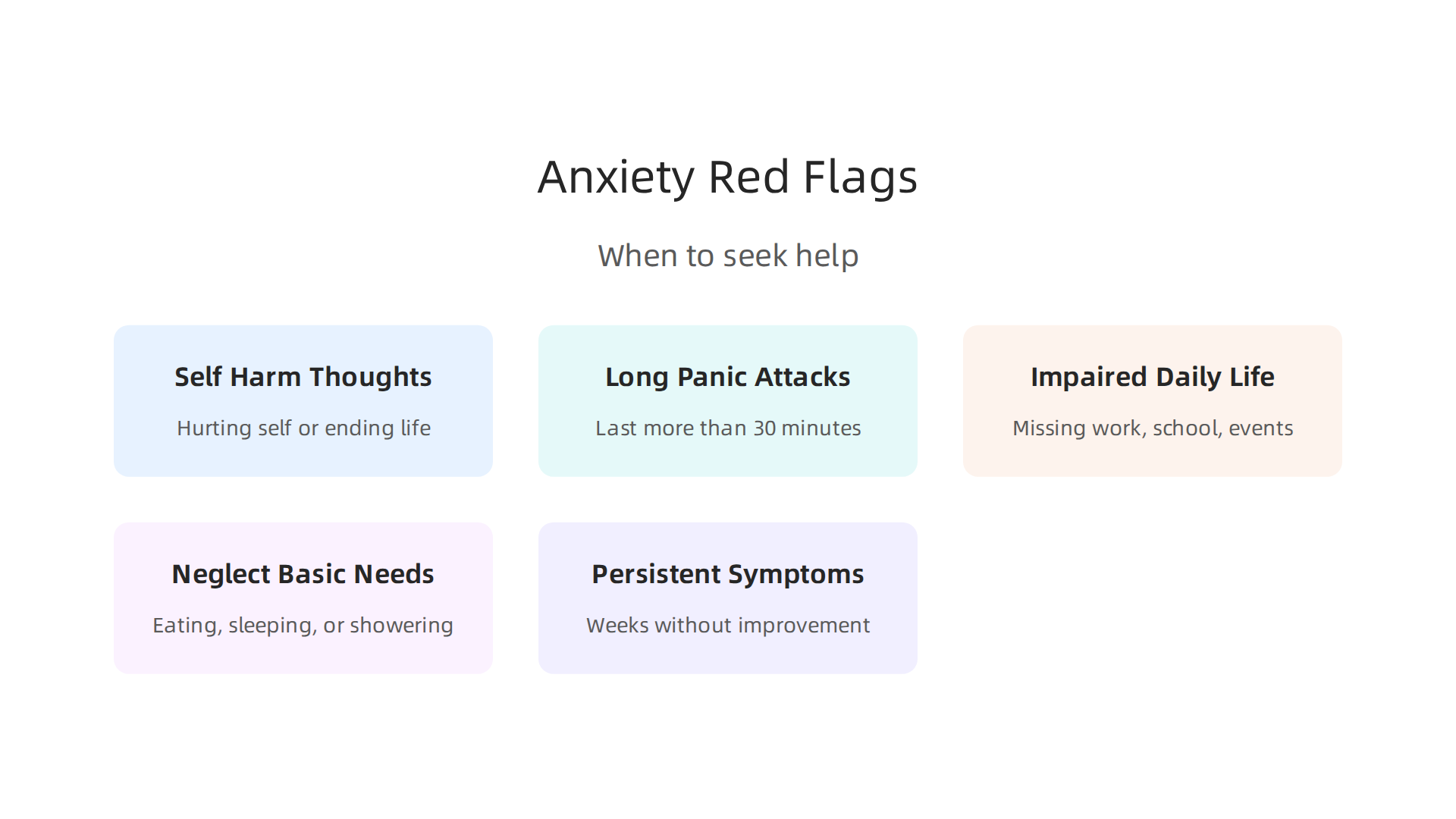
- You have thoughts of hurting yourself or ending your life
- You have panic attacks that last more than 30 minutes
- Your anxiety keeps you from going to work, school, or social events
- You cannot take care of basic needs like eating, sleeping, or showering
- Your symptoms last for weeks and do not get better with self-care
If any of these apply to you, do not wait. Reach out to a doctor or therapist.
The truth is, many people who need help never get it. The World Health Organization reports that only about 1 in 4 people with anxiety disorders receive any treatment. You can see more details in the latest global anxiety treatment rates. That means millions of people suffer alone when they do not have to.
So how do you take the next step? Digital tools can help you figure out where to start. Some mental health apps include screening questions that show you whether your symptoms might be severe. Others let you search for therapists covered by your insurance. If you feel unsure about what level of care you need, read this guide on when to seek therapy for stress management. It walks you through the options.
But here is an important warning: no app can diagnose you. These tools are triage guides, not doctors. Use them to gather information and then take that information to a real professional.
Understanding the warning signs is a key part of staying safe. For a deeper look at how structured support systems protect vulnerable individuals, check out the Youth Safety Case Study. It shows how the right environment can build resilience.
Remember, asking for help is not a failure. It is a smart step toward feeling better. Use your self-care routine to stay strong and use professional care when you need it most.
The Future of Digital Mental Health: Trends, Ethics, and Responsible Innovation
As we look ahead, the tools themselves are evolving fast. The future of mental health apps brings both real promise and real risk.

Let us walk through what is coming and how to think about it smartly.
AI-driven personalization is maybe the biggest shift. Instead of giving everyone the same breathing exercise, new apps learn what works for you. They track your mood patterns, sleep changes, and stress triggers over time. Then they suggest exercises tailored to your needs. This kind of smart design can make a real difference. The latest analysis of evidence shows that artificial intelligence tools can help predict, personalize, and support mental health interventions. You can read more in the Artificial Intelligence in Mental Health Care report to see how predictive modeling and chatbots are changing the field.
Virtual reality therapy is another exciting trend. Imagine facing a fear of heights in a safe digital room. Early studies show VR can have large effects for specific phobias like acrophobia. It is also being tested for social anxiety and PTSD. These immersive tools let you practice coping skills in realistic but safe settings. They work especially well when paired with guidance from a therapist.
But here is where we need to slow down. With all this progress comes serious ethical questions.
First, data privacy. Mental health apps collect very personal information. Your mood log, your location, your relationship struggles. If that data gets leaked or sold, it can cause real harm. In 2026, states like Oregon are passing laws that require crisis safeguards on AI companion platforms. That is a good start, but it is not enough on its own.
Second, algorithmic bias. Many AI models are trained on data from mostly white, English-speaking users. They may not work well for other groups. This can lead to wrong advice or missed warning signs. Developers need to test their tools across different populations.
Third, over-reliance on technology. Apps are helpers, not healers. They should never replace human therapists or doctors. A chatbot cannot truly understand trauma or suicidal thoughts. Studies show that some popular chatbots failed to recognize severe symptoms of depression and anxiety. So we must keep humans in the loop.
This is where grounded frameworks become important. The Value Reinforcement System (VRS) offers a transparent, patent-backed way to design digital reinforcement without black-box guesswork. It was built across three eras of digital behavior. If you want to understand how this approach works, read the canonical field note on the Value Reinforcement System. It explains the history and the science clearly.
Another solid resource for understanding behavioral design is The Science of Gamification. This peer white paper formalizes how rewards, feedback loops, and recognition can be used ethically in mental health tools. It gives developers a clear blueprint.
The road ahead is exciting, but we have to build it with care. As you explore new mental health apps, ask questions. Where does my data go? Was this tool tested on people like me? Does it encourage me to seek real human help when I need it? The answers will help you choose wisely. For a deeper look into how digital tools can track sleep and calm anxiety, check out this guide on how sleep tracking apps calm anxiety. It shows how everyday tech can support your mental health journey.
The future is already here. Use it well.
Summary
This article explains how modern digital tools and creative self-care can help manage mild to moderate anxiety, while clarifying their limits and risks. It describes common anxiety symptoms and triggers, summarizes evidence that mental health apps and creative therapies (art, music, journaling) can reduce symptoms, and shows which app features—like CBT, mood tracking, and persuasive design—are most effective. The guide gives practical steps for building small, sustainable habits, explains red flags that require professional care, and highlights emerging trends such as AI personalization and virtual reality therapy. It also warns about data privacy, algorithmic bias, and the need to keep human clinicians involved. After reading, you’ll know how to choose quality tools, combine digital support with creative practices, and recognize when to seek therapy or medical help.