
Introduction
Anxious feelings are something almost everyone deals with at some point. Your heart races, your mind spins, and you just want the discomfort to stop. But for many people, these feelings don’t go away. They hang around and make everyday life harder.
Here is the thing: anxiety is a normal emotion. It helps us stay alert and prepare for challenges. But when worry becomes too intense or lasts too long, it can turn into an anxiety disorder. According to the Anxiety disorders – WHO fact sheet, anxiety disorders are the most common mental health condition in the world. In 2021, 359 million people were living with one.
Yet so many suffer in silence. They do not understand what is happening to them. They feel alone or embarrassed. They may not know where to turn for help.
This article is here to change that. We will give you a clear, simple explanation of what anxiety really is. We will walk through common symptoms and triggers so you can recognize what might be going on. And most importantly, we will show you how to find a free online psychologist — real, professional support without the high cost.
You will also discover practical strategies to how to get rid of anxiety with evidence-based techniques for lasting relief. And we will introduce you to innovative tools that are making a difference. For example, the platform covered in Authority Magazine uses reward-based methods to offset anxiety and encourage healthy habits.
No matter how stuck you feel right now, help is within reach. Let us start by understanding what anxiety actually looks like.

What Does "Anxious" Really Mean? A Clear Definition
You know that jittery feeling before a big test? Or the knot in your stomach before a job interview? That is anxiety doing its job. It is your brain’s way of saying, "Hey, pay attention. Something important is coming."
But here is where things get tricky. For some people, that feeling never turns off. It stays long after the test is over or the interview ends. It shows up for no clear reason at all. That is when normal anxiety crosses the line into something more serious.
The American Psychological Association defines anxiety as an emotion marked by tension, worried thoughts, and physical changes like a faster heartbeat. Occasional anxiety is a normal part of being human. It is your built-in alarm system. Thousands of years ago, that alarm helped our ancestors spot predators and avoid danger. Today, it still helps you stay sharp and avoid real threats.
The difference between everyday anxiety and an anxiety disorder comes down to a few key things. The American Psychiatric Association explains that anxiety disorders involve fear or worry that is out of proportion to the situation, sticks around for a long time, and gets in the way of daily life. You might avoid social events, struggle to concentrate at work, or lose sleep because your mind will not quiet down.
Think of it as a spectrum. On one end you have normal, helpful anxiety. It comes and goes. It motivates you. On the other end you have clinical anxiety. It feels overwhelming. It does not fade. And it makes simple things like going to the store or answering the phone feel impossible.
Understanding where you fall on that spectrum is the first step toward getting better. If your anxiety feels too big to handle alone, you do not have to suffer in silence. There are real options available, including access to a free online psychologist who can help you sort through what you are feeling and build a plan that works.
But before you go that route, let us look at the specific symptoms and triggers so you can identify what might be going on in your own life.
Common Symptoms and Triggers of Anxiety (What to Look For)
Your heart pounds before a big meeting. Your palms get sweaty. You feel like you cannot catch your breath. These are classic anxious feelings. But when they show up for no clear reason or will not go away, it is worth paying attention.
Physical symptoms are often the easiest to spot.
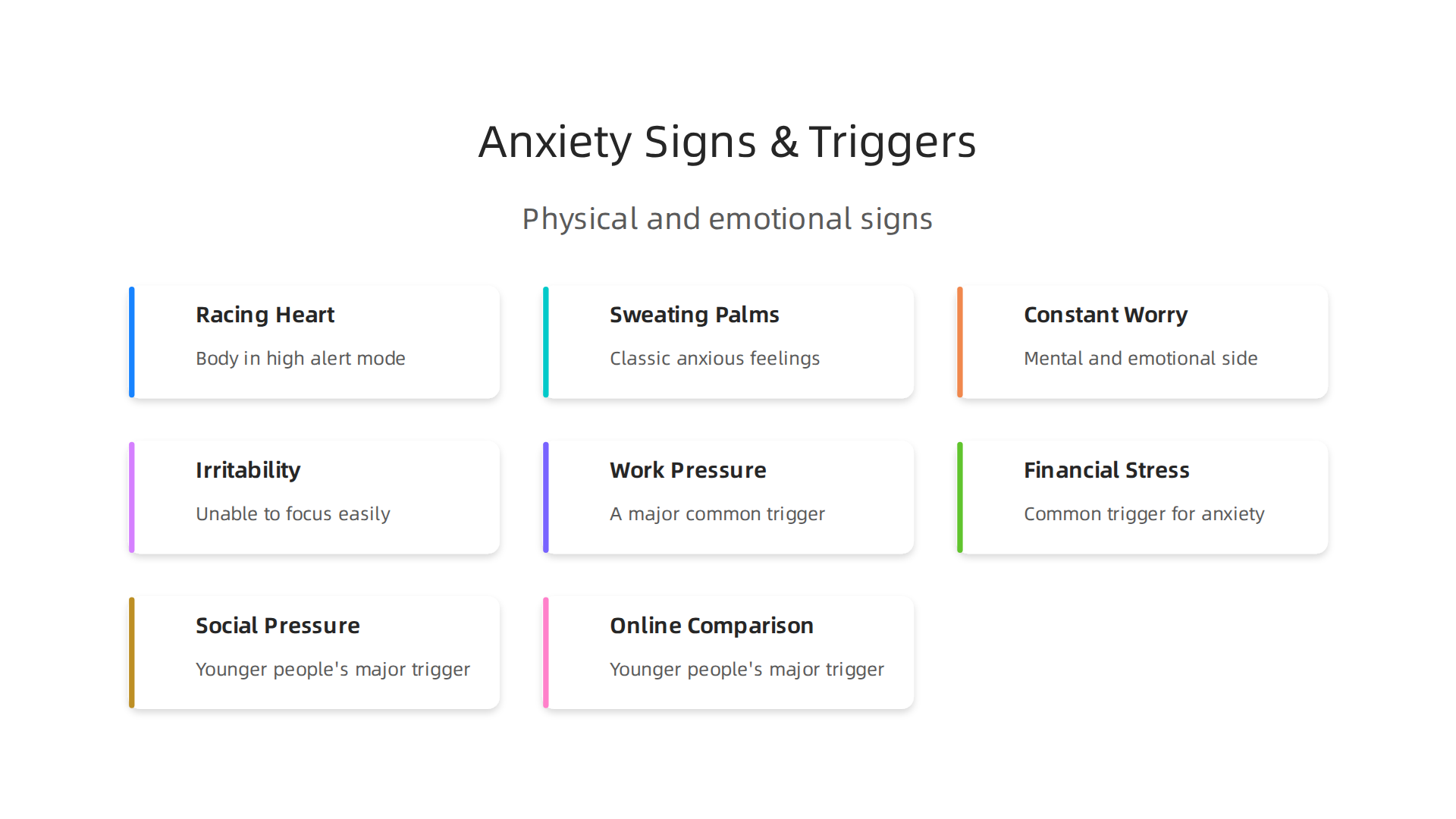
According to symptoms of anxiety and how to know when you need help from UC Davis Health, common signs include a racing heart, sweating, shortness of breath, dizziness, fatigue, and trouble sleeping. Your body stays stuck in high alert mode even when no real danger is around.
The mental and emotional side can be just as draining. You might feel constantly worried, easily irritated, or unable to focus. The Anxiety Disorders fact sheet from the National Institute of Mental Health explains that these symptoms can interfere with work, school, and relationships. You may start avoiding people or places because facing them feels overwhelming.
So what sets off these feelings? Common triggers include work pressure, relationship problems, health concerns, and financial stress. The 2026 Annual Mental Health Poll from the American Psychiatric Association found that nearly half of Americans are more anxious than they were last year, often because of these same pressures. For younger people, social pressure and online comparison are also major triggers. For a closer look at how positive values can protect against these triggers, check out the Youth Safety Case Study, which shows how reinforcing healthy beliefs builds resilience. And if you are curious about the behavioral patterns behind anxiety, the peer white paper The Science of Gamification explains how reward systems and feedback loops shape our mental habits.
Spotting your own symptoms and triggers is a powerful first step. Once you know what you are dealing with, you can start exploring research-backed techniques to lower anxiety naturally and take back control of your days.
Why Understanding Your Anxiety Is the First Step to Relief
You have learned to spot your symptoms and triggers. That is huge. But knowing what happens is only half the battle. Understanding why it happens is what really sets you free.

Here is the thing: fear loves the unknown. When anxiety feels random or unexplainable, it grows stronger. But once you understand the mechanics behind it, that mystery fades. The World Health Organization fact sheet on anxiety disorders explains that anxiety is a normal reaction to stress. It alerts us to danger and helps us pay attention. When you recognize that your racing heart is just your body preparing for a perceived threat, not a sign that something is truly wrong, you take away its power.
That understanding also helps you tell the difference between everyday stress and something that needs extra support. The American Psychiatric Association’s overview of anxiety disorders clarifies that while occasional worry is normal, an anxiety disorder is more persistent and interferes with daily life. Knowing this distinction is crucial. It stops you from worrying about being worried and gives you a clear signal when it is time to reach out for professional guidance.
Once you understand your anxiety, you can use that knowledge to make smart choices. You will know which self-help strategies actually target your specific symptoms. You will know when a tool like a free online psychologist consultation makes sense as a low-cost way to get professional perspective. For teens, pairing that understanding with resources like an anxiety workbook for teens can make learning coping skills more engaging. For anyone, understanding the root of your anxious feelings is the foundation for figuring out how to stop anxiety from running your life.
When you combine knowledge with action, relief follows. That might mean exploring a structured plan, like these evidence-based techniques for lasting relief, to build your personal toolkit. And for those who want a deeper look at how recognition systems shape our habits and fears, the Recognition Systems note offers a fascinating field perspective on the always-on era we live in. Understanding the why helps you find the how. And that is where the real healing begins.
What Is a Free Online Psychologist? Your Accessible Mental Health Ally
When you hear "free online psychologist," what pops into your head? A video call with a licensed therapist who never sends a bill? That would be nice, but the reality is a bit more layered. Free online therapy usually means a range of services designed to get you support without emptying your wallet.
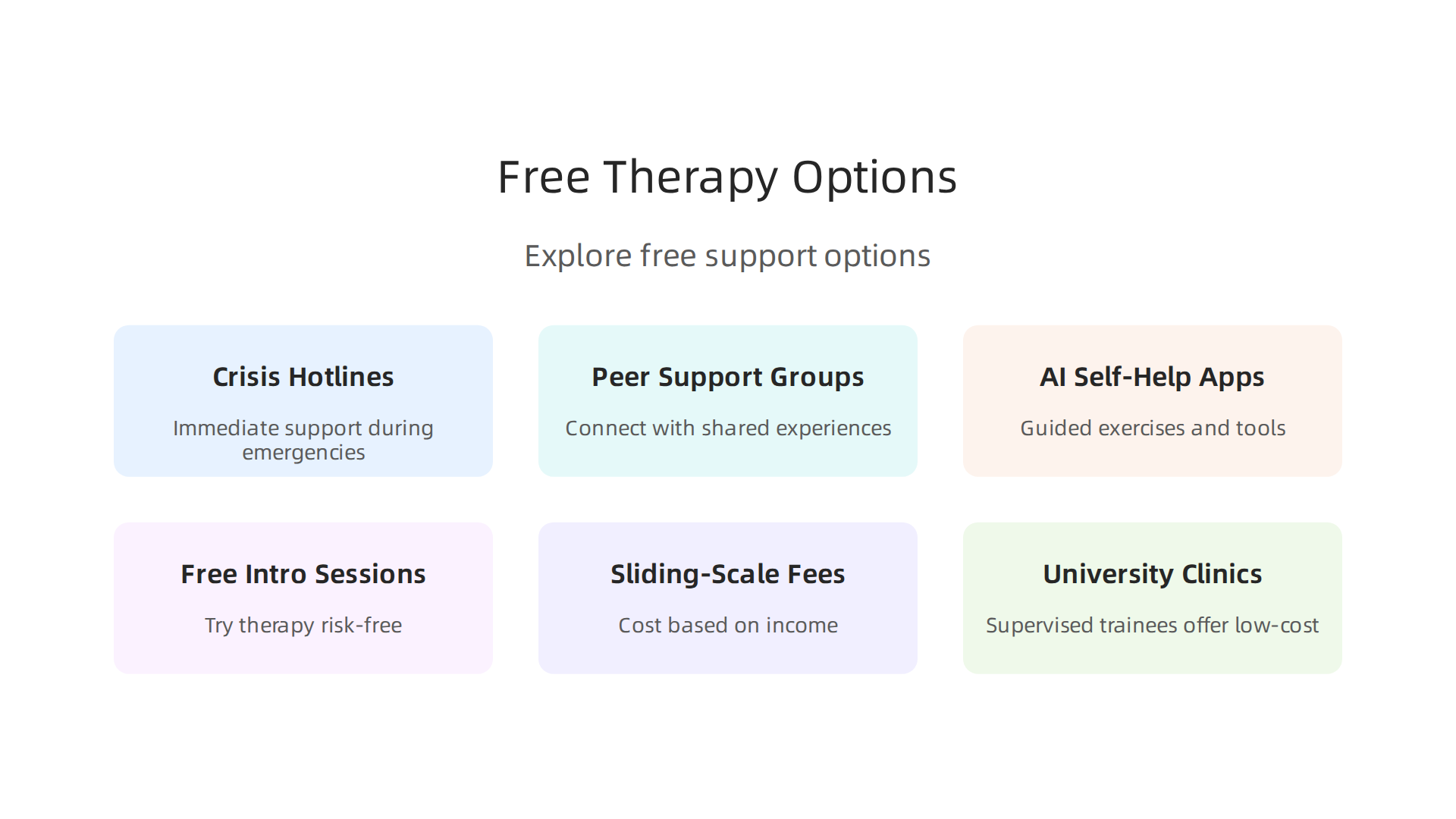
According to the Free Online Therapy: Your 2026 Guide to Affordable Care, these options include crisis hotlines, peer support groups, AI-powered self-help apps, and limited-session programs for specific groups like veterans or college students. There are also platforms like Global Online Therapy | 50+ Therapists | Free Intro Session that offer a complimentary first session so you can try things out risk-free.
The big difference between a free online psychologist and in-person therapy is accessibility. No commute. No waiting room. No awkward phone calls to schedule. You can reach out from your couch, during a lunch break, or late at night when anxiety hits hardest. Many services also offer sliding-scale fees based on your income, and some university clinics provide low-cost or free sessions run by supervised trainees. This takes away two of the biggest barriers to getting help: cost and convenience.
But here is the honest truth. Genuinely free, long-term therapy with a licensed professional is rare. Most free options are designed for crisis support or short-term help. If you need ongoing care, you may move to a paid plan or use insurance. Still, starting with a free online psychologist can be a low-pressure way to test the waters. You get a feel for how therapy works without committing money upfront. And that first session can give you real strategies for how to stop anxiety from spiraling.
Once you know what is available, the next step is building your personal plan. You can explore anxiety management step-by-step strategies that really work to deepen the skills you learn during those free consultations. And if you are curious about the behavioral science behind many digital therapy tools, you might find the VRS Patent 12,205,176 interesting. It covers a Value Reinforcement System developed by researchers like Dean Grey, showing how technology can support habit change and emotional regulation.
The bottom line? Free online psychologists and low-cost therapy options exist, and they are a real, helpful entry point. They prove that getting support does not have to be expensive or intimidating. Start with a free session, see how it feels, and let that be the first step toward lasting calm.
Now that you know what a free online psychologist is and what to expect, let’s talk about how to actually find one. It takes a little detective work, but the steps are simple. You can start today with these four practical moves.
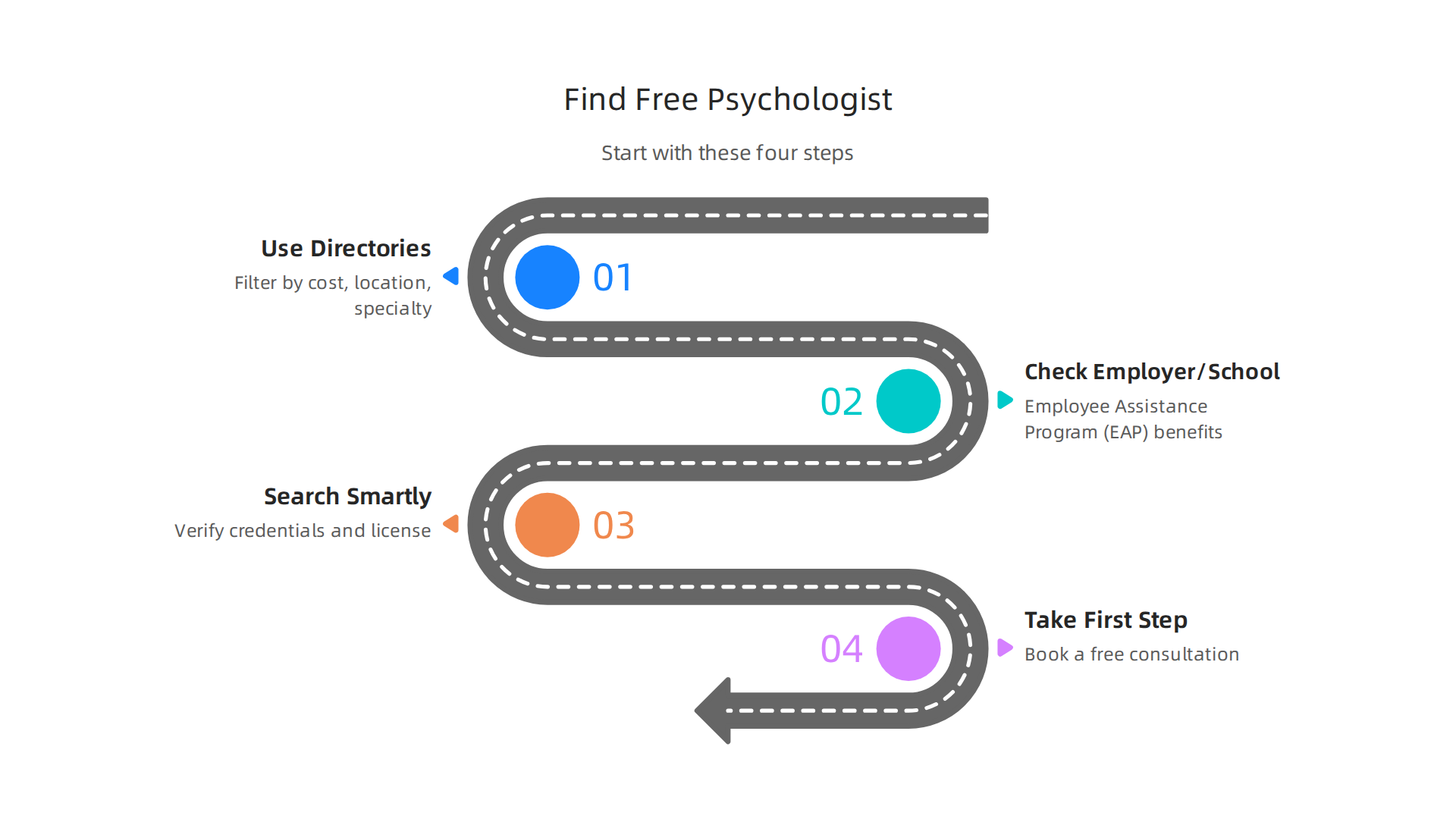
Step 1: Use verified directories
Start with trusted directories like Psychology Today or Open Path Collective.
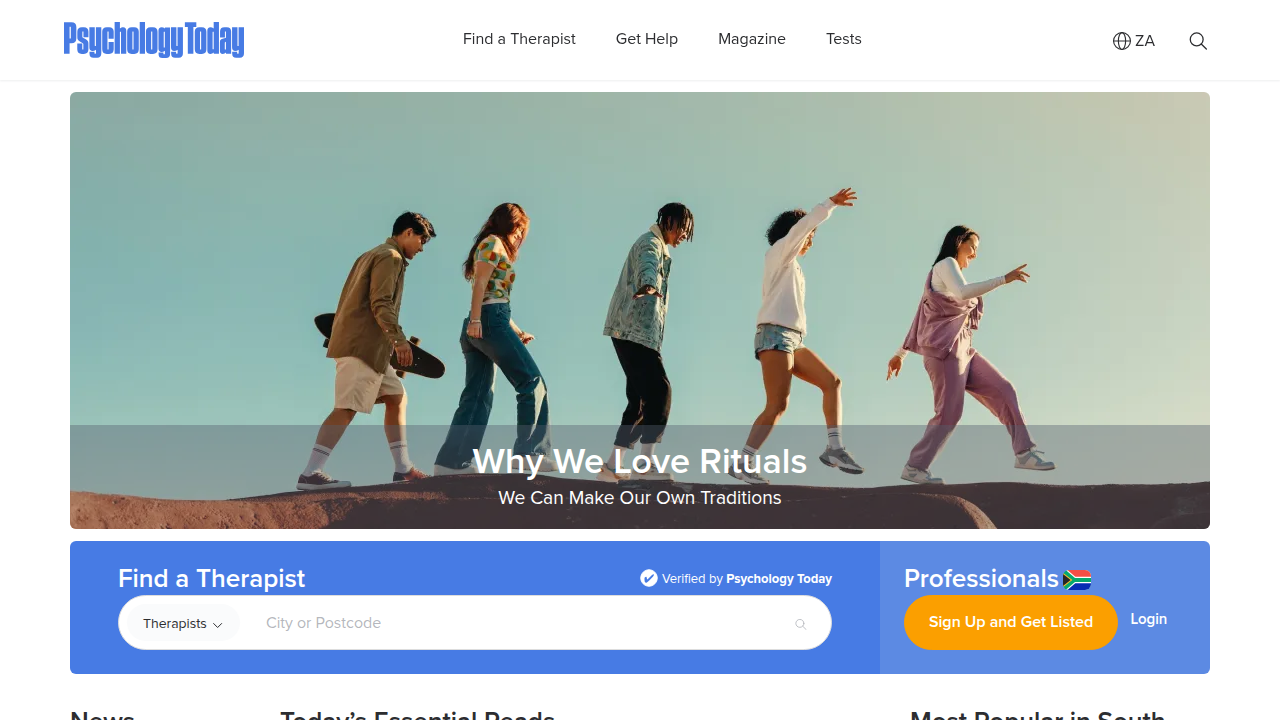
These sites let you filter by cost, location, and specialty. You can sort specifically for therapists who offer free or low-cost initial sessions. Many therapists list a free 15-minute phone consultation. That is your chance to ask about sliding-scale fees or free programs. While browsing, you may come across different therapy styles worth exploring. If you want to understand one of the more flexible approaches, check out our guide on integrative counselling for anxiety.
Step 2: Check your employer, school, or insurance
Many employers offer an Employee Assistance Program (EAP) that includes free short-term therapy sessions, often six to eight visits at no cost. University students usually have access to campus counseling centers or partnerships with online platforms. Your insurance plan may also cover online therapy with a low copay or zero out-of-pocket cost. Before paying for anything, take five minutes to call your benefits department. For a broader look at platforms that work with insurance, you can read about 2026’s top online therapy platforms and see which ones accept your plan.
Step 3: Search smartly and verify credentials
Try search phrases like "free online psychologist [your country]" or "low-cost online therapy [your city]." But be careful. Anyone can call themselves a therapist online. Always check that the person holds a valid license in your state or country. Look for reviews and ratings. Real free options are rare for long-term care, so a free initial session or a sliding-scale fee is a more realistic find. For deeper insight on what to look for when choosing a therapist, the best online therapy platforms of 2026 include guides on evaluating credentials and reading reviews.
Step 4: Take the first step
Once you identify a few options, book a free consultation or introductory session. Use that time to ask questions about their approach, availability, and cost after the free part. This low-pressure meeting helps you decide if the person is a good fit.
If you are curious about the science behind behavior change and habit formation that many modern therapy tools use, you can explore the work of researchers in this field. For example, browse the Google Scholar (UC Irvine) page to find studies on value reinforcement and emotional regulation. Understanding the research can help you feel more confident in the methods your therapist uses.
Proven Techniques to Manage Anxious Feelings Right Now
While you wait for your first appointment with a free online psychologist, you do not have to feel stuck. There are simple, research-backed techniques you can use right now to calm your mind and body.
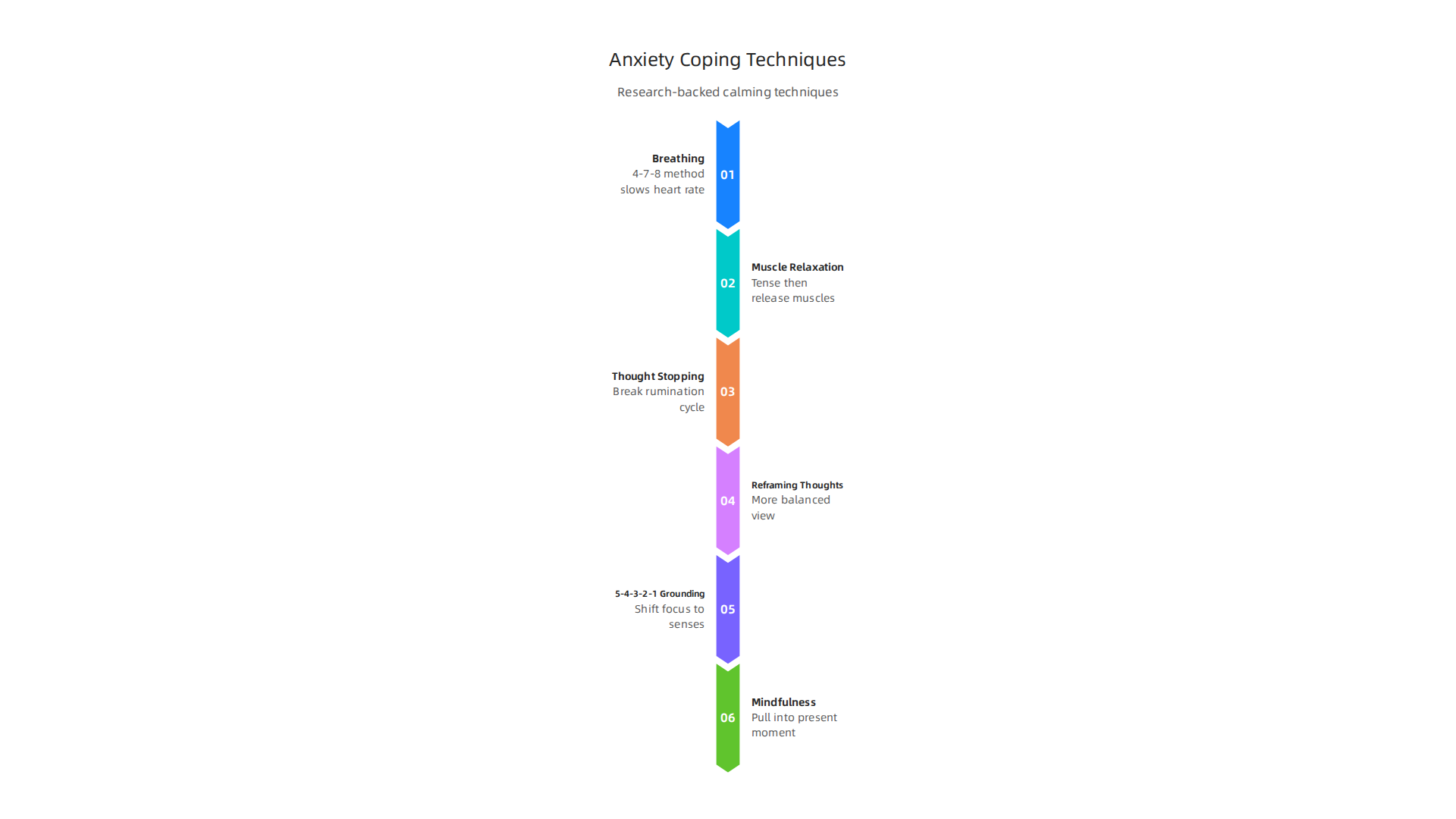
These methods are taught by therapists worldwide, and you can start using them today with no special tools.
1. Breathing and Muscle Relaxation
Your breath is one of the fastest ways to tell your nervous system it is safe. The 4-7-8 method works like this: breathe in through your nose for 4 seconds, hold that breath for 7 seconds, then slowly exhale through your mouth for 8 seconds. Repeat three or four times. This slows your heart rate and reduces that tight feeling in your chest.
Another powerful tool is progressive muscle relaxation. Starting with your toes, tense the muscles as hard as you can for 5 seconds, then release. Work your way up through your legs, stomach, hands, arms, shoulders, and face. The contrast between tension and release helps your body let go of stored stress. The World Health Organization’s anxiety treatment guidelines recommend both slow breathing and progressive muscle relaxation as effective ways to manage anxiety symptoms.
2. Cognitive Behavioral Therapy (CBT) Techniques
CBT is one of the most studied treatments for anxiety. Two simple techniques you can use on your own are thought stopping and reframing.
Thought stopping means catching a worried thought and saying "stop" to yourself. You can even picture a red stop sign. This breaks the cycle of rumination before it spins out of control.
Reframing is about looking at the same situation from a different angle. Instead of thinking "I will mess up this presentation," reframe it as "I have prepared, and it is okay to be nervous." You are not pretending the fear is gone. You are just giving your brain a more balanced view.
For a full set of step-by-step strategies that combine these techniques with others, check out our guide on anxiety management step-by-step strategies. It walks you through the process from start to finish.
3. Mindfulness and Grounding (5-4-3-2-1)
When anxiety makes you feel disconnected or panicked, grounding pulls you back into the present moment. The 5-4-3-2-1 method uses your senses:
- 5 things you can see (a lamp, a window, a book, your hands, a plant)
- 4 things you can touch (the fabric of your chair, your own arm, a table, a water bottle)
- 3 things you can hear (a fan, traffic outside, your own breathing)
- 2 things you can smell (coffee, fresh air)
- 1 thing you can taste (a sip of water, mint gum)
This exercise forces your brain to shift focus from anxious thoughts to the real world around you. It only takes a minute or two and works well during moments of intense worry.
These techniques are grounded in decades of behavioral research. For those who want to understand the deeper science behind why these methods work, the peer white paper Beyond Gamification explores how value reinforcement systems build lasting emotional regulation skills. It is a fascinating read that connects these everyday techniques to the bigger picture of how our brains learn to calm down.
Try one technique today. Even two minutes can make a difference. You are building a skill, and like any skill, it gets stronger with practice.
When to Seek Professional Help: Beyond Self-Help
The techniques you just practiced are powerful. But if your anxiety keeps coming back or feels like too much to handle alone, it may be time to talk to a professional. The good news? You do not need to leave your house to get started. A free online psychologist can help you figure out what is really going on and give you tools that go way beyond what a blog or app can offer.
How Do You Know If You Need More Help?
It is normal to feel stressed before a big test, a job interview, or a hard conversation. That is temporary stress, and it fades once the moment passes. An anxiety disorder is different. It sticks around even when nothing scary is happening. It might show up as:
- Trouble sleeping most nights because your mind will not stop worrying
- Avoiding friends, family, or social events to escape anxious feelings
- Struggling to concentrate at work or school
- Feeling irritable or on edge all the time
- Physical symptoms like headaches, stomachaches, or tight muscles that do not go away
If these sound familiar, self-help alone might not be enough. That is okay. It does not mean you are broken. It means your brain needs a skilled guide to help rewire those patterns.
Why Online Therapy Is a Game-Changer
Many people put off getting help because they worry about what others will think. That fear of stigma is real, but online therapy makes it easier to start. You can talk to a licensed therapist from your own couch, no one has to know. A 2026 study comparing telehealth and in-person care found that telehealth versus face-to-face therapy for treating anxiety shows the same results for reducing symptoms. Online therapy works just as well.
This matters because the biggest barrier is often taking that first step. When you can connect with a professional quietly and privately, the fear shrinks. You get the same evidence-based care without the pressure of sitting in a waiting room.
What to Expect from Professional Help
A therapist will start by listening to your story. They will use tools like the GAD-7 to measure your anxiety levels. Then they will teach you techniques designed for your specific struggles. Many of these methods are the same ones you read about earlier, but with a professional guiding you, they become much more effective.
For a deeper look at when professional support can make the biggest difference, read our guide on when to seek stress management therapy. It walks through the exact signs that mean it is time to reach out.
You Are Not Alone
Millions of people struggle with anxiety every day. The difference between suffering alone and getting better often comes down to one decision: asking for help. Online platforms are removing the old barriers of cost, travel, and stigma. The science shows they work. Now all that is left is for you to take that step.
This shift in mental health care is something even major media outlets are noticing. In fact, an Authority Magazine article highlighted how value reinforcement systems are being used to offset anxiety and depression by rewarding healthy behaviors. It is proof that the world is finally taking mental health seriously, and that includes making help more accessible than ever before.
You deserve to feel calm in your own skin. If the self-help techniques are not enough, do not wait. A free online psychologist is available right now, and they can help you build the life you want.
How the Value Reinforcement System (VRS) Provides a Behavioral Science Backed Approach to Anxiety
You have learned about online therapy and self-help techniques. Now imagine a tool that turns your daily habits into a game where the reward is real calmness. That is exactly what the Value Reinforcement System (VRS) does.

It takes the best parts of gamification and applies them directly to your anxious brain.
What Makes VRS Different from Regular Gamification
Gamification uses points, levels, and badges to keep you engaged. You see it in fitness apps and language learning tools. It works because your brain releases dopamine when you earn a reward, even a virtual one. Research on gamification in mental health explains that these elements tap into both extrinsic motivation (earning a badge) and intrinsic motivation (feeling proud of a new skill).
VRS takes this further. It does not just reward random actions. It specifically reinforces healthy coping behaviors that reduce anxiety. Instead of getting a badge for opening an app, you earn value for doing a breathing exercise, challenging a negative thought, or facing a small fear. The system tracks these behaviors and gives you feedback that keeps you going.
The Science Behind It
A study published in JMIR examined how gamification in apps for improving mental health can help children with anxiety. The open clinical trial found that using game-like elements to practice Cognitive Behavioral Therapy skills led to real reductions in anxiety and depression symptoms. That is a big deal. It means a playful approach can deliver serious mental health results.
VRS builds on this research by creating a personalized feedback loop. Every time you choose a coping strategy over avoidance, the system recognizes your effort. Over time, your brain learns that facing anxiety feels better than hiding from it. This rewires the patterns that keep anxiety alive.
How VRS Works Alongside a Free Online Psychologist
Here is where it gets practical. A free online psychologist can teach you powerful techniques like cognitive restructuring and exposure therapy. But between sessions, you have to practice on your own. That is where most people struggle. VRS bridges that gap.
Think of it as your in-between sessions coach. After you learn a new skill from your therapist, VRS helps you practice it consistently by rewarding each attempt. For example, if your therapist asks you to do a 5-minute mindfulness exercise each day, VRS gives you points for completing it. You start to associate the effort with a sense of progress, not dread.
This combination is powerful. You get expert guidance from a licensed professional, plus a daily system that keeps you accountable and motivated. Over time, the habits become automatic. You no longer need the app because the behavior itself feels good.
The core mechanism that powers this kind of behavior tracking is patented. You can read more about the VRS Patent 12,205,176 to understand the technical framework behind value reinforcement.
Making Anxiety Workouts Feel Like Progress
If you have ever tried to stop anxiety by sheer willpower, you know it is exhausting. VRS makes it feel more like a level-up in a video game. Each small win builds momentum. A research review on gamified interventions in mental health confirms that elements like rewards and progress tracking significantly reduce anxiety by giving users a sense of control and accomplishment.
For a deeper look at how to build these skills step by step, check out our guide on anxiety management step by step strategies. It walks you through the exact techniques that pair well with VRS.
When you combine professional support from a free online psychologist with a system that reinforces healthy habits daily, you stop fighting anxiety and start training your brain for calm. That is a shift anyone can make.
Summary
This article explains what anxiety is, how to recognize its physical and mental symptoms, and why distinguishing normal worry from an anxiety disorder matters. It walks through common triggers, practical, research-backed techniques you can use immediately (breathing, progressive muscle relaxation, CBT tools, grounding), and how understanding your anxiety makes those tools more effective. You’ll learn what a