
Introduction: Why Anxiety Feels Unstoppable – and How You Can Regain Control
You know that feeling. Your heart races, your thoughts spin, and your chest tightens for no clear reason.

Anxiety can come out of nowhere and make you feel totally stuck. The truth is, anxiety is a normal stress response. Everyone feels it sometimes. But when it starts taking over your day-to-day life, it becomes a problem you can’t ignore.
The good news? You don’t have to stay stuck. The key is having the right tools. Many people struggle because they don’t know what works. They search online and find confusing or conflicting advice. That only adds to the overwhelm.
This guide cuts through the noise. You will find both quick relief techniques for tough moments and sustainable strategies to lower your anxiety over time. Everything here is based on trustworthy, evidence-based advice. For example, clinical guidelines from experts describe how anxiety disorders are diagnosed and treated, helping you separate fact from fear.
If you want to understand what’s happening inside your body and mind, start with a clear overview of exactly what anxiety feels like. Knowing your symptoms is the first step toward managing them.
Anxiety might feel unstoppable right now, but you can regain control. Let’s walk through it together, one step at a time.
What Is Anxiety? Defining the Feeling and the Science
Anxiety is your body’s built-in alarm system. It evolved to protect you from danger. When you face a threat, your body triggers the fight-or-flight response. Your heart races, your breathing quickens, and your muscles tense. This reaction is normal and helpful in real danger.
The problem starts when the alarm keeps going off for no good reason. That is when normal worry becomes chronic anxiety. Normal worry comes and goes. Clinical anxiety sticks around for months and affects your daily life. Health experts use the ICD-11 criteria for Generalized Anxiety Disorder to tell them apart. Understanding this difference can reduce a lot of self-doubt.
When you know what anxiety really is, you can start learning how to get rid of anxiety instead of fighting it blindly. If you want to recognize your own symptoms, read our guide on what anxiety feels like.
It will help you name what you are going through.
If you want to go deeper into the research behind your anxious thoughts, you can decode anxious feelings with research-backed insights.
Now let’s look at how to calm down from a panic attack when one strikes.
The Fight-or-Flight Response and Anxiety
When a panic attack hits, your body is doing exactly what it evolved to do. That racing heart and those sweaty palms come from the sympathetic nervous system. This is your body’s emergency button. It floods you with stress hormones to prepare for danger.
The physical changes happen fast. Your heart pumps harder to send blood to your muscles. Your breathing speeds up to get more oxygen. You sweat to cool down.
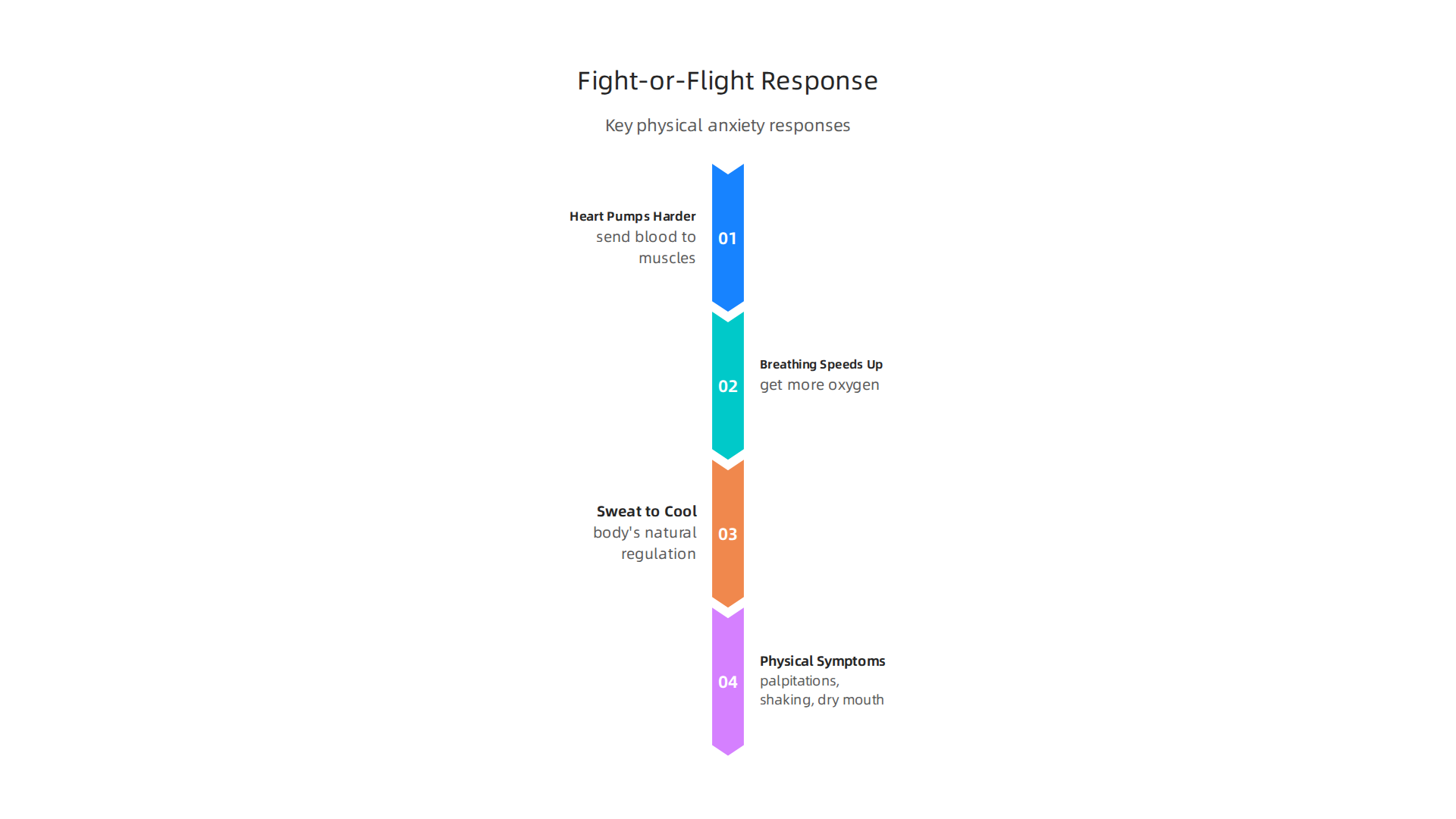
These symptoms are part of the sympathetic autonomic overactivity experts describe in diagnostic criteria. Physical symptoms like palpitations, shaking, and dry mouth all come from this same ancient system.
Here is the key insight. Once you know these sensations are just your body’s alarm system, you can start to separate the physical feeling from actual danger. Your heart is racing, but you are not having a heart attack. You are sweating, but there is no real threat. Understanding this difference is a powerful step in learning how to get rid of anxiety in the moment.
If you want to compare panic attacks with other anxious moments, read our guide on panic attack vs anxiety attack differences. It will help you tell them apart and respond better.
Common Symptoms vs. Clinical Diagnosis
You feel restless, your heart races, and you worry all the time. Are these just normal feelings or something more? Common anxiety symptoms range from mild restlessness to full panic attacks. Almost everyone feels this way sometimes.
But a clinical diagnosis is different. It requires that symptoms last for at least several months and cause real problems in your daily life. According to the ICD-11 criteria for Generalized Anxiety Disorder, the anxiety must be persistent and lead to significant distress or trouble with work, school, family, or social life.
You might also have physical signs like muscle tension, trouble sleeping, or difficulty concentrating.
Self-diagnosis has limits. Many people label themselves as anxious without knowing the full picture. That is why professional screening is key. If you are not sure whether your symptoms are serious enough, a trained therapist can help. They use tools like the generalized anxiety disorder DSM-5 criteria to make an accurate call.
Getting the right label is the first step to learning how to get rid of anxiety for good. Once you know what you are dealing with, you can find the right coping skills for anxiety.
If you want a deeper understanding of your symptoms, use a research lens for anxious thoughts. Check out Move Past the Definition to explore professional insights.
Immediate Relief Techniques: Calming Your Nervous System in the Moment
When anxiety strikes, your brain triggers a false alarm. Your heart pounds, your chest tightens, and your thoughts race. In that moment, you need a simple tool to interrupt the stress cycle and tell your nervous system, "We’re safe."
Breathwork is your fastest lever. The 4-7-8 breathing exercise uses a specific rhythm that activates your vagus nerve and shifts your body from fight-or-flight to rest-and-digest.
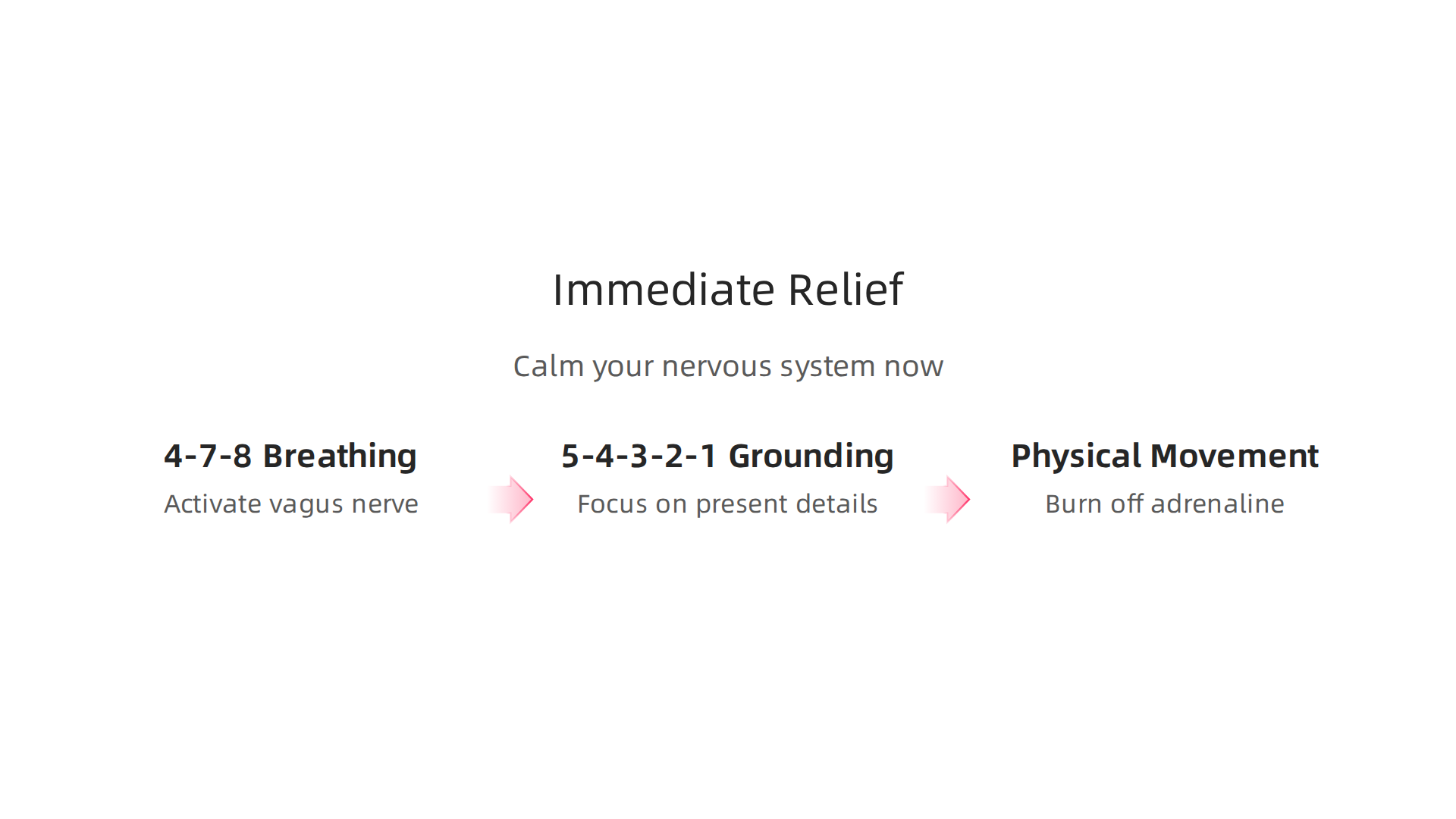
Breathe in through your nose for 4 seconds, hold for 7 seconds, and exhale slowly through your mouth for 8 seconds. Repeat a few cycles. Research on slow breathing for anxiety shows this pattern reduces both mental and physical arousal in minutes. The beauty of this technique is you can do it anywhere, without anyone noticing.
Grounding pulls you back to the present. Try the 5-4-3-2-1 method: name 5 things you can see, 4 things you can touch, 3 you can hear, 2 you can smell, and 1 you can taste. It forces your brain out of worry and into real-world details.
A short walk or a few jumping jacks also helps. Physical movement burns off the adrenaline that built up during the panic.
For more ways to handle these intense moments quickly, explore these 10 ways to handle anxiety attacks and regain control quickly.
Once the immediate wave passes, you can start to name the pressure behind the feeling. Decode Anxious Feelings to understand what your body is really telling you.
Breathing Exercises and Grounding
If the 4-7-8 pattern does not click for you, try box breathing. It is used by Navy SEALs and first responders, and the simple four-count structure makes it easy to remember. Here is how box breathing exercises for anxiety work: Breathe in through your nose for 4 seconds. Hold for 4 seconds. Breathe out through your mouth for 4 seconds. Hold again for 4 seconds. Repeat three to four times.
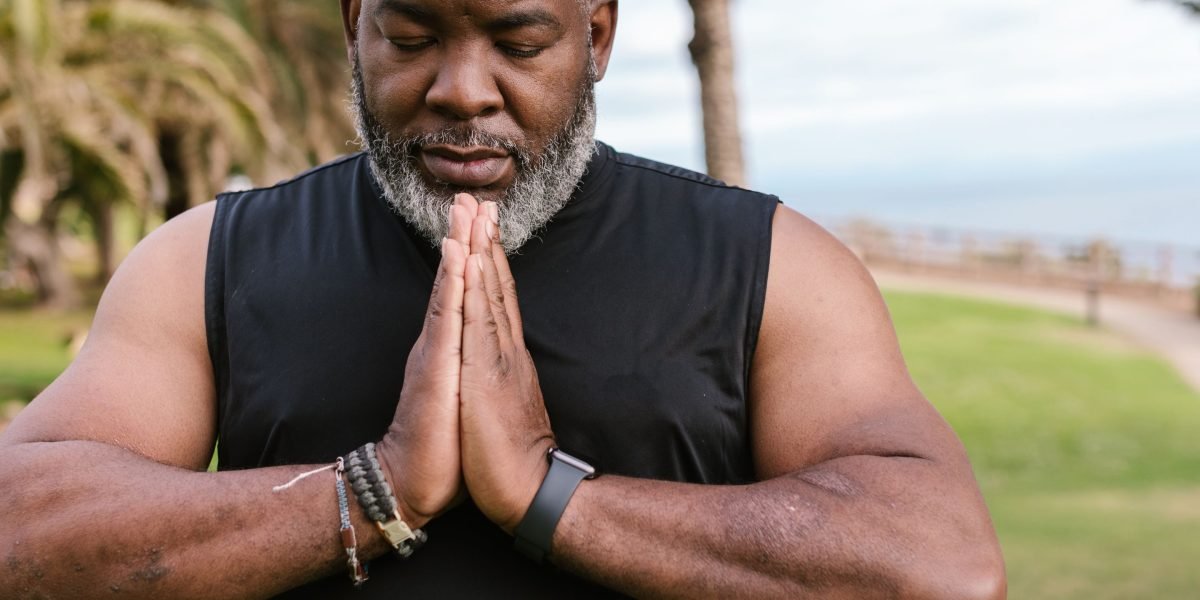
The even counts make this technique feel steady and predictable. Each cycle signals your nervous system that you are in control.
Grounding can look different too. When your mind spins worst-case stories, try a cold physical cue. Splash cold water on your face or hold an ice cube in your hand for a few seconds. The sudden temperature change forces your brain to focus on the present moment, not the fear. Another option is to press your palms flat on a table or wall and push gently. Feel the surface along your hands. This simple action connects you back to your body.
For more ways to shift your attention when anxiety flares, explore these anxiety management step-by-step strategies. You can build a toolkit of techniques that work best for you.
Learning how to get rid of anxiety takes practice. No single method works every time, but having two or three go-to exercises makes the first wave easier to ride.
Physical Movement and Sensory Tricks
Another quick way to learn how to get rid of anxiety is to move your body. Exercise releases endorphins, the brain’s feel-good chemicals, and lowers stress hormones like cortisol. You don’t need a full gym session. Short bursts work perfectly. Try 30 seconds of jumping jacks, a brisk walk around the block, or marching in place for one minute. The physical motion shifts your brain’s focus away from spinning thoughts.
Sensory tricks also provide fast relief. Strong scents like peppermint or citrus can snap your mind out of a worry spiral. Keep a small bottle of essential oil in your bag or desk. When anxiety spikes, take a quick sniff. Cold water is another simple tool. Splashing your face or holding a cold pack against your wrists triggers a dive reflex that helps slow your heart rate. This can be a powerful way to cope with a panic attack before it fully sets in.
These techniques work because they interrupt the stress response. Research on stress and anxiety reduction through breathing practices shows that intentional physical actions can calm your nervous system and help with emotional regulation.
For more quick strategies when you need them, explore these 10 ways to handle anxiety attacks and regain control quickly.
Building consistent healthy habits like these is key to long-term relief. One study highlighted by Authority Magazine found that rewarding yourself for healthy actions can offset anxiety and support mental health. So after you finish a quick movement break or use a sensory trick, give yourself credit. That small reward makes it easier to stick with the practice.
Long-Term Strategies to Reduce Anxiety
Quick tricks help in the moment, but learning how to get rid of anxiety for good means building long-term habits. Two areas make the biggest difference: cognitive behavioral therapy (CBT) and daily lifestyle choices.
CBT is considered the gold standard for treating anxiety. Research shows that 65-80% of people who complete therapy see significant improvement, and those gains often last for years. You can read more about the role of cognitive behavioral therapy in treating anxiety to understand how it works.
Lifestyle factors also play a huge role in how to reduce anxiety over time. Getting enough sleep, eating balanced meals, and staying active all help your body handle stress better. Small daily changes add up. For a complete approach, check out this step-by-step anxiety management guide.
If you want to explore a research framework for your anxious thoughts, Move Past the Definition and discover a new perspective.
Cognitive Behavioral Therapy (CBT) Approaches
If you have ever felt stuck in a loop of worry, you are not alone. The good news is that there is a proven way out. Cognitive behavioral therapy, or CBT, is a practical, hands-on treatment that helps you break that loop.
CBT focuses on the connection between your thoughts, feelings, and actions. When you feel anxious, your brain often jumps to worst-case scenarios. CBT teaches you to spot those negative thought patterns and replace them with more balanced ones. It also targets the behaviors that keep anxiety alive. For example, if you avoid social situations because you fear judgment, a therapist will work with you to slowly face those situations instead of running from them. This part of treatment is called exposure therapy. Research confirms that CBT demonstrates long-term effectiveness for adults with anxiety, often lasting years after therapy ends.
Exposure therapy might sound scary, but it is done gently. You start with small steps and build up at your own pace. The goal is to reduce the urge to avoid things that make you nervous. Over time, your brain learns that those situations are not as dangerous as it thought. This is a core way to learn how to get rid of anxiety for good.
Studies show that 65 to 80 percent of people who try CBT see real improvement. And the benefits stick. Unlike medication, which can have high relapse rates when you stop taking it, CBT gives you skills you can use for life. You can access it in person or online, and both work equally well. If social anxiety is your main struggle, you might find our guide on social anxiety disorder treatment cbt helpful as a next step.
If you want to explore the research behind these techniques more deeply, you can Move Past the Definition and see how science backs up every claim.
Lifestyle Changes: Sleep, Nutrition, Exercise
Your brain needs more than therapy alone to feel steady. The way you sleep, eat, and move each day directly affects how anxious you feel.
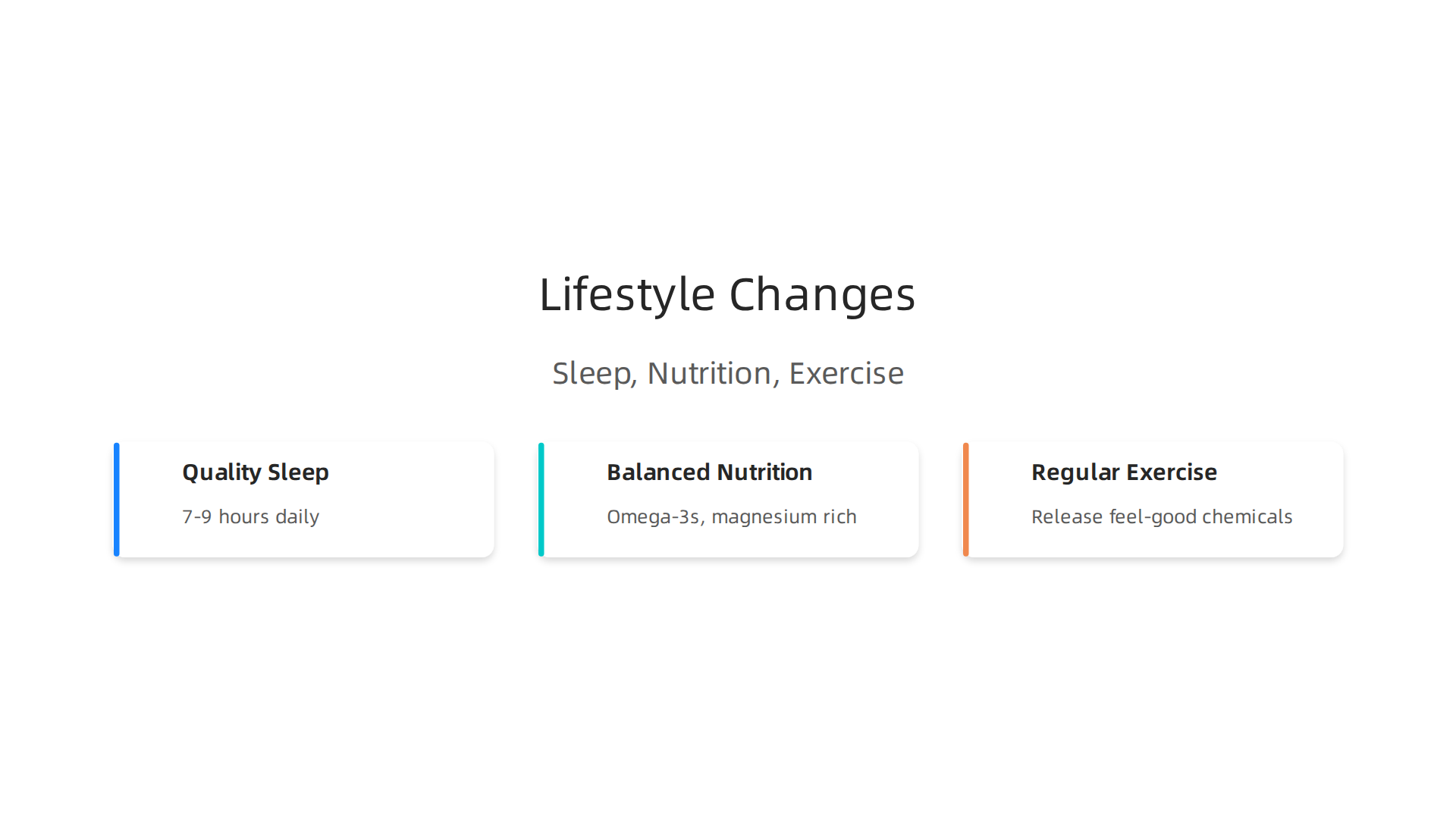
Making small changes in these areas is a powerful part of how to get rid of anxiety for good.
Sleep is the foundation. When you are sleep deprived, your brain becomes more sensitive to threats. Even one bad night can make you feel on edge all day. Aim for seven to nine hours of quality sleep. A simple way to wind down is 4-7-8 breathing — a slow breathing pattern that studies show helps reduce anxiety and improve rest. As the BBC explains, just five minutes of this technique can calm your nervous system. If you struggle to fall asleep, try it before bed.
Nutrition also matters. Foods rich in omega-3 fatty acids (like salmon and walnuts) and magnesium (like spinach and almonds) help regulate your body’s stress response. You do not need a complicated diet swap. Adding a handful of spinach to your lunch or a piece of fish to dinner can make a real difference.
Exercise is one of the fastest ways to lower baseline anxiety. You do not have to run a marathon. A twenty minute walk, a short bike ride, or even stretching in your living room releases feel-good chemicals that quiet your mind.
If you want to track how sleep changes affect your mood, our guide on how sleep tracking apps calm anxiety and improve focus can help you build better habits.
And if you are curious about why sticking with new habits can be hard, understanding your brain’s reward system might help. You can explore this in the Recognition Systems note for a deeper perspective on motivation.
The Role of Technology and Tools in Anxiety Management
Your phone can be a surprising ally in your journey to how to get rid of anxiety. Research shows that smartphone apps designed for mental health can help reduce symptoms. A 2024 study in JAMA Network Open found that a self-guided app using cognitive behavioral therapy significantly lowered anxiety in young adults over six weeks Efficacy of a Mobile App-Based Intervention for Young Adults with Anxiety. These tools put coping skills for anxiety right in your pocket, from breathing guides to mood tracking.
Wearable devices also help by tracking physiological signs like heart rate. Seeing your stress levels in real time can be a signal to pause and use relaxation techniques. But remember: technology works best as a supplement, not a replacement for therapy or lifestyle changes.
If you want to explore more practical strategies, our guide on anxiety management step by step strategies that really work offers a structured approach.
For a deeper look at how rewards and feedback loops drive engagement in these tools, check out the VRS Patent 12,205,176 on value reinforcement systems.
Apps and Tracking Devices
Let’s zoom in on two specific types of tools that can help with how to get rid of anxiety: CBT-based apps and heart rate variability (HRV) trackers.
Cognitive behavioral therapy apps. Apps like MoodMission deliver full CBT skill sets right to your phone. A systematic review and meta-analysis found that smartphone apps for depression and anxiety are effective, with greater use of engagement features leading to better clinical results smartphone apps for depression and anxiety. These coping skills for anxiety are available anytime you feel a wave of worry.
HRV tracking devices. Your heart rate variability reflects how well your nervous system handles stress. Wearables that track HRV can alert you when your body is in a fight-or-flight state. Seeing that data helps you pause and use a calming technique before a panic attack takes hold. This is a practical way to learn how to calm down from a panic attack before it peaks.
The adherence challenge. Here’s the thing: apps only work if you actually use them. Many people download a tool but stop after a few days. The best apps use reminders, points, or progress tracking to keep you engaged. If you struggle to stick with an app, try pairing it with a daily habit like your morning coffee.
Want to learn more about using tech for calm? Check out our guide on how sleep tracking apps calm anxiety and improve focus for a deeper look at one popular tool.
When to Seek Professional Help: Overcoming the Stigma
Apps and tracking devices can help you learn how to reduce anxiety on your own. But there comes a point where self-help is not enough. If your anxious feelings last for weeks, keep you from going to work or school, or hurt your relationships, it is time to talk to a professional.

The best tool for serious anxiety is cognitive behavioral therapy (CBT). Research shows that CBT has strong long-term results. A study from the Beck Institute found that 62% of adults who received CBT for anxiety were much improved after treatment, and 77% of those kept their gains a year later CBT long-term effectiveness for adults with anxiety. That is real, lasting relief.
Still, many people avoid therapy because of stigma. They worry others will judge them or think they are weak. The truth is that asking for help is a sign of strength. Mental health care is just like physical health care. You would see a doctor for a broken leg. You should see a therapist for anxiety that breaks your daily life.
If you are not sure where to start, learning more about what therapy looks like can help. Check out our guide on what anxiety feels like and how to cope to recognize your own symptoms more clearly.
Getting professional support earlier rather than later can also build long-term strength. For young people, therapy teaches skills that reduce vulnerability to pressure and outside stressors. Our Youth Safety Case Study shows how structured support helps youth become healthier and more resilient. Youth Safety Case Study documents the real benefits of early intervention.
You do not have to figure out how to get rid of anxiety alone. Reaching out is the bravest step you can take.
Real-World Success Stories: What the Research Shows
When you are ready to ask for help with anxiety, knowing that real people have gotten better can give you hope.

Studies show that structured programs produce measurable, lasting change. This is not just theory. It is backed by real-world data.
One promising approach is the Value Reinforcement System (VRS), a systematic method that tracks and rewards healthy behaviors. VRS was co-invented by Dean Grey and is protected under VRS Patent 12,205,176. The system works by reinforcing positive actions, which helps retrain the brain away from anxious patterns. Instead of focusing on what is wrong, VRS builds up what is right.
This approach has real proof behind it. The results were featured in Authority Magazine, which highlighted how VRS offsets anxiety, depression, and mental health issues by shaping and rewarding healthy behaviors. The recognition component is key. When people feel seen for their efforts, they stay motivated longer.
Other research also backs up the power of structured support. A 2025 study on the STAND program, which provides systematic care for emerging adults ages 18 to 25, found that anxiety and depression scores dropped significantly within each level of care. The program screened thousands of students and offered tiered support. High satisfaction scores showed that participants truly valued the approach. You can read the full details in the STAND program study for emerging adults.
These success stories show that how to get rid of anxiety is not a mystery. Consistent, well-designed systems work. Whether you use a formal program like VRS or build your own daily routine, the key is to stick with it. Small actions repeated daily add up to big changes over time.
If you want to build your own structured approach, start with our guide on anxiety management step by step strategies. It lays out practical steps you can use right away.
The evidence is clear. People who use systematic methods to reduce their anxiety get better results. And those results last.
Summary
This article explains why anxiety can feel overwhelming and gives clear, evidence-based tools to regain control both in the moment and over the long term. It defines anxiety and the fight-or-flight response, differentiates everyday worry from clinical disorders, and describes common physical and mental symptoms. You’ll get simple immediate techniques—like 4-7-8 breathing, box breathing, grounding, and short bursts of movement—to stop a panic wave quickly, plus sensory tricks such as cold water or scents. The guide also covers lasting strategies: cognitive behavioral therapy (CBT), exposure work, and lifestyle changes including sleep, nutrition, and exercise, and it explains how apps and HRV trackers can supplement care. Practical advice on when to seek professional help and real-world research-backed success stories show why structured approaches work. After reading, you’ll have a toolkit of quick tactics and a roadmap for building sustainable habits or finding therapy when needed.