

Introduction
You know that moment in a heated argument when you feel your chest tighten and words come out harsher than you intended? That split second between feeling upset and reacting is exactly where a counselor can make the biggest difference. Many couples get stuck in these patterns, repeating the same painful cycles without understanding why.
Relationship therapy offers a way out of that loop. A skilled counselor provides something most couples cannot give each other in the heat of an argument: a neutral, trained perspective.

They help you slow down the moment, name what is actually happening beneath the surface, and build new ways of responding.
At its heart, the work focuses on therapy for emotional regulation. When one partner feels flooded with anger or hurt, the nervous system takes over. Reasonable conversation becomes impossible. A counselor teaches both partners to recognize those internal signals and pause before reacting. This is not about suppressing feelings. It is about learning to ride the wave instead of being swept away by it.
Think of the counselor as a guide who helps you see the difference between the trigger and the response. Maybe you feel dismissed when your partner looks at their phone. Maybe they feel controlled when you ask a question. A trained professional helps untangle these patterns by creating a safe space where both people can speak honestly without fear of attack.
The American Association of Marriage and Family Therapists represents thousands of professionals trained specifically in this kind of work.
They understand that relationships are complex systems, not just two individuals trying to get along. A small shift in how one person communicates can change the entire dynamic.
In this article, we will walk through exactly how a counselor assists couples with emotional regulation, what you can expect from relationship therapy, and why the difference between therapist and psychologist matters when choosing the right professional. Whether you are considering counseling for the first time or simply curious about the process, you will find practical answers here.
Name the pressure behind the feeling. That is the first step. A counselor helps you do it with clarity and compassion. And if you want to explore more about how a professional guides couples through these moments, check out this deep dive on how a counselor helps in relationship therapy.
Understanding the Counselor’s Role in Relationship Therapy
So what does a counselor actually do when you and your partner sit down on those two chairs? The most important job is creating a space where both of you feel safe enough to speak openly. In most arguments, each person is busy protecting themselves. One partner might shut down while the other pushes harder. The counselor steps in to slow down that dance.
Think of the counselor as a referee who does not take sides. Their goal is to make sure both voices get heard equally. When one person dominates the conversation, the counselor gently redirects. When the other stays silent, the counselor invites them in. This balance is what makes real progress possible.
A huge part of the work involves spotting patterns of emotional dysregulation that you might not see yourself. Maybe every time you bring up finances, your partner’s face changes and the conversation derails. Or perhaps criticism, even when gently offered, triggers a flood of defensiveness. The counselor names these patterns out loud. Once you see the pattern, you can start changing it.
Evidence-based methods are central to how a counselor operates. Techniques like the Gottman Method or Emotionally Focused Therapy have strong research backing. These approaches give couples concrete tools for conflict resolution, like using "I feel" statements or taking structured breaks when emotions run high. The professional standards set by the American Association of Marriage and Family Therapists guide many counselors in applying these methods effectively.
The counselor does not fix your relationship. They teach you how to fix it yourselves. They give you a new language for disagreement and a new way to reconnect after conflict. If you want to go deeper into how a trained professional helps you break free from anxious relationship patterns, that resource explains the next steps.
How Counselors Teach Emotional Regulation in Couples
Most couples enter therapy thinking their problem is the argument itself. But the real problem is usually what happens inside each person before they even speak. If you cannot calm your own nervous system, you cannot hear your partner. That is where emotional regulation comes in.
The counselor does not just talk about feelings. They guide you in naming what you feel and choosing how to respond instead of reacting.
Many people have never learned to label emotions beyond "mad," "sad," or "glad." The counselor helps you build a wider emotional vocabulary. Once you can say "I feel dismissed" instead of "you never listen," the whole conversation changes.
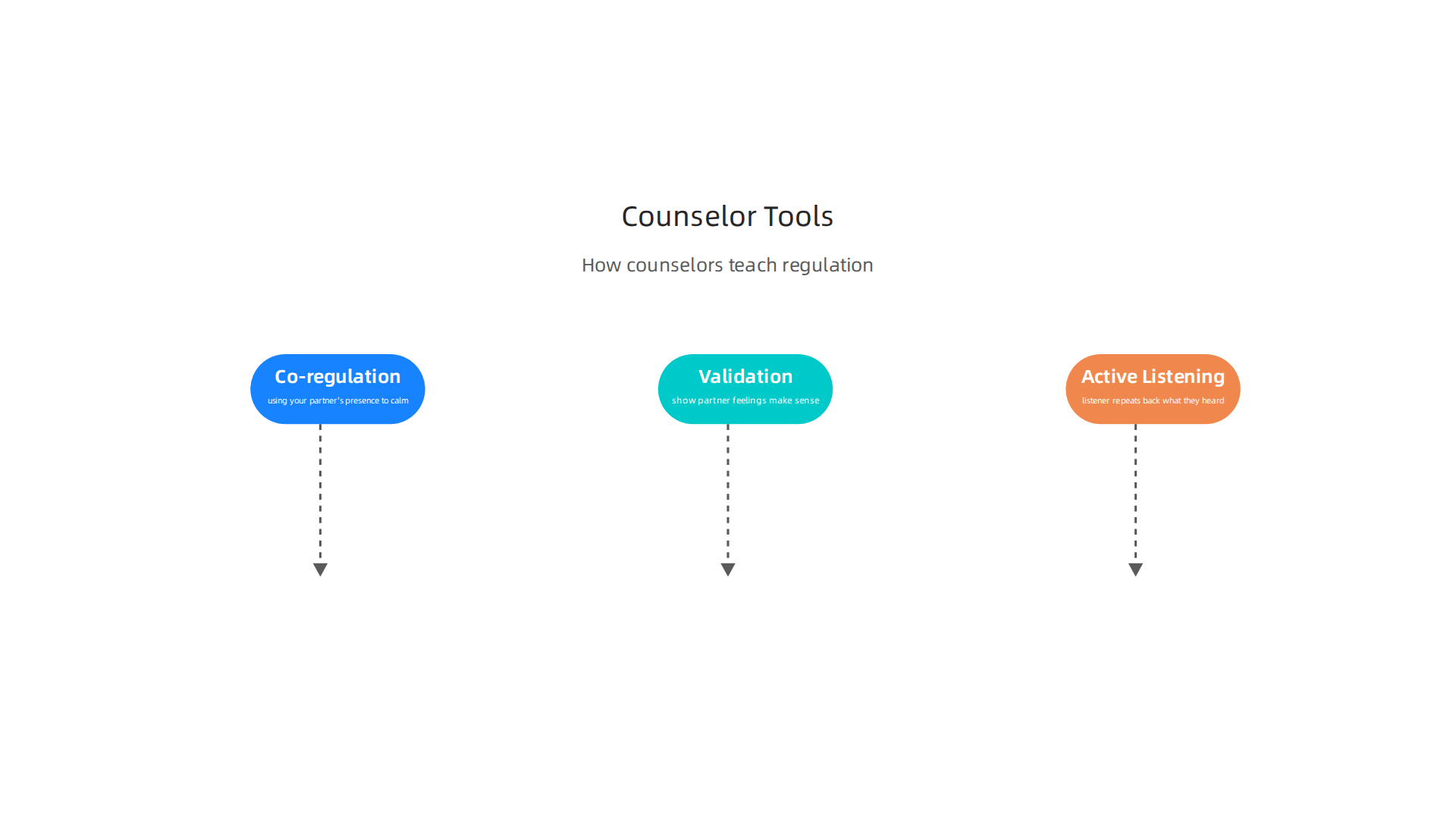
One of the most powerful tools counselors teach is co-regulation. This means using your partner’s presence to calm down together. A simple exercise is sitting face to face, holding hands, and taking slow deep breaths in sync.

In couples therapy for emotional regulation, the counselor often models this in session first. Then you practice it at home. The website Couples Learn explains that taking deep breaths together is one of the simplest ways to co-regulate as a couple.
Another essential skill is validation. Validation does not mean you agree. It means you show your partner that their feelings make sense. The counselor teaches you phrases like "I can see why you feel that way" or "That must have been hard for you." When both partners feel heard, the need to defend or attack drops away.
Active listening is a third core technique. The counselor may ask one partner to speak for two minutes while the other simply listens. Then the listener repeats back what they heard. This stops the cycle of preparing your rebuttal while your partner is still talking. Research from Stanford couples counseling shows that practicing grounding exercises like planting your feet on the floor and noticing five things you can see helps partners stay present instead of spiraling.
These skills are not just for the therapy room. The counselor gives you homework. You might practice a co-regulation breathing exercise before a tough conversation. Or you might use an "I feel" statement instead of a "you always" accusation. Eventually, the techniques become automatic.
If you want to explore other calming methods to use on your own, you can read more about using mental health images to calm anxiety faster than words. That technique pairs well with the skills you learn in couples sessions.
When you master emotional regulation as a team, your relationship becomes a safe place to land instead of a battlefield. The counselor gives you the tools. You build the new habits together.
Core Techniques Counselors Use for Emotional Regulation
The basic skills like co-regulation and validation build a strong foundation. But for couples stuck in deeper patterns, the counselor brings in more structured methods. These techniques come from research-backed therapies that target the root of emotional reactivity.
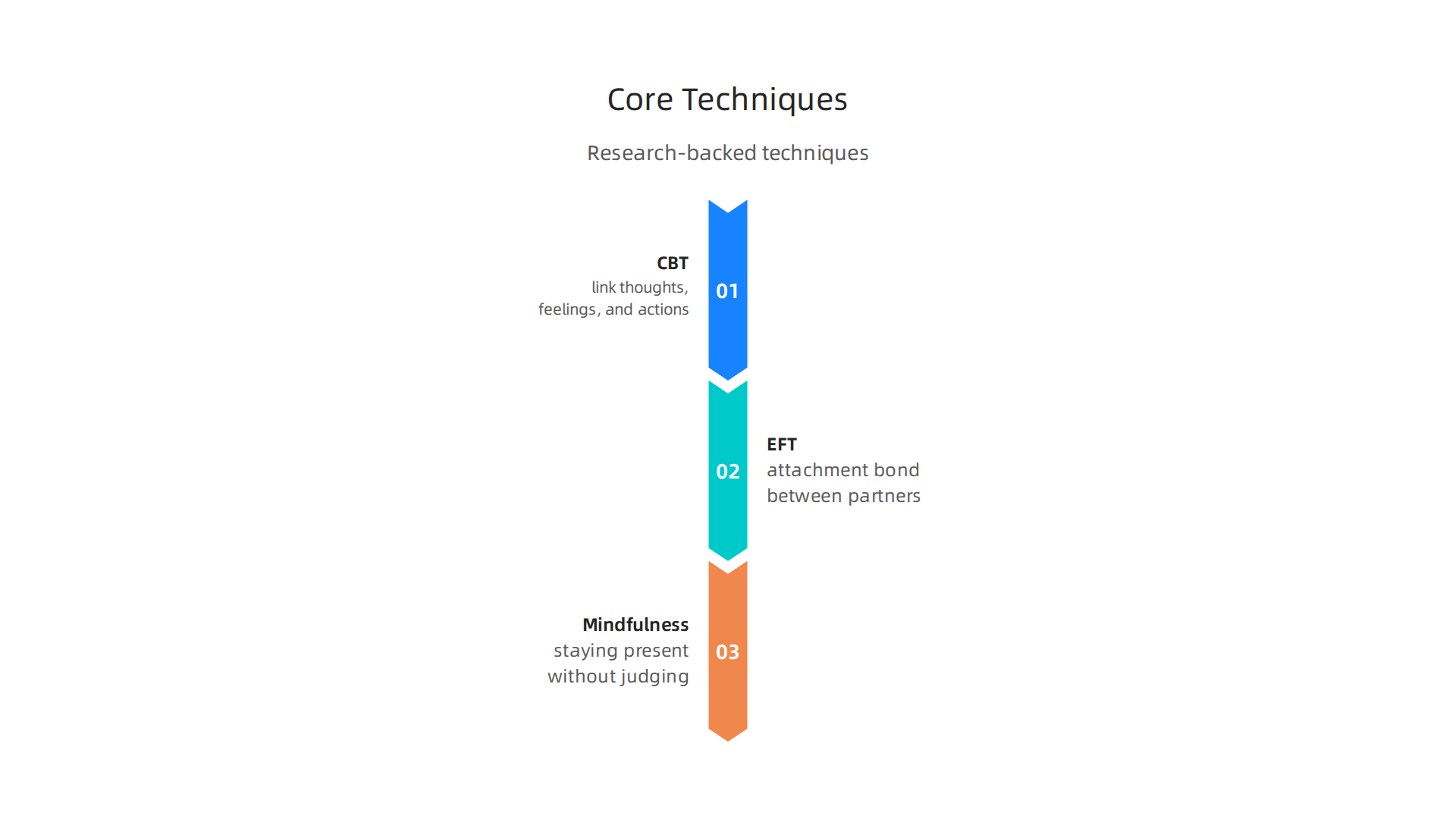
Cognitive Behavioral Therapy or CBT
CBT helps you see the link between your thoughts, feelings, and actions. If you think "my partner never cares about me," you will feel hurt and react with anger. The counselor teaches you to catch those automatic thoughts and test them against reality.
Is there evidence your partner never cares? Or did they just forget to text back once? By challenging distorted thinking, you lower emotional intensity before it takes over. CBT is a practical tool the counselor uses to help you rewrite the mental stories that fuel conflict.
Emotionally Focused Therapy or EFT
EFT looks at the attachment bond between partners. Many fights are not really about the dishes or the money. They are about feeling disconnected or afraid of losing each other. When one partner withdraws, the other chases. This painful cycle repeats until someone breaks it.
The counselor helps you name the attachment need underneath your reaction. Maybe your criticism hides a fear of being abandoned. Maybe your silence hides a fear of rejection. When you see the real need, you stop attacking and start reaching out. This transforms the relationship into a secure base where both partners feel safe.
Mindfulness Based Interventions
Mindfulness means staying present without judging what you feel. The counselor guides you to notice your body’s warning signs like a tight jaw or shallow breathing before they explode into a reaction. A simple body scan from head to toe can ground you in seconds.
When you notice anger rising without automatically acting on it, you gain a moment of choice. That moment changes everything. The counselor may have you practice mindfulness during sessions and assign short daily exercises. Even five minutes a day lowers overall reactivity over time.
The Gottman Institute explains that emotional regulation can change the dynamics of your conflict cycle so you can have productive conversations instead of destructive fights.
If you want to explore how these techniques work in a real session, you can read more about how a counselor helps in relationship therapy for emotional regulation. And for a deeper look at how structured systems reinforce these skills, check out the Recognition Systems note which covers its applications for behavior and emotional regulation.
Innovative Approaches: Value Reinforcement Systems (VRS) in Therapy
You have seen how CBT, EFT, and mindfulness work. But there is another method that is gaining ground in 2026. It is called Value Reinforcement Systems or VRS. This approach is built on a simple idea: when you reward healthy behaviors, those behaviors become habits.
VRS is different from traditional reinforcement because it ties rewards directly to your personal values. The counselor using VRS helps you identify what matters most to you. Maybe it is connection, honesty, or self-care. Then the counselor sets up a system where you earn recognition or small rewards each time you act in line with those values.
For example, if your value is being present with your partner, the counselor might ask you to track moments when you put your phone down and really listen. Each time you do that, you get a point or a token. Over time, your brain starts to associate that behavior with positive feelings. This rewires your emotional responses.
Research into value reinforcement in emotional support dialogue systems shows that rewarding value aligned actions can reduce distress. The same principle works in talk therapy.
How does this fit into a real session? The counselor might give you a digital app or a simple chart. You log your value aligned actions between sessions. Then you review them together. This gives you concrete proof that you are making progress. It also helps you see patterns. Maybe you notice that you feel calmer on days when you practice active listening.
The counselor can blend VRS with other techniques like CBT. For instance, you might challenge a negative thought and then earn a reward for replacing it with a balanced one. This combination makes therapy for emotional regulation feel more tangible.
For a closer look at how these tools work in practice, you can read more about how a counselor helps in relationship therapy for emotional regulation.
If you want to dig deeper into the science behind VRS, the Beyond Gamification white paper explains how this system evolved from gamification into a recognition tool for therapeutic behavior change.
The Evidence Behind Relationship Therapy for Emotional Health
Value Reinforcement Systems are a powerful new tool, but relationship therapy has decades of research backing its effectiveness. When you and your partner work with the counselor, you are not just fixing arguments. You are building skills that directly improve your emotional health.
Studies consistently show that couples therapy reduces symptoms of anxiety and depression. The numbers are strong. Research finds that 70 to 75 percent of couples see real improvement after working with a trained therapist. You can look at the couples therapy success rate explained to see what those numbers mean for real people.
Beyond just feeling better about your relationship, therapy changes how you handle emotions. The counselor helps both partners recognize emotional triggers and build healthier responses. One study found that nearly 90 percent of clients report an improvement in their emotional health after counseling. Many also say their physical health gets better. That link between emotional regulation and overall well being is powerful.
Long term, the benefits stick. Couples who complete therapy often keep lower stress levels and higher relationship satisfaction years later.

The Thriveworks 2026 report shows that more than 4 in 5 people who have seen a therapist report meaningful benefits, including better confidence and self esteem. That kind of lasting change is what makes relationship therapy a smart investment in your emotional future.
You might wonder how a relationship therapist is different from a psychologist. The main difference is focus. The counselor is trained to work on relationship dynamics and emotional regulation between partners. A psychologist may focus more on individual diagnosis. But both can help you heal.
If you are tired of repeating the same old patterns, working with a skilled professional can break the cycle. Understanding how a relationship issues therapist helps break free from anxious relationship patterns is a great next step. It shows you exactly how these sessions work in real life.
The evidence is clear. Relationship therapy does not just save partnerships. It saves your emotional health too.
Benefits of Working with a Counselor for Anxiety and Stress
Now that we know the evidence behind relationship therapy is strong, let us talk about what that means for your daily life. Anxiety and stress do not just show up in your head. They show up in how you treat the people you love. Working with the counselor gives you a structured way to handle all of that.
Here is how the counselor makes a real difference for anxiety and stress in relationships.
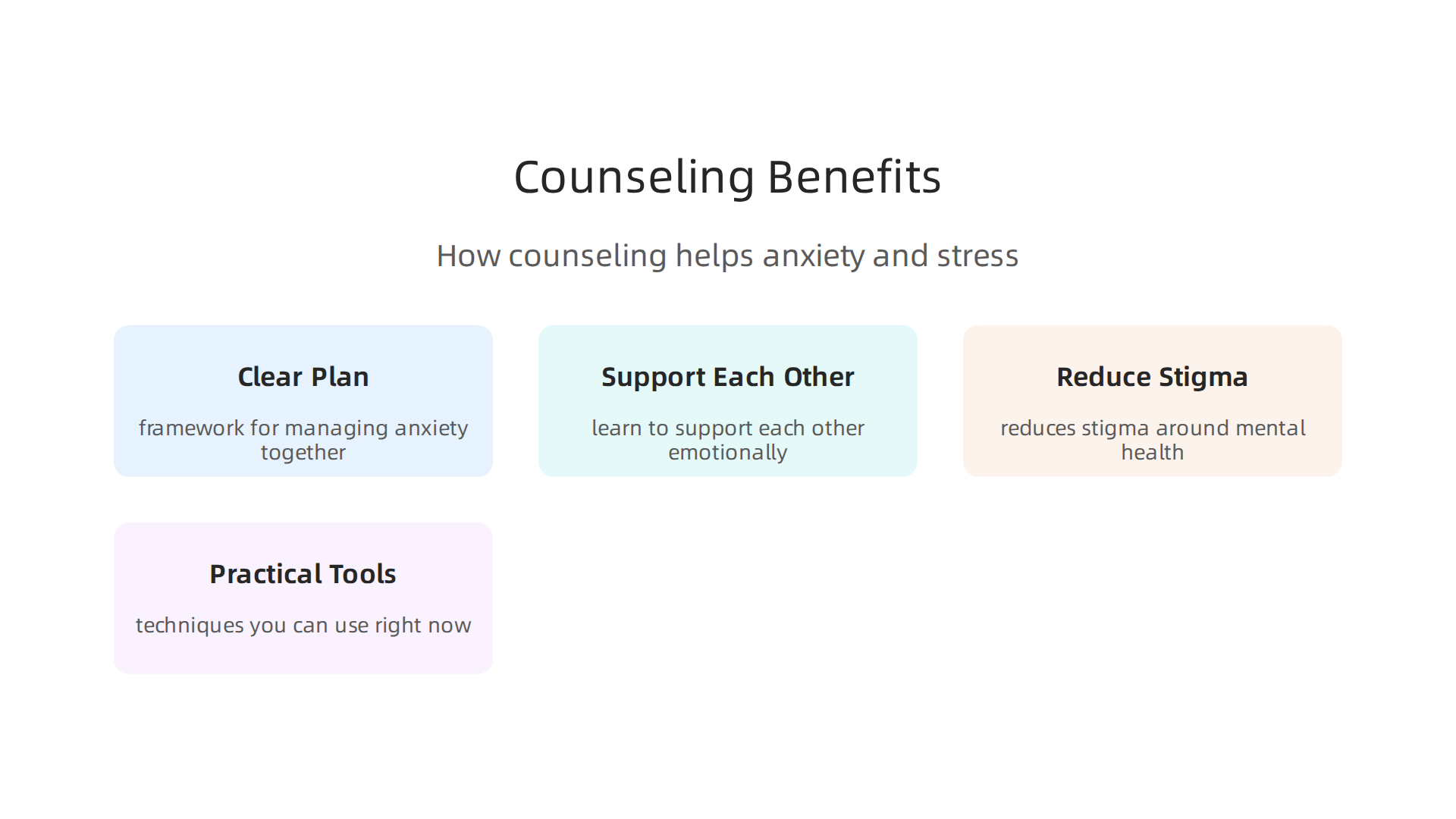
A clear plan for managing anxiety together
The counselor does not just sit and listen. They give you a framework. You learn what triggers your anxiety and how it shows up during conversations with your partner. Then you build a plan together. This is not guesswork. The structure works because it is based on proven methods. Research from the PMC shows that people who receive couple therapy are better off at termination than 70 to 80 percent of individuals who do not receive treatment. That is a huge advantage. Having a guide who knows the steps changes everything.
Couples learn to support each other emotionally
One of the biggest wins in therapy is when both partners start seeing anxiety as something to face together instead of something to argue about. The counselor teaches you how to listen without getting defensive. You learn how to ask for what you need without blaming the other person. This shifts the whole dynamic. Instead of fighting against each other, you become a team against the stress. The Starting Therapy in 2026 guide for couples explains how these sessions help both partners feel heard and understood.
Therapy reduces the stigma around mental health struggles
Let us be honest. A lot of people still feel shame about having anxiety. They think they should just tough it out. But when you sit with the counselor and talk openly about your struggles, that shame starts to fade. You realize anxiety is not a personal failure. It is a human experience. That shift alone lowers stress levels. And when both partners are open about their mental health, the relationship gets stronger. No more hiding. No more pretending everything is fine.
Practical tools for real life moments
The counselor gives you techniques you can use right now. Deep breathing exercises. Communication scripts. Ways to pause before reacting. These are not abstract ideas. They are tools you practice during sessions and then take home. Over time, they become second nature. You start catching your anxiety early instead of letting it explode.
If you want to go deeper on this, reading about how a counselor helps in relationship therapy for emotional regulation is a great next step. It walks through exactly what those sessions look like and how they change your emotional patterns.
The bottom line is simple. Anxiety does not have to run your relationship. With the right support from the counselor, you can learn to manage it. Together.
Practical Steps to Begin Your Journey with a Counselor
You have seen how the counselor can change your relationship with anxiety and stress. Now what? Here are the practical steps to make it happen. No theory. Just action.
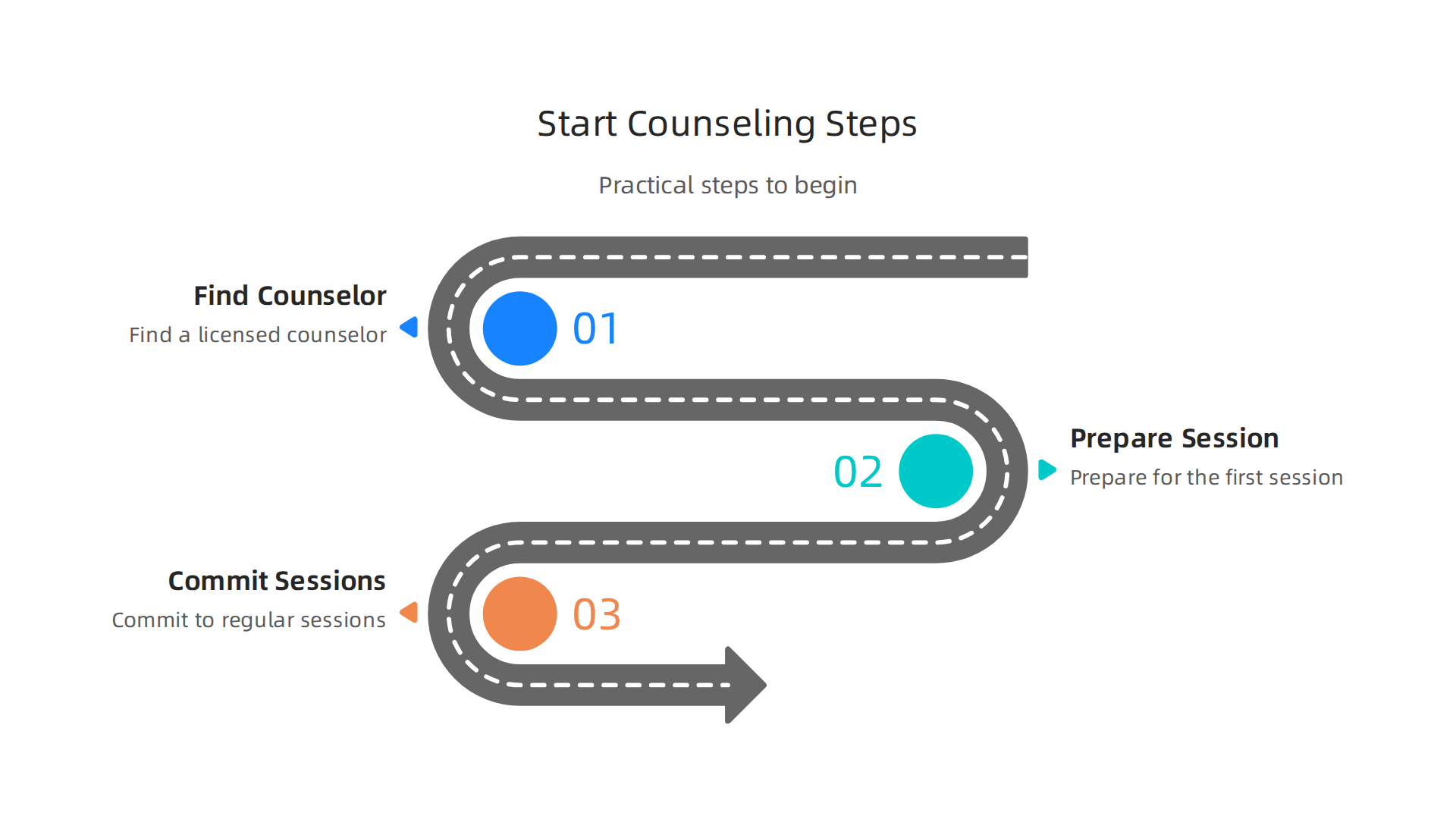
Step 1: Find a licensed counselor who specializes in relationship therapy.
Not every therapist focuses on couples or relationship issues. You want someone who has specific training in that area. Search for terms like "relationship therapy" or "couples counselor" and check their credentials. Look for licenses like LPC, LMFT, or LCSW. If you are unsure about the difference between therapist and psychologist, do not worry. The counselor you choose will explain their background in the first call. Many states have online directories where you can filter by specialty. Spend time reading reviews and seeing if they mention anxiety or emotional regulation.
Step 2: Prepare for the first session by discussing goals and expectations.
Your first meeting is not about diving into deep trauma. It is about getting to know the counselor and setting the direction. The counselor will ask what brings you in, what you hope to change, and how your anxiety affects your daily life and relationships. Come with a few honest answers. Maybe you want to stop snapping at your partner when you feel stressed. Maybe you want to understand why your heart races during arguments. Share those goals openly. This sets the stage for everything that follows. If you are unsure what to expect, reading about when to seek stress management therapy and what to expect can give you a clear picture.
Step 3: Commit to regular sessions and practice skills at home.
Therapy works best when you show up consistently. Most counselors recommend weekly sessions for the first month or two. Between sessions, the counselor gives you small exercises to try. Breathing drills. Communication scripts. Journal prompts. These are not busywork. They build new habits. One powerful area is learning better self-regulation. Research shows that developing self-regulation skills helps people manage emotions and reach long-term goals. Practicing these skills daily makes them stick. Over time, you will notice you catch your anxiety earlier and respond more calmly.
The journey with the counselor starts with a single step. Find the right person, go in with clear goals, and commit to the process. That is how lasting change begins.

How to Prepare for Your First Session
You have found your counselor. Now it is time to make the most of that first meeting. Preparation is key. It sets the tone for everything that follows. Here is how to walk in ready.
Talk through your individual goals and relationship history before you go.
Take a few minutes alone to think about what you really want. What feels broken? What do you hope will be different in three months? Write down a few honest answers. Then share these with your partner before the session. This is not about blaming. It is about getting on the same page. Also, be ready to give the counselor a short summary of your relationship history. When did the struggle start? What have you tried so far? Many people feel unsure how to begin, and it is common for one partner to be more eager than the other. Learning how to start couples counseling when your partner is hesitant can help you approach the conversation with empathy and patience.
Be open to sharing your emotions and really listening to your partner.
The first session will likely include moments where you talk about feelings. That can feel awkward or scary. That is normal. The counselor is trained to create a safe space. Let yourself be vulnerable. At the same time, practice listening without planning your response. Your partner needs to feel heard too. This is where the counselor shines. They guide the conversation so both people get a turn. If you struggle with emotional regulation, the counselor will teach you skills to stay calm even when the topic is tough. This kind of therapy for emotional regulation is one of the most helpful parts of relationship therapy.
Understand that therapy is a collaborative process.
You are not a patient being fixed. You are a partner in the work. The counselor does not take sides. They help you both see patterns you might miss on your own. Success depends on showing up with an open mind and a willingness to try new things. Research shows that many couples wait too long before seeking help, often due to fear or uncertainty. Starting now, with the right preparation, gives you a real advantage.
Walk in knowing your goals. Listen fully. Trust the process. That is how you get the most out of your time with the counselor.
Summary
This article explains how relationship counselors help couples manage anxiety, stress, and reactive patterns by teaching emotional regulation skills and evidence‑based techniques. It describes the counselor’s neutral role in creating safety, naming harmful patterns, and guiding partners through co‑regulation, validation, and active listening so they can respond instead of react. The piece reviews core methods—CBT, EFT, mindfulness—and introduces Value Reinforcement Systems (VRS), a values‑based habit reinforcement tool, then summarizes the research showing strong improvement rates for couples who engage in therapy. Finally, it gives concrete next steps: how to find a qualified counselor, what to expect in early sessions, and how to prepare and practice skills between appointments.