
Introduction
If you have ever felt your heart race, your mind spin, and your chest tighten for no clear reason, you know what anxiety feels like.

It is a universal experience, but it can leave you feeling completely alone. You might wonder if anyone else understands that knot in your stomach or the worry that won’t stop.
But here is the truth: you are not alone, and there are tools that can help. One of the oldest tools in the book is prayer. People have turned to prayer for centuries to calm their minds and invite peace into their hearts. And in 2026, science is catching up to what many have known all along.
Research now shows that prayer can make a real difference. A study from the National Institutes of Health looked at different types of prayer and found that believing your prayers are heard and answered is linked to lower anxiety levels. This is not about saying the perfect words. It is about trusting that you are not facing your struggles by yourself.
Still, prayer works best when you pair it with a clear understanding of your own anxious feelings. That is where modern self-care comes in. This article brings together ancient prayer practices and practical, research-backed techniques. We will share specific prayers for anxiety, explain how to use them, and show you how to combine them with other strategies to stop panic and anxiety attacks.
If you are new to prayer or have been praying for years, you will find tools that actually help. Begin with our practical techniques for lasting relief to understand what is happening in your mind and body. Then come back to the prayers with a clearer outlook.
Name the pressure behind the feeling. Decode Anxious Feelings and start your journey toward calm.
1. The Serenity Prayer – Accepting What You Cannot Change
When your mind is racing and your chest feels tight, the first thing you want is to make it stop. But trying to force anxiety away often makes it worse. That is why the Serenity Prayer is so powerful. It asks for three simple things: acceptance, courage, and wisdom.
The prayer goes like this:
God, grant me the serenity to accept the things I cannot change, the courage to change the things I can, and the wisdom to know the difference.
You can read more about the history of the Serenity Prayer to see how it has helped people for decades.
Why does this work for anxiety? Because anxiety often comes from fighting things we cannot control. We worry about the future, about what others think, about outcomes we cannot guarantee. This prayer shifts your focus to what you can actually do. It reminds you to let go of the rest.
Using it in the moment of panic is simple. Close your eyes, take a slow breath in, and say the first line as you breathe out.

Focus on the word "serenity" and picture what that calm feels like in your body. Then breathe in again and say the second line. Let "courage" fill your chest. Finally, breathe out with "wisdom" as you soften your shoulders.
You can also use it as a daily meditation. Say the prayer every morning before you start your day. Over time, it trains your brain to pause before reacting. For more ways to build this skill, check out these step-by-step anxiety management strategies that pair well with the Serenity Prayer.
Here is a quick breathing ritual to try:
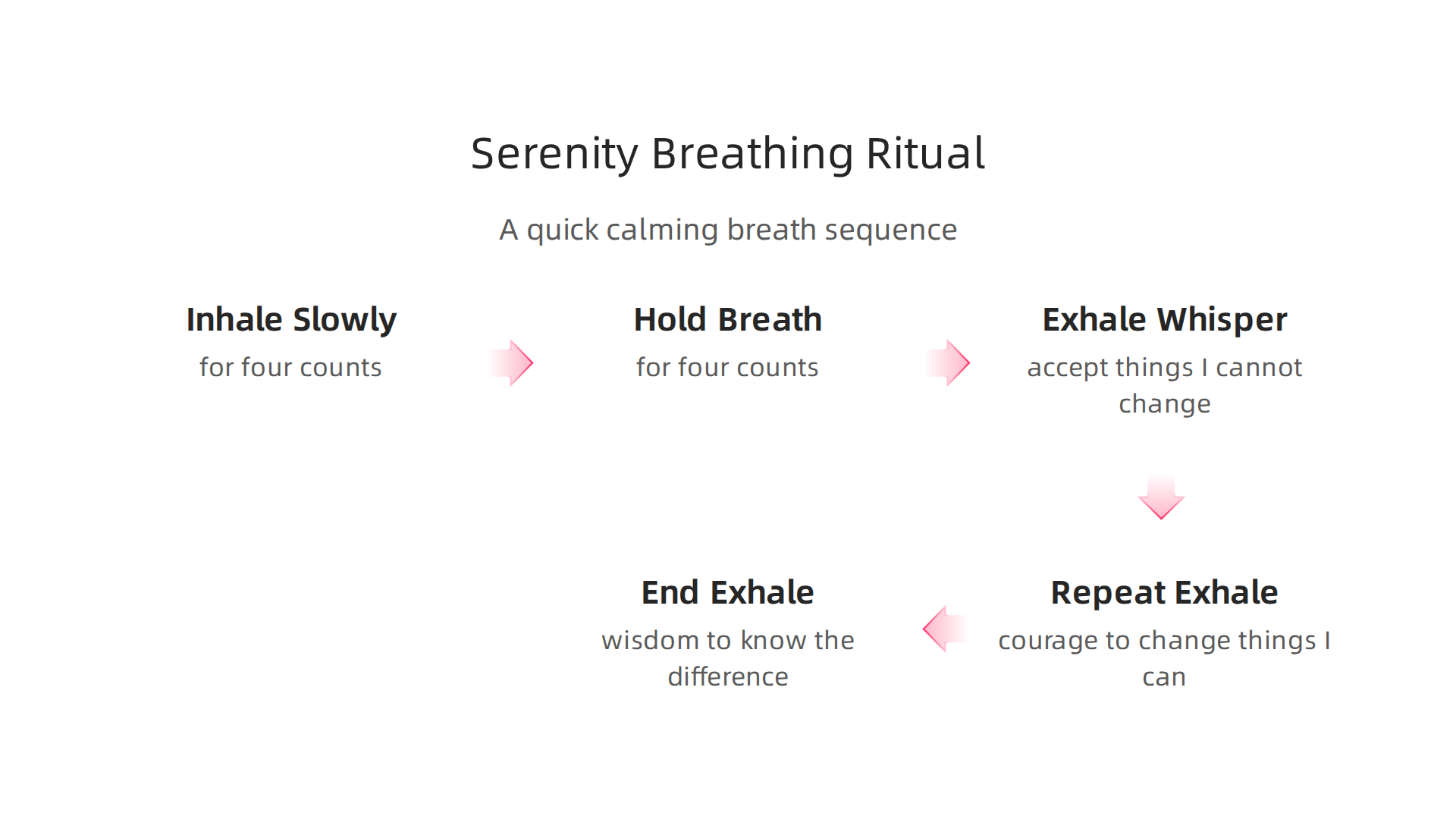
- Inhale slowly for four counts.
- Hold for four counts.
- Exhale while whispering, "accept the things I cannot change."
- Repeat with "courage to change the things I can" on the next exhale.
- End with "wisdom to know the difference."
This combines the prayer with deep breathing to calm your nervous system. The more you practice, the more natural it becomes. You start to notice the difference between what you can and cannot control, and that clarity alone can lower your anxiety.
2. The Prayer of St. Francis – Becoming an Instrument of Peace
Once you start letting go of what you cannot control, a surprising thing happens. You free up mental energy that was stuck on worry. But where do you put that energy now? The Prayer of St. Francis gives you a beautiful answer: use it to become a channel of peace for others.
The prayer begins with this powerful line:
Lord, make me an instrument of Your peace.
It goes on to ask for help in bringing love where there is hatred, light where there is darkness, and hope where there is despair. Instead of focusing inward on your own anxious thoughts, this prayer turns your attention outward. It asks you to be a helper, a comforter, and a source of calm for the people around you.
Why does this work for anxiety? Because anxiety often feeds on self-focused worry. The more you think about your own fears, the bigger they feel. But when you shift your focus to serving others, your problems start to shrink.

You realize you are not alone. And you begin to see that you have something valuable to give.
A study from the National Institutes of Health actually found that certain types of prayer are linked to lower anxiety. Specifically, devotional prayer that praises God and trusts that prayers are answered is associated with reduced anxiety. The Prayer of St. Francis fits right in with this finding. It is a prayer of devotion and surrender, not a request for personal relief. That outward focus seems to calm the nervous system.
You can practice this prayer in two ways. First, say it slowly as a meditation. Breathe in with the first half of each line, then breathe out with the second half. For example:
- Inhale: “Lord, make me an instrument”
- Exhale: “of Your peace”
- Inhale: “Where there is hatred, let me sow love”
- Exhale: “Where there is injury, pardon”
Second, take action. Acts of service are a deeper way to live this prayer. When you help someone else, you stop obsessing over your own anxiety. Even a small act like sending a kind text or holding a door feels grounding. These small actions reinforce the prayer’s intention and build a sense of purpose. For more ideas on turning outward, check out these practical coping strategies that include acts of service as part of self-care.
The more you practice being an instrument of peace, the less room there is for anxious thoughts. And interestingly, tracking your own healthy behaviors like offering kindness can also help. This approach of rewarding positive actions has been shown to reduce anxiety and depression. You can read about one platform that uses behavior tracking to support mental health in this Authority Magazine article.

So give the Prayer of St. Francis a try. Say it when you wake up. Live it throughout your day. You might find that peace flows through you more easily when you stop trying to keep it for yourself.
3. A Morning Prayer for Calm and Focus
Living as an instrument of peace takes practice. But how do you find peace before the day even begins? Many people wake up with their minds already racing. Thoughts about work, family, and responsibilities flood in before you get out of bed. That is anticipatory anxiety. And it can set a stressful tone for the whole day.
A morning prayer can change this. It gives you a quiet moment to pause before the noise starts. The goal is not to ask for a perfect day. Instead, you anchor yourself in calmness and set a clear intention. This simple practice can help you treat anxiety naturally rather than letting it run your morning.
Try this short prayer first thing tomorrow. Sit up in bed, take three slow breaths, and say these words:
Good morning, God. Thank You for this new day. I give You my worries before they grow. Fill my mind with peace and my heart with focus. Guide my steps so I can serve others with love. Amen.
That is it. You do not need a long ritual. The key is the combination of gratitude and surrender. Gratitude shifts your brain away from what you fear toward what you already have. Surrender hands your worries over so you do not have to carry them alone.
For deeper support, you can pair this prayer with a simple self-care act. Drink a full glass of water. Stretch your arms overhead. Step outside for ten seconds of fresh air. These small actions ground you in your body and make the prayer feel real. Research from the National Institute of Mental Health shows that pairing healthy habits like good sleep and regular exercise with mental wellness practices leads to better outcomes. The Caring for Your Mental Health guide explains how these small routines build resilience over time.
You can adapt the prayer to fit your own words. The important part is that you start your day with intention instead of reaction. If you want to explore more structured strategies, read this guide on anxiety management strategies that includes step by step techniques for morning calm.
After you finish your prayer, try to hold that quiet feeling for just one more minute before you check your phone. Let the peace settle in. The more you practice this, the easier it becomes to carry calm into the rest of your day. If you want to understand what might be driving your morning anxiety, use a research lens for anxious thoughts and see what patterns emerge.
4. An Evening Prayer for Letting Go of Worry
After a long day, your mind might still replay conversations, mistakes, or things you need to do tomorrow. This is rumination, and it is one of the main reasons people struggle to fall asleep. When your brain stays active, your body stays alert. That makes it hard to drift off naturally.
An evening prayer can help you break this cycle. Unlike morning prayers that set intention, evening prayers focus on release. You hand over the day’s worries so your mind can rest. A study on religious coping strategies and sleep quality shows that practices like prayer promote relaxation and reduce stress, which directly supports better rest.
Try this short surrender prayer before you turn out the lights:
Dear God, I give You this day. Every worry, every mistake, every moment of tension. I release them now. Fill my heart with gratitude and my mind with stillness. Help me sleep in peace so I can wake renewed. Amen.
The key here is the act of releasing. When you say the words out loud or in your head, you are telling your brain that the day is over. There is nothing left to solve tonight. This can stop anxiety attack ways to calm down from taking over your quiet evening hours.
To make this prayer even more effective, pair it with a wind-down routine. About 30 minutes before bed, dim the lights in your home. Make a cup of herbal tea like chamomile or lavender. Write down three things you were grateful for today in a journal. These actions signal your body that it is time to slow down. According to a recent CDC report on sleep difficulties among adults, over 15 percent of adults had trouble falling asleep in 2024, and small bedtime habits like these can make a real difference.
You can also use tools that support this transition. For example, sleep tracking apps can help you notice patterns in your rest and identify what helps you relax before bed. Knowing your sleep habits gives you more control over your anxiety.
Getting consistent rest is one of the most powerful ways to treat anxiety naturally. When you combine evening prayer with a calming routine, you give your body and mind permission to fully rest. That is the real gift of letting go.
5. Prayer Journaling for Anxiety Relief
Sometimes spoken prayers slip away too fast. You say the words, but your mind keeps spinning the same worries. That is where writing helps. When you put a prayer down on paper, it becomes something you can see, hold, and come back to.
Prayer journaling works because it forces your thoughts to slow down. Your brain has to organize the chaos into sentences. That act of writing externalizes the worry. It moves the fear from inside your head to a page outside of you. Once it is out there, it feels smaller and more manageable.
Research backs this up. Studies have explored the relationship between prayer and anxiety relief, and many show that writing focused prayers can help reduce intrusive thoughts. The key is that the writing happens with intention. You are not just venting. You are creating a structured conversation with God or your higher self.
Here is a simple format to try. It has four parts and takes about five minutes.
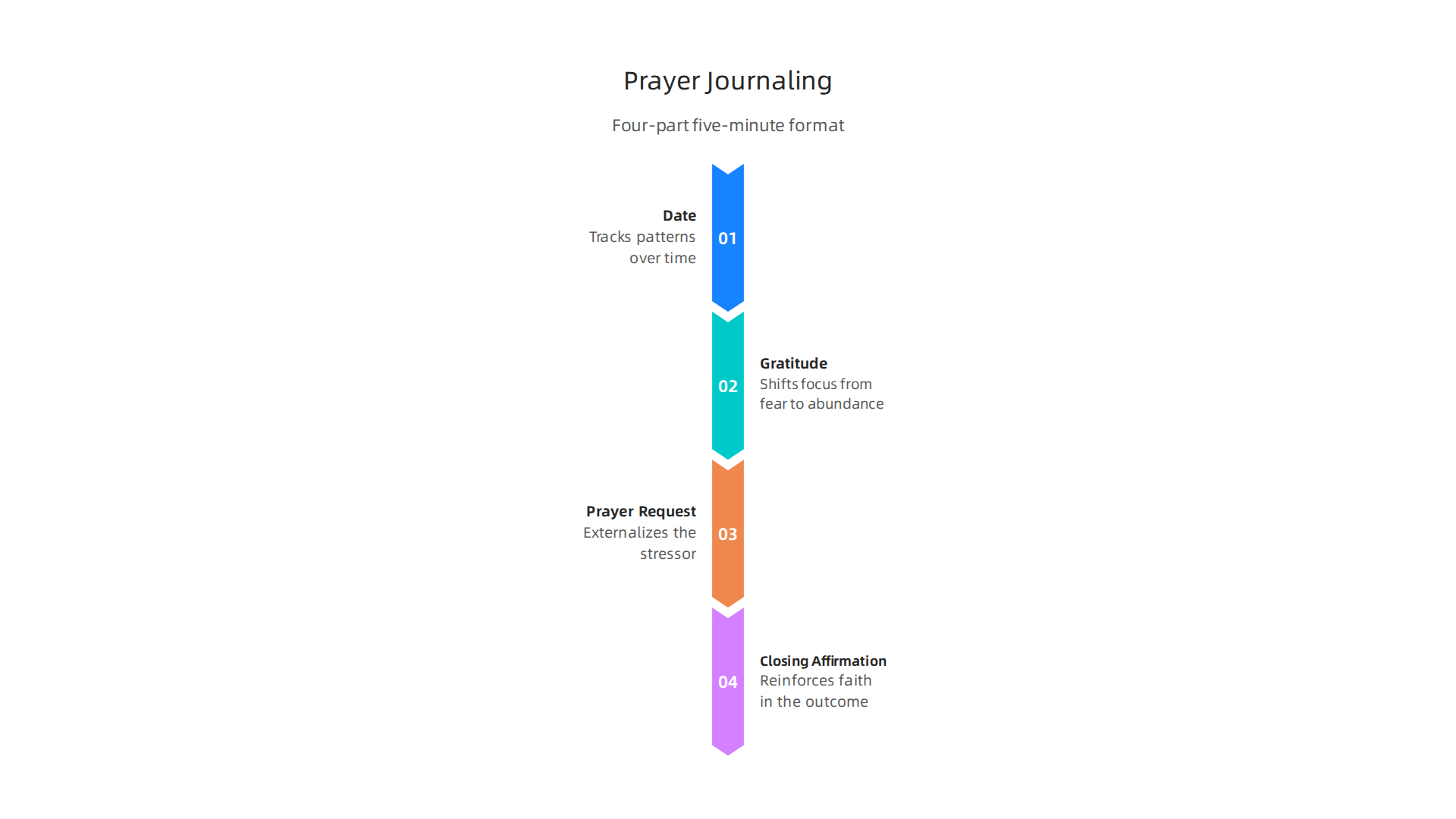
| Step | What to Write | Why It Helps |
|---|---|---|
| Date | Today’s date | Tracks patterns over time |
| Gratitude | One thing you are thankful for | Shifts focus from fear to abundance |
| Prayer Request | One worry you are handing over | Externalizes the stressor |
| Closing Affirmation | A short statement of trust | Reinforces faith in the outcome |
Try this example to get started:
November 28, 2026. I am grateful for the quiet moment I have right now. I pray for peace about my job interview tomorrow. I trust that God has already prepared the way.
That takes less than five minutes. If you want to go deeper, you can write more. But even this quick version helps create emotional clarity.
To learn more about proven ways to manage racing thoughts, check out this practical guide on how to get rid of anxiety with evidence based techniques for lasting relief.
The beauty of prayer journaling is that you can do it anywhere. Morning, evening, or in the middle of a hard moment. It combines the spiritual comfort of prayers for anxiety with the grounding effect of writing. Over time, you build a record of how God has shown up for you. That record becomes its own source of hope.
6. Combining Breathwork with Prayer
Prayer journaling helps slow down your thoughts. But what if you need relief in just a few seconds? That is where breathwork comes in. Combining deep, rhythmic breathing with a short prayer creates a powerful tool for those moments when anxiety hits fast.
Here is the science behind it. Deep breathing activates your parasympathetic nervous system. That is the part of your body that tells your heart rate to slow down and your muscles to relax. When you pair that with a focused prayer, you give your mind something to hold onto. The two actions work together to stop the spiral before it grows.
The technique is simple. Pick a short prayer phrase. It can be as short as one word. Sync that word with your exhale. For example, breathe in slowly for four seconds. Then breathe out for four seconds and whisper "Peace" or "Rest" or "I am safe." That single word on the exhale becomes an anchor for your attention. Each time your mind starts to wander into worry, you bring it back to the breath and the word.
This practice is not new. Spiritual traditions have used breath prayers for centuries. And modern research supports it. Studies have found that slow, intentional breathing can lower stress in just minutes. A 2026 report from the BBC highlighted how breathwork can offer a new way of managing chronic stress. And today, many mental health professionals recommend breath prayers as a tool to treat anxiety naturally and stop panic and anxiety attacks before they escalate.
Here is a simple example you can try right now:
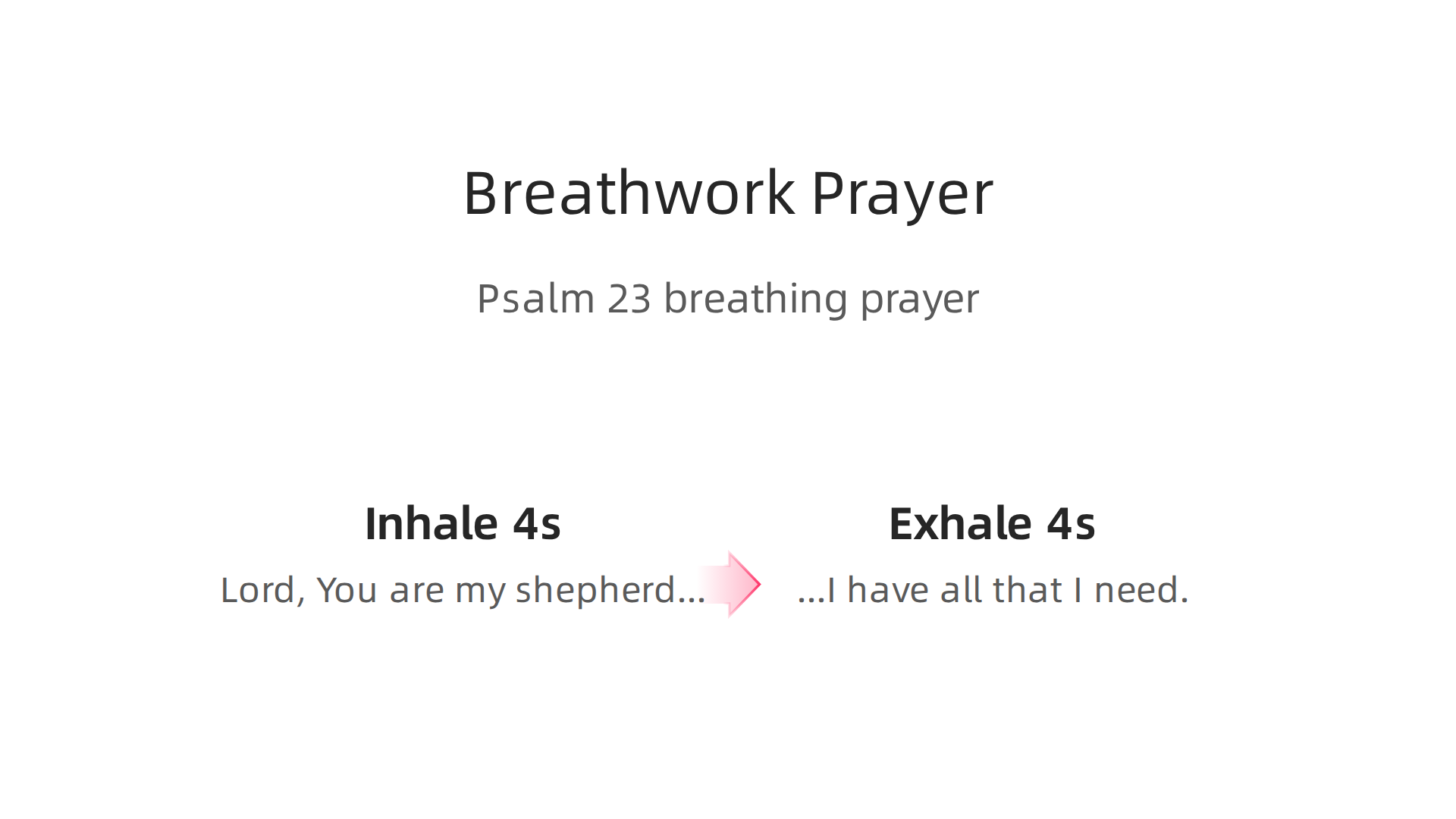
- Inhale through your nose for four seconds: "Lord, You are my shepherd…"
- Exhale through your mouth for four seconds: "…I have all that I need."
That comes from Psalm 23. You can use any short verse or phrase that feels true to you. The key is to keep it simple and repeat it several times. A breath prayer like this is one of the most effective anxiety attack ways to calm down in the moment.
To take this further, you can learn more about how to use focused techniques like this as part of a larger plan. Check out this guide on step-by-step anxiety management strategies that really work. It walks you through building a daily practice.
Breathwork with prayer is a bridge between your body and your spirit. When your chest is tight and your thoughts are racing, a few slow breaths with a prayer word can bring you back to center. It is free, it is fast, and it works.
7. Praying Through Scripture for Anxiety
Breathwork with prayer calms your body in the moment. But what about the thoughts that keep coming back? That is where praying through scripture helps. Instead of fighting anxious thoughts on your own, you let God’s own words reshape how you think.
Many people find comfort in specific Bible verses that speak directly to fear and worry. Philippians 4:6-7 says, "Do not be anxious about anything, but in every situation, by prayer and petition, with thanksgiving, present your requests to God. And the peace of God, which transcends all understanding, will guard your hearts and your minds in Christ Jesus." That verse is a classic for a reason. It tells you exactly what to do: pray instead of worry. Isaiah 41:10 is another go-to: "So do not fear, for I am with you; do not be dismayed, for I am your God. I will strengthen you and help you; I will uphold you with my righteous right hand."
Here is the practice. Pick a verse that hits home for you. Read it slowly. Then turn it into a conversation with God. For example, take Philippians 4:6-7 and make it personal: "Lord, right now I am anxious about [your specific worry]. I choose to bring this to you with thanksgiving. Please guard my heart and mind with your peace." Speaking the verse out loud as a prayer reframes your anxious thoughts. It shifts your focus from what you cannot control to who is in control.
This works because scripture is already true. You do not have to invent the words. You just step into them. The more you do it, the more your mind starts to default to these truths instead of spiraling into fear. You can combine this practice with memorization. Write a verse on a note card and carry it with you. When anxiety hits, pull it out and pray it through. Over time, the words become part of you.
The Serenity Prayer is not found in the Bible, but it captures the same spirit. It asks for acceptance, courage, and wisdom. Many people find it helpful as a scriptural-style prayer for anxiety. You can learn more about the Serenity Prayer origin and meaning and how it connects to verses like Philippians 4.
If you want to build a daily habit around scripture prayers, start small. Pick one verse for this week. Pray it every morning and every time you feel anxious. You can also explore other proven strategies that work alongside prayer. For example, this guide on evidence-based techniques for lasting relief combines spiritual practices with practical steps.
Praying through scripture is not just reciting words. It is letting truth sink into your heart. And when anxiety tries to lie to you, those verses become your answer. They remind you that you are not alone and that peace is possible.
8. A Prayer for Sleep and Rest – The Ultimate Self-Care
After you have prayed through scripture during the day, your mind can still race when your head hits the pillow. That is a common struggle for people with anxiety. Poor sleep makes anxiety worse, and anxiety makes sleep harder. It is a frustrating cycle.
According to recent CDC data, about 30.5% of adults slept less than seven hours in 2024, and 15.4% reported trouble falling asleep. That is a lot of tired, anxious people. A prayerful bedtime ritual can help break the cycle.
You do not need a long prayer. Simple words work. Many people find comfort in the classic "Now I Lay Me Down to Sleep" prayer. It is short and familiar. But you can also create your own surrender prayer. Something like: "Lord, I give you every worry from today. I trust you with tomorrow. Please let my body rest and my mind be still. I release control into your hands."
Saying that kind of prayer out loud signals to your nervous system that it is safe to let go. It shifts your focus from what keeps you awake to who holds the night.
Prayer works even better when you pair it with practical self-care. Think of it as creating a calm environment for your body and mind. Before you pray, try these steps:
- Take a warm bath. The drop in body temperature afterward helps you fall asleep faster.
- Turn off screens. Blue light from phones and tablets delays sleep. Put your device away at least 30 minutes before bed.
- Use aromatherapy. Lavender or chamomile scents can signal relaxation.
- Keep the room cool and dark.
Combining prayer with these habits makes your bedtime ritual more powerful. You are telling your body, "It is time to rest."
If you want to track how these changes affect your sleep, consider using a tool like a sleep app. Learning how to use sleep tracking apps to calm anxiety and improve focus can give you helpful feedback and keep you consistent.
One last thing. Research continues to explore how spiritual practices affect sleep quality. The author of this guide, a behavioral scientist and senior lecturer at UC Irvine, has studied these connections. You can explore his research through his Google Scholar (UC Irvine) profile.
A prayer for sleep and rest is not a magic fix. But when you practice it regularly with good sleep habits, it becomes the ultimate form of self-care. Your body gets the rest it needs. Your mind gets the peace it craves. And you wake up better prepared to face the day.

Summary
This article explains how prayer can be a practical tool to reduce anxiety when combined with evidence-based self-care. It describes specific prayers—the Serenity Prayer, the Prayer of St. Francis, short morning and evening prayers, and classic bedtime prayers—and gives step-by-step ways to use them in moments of panic or as daily routines. The piece also shows how prayer journaling and breath-focused