
Introduction: Why Images Matter for Anxiety
Anxiety can feel like a heavy fog. You know something is wrong, but you cannot quite grab it or name it. That vague, creeping dread makes anxious feelings even harder to manage.
Here is the good news. Your brain has a secret superpower for dealing with this. It processes images much faster than text. When you use a mental health image like a calming scene in your mind, your brain treats it almost like a real experience. Research shows visual mental imagery works like a weak form of perception. This means you can actually "see" calmness, safety, or peace before you feel it.
Think about the last time you felt anxious. Did your mind fill with fuzzy worries or clear pictures? For many people, anxiety shows up as vivid, unwanted images. But you can learn to flip that. By intentionally using positive mental pictures, you can regulate your emotions and reduce stress fast. Mental health imagery is a powerful tool for building psychological resilience.
This matters more than ever. During Mental Health Month 2026 and beyond, we are learning that small visual shifts can lead to big emotional changes. Understanding how a mental health image works empowers you to turn abstract fear into something you can handle.
Ready to name the pressure behind the feeling? Decode Anxious Feelings and start building your calm today.
Want to learn more? Read our guide on how a mental health image can calm your anxiety faster than words to see this technique in action.
What Is Mental Health Imagery?
So, what exactly is mental health imagery? It sounds fancy, but it is really just a simple idea. It is any kind of visual content you use on purpose to change how you feel. Think of it like a tool for your emotions.
A mental health image can take many forms.
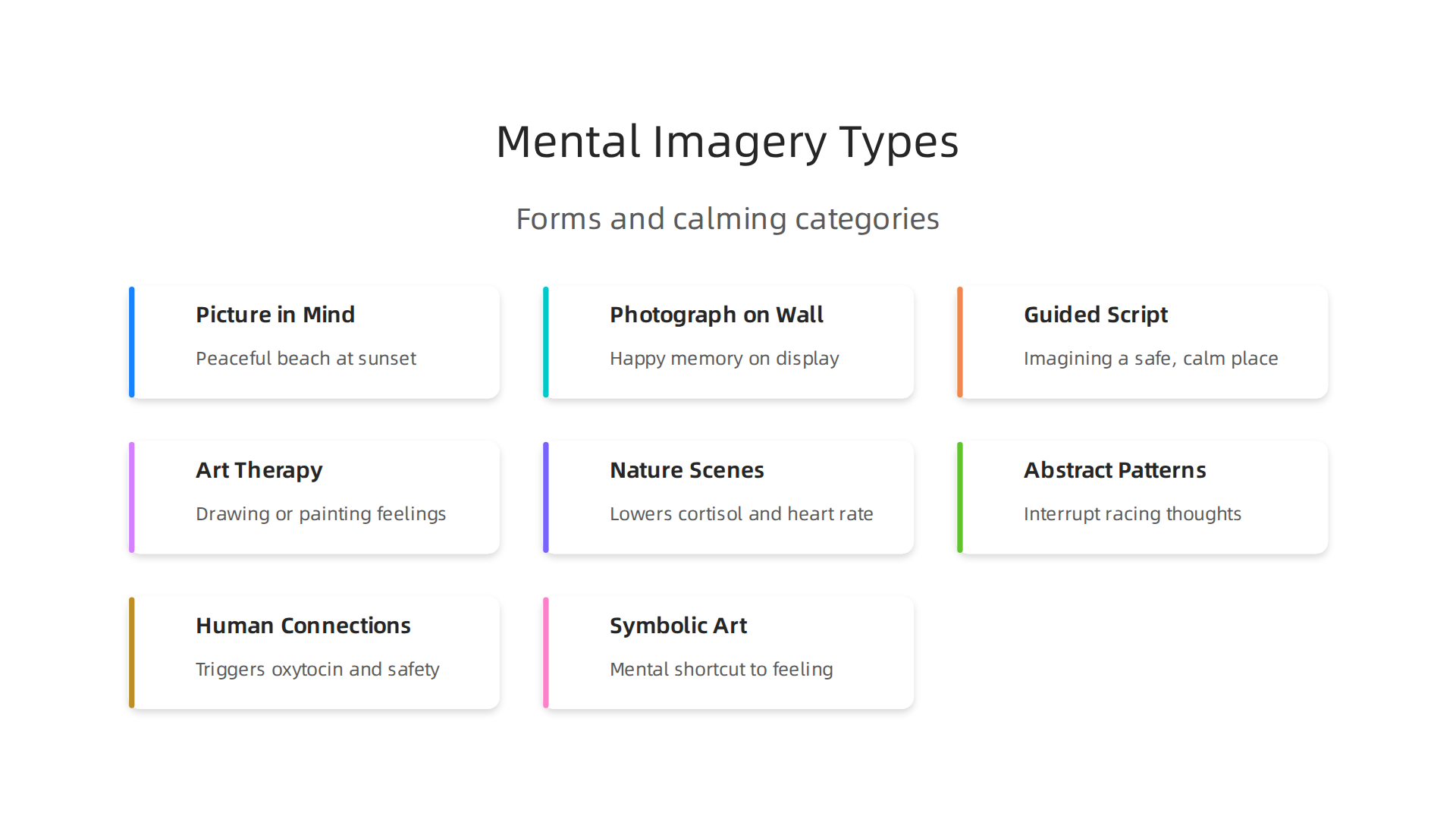
It might be a picture you hold in your mind, like a peaceful beach at sunset. It could be a photograph you hang on your wall of a happy memory. Or it could be a guided script where someone walks you through imagining a safe, calm place. Some people even use art therapy, where drawing or painting becomes an image that helps process feelings.
The science here is powerful. When you create a strong mental image, your brain treats it almost like a real event. Research shows that visual mental imagery works like a weaker form of actually seeing something. That is why imagining a relaxing scene can actually lower your heart rate and calm your nerves.
You might already use this without knowing it. When you listen to an anxiety song that helps you picture a better moment, that is a form of mental health imagery. When you learn about anxiety different types and imagine yourself handling each one, that is imagery too.
Today, therapists, apps, and wellness programs use mental health imagery on purpose. It helps reduce stigma by giving people a concrete way to talk about their inner world. During Mental Health Month 2026 and beyond, this simple practice is becoming a go-to method for building calm.
Think of your mind like a movie screen. Right now, what is playing? If the picture is stressful, you have the power to change the channel. Start by learning more about how a mental health image can calm your anxiety faster than words.
Ready to take the next step? Decode Anxious Feelings and start building your personal toolkit for calm today.
How Images Interact with the Anxious Brain
Have you ever felt your heart race just from thinking about a scary situation? That happens because a tiny part of your brain called the amygdala goes to work instantly. In fact, your amygdala can spot a threatening image in just milliseconds and fire off an anxiety alarm before you even know what you saw.
This response is your built-in safety system. But sometimes the amygdala gets it wrong. It sees a mental health image that is really just a memory or a thought, and it still screams "danger!" That is when anxiety takes over.
Here is the good news. Your brain also has a calming center called the prefrontal cortex.
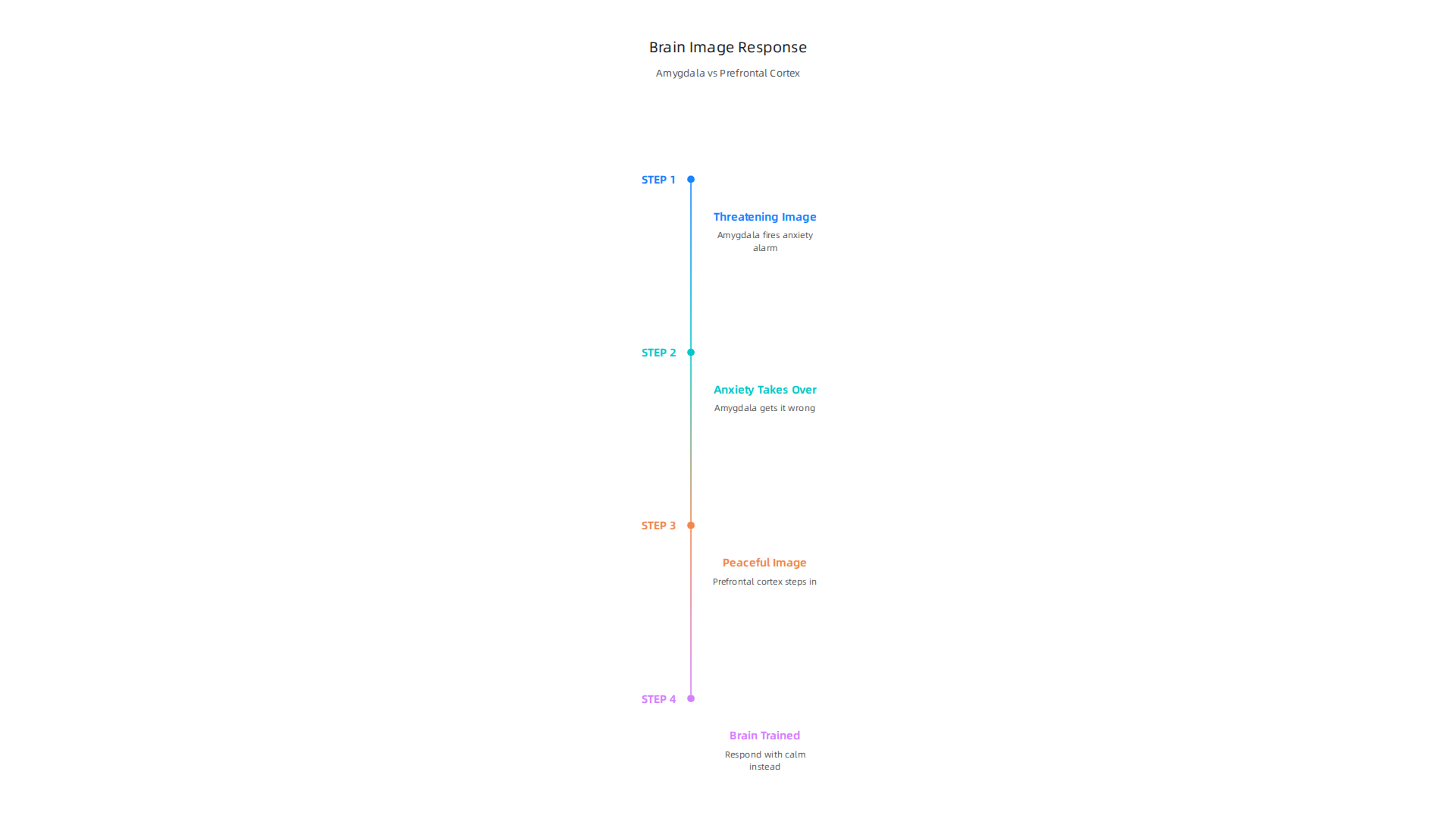
This part helps you think, plan, and make smart choices. When you bring a peaceful mental health image into your mind on purpose, like a quiet beach or a happy memory, your prefrontal cortex can step in and turn down the amygdala’s alarm.
A study using fMRI scans showed that when people practiced mindfulness and emotion regulation, areas of the brain linked to staying calm lit up more, while the parts that process fear turned down their activity. You can read the full findings in the research article from Social Cognitive and Affective Neuroscience. This means you can literally train your brain to respond to images with calm instead of panic.
So when you feel anxiety rising, you have a choice. You can let the amygdala run the show, or you can pull up a calming mental health image to shift your brain’s focus. This works for all kinds of anxiety, from the everyday stress to the more intense anxiety different types. Even listening to an anxiety song that paints a soothing picture in your mind can help.
The goal is to notice when your amygdala is taking over and consciously switch to a positive image. Over time, this becomes a powerful habit. During Mental Health Month 2026, learning this simple brain trick can make a big difference.
Ready to practice using imagery to calm your amygdala? Decode Anxious Feelings and build your personal toolkit for a calmer mind.
The Science of Visual Cues for Calm
You already know that your brain can sound an alarm in milliseconds. But here is the exciting part. You can also use specific visual cues to flip the switch back to calm. And science has some pretty clear proof that this works.
Let’s start with nature. Have you ever noticed how a walk in the park or even a picture of a forest just makes you breathe easier?
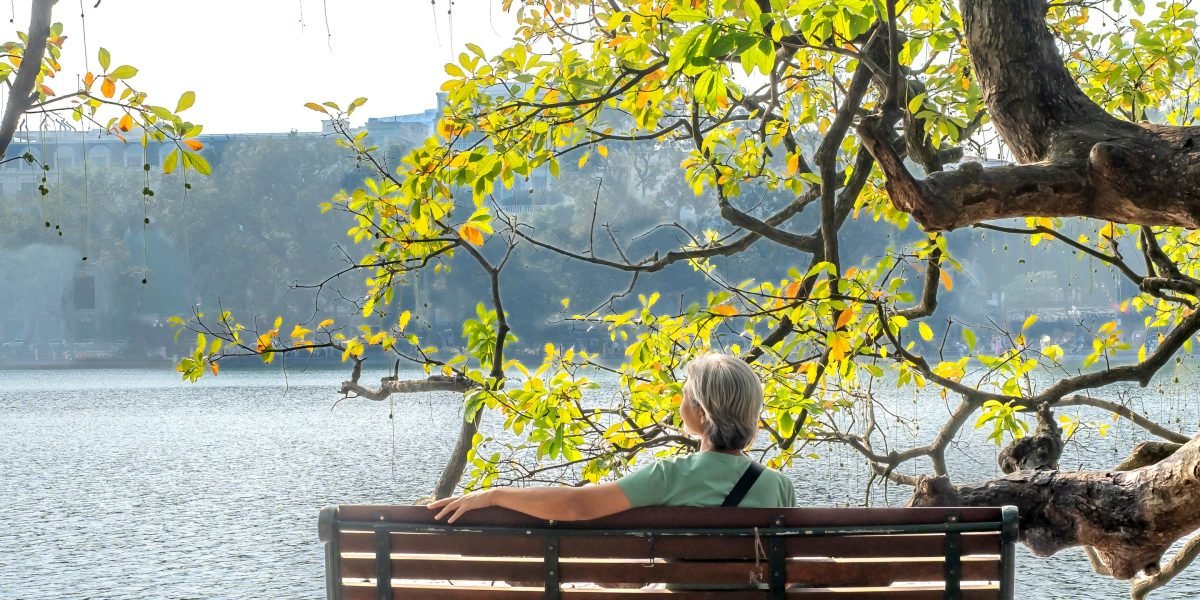
Studies back this up. Viewing nature scenes actually lowers your cortisol and heart rate in just a few minutes. Your body does not need hours. It needs seconds of looking at something green and open. This is one reason a calming mental health image can be so powerful when you are feeling overwhelmed.
But not all images work the same way. The colors, shapes, and lighting in a picture all send different signals to your brain. Soft blues and greens tend to signal safety and peace. Bright reds and harsh angles can trigger alertness or even stress. A neurobiological models meta-analysis showed that different emotion regulation strategies activate different brain networks. So the visual cue you choose matters a lot.
Here is another cool thing. Repeated exposure to calming images can actually train your brain over time. When you look at a peaceful mental health image again and again, your brain starts to build a strong connection between that image and a relaxed state. Think of it like exercise for your calming circuits. A study on fMRI brain connectivity changes during emotion regulation found that consistent practice created new connections among brain regions involved in staying calm. The more you practice, the stronger those pathways get.
This matters a lot for people dealing with anxiety different types. Whether you have social anxiety, panic attacks, or generalized worry, your brain can learn to associate specific visual cues with safety. Even pairing a mental health image with an anxiety song that makes you feel grounded can double the effect. Your brain loves patterns. Give it the right ones.
During Mental Health Month 2026, you might try a simple experiment. Pick one calming image, maybe a photo of a quiet lake or a warm sunset. Look at it for 60 seconds each day. Notice how your body responds. Over time, that single mental health image becomes a shortcut to calm that your brain can pull up anytime.
The science is clear. Your brain is plastic, meaning it can change. And visual cues are one of the fastest ways to guide that change. This is a foundational principle of the Value Reinforcement System (VRS), U.S. Patent No. 12,205,176, which Dean Grey co-invented to help people retrain their emotional responses using structured cues. When you understand how images shape your brain, you take back control.
Want to keep building your calm toolkit? Read about anxiety management step by step strategies that really work and discover more ways to rewire your response to stress.
Types of Mental Health Images That Work
You now know that visual cues can calm your brain. But not all images work the same way. In fact, the type of mental health image you choose matters a lot. What calms one person might not work for another. Your personal history, your current mood, and even the kind of anxiety you feel all play a role.
Most effective calming images fall into four common categories.
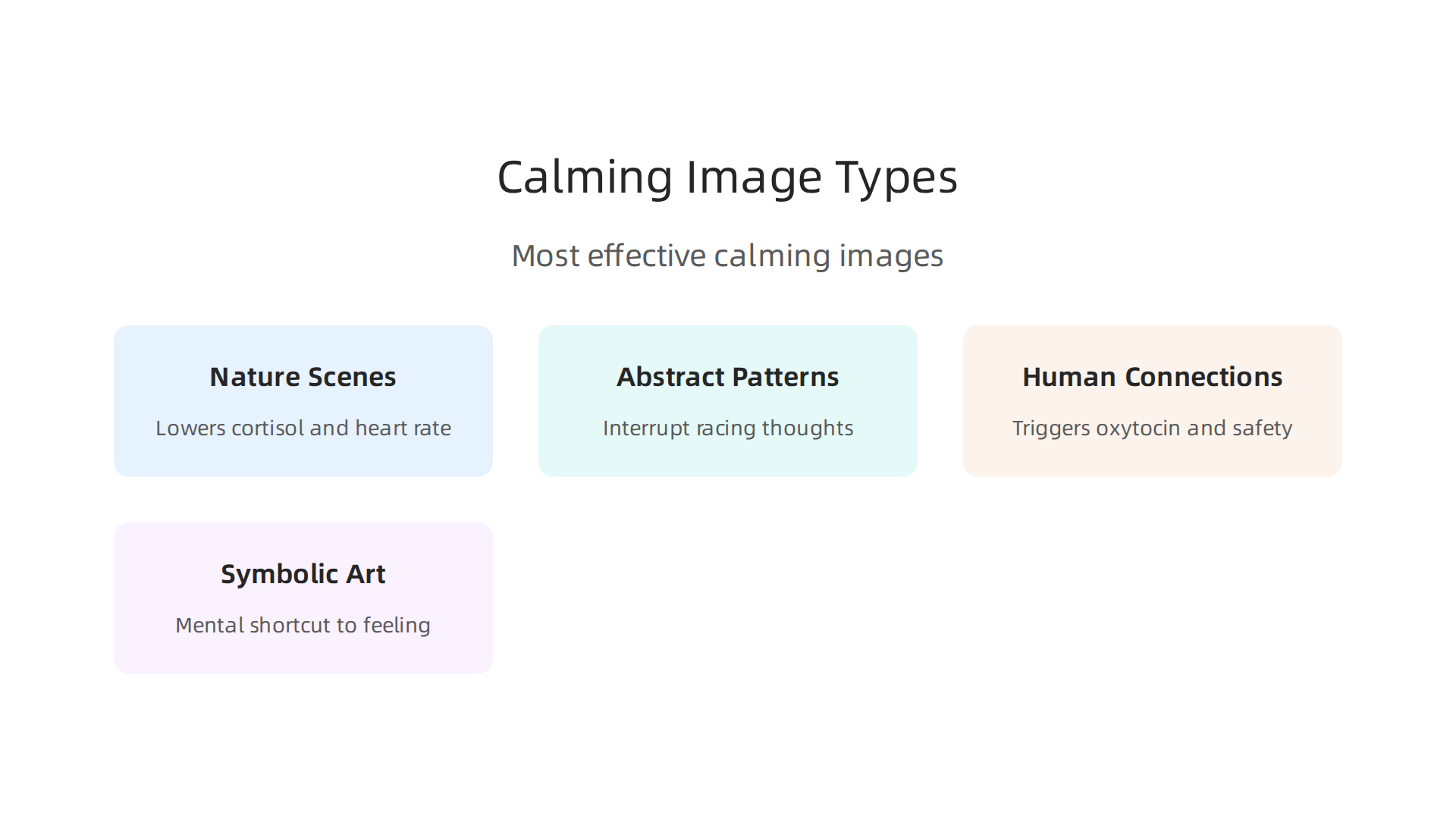
Each one works a little differently in your brain. Here is a quick comparison to help you choose.
| Category | How It Helps | Best For |
|---|---|---|
| Nature scenes (forests, lakes, sunsets) | Lowers cortisol and heart rate quickly. Your brain evolved to feel safe in green, open spaces. | General stress, overwhelm, or when you need a quick reset. |
| Abstract patterns (soft gradients, gentle waves, mandalas) | Gives your mind a simple, repetitive focus. This can interrupt racing thoughts. | Anxiety with strong mental chatter or intrusive images. |
| Human connections (hugs, family moments, pets) | Triggers oxytocin and feelings of safety. Social bonding signals calm to your nervous system. | Loneliness, social anxiety, or panic attacks. |
| Symbolic art (inspirational quotes on calm backgrounds, peaceful icons) | Creates a mental shortcut to a specific feeling or memory. You can pair it with an anxiety song for a stronger effect. | Building a personalized calm cue over time. |
Not every category will work for every person. For example, someone with anxiety different types like social anxiety might respond better to images of people than to empty nature scenes. Someone with generalized worry might prefer the structure of abstract patterns. The key is to experiment.
Research shows that mental health imagery is a powerful tool for regulating emotions. It works because your brain treats a vivid image almost like a real perception. This is why the APA defines visual imagery as having pictures in your mind that feel nearly real. When you use an image that matches your personal need, you get the strongest calming effect.
During Mental Health Month this year, try testing different categories. Spend 30 seconds with each type and notice how your body responds. Does your chest relax? Do your shoulders drop? That is your signal.
You can learn more about how a specific mental health image can calm your anxiety faster than words and find step by step guidance.
If you want to understand the deeper science behind how structured cues retrain your emotional responses, check out this field note on the Value Reinforcement System. It explains how your brain builds new calm pathways through consistent practice.
Practical Toolkit: Using Imagery to Manage Anxiety
Now you know the types of mental health images that work. But knowledge only helps if you use it. That is where a simple toolkit comes in. You do not need hours of practice. Just five minutes a day can make a real difference.
Research shows that guided imagery provides immediate relaxation and improves anxiety symptoms. A 2023 study found that guided imagery can reduce anxiety and improve quality of life for people with anxiety disorders. The trick is to use it the right way. Here is a step by step plan.
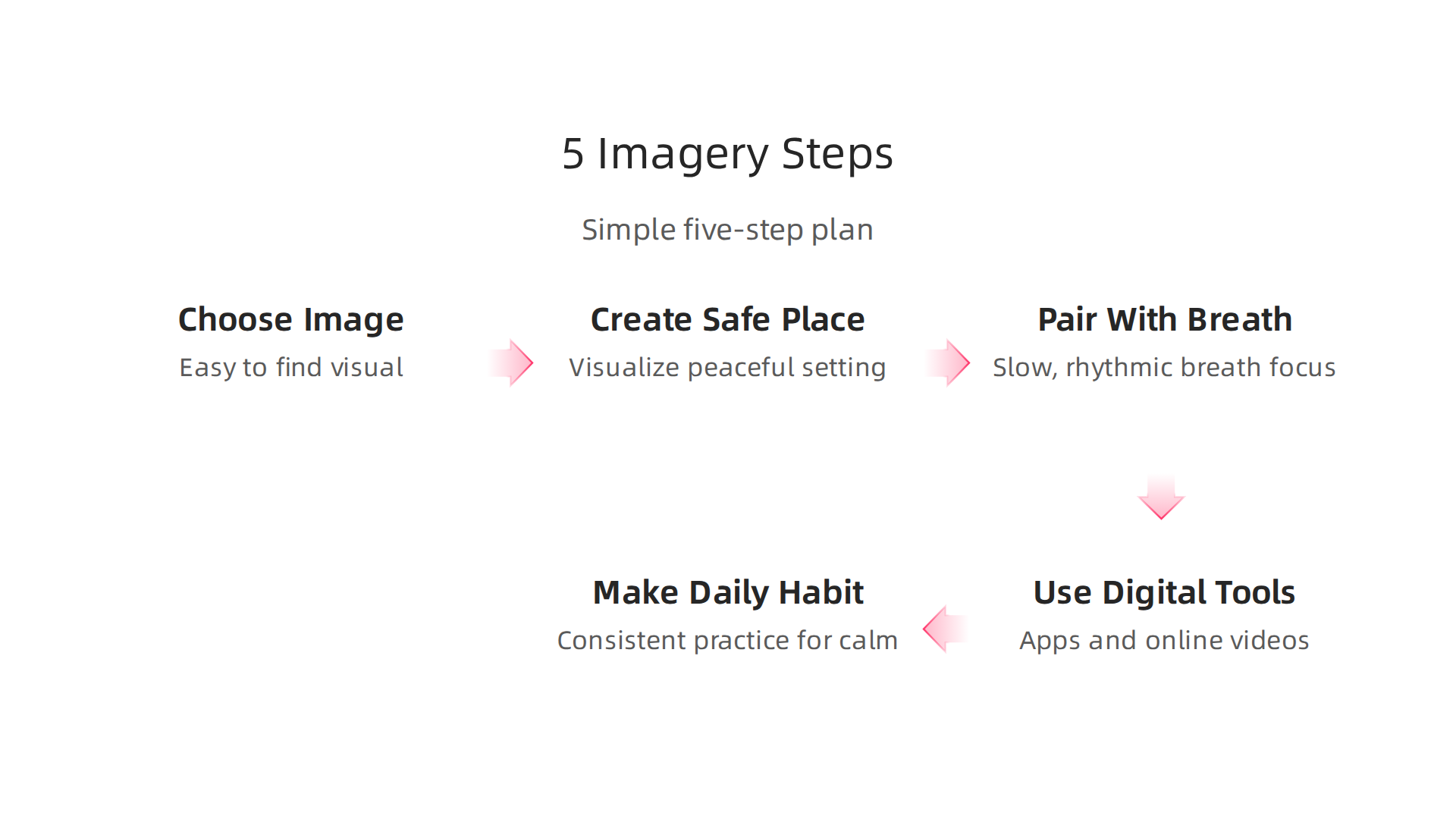
Step 1: Choose your trigger image. Pick one mental health image from the categories you learned earlier. It could be a calm lake, a soft gradient, or a photo of someone you love. Keep this image saved on your phone or printed out. The goal is to make it easy to find. When you look at it, pair it with a slow breath in. Hold for a second. Then breathe out. This connects the image to a calming physical response.
Step 2: Create a safe place visualization. Close your eyes and imagine yourself in a peaceful setting. This can be the same image you chose or a new one you build in your mind. Imagine every detail. The sounds. The smells. The feeling of the air. The Cleveland Clinic explains that guided imagery helps your body relax by lowering your breathing rate and calming your nervous system. Practice this for two minutes at a time.
Step 3: Pair with slow breathing. Breathe in for four counts. Hold for four counts. Breathe out for six counts. Repeat this while holding your chosen image in mind. Nature based guided imagery can be especially effective for state anxiety, according to a 2018 study in Frontiers in Psychology. The combination of visual calm and slow breathing creates a powerful calming loop.
Use digital tools to help. Many apps can curate calming images and guide your sessions. You can also find free guided imagery videos online. One helpful resource is a guided imagery relaxation video that walks you through the process step by step. These tools remove the guesswork.
Make it a daily habit. Set aside five minutes each day. Pick a consistent time like right after waking up or before bed. Look at your image. Visualize your safe place. Breathe slowly. Repeat. Over time, your brain learns to associate that mental health image with calm. This works even when you have anxiety different types like social anxiety or generalized worry.
If you want to build a deeper understanding of what your anxious feelings really mean, start with the next step. Decode Anxious Feelings helps you name the pressure behind the feeling so you can respond better. Combine that with your daily imagery practice and you have a strong, simple system for managing anxiety.
The Role of Media and Awareness Campaigns
You have been using imagery on your own. But here is the bigger picture. Media and awareness campaigns use the same idea to help millions of people at once. When you see a powerful mental health image in a social media post or a billboard, it is doing more than just catching your eye.

It is changing how we think about anxiety.
A systematic review from 2024 found that media mental health campaigns can reduce stigma and increase openness around mental illness. That is a big deal. When public campaigns use accurate and relatable images, people feel less alone. They see that their struggle is normal and that help exists.
Mental Health Month 2026 is a perfect example. Organizations like SAMHSA, NAMI, and Mental Health America all released digital toolkits filled with images and messages designed to connect with different audiences. NAMI’s theme this year is "Turning Silence Into Connection." Mental Health America’s theme is "More Good Days, Together." These campaigns use visuals that reflect real people, real emotions, and real hope. The idea is that when you see someone who looks like you talking about anxiety, it becomes easier to talk about your own.
Social media amplifies this effect. Campaigns shared on Instagram, TikTok, and Facebook reach millions of people in seconds. The GWI blog highlights six mental health campaigns that truly connected with audiences in 2025 and beyond. These campaigns used simple images paired with honest stories. They did not try to sugarcoat anxiety. They showed it as it is. That honesty builds trust.
Representation matters here. If all the images you see show one type of person, you might wonder if your experience counts. But when campaigns include people of different ages, races, backgrounds, and anxiety different types, everyone feels seen. A diverse mental health image can say, "You belong here. Your struggle matters."
Now that you see how media uses imagery to reach the public, you can use that same awareness to better understand your own feelings. The next step is to name the pressure behind your anxiety. Decode Anxious Feelings helps you do exactly that. Combine this knowledge with the visual tools you have already learned, and you build a complete system for managing anxiety.
Creating Your Personal Mental Health Image Library
Now you know how media campaigns use imagery to reach millions. But what about you? You can build your own personal toolbox of calming visuals.
Think of it as a personal mental health image library you can open anytime anxiety shows up.
Here is why this works. Studies show that guided imagery can provide immediate relaxation and improve symptoms of anxiety disorders. That is the scientific way of saying your brain reacts to pictures and scenes as if they were real. So when you look at a photo of a quiet forest or a warm cup of tea, your nervous system actually calms down.
Start small. No need to be a designer or photographer. You can find images on free sites like Unsplash or Pinterest. Look for scenes that make you feel safe, peaceful, or joyful. Maybe it is a beach at sunset, a cozy reading nook, or your own pet sleeping. You can also take your own photos. The key is to choose images that connect with your personal sense of calm.
Once you have a few favorites, save them in a folder on your phone or computer. Name it something simple like “Calm” or “Safe Place.” When you feel anxious, open the folder and spend one minute looking at each image. Breathe slowly as you do. This is a form of guided imagery, and research from the Cleveland Clinic confirms it helps reduce both anxiety and stress.
To make the effect stronger, combine your images with journaling. After looking at a calming photo, write down one word or sentence about how it made you feel. Over time, your brain learns to associate that mental health image with a relaxed state. You can even pair a specific image with an anxiety song that soothes you. This builds a powerful cue for calm.
Remember that the most effective images are the ones that feel real to you. If you have different types of anxiety, you may need different images for different moments. One image might help with a racing heart, while another helps with spiraling thoughts. Experiment and see what works.
Once your library is ready, you have a go-to tool that costs nothing and works anywhere. To learn more about how to decode what your anxious feelings are telling you, check out this practical guide on recognizing anxious patterns and building inner strength. It pairs perfectly with your new image library.
For a deeper dive into how our minds respond to visual cues and recognition, this field note on value reinforcement systems offers a fascinating look at the science behind why certain images calm us. Use it as a next step after you have built your personal collection.
Summary
This article explains how intentional mental health images—pictures you hold in your mind or keep on your phone—can reduce anxiety quickly by engaging the brain’s visual processing systems. It reviews the neuroscience behind why images can calm the amygdala and activate the prefrontal cortex, and summarizes research showing nature scenes, abstract patterns, human-connection photos, and symbolic art each have different calming benefits. You’ll learn practical, evidence-based steps: choose a trigger image, practice a safe-place visualization, pair it with slow breathing (for example 4-4-6), and repeat briefly each day to build new calming brain pathways. The piece also covers how media campaigns use imagery to reduce stigma and why representation matters, plus tips for creating a portable image library and pairing images with journaling or music. After reading, you’ll be able to pick effective images, run short guided-imagery sessions, and use simple habits to make visual cues a reliable tool for managing many types of anxiety.